


Green Velvet Box
These green velvet box examples range from Victorian dressing cases to Edwardian jewellery chests, offering tactile historic storage for personal treasures.
Green Velvet Box
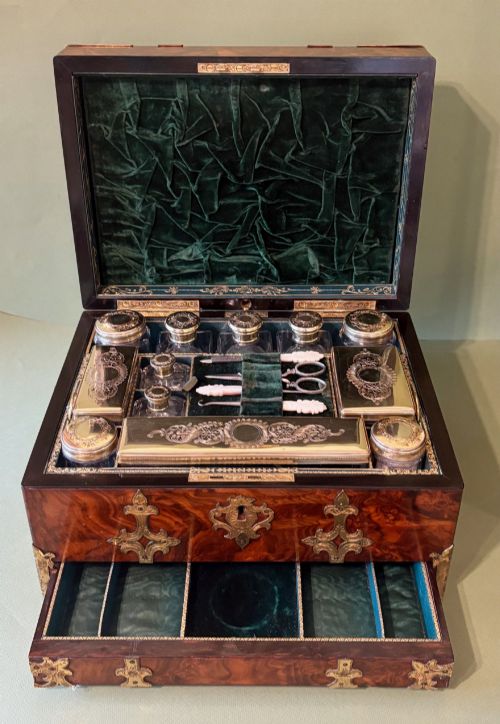
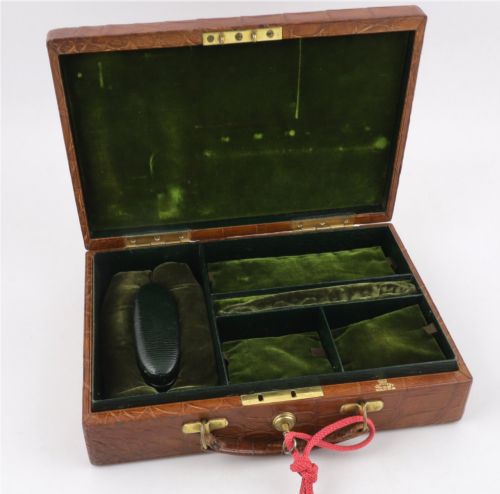
A green velvet box brings together functional nineteenth-century containment and soft textile interiors designed to protect delicate valuables. When searching for a green velvet box, buyers encounter diverse forms including sewing boxes, writing slopes, and jewellery chests.
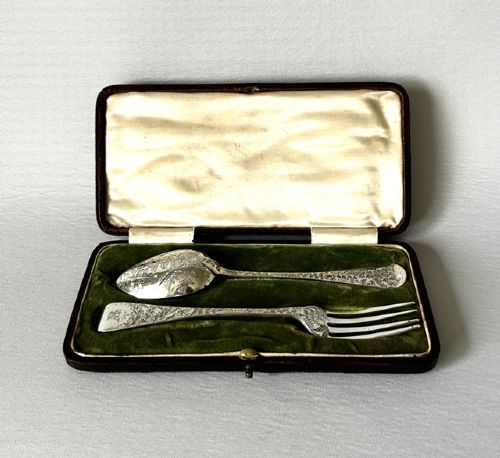
The pieces appearing on this page span the Victorian and Edwardian eras, utilising woods like rosewood, walnut, and coromandel alongside exotic decorative elements such as mother-of-pearl and bone. Many function as specialised containers, housing everything from christening sets to musical instruments.
Origins stretch across British, French, Dutch, and Anglo-Indian traditions, reflecting the global reach of nineteenth-century craftsmanship. Each form tells a story of domestic organisation and personal care, whether styled in Black Forest woodwork or inlaid brass.
How they were made
Construction relies heavily on dense hardwoods such as rosewood, burr walnut, and coromandel, providing sturdy structural shells for delicate internal fittings. Artisans shaped these timbers into domed tops, hinged lids, and sloping writing surfaces.
Surface decoration integrates mother-of-pearl inlay, brass stringing, and carved antler, demonstrating meticulous hand-assembly by period craftsmen. Interiors are then lined with rich green velvet to cushion jewellery, cutlery, and sewing instruments safely.
Musical instruments needed homes too, proving that even a cello once required a plush velvet-lined resting place.
What varies in quality
Quality reveals itself in the precision of the woodwork and the integrity of the internal velvet lining, which should sit flush against fitted compartments. Superior examples showcase complex materials like coromandel or detailed Anglo-Indian carving rather than simple plain timber bodies.
The sophistication of the hardware, from working brass locks to fitted gilt interiors, separates standard utility boxes from high-status dressing cases and jewellery chests. Maker attribution and specialised uses, such as instrument casing or writing slopes, further elevate the standing of a piece.
J C Vickery·W E Hill·Edwards
The Green Velvet Box Glossary
- Writing Slope
- A portable desk featuring an angled lid that opens to reveal compartments for paper, inkwells, and pens. These pieces often incorporate secret drawers beneath the writing surface.
- Coromandel
- A dense, heavily figured timber imported from Asia, prized for its dark brown colour and contrasting pale streaks. It frequently appears on high-end nineteenth-century sewing boxes and dressing cases.
- Vizagapatam
- A style of decorative work originating in India, characterised by intricate engraving on bone or ivory veneers applied to wooden box structures. Pieces utilising this technique often feature complex geometric and floral motifs.
- Black Forest Style
- A carved wood aesthetic originating from central Europe, known for realistic representations of animals, foliage, and rustic scenes. These boxes typically feature heavily textured lids and domestic motifs.
Green Velvet Box: Frequently Asked Questions
What were green velvet boxes used for?
These boxes served specialised domestic roles, housing everything from fine jewellery and silver christening sets to sewing implements and writing materials. Their soft velvet interiors protected delicate items from scratching during transport or daily use.
Over the nineteenth century, forms evolved to suit the specific needs of Victorian and Edwardian households, resulting in dedicated dressing cases and instrument boxes.
How do I date a green velvet box?
Dating relies on examining the timber species, construction techniques, and stylistic markers recorded across the Victorian and Edwardian periods. For instance, the use of coromandel or specific brass inlay points securely to mid-nineteenth-century workshops.
Hardware styles and lining fabrics also provide clues, though makers' marks or retailer stamps offer the most precise chronological indicators when present.
Are these boxes suitable for modern storage?
Yes, their original purpose makes them ideal for storing modern jewellery, watches, or small keepsakes safely on a dressing table. The historical compartments and velvet trays accommodate contemporary accessories surprisingly well.
Care should be taken to protect antique wood finishes and original textile linings from excessive moisture and direct sunlight.
What materials are most common?
The exterior shells utilise traditional nineteenth-century timbers including rosewood, walnut, and coromandel, often enhanced by brass and mother-of-pearl inlay. Some examples incorporate exotic elements like antler and bone for distinctive surface texture.
Internal elements combine wood framing with paper, leather, gilt details, and the characteristic green velvet lining that defines the category.