
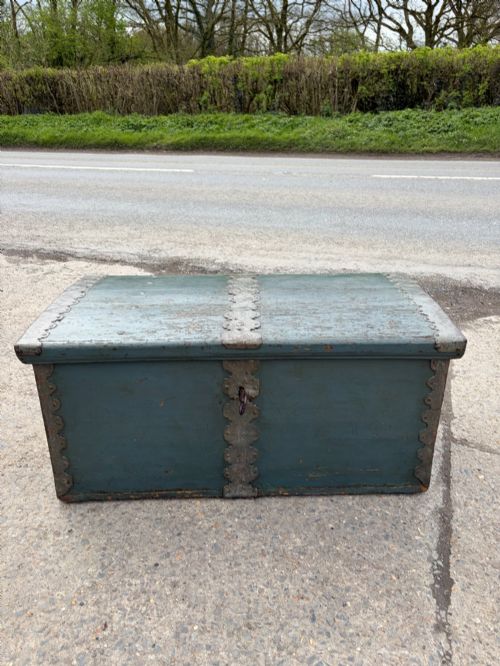


Domed Storage Trunk
These heavy-lidded boxes promise both utility and narrative, turning spare storage into a focal point.

Domed Storage Trunk
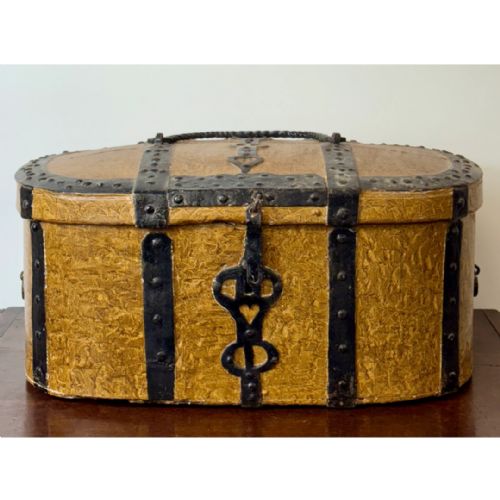
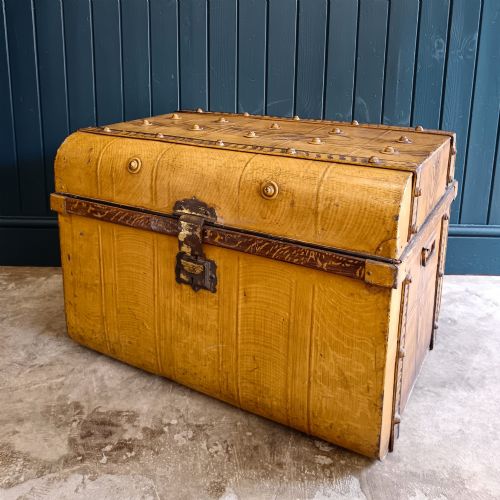
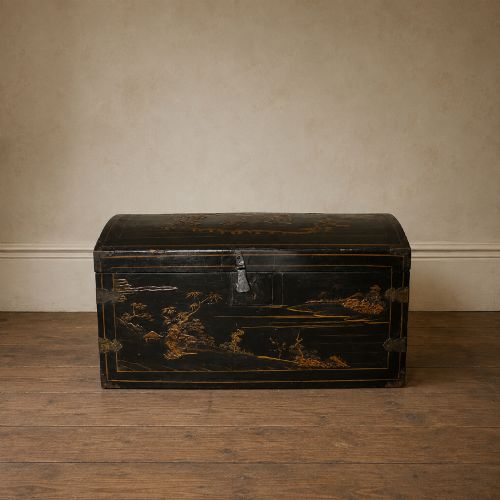
A domed storage trunk offers deep capacity beneath a curved lid designed to shed water and allow extra stacking height inside. The pieces seen here span centuries of regional craftsmanship, ranging from rustic Scandinavian pine to Chinese export lacquer.
Buyers meet sturdy nineteenth-century pine examples alongside eighteenth-century marriage chests and leather-clad travel cases. These objects served to move belongings across seas or secure household valuables in domestic rooms.
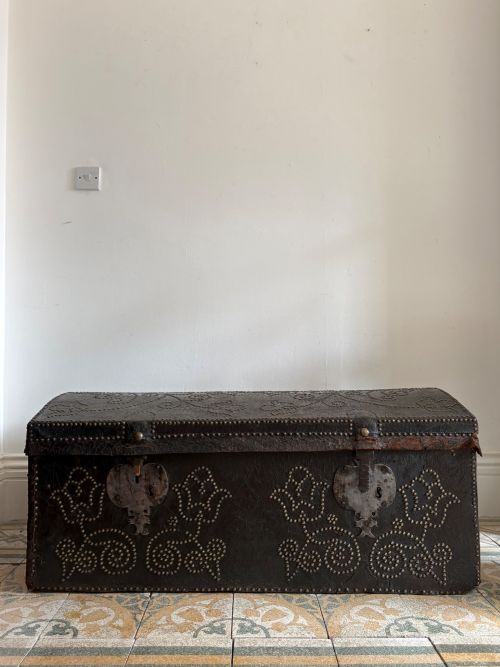
Regional styles dictate much of the character, with painted folk art surfaces common in northern European pieces and heavy brass studding marking Spanish or Dutch coffers. The curved profile distinguishes them from flat-topped blanket chests.
Materials and Construction
Carpenters built these bodies primarily from solid timbers like pine, oak, and teak, joining boards with dovetails or pegged tenons. The curved lids required steam-bent or segmented wooden ribs to support the arched shape.
Protective outer layers of leather, hide, canvas, or sheet metal added durability against travel wear. Iron, brass, and wrought iron provided structural reinforcement through corner braces, hinges, and carry handles.
Surface decoration involved hand-applied paint, black lacquer with gilt details, or complex stud work hammered into leather. Makers utilised local materials to suit the specific transport or domestic demands of the era.
Many Swedish marriage chests hide initials and wedding years inside the lid, left by carpenters for posterity.
Assessing Quality and Character
Quality rests upon the integrity of the original construction and the survival of surface finishes like historic paint or leather. Untouched patination on wood and metal carries more weight than heavily restored surfaces.
The sophistication of internal fittings, dovetailing, and the weight of the hardware separate standard utility boxes from high-status marriage chests or export pieces. Heavy forged iron handles and intact locking mechanisms elevate a piece.
Proportion and decorative ambition dictate the appeal of individual trunks, from plain woven pine to profuse walnut inlay or intricate Chinoiserie decoration.
The Domed Storage Trunk Glossary
- Dome top
- A curved lid profile engineered to shed moisture during travel and increase internal volume. This shape defines the category.
- Marriage chest
- A commissioned trunk given to mark a wedding, frequently bearing dates, initials, and folk art painting. These items held household linens.
- Coffer
- A heavy wooden chest traditionally used for storing valuables or documents. They often feature robust iron bands and secure locks.
- Export lacquer
- A glossy resin finish applied to wooden chests in Asia for western markets. It typically incorporates gilt decoration and dark backgrounds.
- Studded leather
- An exterior treatment utilising animal hide fastened with rows of brass or iron studs. This technique reinforces the seams and decorates the surface.
Domed Storage Trunk: Frequently Asked Questions
How were domed storage trunks used?
These trunks functioned as luggage for sea voyages and overland travel, or served as permanent domestic storage for blankets and valuables.
The curved lid allowed owners to pack items higher than the box rim while shedding moisture if exposed to rain during transit.
What woods appear most often?
Pine dominates the Scandinavian and country pieces, frequently found under layers of original paint or folk art decoration.
Heavier examples utilise oak, teak, or walnut, while structural reinforcement relies on iron, wrought iron, and brass.
How do I date a trunk?
Dating relies on construction methods, hardware types, and surviving decorative finishes like eighteenth-century folk art or Victorian lacquering.
Examine the hinges, lock plates, and timber preparation to determine whether the piece belongs to the Georgian, Victorian, or earlier periods.
How do I care for leather trunks?
Leather-clad and hide trunks require stable humidity levels away from direct sunlight and heat sources to prevent drying and cracking.
Gentle dusting preserves the surface, avoiding harsh modern cleaning agents that strip historic patination from the hide and brass studs.