


Domed Blanket Chest
A domed blanket chest offers deep storage beneath a curved lid, pairing rustic utility with centuries of character.
Domed Blanket Chest
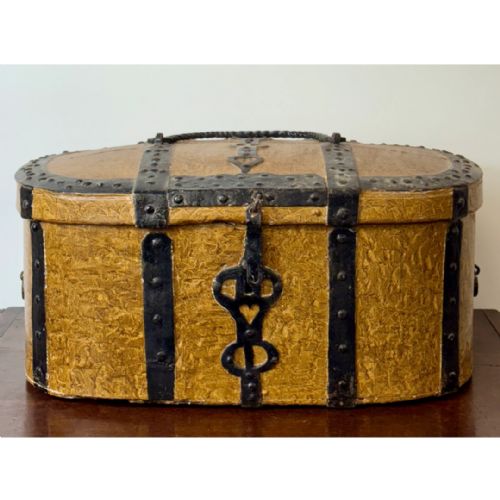
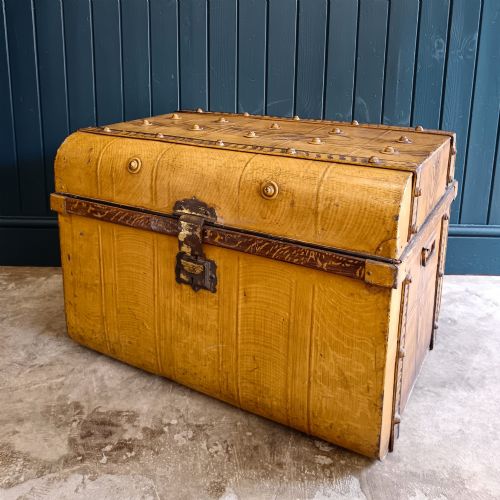
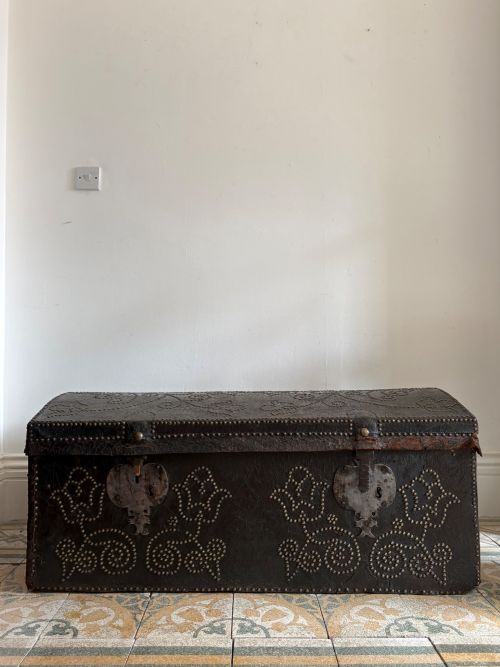
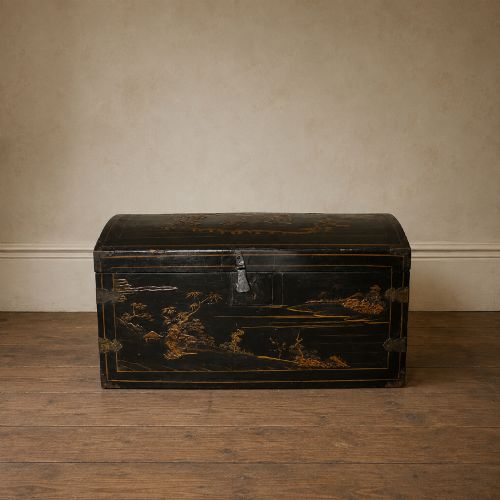
A domed blanket chest serves as a robust storage container designed with a convex, curved lid that sheds water and allows bulky textiles to pile high inside. Buyers encounter forms ranging from rustic pine country boxes to elaborate Chinese export lacquer pieces and European leather-clad coffers.
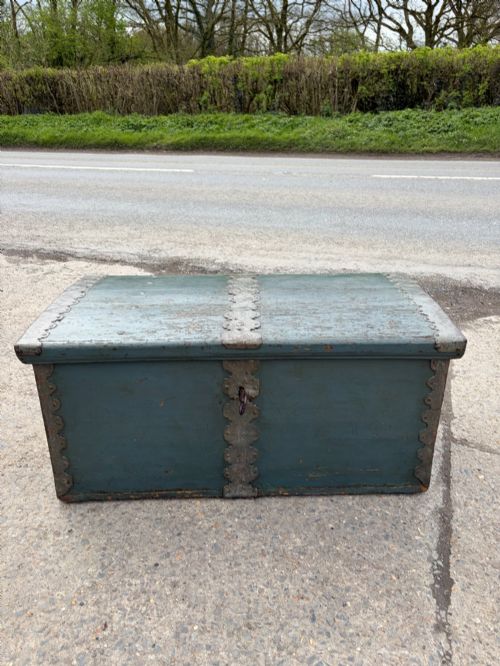
The selection on this page spans the 18th century through the Victorian era, heavily featuring Scandinavian hand-painted marriage chests alongside English oak and pine travel trunks. These pieces function visually as substantial anchor furniture in a room while providing practical concealment for household items.
Origins stretch across Britain, Scandinavia, continental Europe, and Asia, resulting in diverse decorative treatments from wrought iron reinforcement to intricate gilt lacquer. The curved lid distinguishes them from flat-topped alternatives, creating a distinct silhouette derived from early travel and maritime storage needs.
Materials and construction methods
Carpenters constructed these chests using solid timber frames of pine, oak, and teak, often shaping the curved lid ribs by hand to support the arched top. Iron, steel, and brass provided essential reinforcement through strap hinges, corner brackets, and carrying handles.
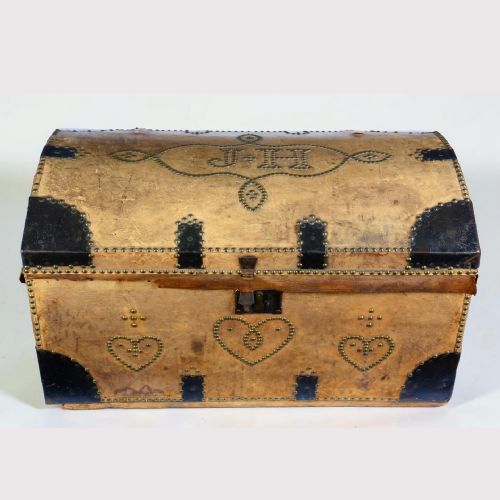
Surface treatments define many examples, utilising original paint, black lacquer with gilt decoration, or hand-tooled leather secured with decorative brass studwork. Canvas, tin, and hide coverings also appear, nailed directly to the wooden carcase to protect the contents during transit.
Periods represented span the Georgian era, the 19th century, and the Victorian period.
Assessing quality and execution
Quality rests in the integrity of the original surface and the proportion of the curved lid relative to the base. Superior examples retain untouched painted decoration, intact leather cladding, or period brass studwork without modern intervention.
Construction details differentiate standard utility boxes from high-status marriage chests, specifically in the precision of dovetail joints, the weight of the wrought iron hardware, and the complexity of internal compartmentalisation.
Arthur Wannop·Cunard Line
The Domed Blanket Chest Glossary
- Marriage chest
- A celebratory storage piece commissioned or given for a wedding, frequently decorated with painted folk motifs, initials, or specific dates.
- Chinese export
- Items manufactured in China specifically for Western markets, often utilising distinctive black lacquer and gilt decoration on domed trunks.
- Studwork
- The decorative application of brass or iron nails arranged in geometric patterns across leather or hide surfaces.
- Folk art
- Utilitarian objects decorated by self-taught makers using regional motifs and traditional pigments.
Domed Blanket Chest: Frequently Asked Questions
What were domed blanket chests used for?
These chests served primarily to store heavy blankets, woollens, and household linens away from dust and moths.
Travellers also utilised them as durable trunks for long journeys, relying on the curved lid to shed moisture and prevent luggage from stacking improperly on top.
How do I clean a leather domed trunk?
Dust the surface gently with a dry, soft cloth to remove surface grit without disturbing fragile hide or aged leather.
Avoid applying modern chemical polishes or heavy oils unless tested on a hidden area, as older leathers react unpredictably to treatments.
How can I tell an 18th-century chest apart from a Victorian one?
Eighteenth-century examples often display hand-split timbers, wrought iron hardware shaped by local blacksmiths, and early folk painted finishes.
Victorian chests frequently incorporate machine-sawn pine, standardised brass studwork, and industrial iron hinges typical of later manufacturing.
Can I use a domed chest as a coffee table?
The flat portion of some shallower domes accommodates flat trays, though the curved profile generally prevents placing cups directly on the surface.
Their substantial internal capacity makes them effective for storing bulky items in living spaces while functioning visually as low focal points.