


Domed Chest
A domed antique chest brings tactile history into a room, offering robust storage built with character from centuries past.
Domed Chest
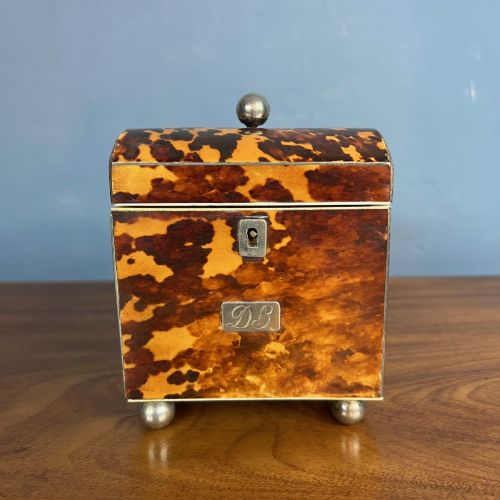
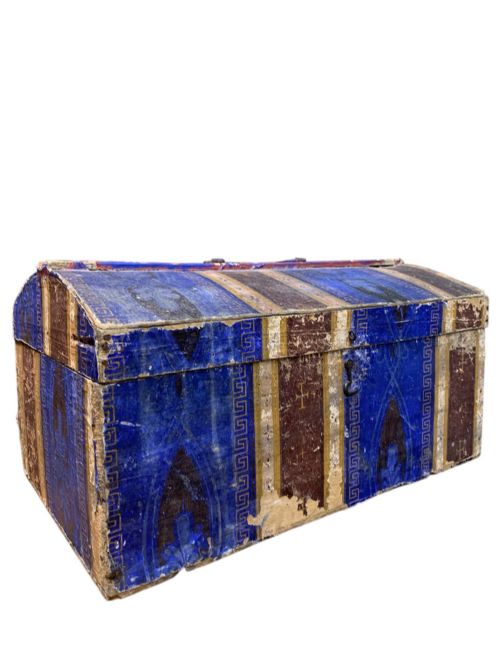
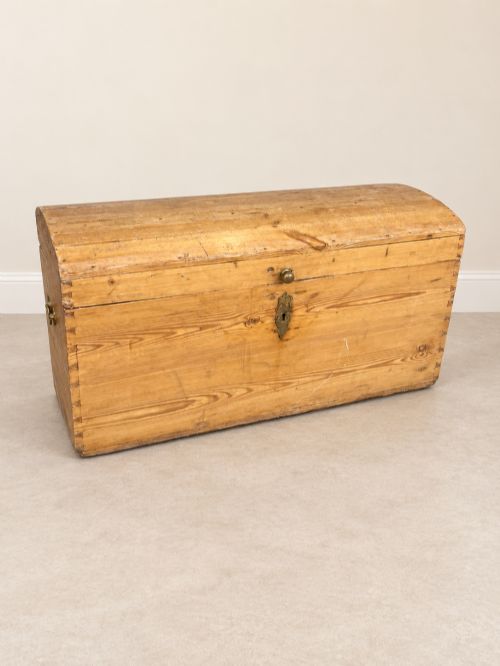
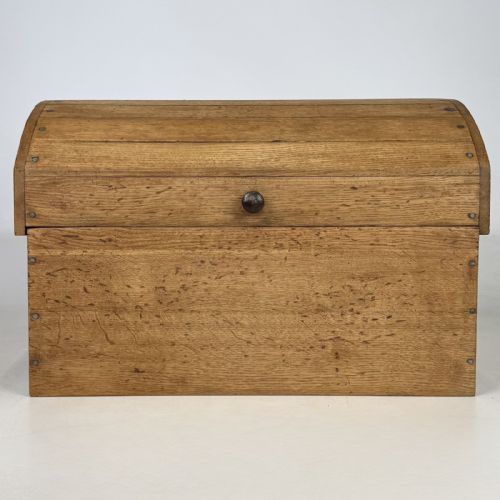
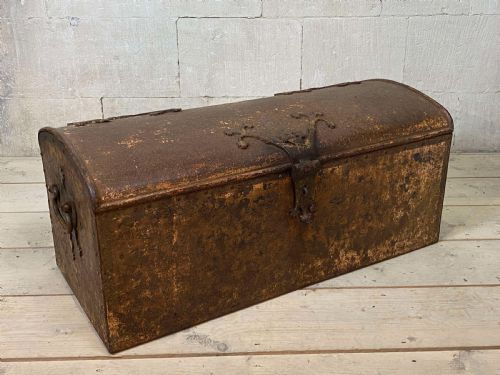
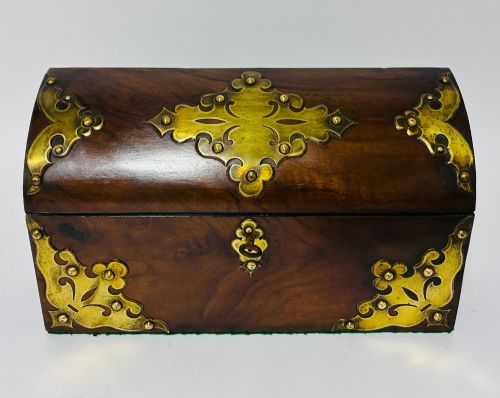
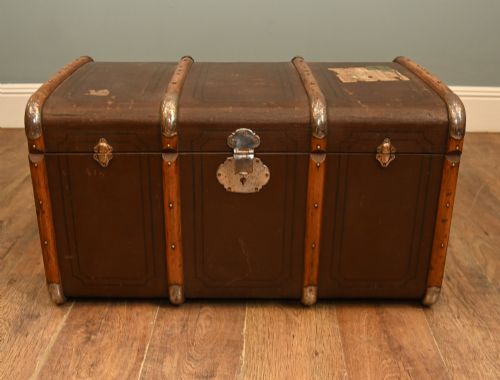
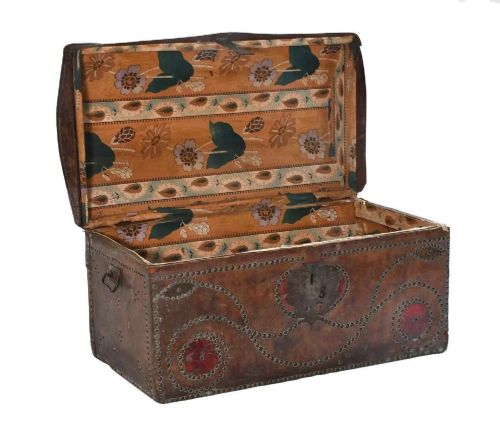
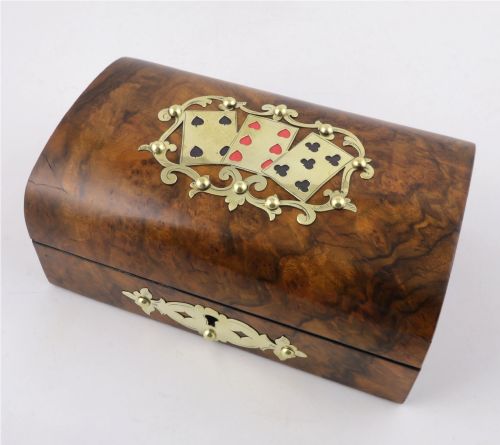
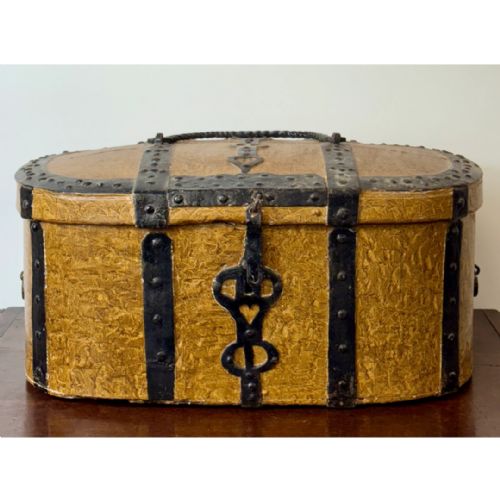
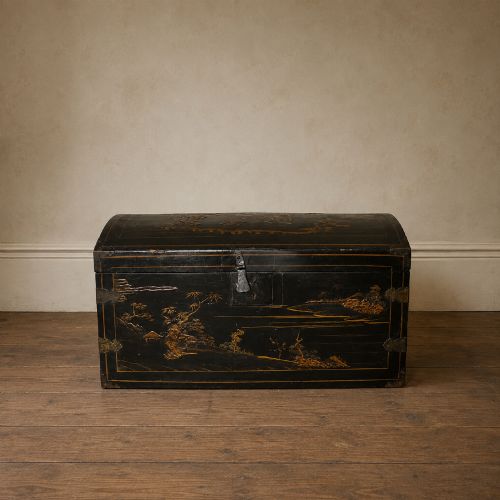
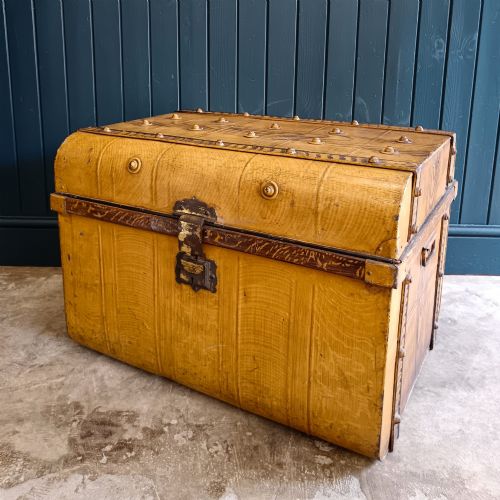
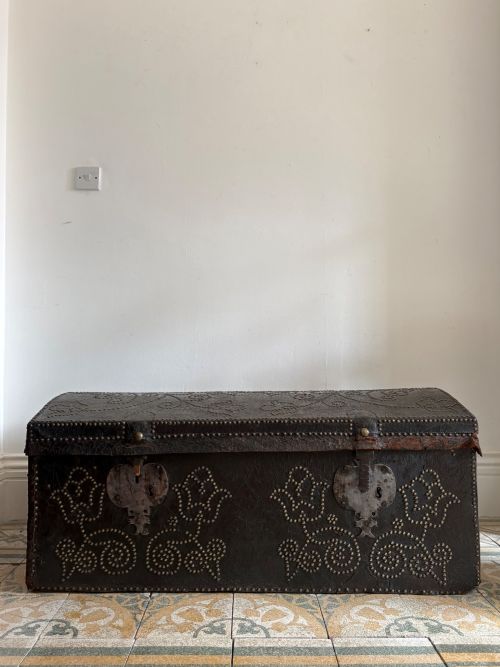
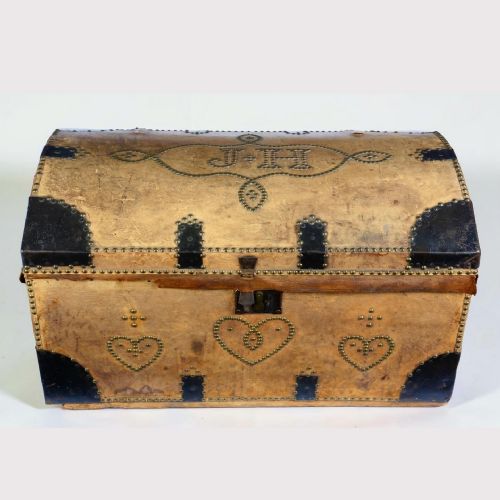
A domed antique chest encompasses large floor-standing trunks, coffers, travelling luggage and smaller table-top caskets or tea caddies. The search for a domed antique chest most frequently yields substantial pine, leather-covered or painted specimens dating from the eighteenth and nineteenth centuries. Regional pieces from Scandinavian folk art traditions sit alongside British Victorian and Georgian examples, as well as Chinese export lacquer pieces.
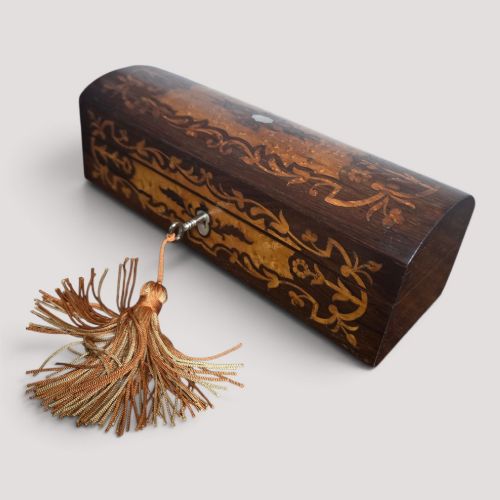
Larger formats serve as blanket boxes or coffee tables, while smaller domed boxes function as desk accessories or tea storage. Painted pine marriage chests and heavy leather studded trunks provide the primary large-scale options found in this category. Tea caddies and stationary boxes represent the smaller scale, featuring curved lids designed to shed dust and house precious goods.
Materials and Construction
Construction relies heavily on timber framing, utilising pine, oak, burr walnut, coromandel and amboyna, often enhanced with exterior cladding. Iron, brass and wrought iron provide structural reinforcement through corner brackets, hinges and locks, while leather and canvas cover timber cores on travel trunks. Hand-painted finishes, black lacquer with gilt decoration, and marquetry surface work appear across domestic and export items.
The characteristic curved lid requires steam-bending wood or assembling segmented wooden ribs beneath leather, hide, or metal sheets. Studwork in brass or iron secures the leather coverings while creating decorative geometric patterns across seventeenth and eighteenth-century coffers.
Domed Chest Retail Price Guide 2026
Typical asking prices for domed chest among the pieces listed under this phrase on Sellingantiques today, from the lower quarter to the upper quarter. They describe what is for sale here now, not the wider market.
Pine, oak and burr walnut dominate the wooden substrates across these listings, alongside painted and leather-clad surfaces.
Assessing Standard and Integrity
Quality rests in the survival of original surfaces, such as untouched paint schemes, patinated leather and untouched brass mounts. Superior pieces retain their working locks, original keys, interior paper linings and structural hardware without extensive timber replacement.
Craftsmanship shows in the precision of dovetail joints, the complexity of Tunbridge inlay or marquetry, and the weight of the metal fittings. Lesser examples suffer from unsympathetic repainting, stripped hardware or replaced lids that disrupt the historical cohesion of the piece.
Chapple And Sons·Cunard Line
The Domed Chest Glossary
- Coffer
- A heavy wooden chest, typically with a domed lid, used historically for storing valuables and documents. These sturdy receptacles often feature iron bands and complex locking mechanisms.
- Tea Caddy
- A small box designed to store loose tea leaves, frequently featuring a domed lid and internal compartments. Finer examples utilise exotic woods and decorative inlay.
- Campaign Case
- Portable furniture and storage designed for travel by military officers during the eighteenth and nineteenth centuries. These items incorporate sturdy brass corners and recessed carrying handles.
- Marquetry
- The art of applying pieces of veneer to a structure to form decorative patterns and pictures. Craftsmen utilise various coloured woods to achieve detailed pictorial designs.
Domed Chest: Frequently Asked Questions
What were domed chests used for?
Domed chests served primarily for secure transport and storage of clothing, documents, and valuable commodities during travel or domestic life. The curved lid prevented water pooling and allowed rainwater to run off easily.
Smaller domed boxes functioned as specialised containers for tea, playing cards, or stationery. Larger coffers protected household linens and dowries against dampness and pests.
How do I clean a leather trunk?
Dust the leather surface gently with a soft, dry cloth to remove loose particles and surface dirt. Avoid commercial cleaning liquids that strip historical patina.
Apply a microcrystalline wax sparingly if the hide requires conditioning, but test a hidden area first. Keep leather chests away from direct sunlight and radiators to prevent cracking.
How are eighteenth and nineteenth-century chests told apart?
Eighteenth-century examples frequently feature hand-forged wrought iron hardware, heavy oak or pine construction, and early hand-mixed paint or natural leather hides. Joinery often relies on hand-cut dovetails and pegged joints.
Nineteenth-century pieces introduce machine-rolled metals, varied exotic veneers like burr walnut and coromandel, and standardised brass locks. Factory production methods appear more commonly in Victorian travelling trunks and steamer luggage.
Can I use a domed chest as a coffee table?
A sturdy wooden or leather-covered chest makes an ideal coffee table while providing hidden storage for blankets or books. Ensure the flat parts of the dome or the overall height suit your seating arrangement.
Place a tray on top to secure glasses and cups, protecting the antique surface from rings and spills. Avoid placing heavy items on fragile lacquer or delicate painted lids.