

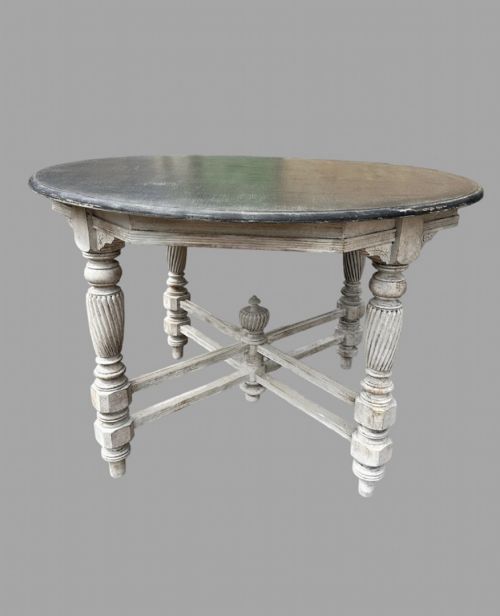
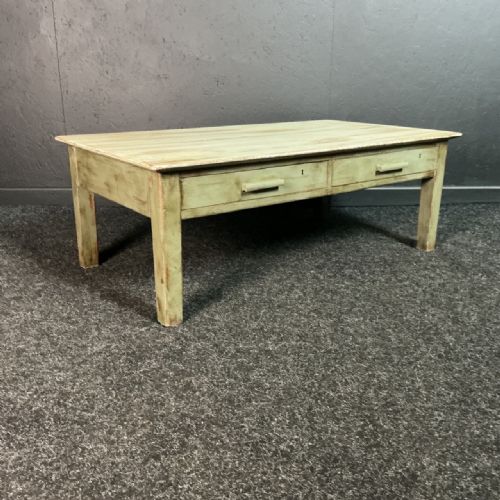

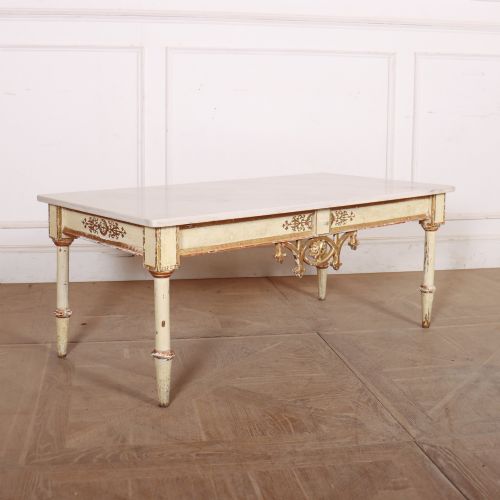


Distressed Paint Tea Table
These distressed paint tea tables bring character and practical surface space to a room, offering tactile surfaces built for daily use.
Distressed Paint Tea Table
When you search for a distressed paint tea table, you encounter low occasional furniture designed to hold drinks and books while displaying aged surface finishes. The selection here spans coffee tables, centre tables, occasional tables, and drop leaf tables spanning from the nineteenth century into the twentieth century. These pieces draw on rustic farmhouse, Victorian, Italian Neoclassical, Georgian, rustic country, English country, French Rococo, and Swedish Rococo traditions.
The version you are most likely to meet on this page is a nineteenth-century occasional or centre table, often built from pine, oak, or hardwood. English, Scandinavian, and Italian origins dominate the offerings, showing surface treatments applied over decades of use. Forms range from compact spider leg drop leaf tables to low coffee tables suited to modern seating arrangements.
How they were made
Cabinetmakers and joiners constructed these tables using solid timber such as oak, pine, hardwood, and walnut. Structural joints relied on traditional woodworking techniques appropriate to the period, while drop leaf versions incorporated hinged folding flaps supported by swing legs.
Surfaces received layers of paint, sometimes combined with gilt details or paired with marble tops. Over time, the original paint finishes weathered naturally through use, creating the distressed appearance characteristic of these pieces.
Distressed Paint Tea Table Retail Price Guide 2026
Typical asking prices for distressed paint tea table among the pieces listed under this phrase on Sellingantiques today, from the lower quarter to the upper quarter. They describe what is for sale here now, not the wider market.
The listings here feature pieces spanning the nineteenth century up to 1930, utilising paint, oak, pine, marble, brass, hardwood, and gilt.
What varies in quality
Quality rests in the integrity of the timber frame and the authenticity of the surface ageing. Tables built from solid oak or pine with sound structural joints outlast those constructed with lesser materials or compromised frames.
The character of the painted finish dictates visual appeal. Surfaces displaying genuine historic wear and original pigment layers hold greater interest than later, heavy-handed applications attempting to mimic age.
The Distressed Paint Tea Table Glossary
- Centre table
- A freestanding table designed to be viewed from all sides rather than pushed against a wall. These pieces frequently occupy the middle of a room.
- Spider leg table
- A slender drop leaf table featuring exceptionally thin turned legs and wooden gates to support the folding leaves. This form saves space when folded down.
- Occasional table
- A small, movable table intended for sporadic use in a sitting room or hallway. They provide convenient surfaces without dominating a room's layout.
- Drop leaf table
- A table with a fixed centre section and hinged flaps that fold down at the sides. Brackets or swing legs support the leaves when raised for use.
Distressed Paint Tea Table: Frequently Asked Questions
What is a distressed paint tea table?
A distressed paint tea table is a low occasional or centre table featuring a weathered painted surface over timber construction.
These pieces originate from the nineteenth and early twentieth centuries, drawing on regional styles from England, Sweden, and Italy.
How do I use a centre table as a tea table?
Centre tables offer a stable surface for everyday items like books, lamps, and tea sets.
Their freestanding design allows them to sit comfortably in the middle of a seating arrangement.
What woods were used for these tables?
Cabinetmakers utilised sturdy timbers such as oak, pine, hardwood, and walnut for the framework.
These durable woods provided a reliable foundation for the painted finishes applied across different stylistic traditions.
How do I identify a nineteenth-century table?
Nineteenth-century tables display construction methods typical of the era, such as hand-cut joints and aged timber.
Stylistic cues like Victorian proportions or rustic farmhouse forms further point toward this period.