
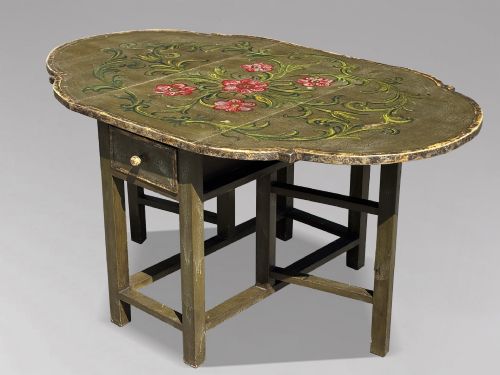


Distressed Green Console
These distressed green console tables bring rustic charm and worn surface character to hallways and living spaces.
Distressed Green Console
A distressed green console provides a practical surface with a distinct aged painted finish, drawing from styles like English Country, French Provincial, and Scandinavian Country. You encounter console tables, side tables, and dresser bases spanning the eighteenth century through the early twentieth century.
The forms range from narrow side tables and drop-leaf tables to serpentine consoles and large dresser bases. Origins vary across English, French, Italian, and Swedish traditions, each bringing local timber and paint traditions to the design.
Makers utilised pine, oak, birch, and mixed woods, often topping pieces with marble, zinc, or verdigris copper. These surfaces reflect decades of domestic or institutional use, displaying natural wear rather than uniform factory production.
How they were made
Cabinet makers built these pieces using solid timbers like pine, oak, and birch, employing traditional joinery suited to heavy daily use in kitchens, potting sheds, and hallways. Construction relies on sturdy framing designed to support stone, wood, or metal tops.
The characteristic green finish involves layers of historic paint applied to wood surfaces, often weathered over decades of exposure and wear. Specialist tops incorporate marble slabs, zinc sheets, or verdigris copper to handle preparation work and resist moisture.
Several tables spent previous decades hard at work in French potting sheds and Swedish baking kitchens before reaching the marketplace.
What varies in quality
Quality rests in the integrity of the original timber frame and the authenticity of the worn surface paint. Pieces retaining their early or original green pigment carry superior character compared to later repainted surfaces.
Material combinations elevate certain forms, such as integrated marble, zinc, or copper tops paired with robust handcrafted bases. Finer proportions and regional joinery details distinguish provincial vernacular items from standard utility furniture.
The Distressed Green Console Glossary
- Console table
- A table designed to stand against a wall, frequently supported by decorative brackets or legs. These tables fit narrow spaces such as hallways and corridors.
- Dresser base
- The lower section of a traditional kitchen or dining room dresser, featuring drawers and cupboards. They provide substantial storage and surface space.
- Verdigris
- A green patina formed naturally on copper or brass through atmospheric weathering and oxidation. This chemical change creates a distinctive aged surface colour.
- Serpentine
- A furniture shape featuring a curved front with a convex centre flanked by concave sides. This flowing line appears on finer eighteenth and nineteenth century tables.
Distressed Green Console: Frequently Asked Questions
Where should I place a console table?
Console tables fit well in narrow hallways, entryways, or living room walls where surface space is needed without blocking movement.
Their shallow depth allows them to sit comfortably behind sofas or beneath mirrors and artwork.
How do I care for aged painted wood?
Dust surfaces regularly with a soft, dry cloth and avoid harsh chemical cleaners that can strip historic paint layers.
Keep wooden furniture away from direct heat sources and strong sunlight to prevent the timber and paint from drying out.
Are marble and zinc tops practical?
Marble and zinc offer durable, wipe-clean surfaces that originally served practical functions in kitchens, pastry rooms, and potting sheds.
They withstand everyday use well, though acidic substances should be kept away from marble to prevent staining.
How can I tell the period of a painted table?
Dating relies on examining the timber types, tool marks, joinery techniques, and the composition of the underlying paint layers.
Secondary woods and construction methods often reveal the regional workshop traditions and centuries of origin.