


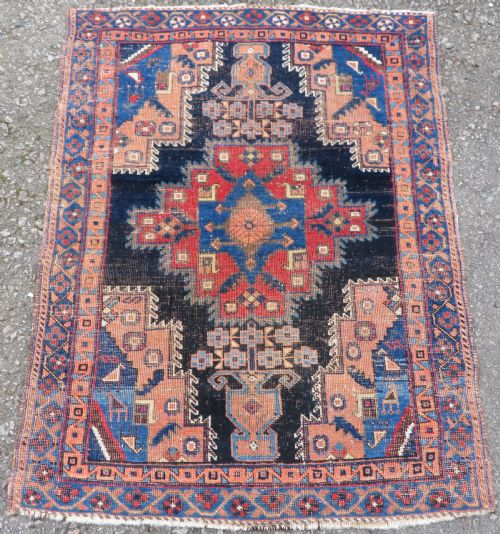

Distressed Area Rug
A distressed area rug brings decades of history and worn character to a floor through faded motifs and softened wool.
Distressed Area Rug
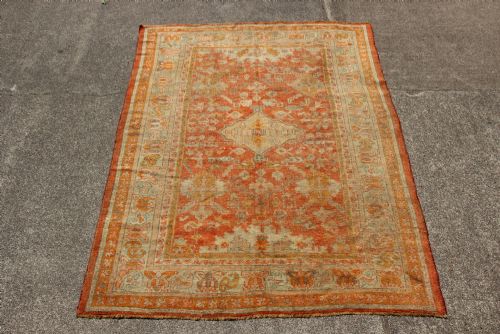
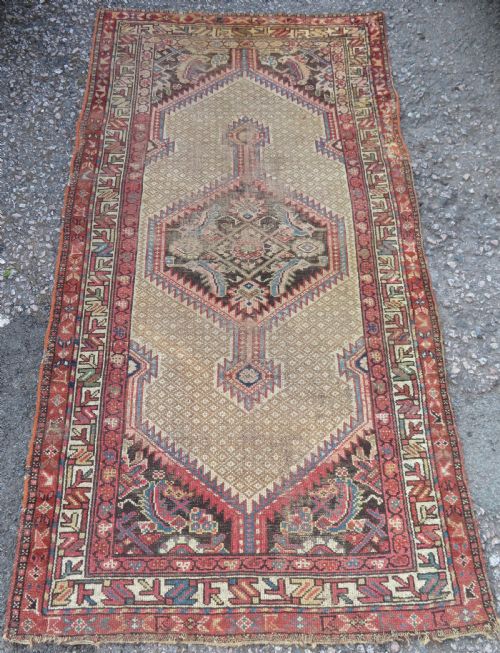
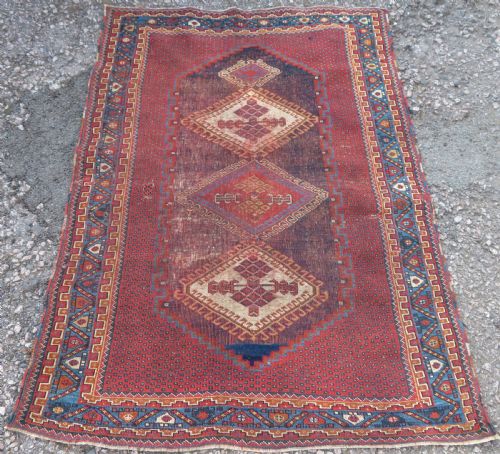
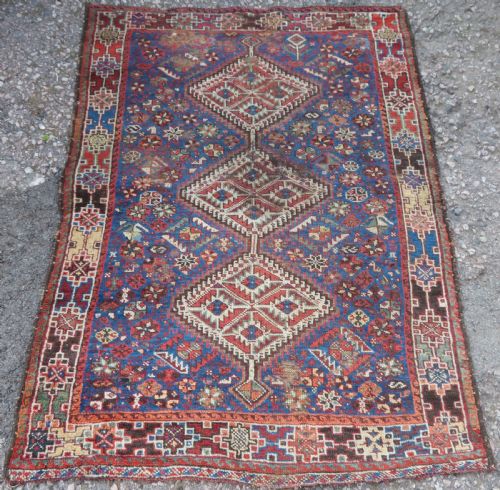
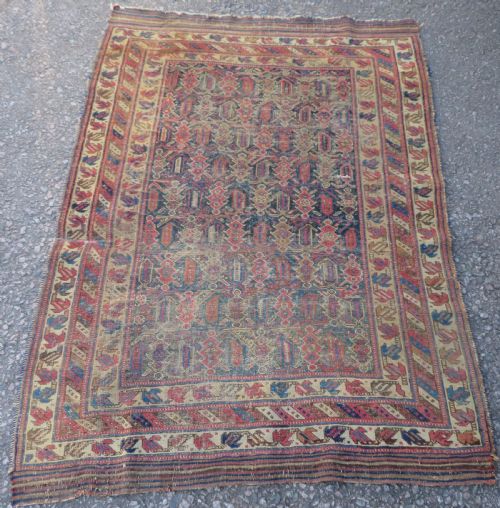
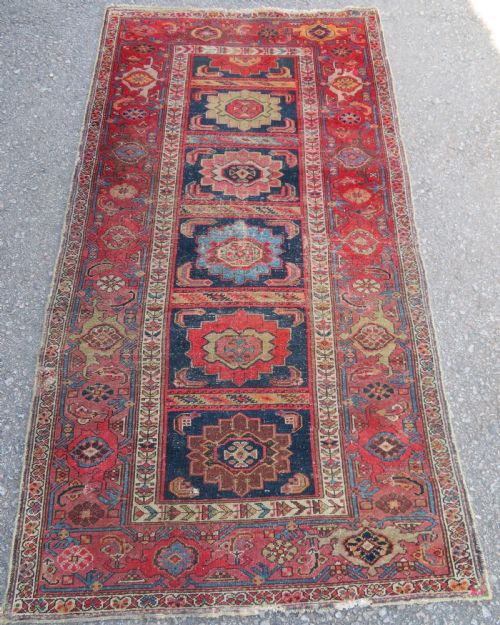
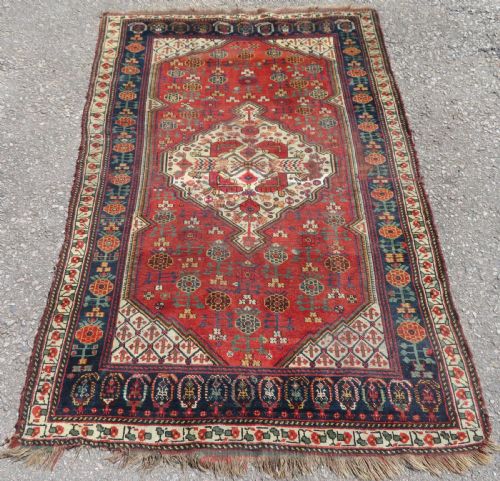
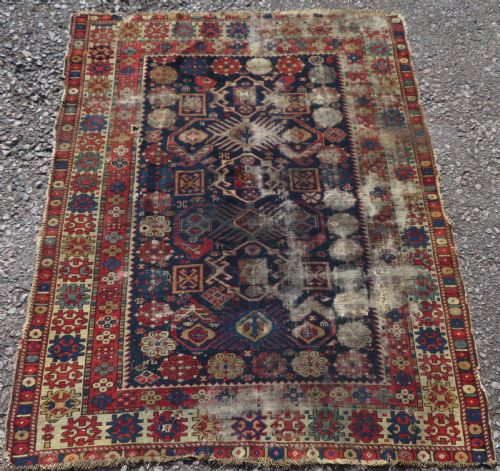
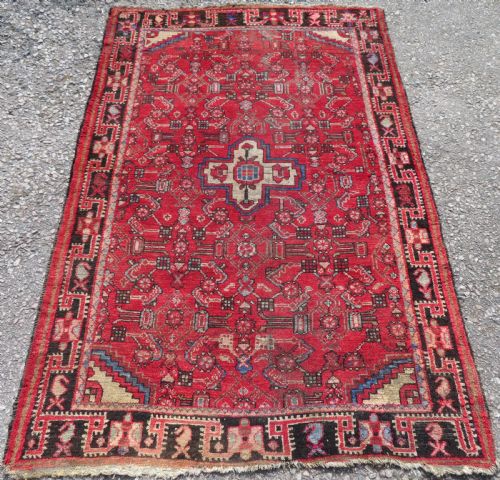
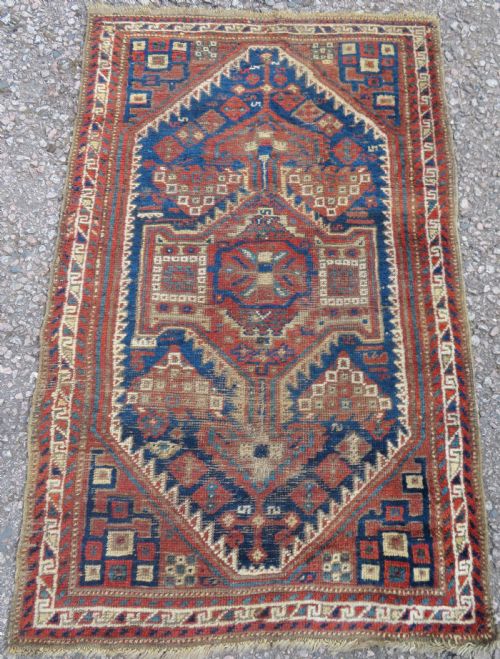
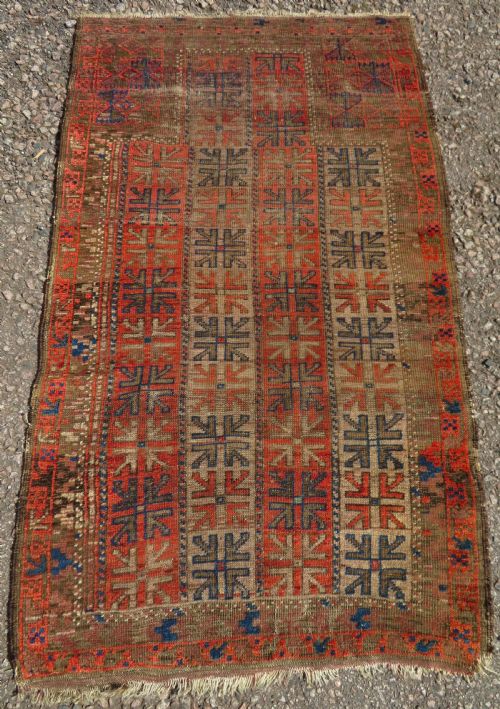
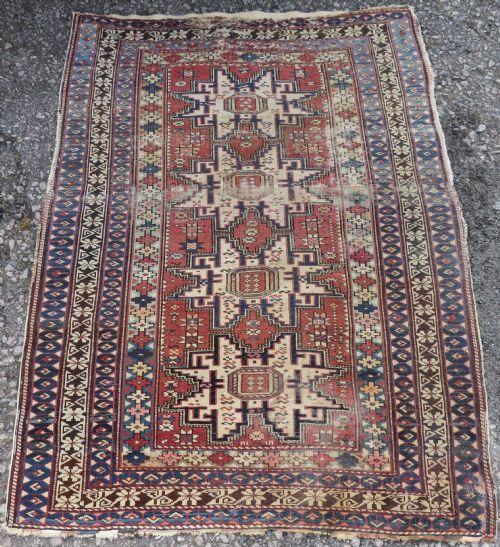
A distressed area rug is a woven floor covering that shows the natural softening of age, heavy use, or purposeful wear across its pattern. When buyers search for a distressed area rug, they find genuine antique carpets from Persian, Caucasian, and Anatolian weaving traditions dating from the late nineteenth century to the early twentieth century. These pieces include tribal formats like Afshar and Khamseh alongside large Oushak and Kirman carpets, all sharing a weathered surface.
The most common examples on this page are antique tribal and village rugs spanning the 1880s to the 1930s. Pieces originating from regions such as Hamadan, Daghestan, and Heriz appear frequently in various dimensions, from compact prayer formats to room-sized carpets. Each item displays the characteristic low pile and faded colour palette that marks genuine historical textiles.
How they were made
These textiles rely on hand-spun wool and cotton foundations, utilising natural dyes derived from plants and minerals to create rich, stable hues. Weavers knotted the wool by hand onto vertical looms, producing tight structures designed to endure generations of foot traffic.
Camel hair also appears in specific tribal pieces, adding subtle tonal variation to the un-dyed sections of the weave. The passage of time interacts with these organic materials to create the faded patina and low pile that define the category.
The listings span from the 1880s through the 1930s, featuring wool, cotton, camel hair, and natural dyes across Persian and Caucasian styles.
What varies in quality
Quality rests in the integrity of the remaining foundation and the harmony of the residual colour palette. A superior piece retains structural stability within the cotton or wool warp and weft despite the weathered pile.
The finesse of the knotting and the complexity of the tribal or traditional design also separate finer examples from simpler village work. Balance in the fading process ensures the remaining pattern retains its artistic strength.
The Distressed Area Rug Glossary
- Pile
- The vertical tufts of wool or camel hair that form the soft surface of the rug. Wear reduces this layer over decades of use.
- Warp
- The vertical threads stretched tightly on the loom that carry the structural weight of the textile. Fringe typically grows directly from these parallel cords.
- Weft
- The horizontal threads passed between the warp rows to lock the knots firmly in place. These strands become visible when the upper wool wears down.
- Patina
- The surface sheen and colour softening acquired by organic materials through age and friction. This quality gives antique textiles their visual depth.
- Prayer rug
- A small format featuring a mihrab or arch design traditionally used for daily devotions. These pieces often show concentrated wear near the centre niche.
Distressed Area Rug: Frequently Asked Questions
How do I care for a distressed rug?
Vacuum gently using suction only, avoiding the rotating brush bars that can catch fragile edges or low pile.
Rotate the textile periodically to ensure even exposure to foot traffic and sunlight.
Are these rugs suitable for high traffic?
Many of these antique pieces survived a century of use because sturdy wool and tight hand-knotting create resilient structures.
Placing a proper underlay beneath the textile absorbs impact and prevents sliding on hard floors.
How can I tell the origin of a rug?
Specific design motifs, border arrangements, and regional colour palettes point toward particular weaving centres like Oushak or Daghestan.
Structural details such as knot density and wool texture further confirm tribal or village provenance.
Why do these rugs look faded?
Decades of walking, washing, and natural light exposure gradually reduce the intensity of the original natural dyes.
This weathering process creates the soft, muted tones that collectors and decorators actively seek out.