
Dish Top Side Table
A dish top side table is a compact surface defined by its raised rim, offering practical elegance for holding small items.
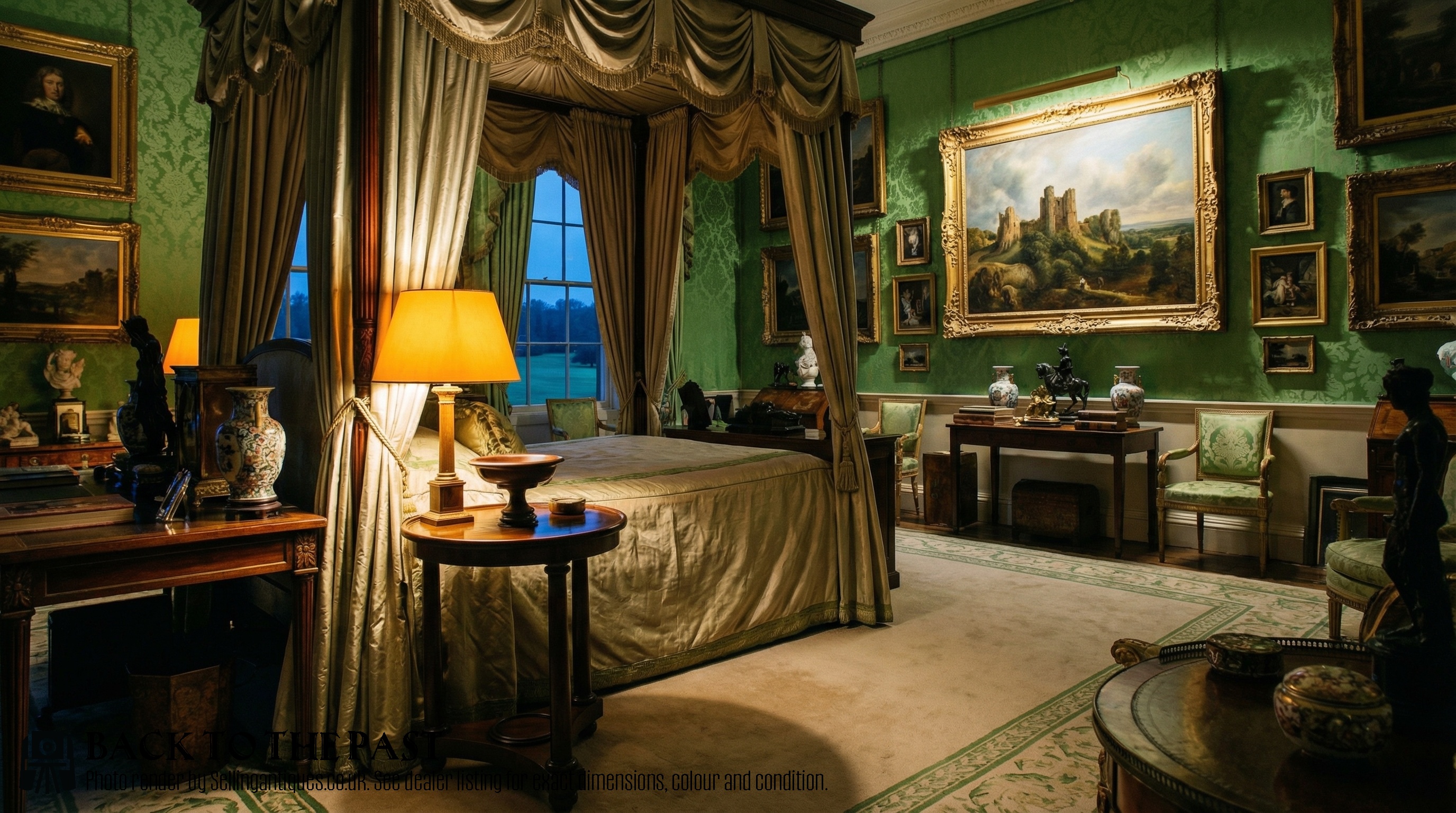
Dish Top Side Table
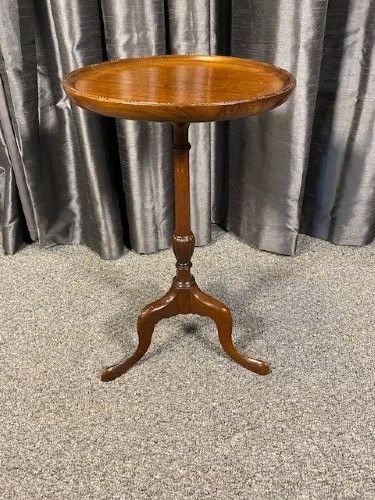
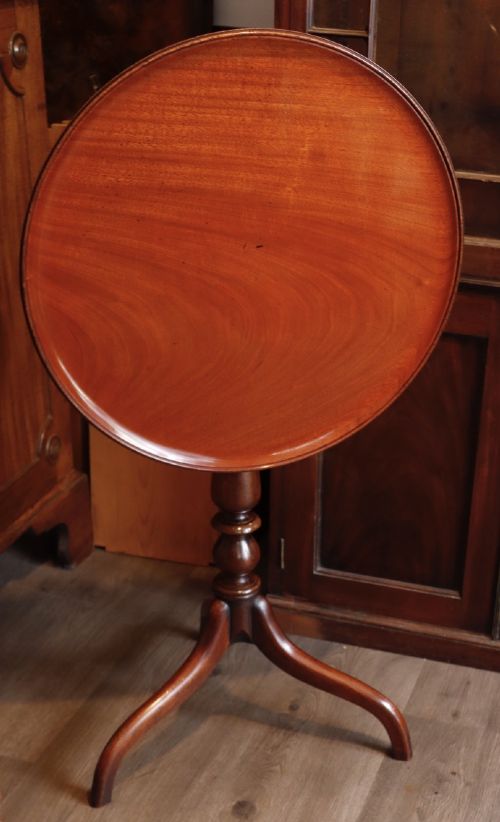
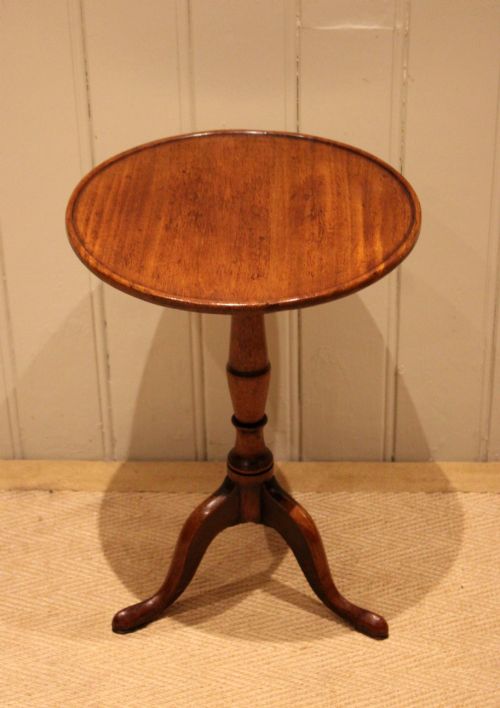
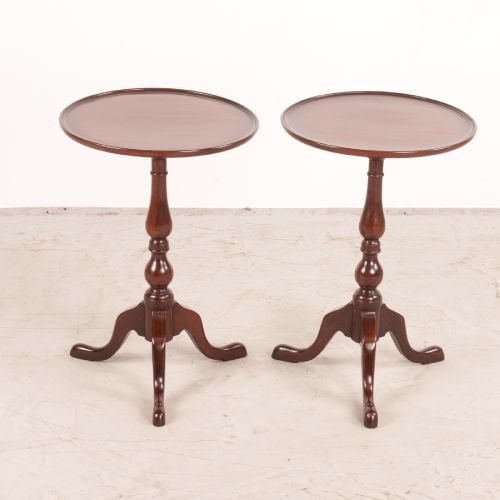
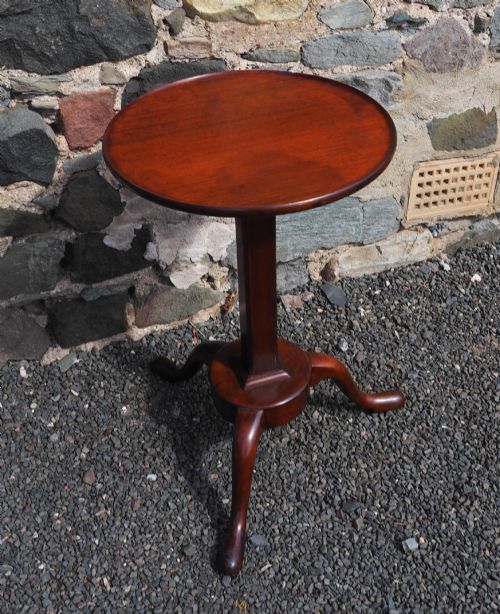
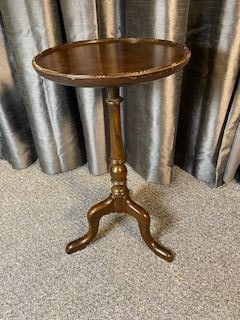
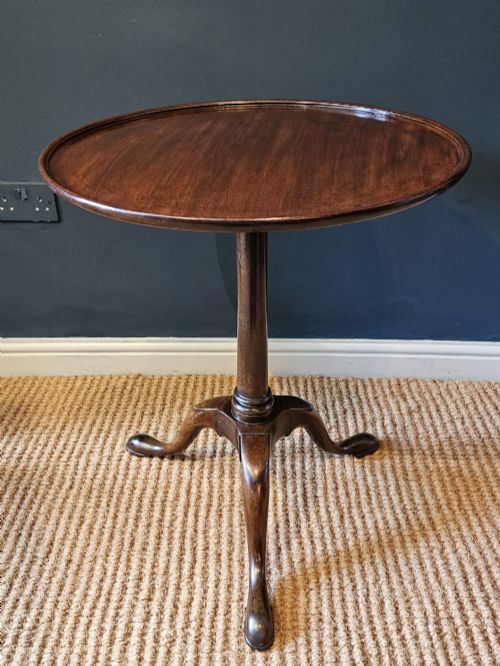
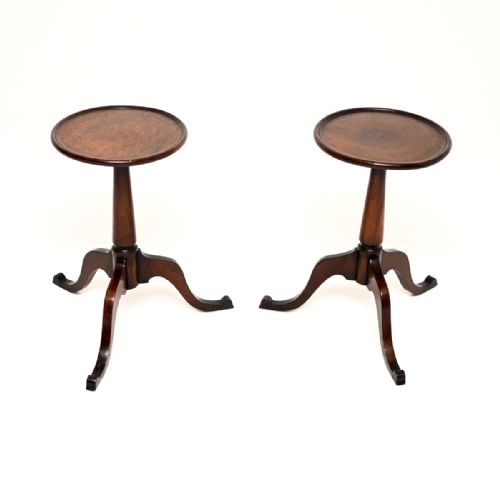
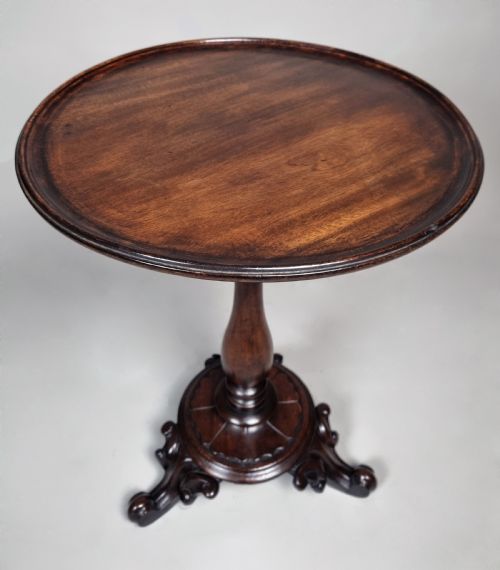
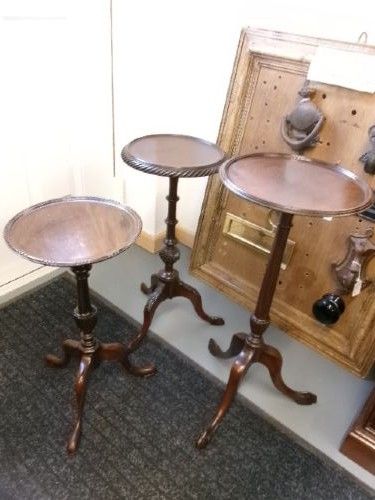
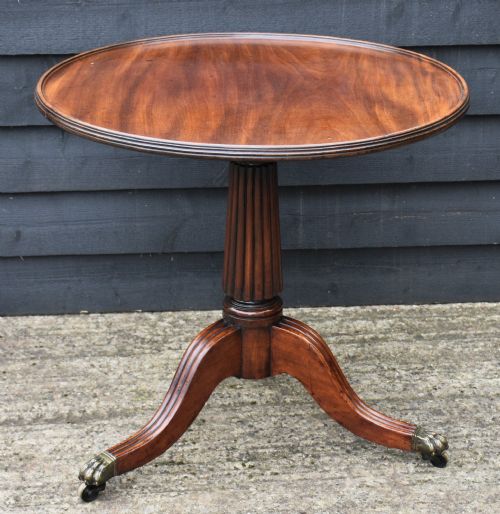
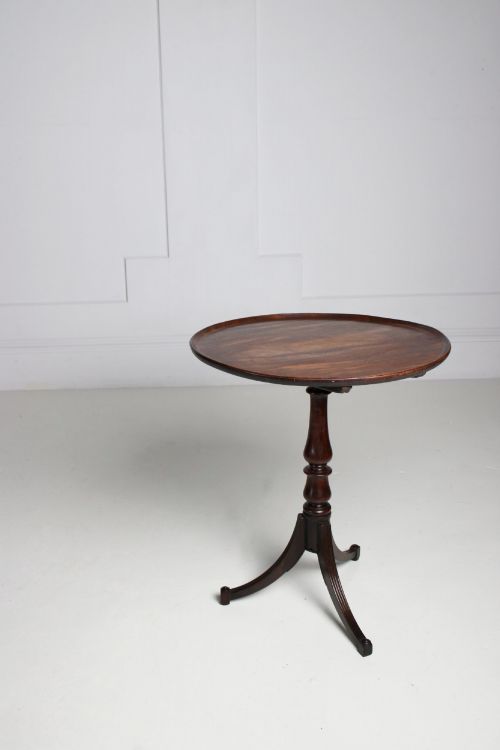
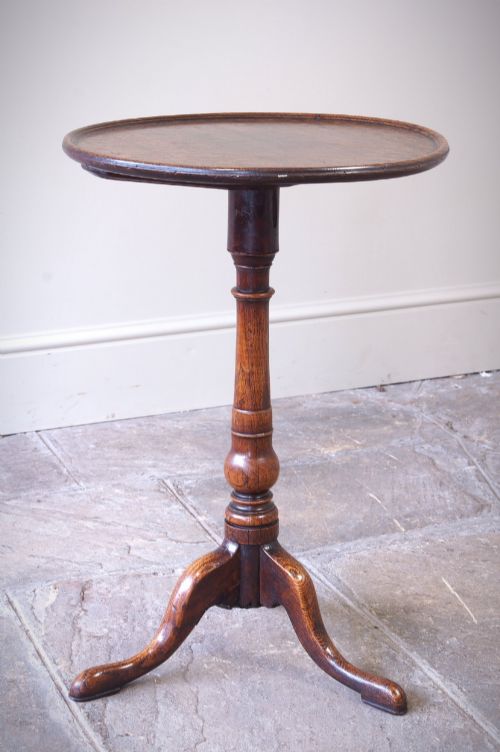
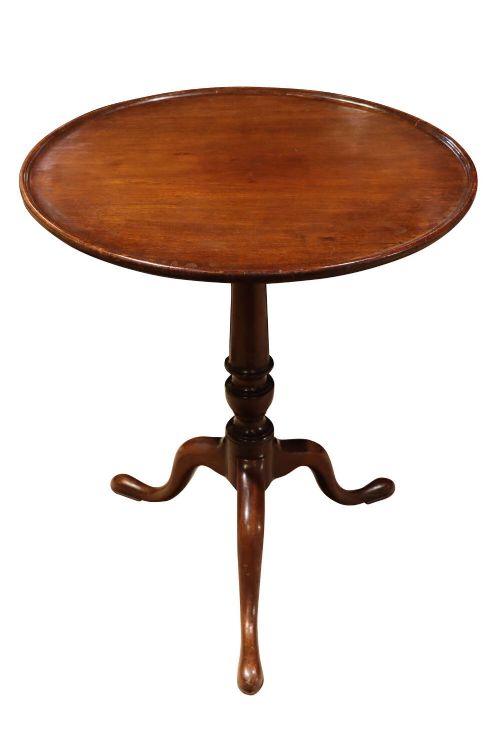
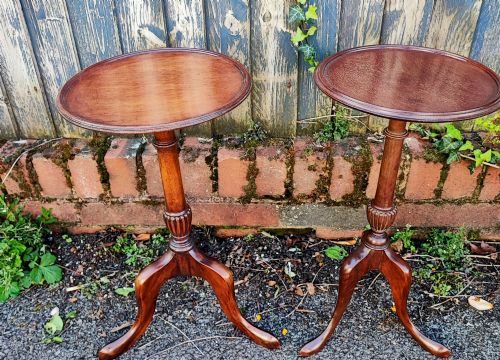
A dish top side table is an intimate piece designed for holding tea, wine, or candles near seating areas. The defining feature is the raised, moulded rim turned directly from the solid timber of the top, which kept cups and glasses secure during use. On this page, the form appears most frequently as a tripod wine table or kettle stand dating from the Georgian period through to the Edwardian era.
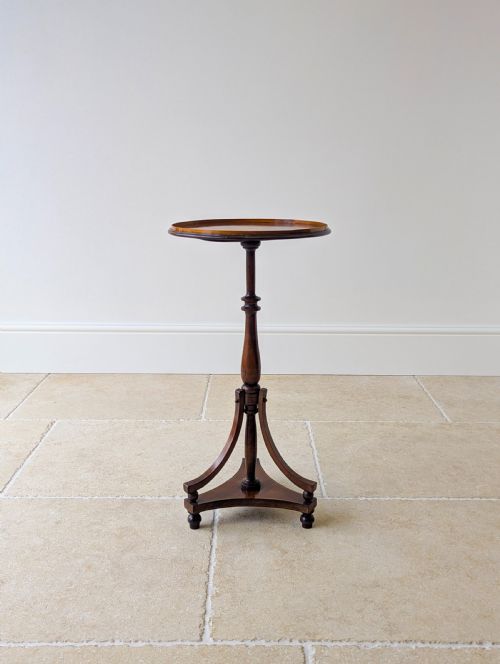
Makers produced these tables in various configurations, including tilt-top examples with birdcage mechanisms that allowed the surface to pivot and fold flat against the wall when not in use. While some are small occasional tables meant for corners, others serve as silver tables or candle stands with slender pedestals. Walnut, oak, and mahogany provide the primary structural support across the centuries represented in the inventory.
Materials and Construction
Cabinet makers utilised dense hardwoods like mahogany, walnut, and oak to construct these pieces, selecting timber with strong grain patterns for the circular tops. Red walnut and figured walnut appear in higher-end examples, sometimes complemented by boxwood inlay or brass fittings. The timber was turned on a lathe or shaped by hand to create the characteristic raised dish rim.
The central pillar typically connects to three cabriole legs via a sturdy dovetail or tenon joint, often supported by a birdcage mechanism that enabled the top to revolve and tilt. Turners shaped the pedestals with fluting or plain columnar profiles, ensuring stability despite the slender footprint of the tripod base.
Dish Top Side Table Retail Price Guide 2026
Typical asking prices for dish top side table among the pieces listed under this phrase on Sellingantiques today, from the lower quarter to the upper quarter. They describe what is for sale here now, not the wider market.
Listings span from the mid-eighteenth century through the Edwardian period, predominantly rendered in solid mahogany and walnut.
Judging Quality
Quality rests in the crispness of the turning on the central pillar and the harmony of proportions between the top and the base. Superior examples exhibit finely carved knees on the cabriole legs, terminating in neat pad or claw-and-ball feet rather than plain, unarticulated timber.
The method used to form the raised rim separates standard production from superior craftsmanship. A top turned from a single thick board of solid mahogany or walnut demonstrates greater skill and material cost than a rim applied separately as a distinct moulding.
Gillows
The Dish Top Side Table Glossary
- Dish top
- A table top with a raised, concave rim turned directly from the solid wood to prevent objects from sliding off.
- Snap top
- A table construction featuring a spring catch or block that allows the top to tilt into a vertical position.
- Tripod base
- A support structure comprising three legs radiating from a central turned pedestal, common on small tables.
- Birdcage
- A wooden framework beneath the top that allows a table to both tilt and revolve independently on its column.
- Kettle stand
- A small, tall table specifically designed to hold a tea kettle and heating apparatus near a table or hearth.
Dish Top Side Table: Frequently Asked Questions
What were dish top side tables used for?
These tables served primarily as movable surfaces for holding tea equipage, wine glasses, or illuminating candles beside seating arrangements.
Their light construction allowed servants to reposition them easily around a room as social gatherings shifted.
What is a birdcage mechanism?
The birdcage is a small wooden assembly of parallel slats and a pivot block situated between the table top and the pedestal column.
It permits the surface to spin horizontally while also tilting vertically without straining the central joint.
Are these tables sturdy?
Despite having three slender legs, period examples achieve stability through carefully balanced joinery and heavy hardwood construction.
The three-legged tripod design ensures the base sits firmly even on uneven historical flooring.