


Diamond Shoulder Engagement Ring
A diamond shoulder engagement ring sets a central stone against accented bands, bringing character and brilliance to the hand.
Diamond Shoulder Engagement Ring
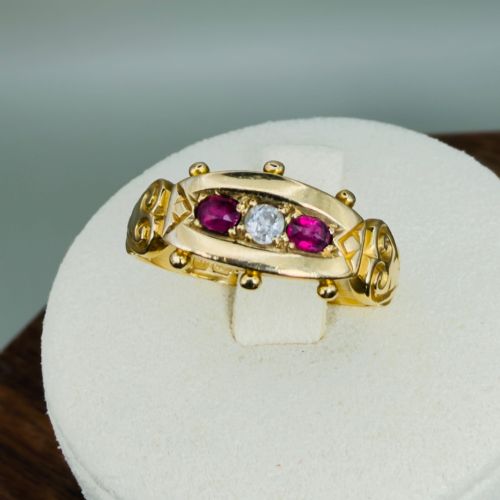
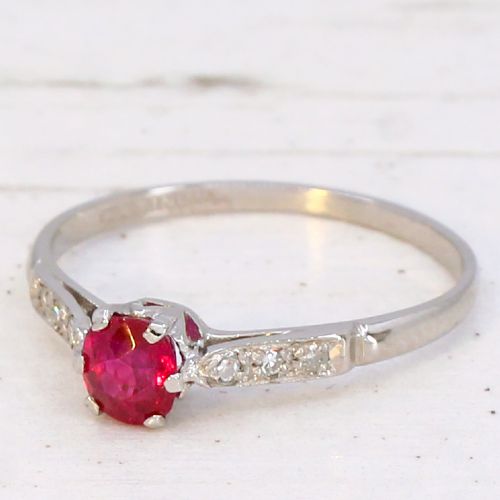
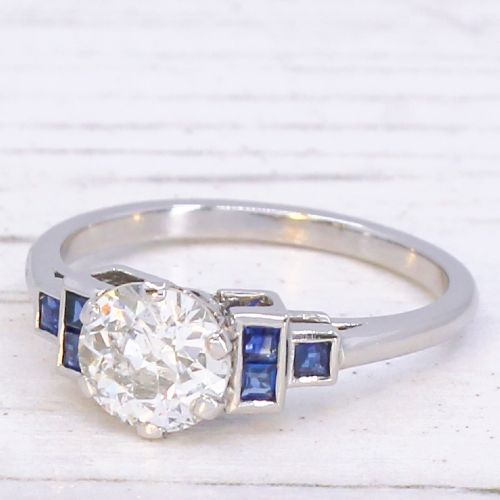
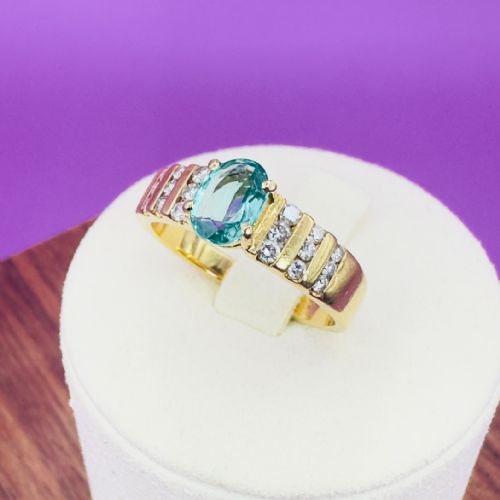
A diamond shoulder engagement ring pairs a principal gemstone with smaller stones set directly into the band. These designs draw the eye along the finger, adding secondary points of light beside the main gem.
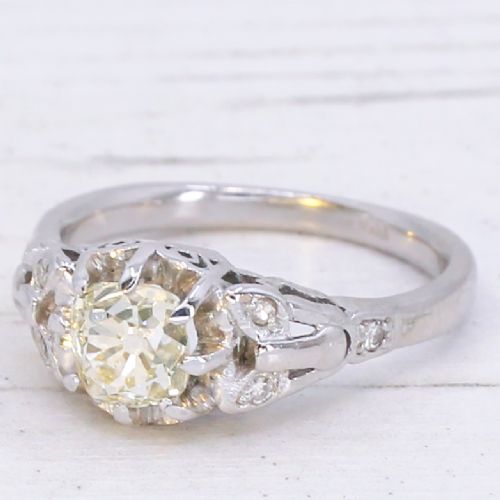
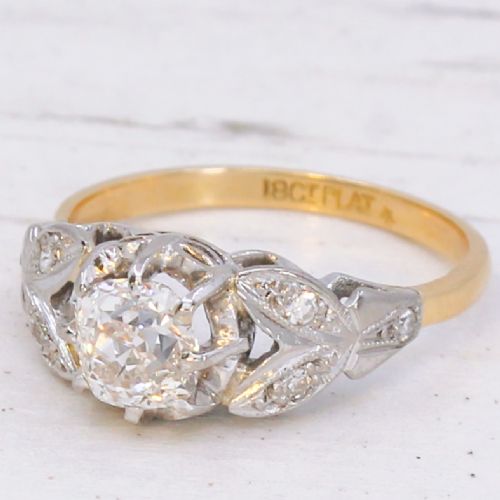
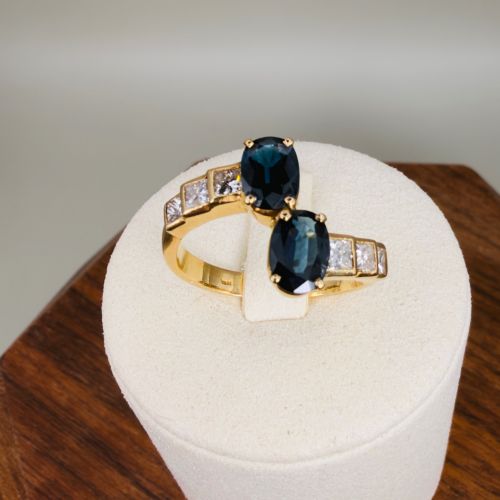
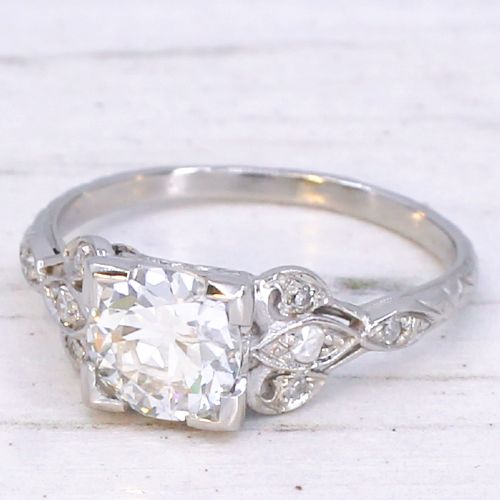
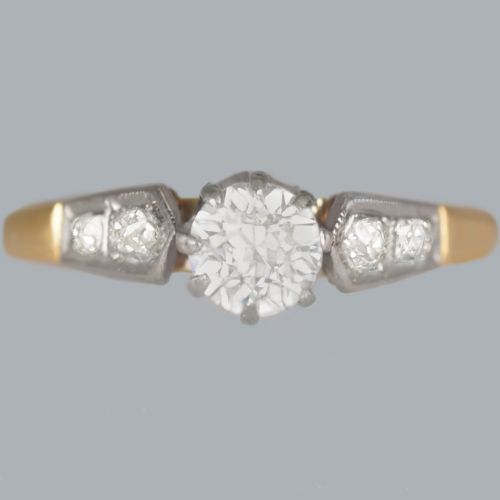
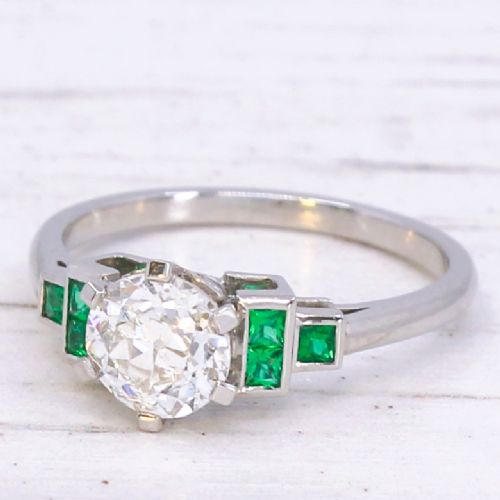
The selections span Victorian, Edwardian, Art Deco, and mid-century periods, showing how shoulder detailing evolved from delicate millegrain work to geometric step-cuts. Solitaires with diamond-set shoulders and multi-stone clusters dominate the offerings.
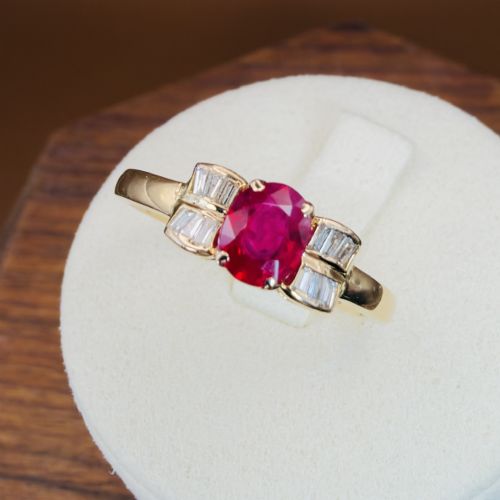
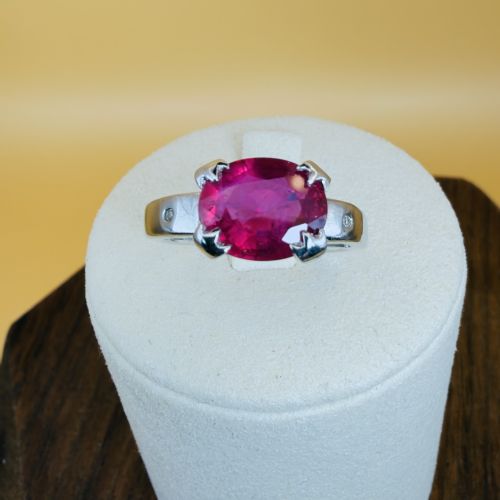
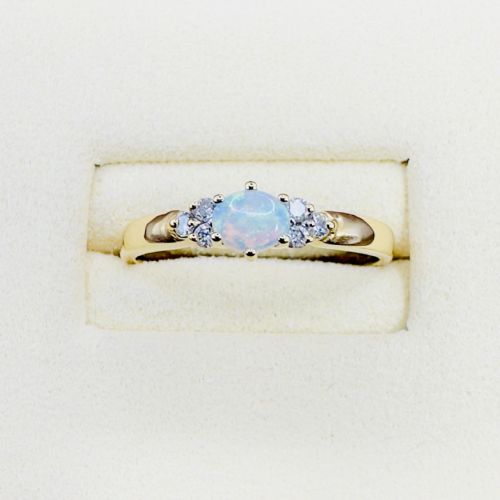
Central stones range from old-cut diamonds to deep blue sapphires, vibrant rubies, opals, and emeralds. Each piece balances a prominent centre with supporting stones integrated into the metal shank.
Materials and Construction
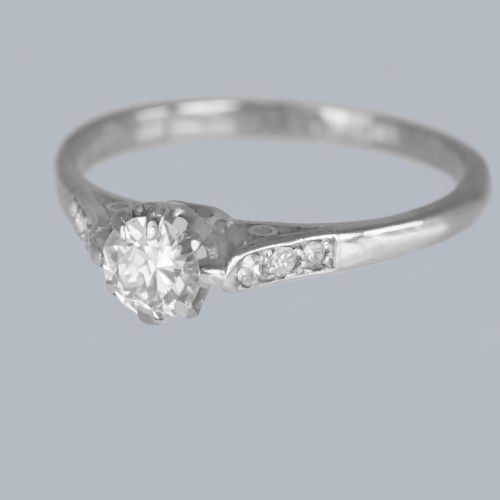
Platinum and 18ct gold, including white and yellow variants, provide the structural foundation for these pieces. Platinum gained prominence during the Edwardian and Art Deco eras for its strength, allowing fine claw and channel settings.
Gems are shaped in various historic cuts, notably old European cuts, old mine cuts, and transitional cuts, alongside modern brilliant facets. Smaller shoulder stones are flush-set, pave-set, or bead-set into the metal shoulders to maintain a smooth transition from band to centre.
Several pieces east-to-west set their stones, proving that Victorian and mid-century designers loved a sideways twist just as much as modern rebels do.
Assessing Quality and Execution
Quality rests in the harmony of proportion between the central stone and the shoulder accents. Superior examples demonstrate precise stone-matching and secure, even settings that integrate seamlessly into the metalwork.
The finesse of the hand-finishing defines the upper tier of these pieces. Subtle details such as hand-carved shoulders, millegrain edging, and well-balanced gallery work separate standard production from exceptional jeweller's art.
The Diamond Shoulder Engagement Ring Glossary
- Old Cut
- A diamond cut by hand before modern machinery standardised facet proportions. These stones feature smaller tables and higher crowns, producing a distinctive, soft candlelit sparkle.
- Millegrain
- A decorative technique involving a row of tiny raised metal beads along the edge of a setting. This finish was widely used in Edwardian and Art Deco jewellery to soften hard metal lines.
- Solitaire
- A ring featuring a single prominent gemstone as its primary focus. When paired with diamond shoulders, the central stone receives supplementary brilliance from the band.
- Transitional Cut
- A diamond facet style popular from the 1920s to the 1940s that bridges the gap between old cut stones and modern brilliant cuts. It retains high crowns while adopting more symmetrical facet arrangements.
Diamond Shoulder Engagement Ring: Frequently Asked Questions
How do I care for antique rings?
Antique rings require gentle handling and regular professional checks to ensure stone settings remain secure over time. Avoid wearing them during heavy manual work or when exposing hands to harsh chemicals.
Cleaning should be done using mild soapy water and a soft brush, keeping harsh ultrasonic cleaners away from fragile gems like opals.
What cuts of diamond are common?
Older pieces frequently showcase old European cuts, old mine cuts, and transitional cuts shaped by hand rather than automated machinery. These historic cuts display broader facets and a warmer, more atmospheric glow than modern stones.
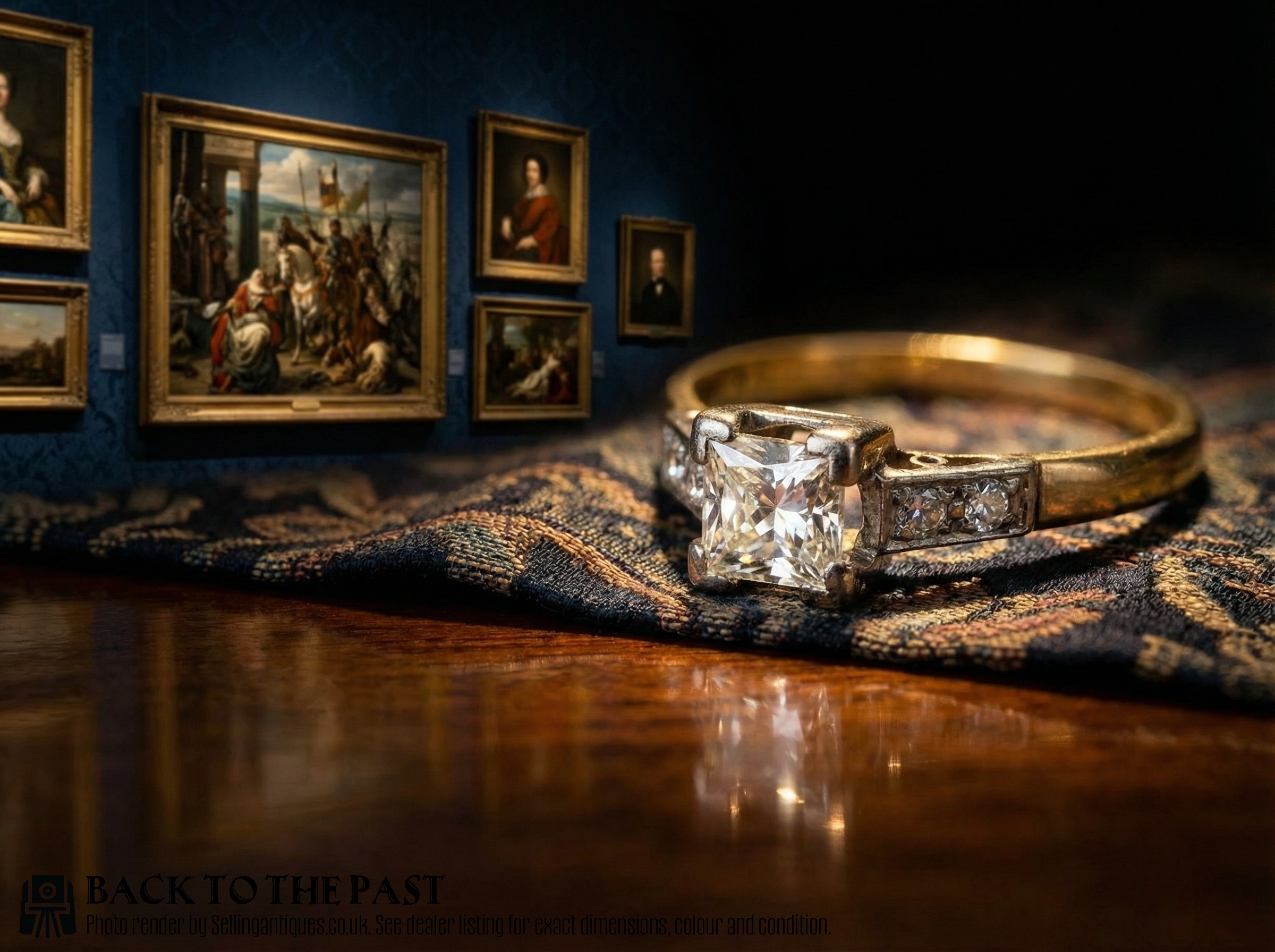
Later mid-century designs often incorporate brilliant cuts alongside baguette or princess cut accents.
Can these rings be resized?
Most gold and platinum bands can be altered by a skilled jeweller, though the presence of channel-set shoulder stones requires careful execution. Altering a band with continuous shoulder work demands precision to avoid disturbing the adjacent settings.
Consulting a specialist ensures the structural integrity of the shoulders remains intact.