
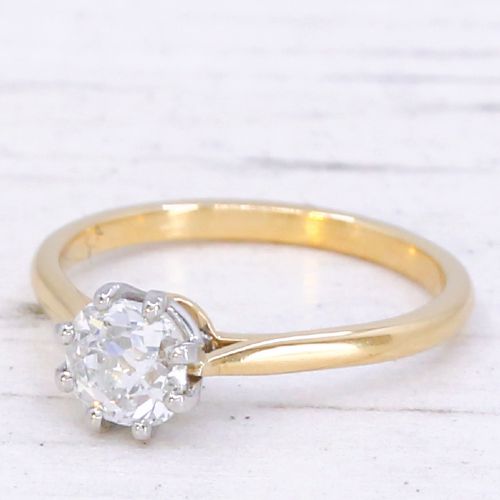
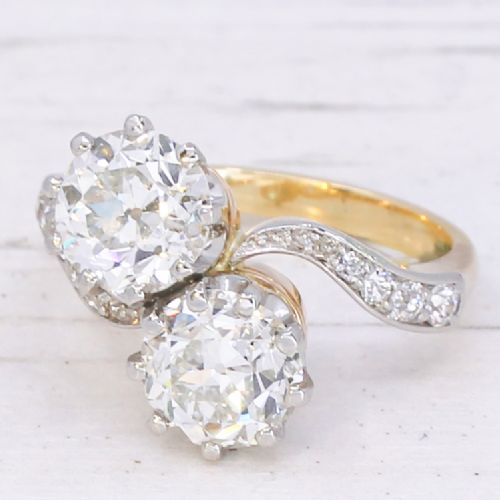


Platinum Claw Engagement Ring
A platinum claw engagement ring brings together durable white metal and historic diamonds in a piece designed to secure a central stone.
Platinum Claw Engagement Ring
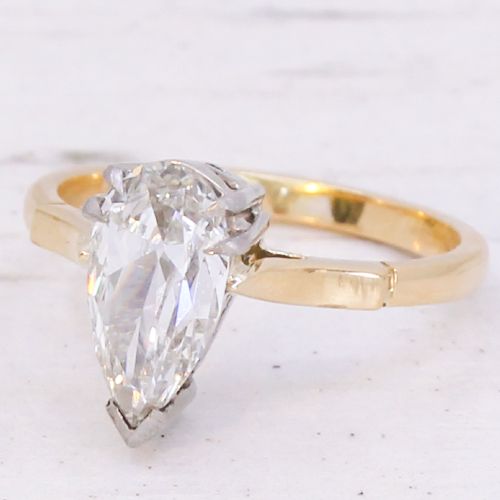
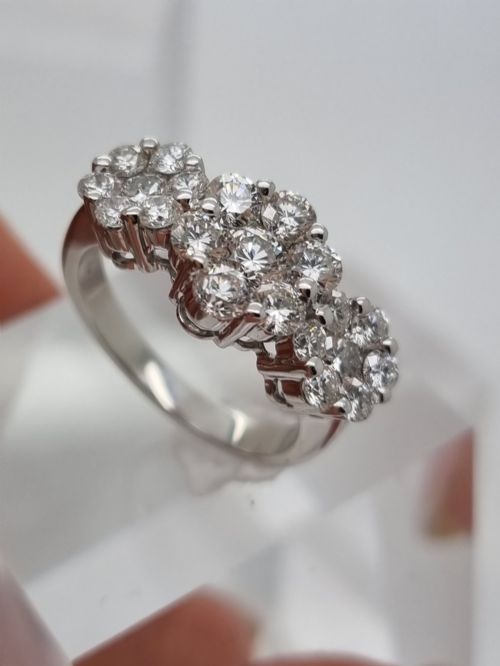
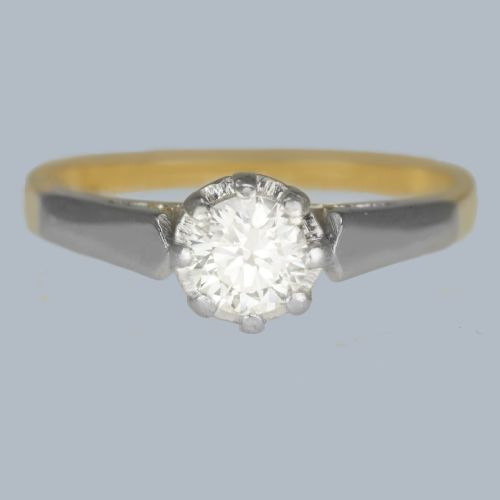
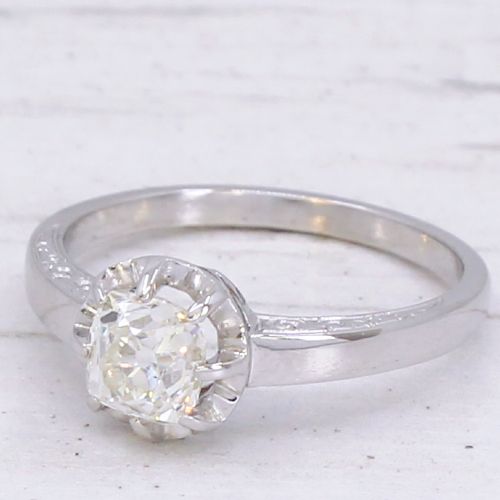
A platinum claw engagement ring holds a diamond or sapphire within prongs designed to maximise light entry. The version met most often on this page is the single-stone solitaire, though multi-stone trilogy and cluster arrangements also appear.
The selection spans periods from the Edwardian era through the Art Deco years and the 1940s Retro style into mid-century modern design. These rings combine strong precious metals with hand-cut stones shaped in older traditions like the old European, old mine, and transitional cuts.
How they were made
Metals such as platinum, yellow gold, white gold, and 14ct or 18ct gold form the bands and settings. Platinum provides the strength required for delicate claw work, holding stones securely while maintaining a bright white finish.
Diamonds and sapphires are shaped by hand into old cuts, cushion cuts, or pear cuts. These stones are then mounted using individual claws or set alongside smaller accent diamonds in shoulders and multi-stone formations.
Several rings conceal tiny rose-cut diamonds tucked away on the shoulders, whispering extra sparkle where you least expect it.
What varies in quality
The distinction between tiers rests on the proportion and symmetry of the diamond cutting alongside the weight and purity of the platinum. Stones with finer clarity grades and superior cut facets project greater brilliance under light.
Construction details also dictate standard, including the thickness of the platinum claws and the crispness of milgrain edges or shoulder details. Stronger original settings preserve the stones more securely than worn examples.
The Platinum Claw Engagement Ring Glossary
- Claw
- A narrow metal prong that holds a gemstone in place on a ring setting. Claws are shaped to let maximum light pass through the pavilion of the stone.
- Solitaire
- A ring featuring a single prominent gemstone, usually a diamond, mounted on a plain or shoulder-set band. This form places total visual focus on the central stone.
- Trilogy Ring
- A ring set with three stones arranged in a row, often interpreted to represent the past, present, and future. These frequently combine a central diamond with two smaller side stones.
- Transition Cut
- A diamond cut used from the 1930s to the 1950s that bridges the older European cut and the modern brilliant cut. It combines proportions from both eras.
Platinum Claw Engagement Ring: Frequently Asked Questions
What is a platinum claw setting?
A platinum claw setting uses small metal prongs to grip a gemstone securely above the band. This construction elevates the stone so light enters from multiple angles.
Platinum provides the tensile strength needed to keep these thin claws rigid over decades of wear.
How do I care for antique platinum?
Platinum develops a soft surface patina over years of handling, which many collectors prefer for its historic character. Cleaning requires only warm soapy water and a soft brush to remove everyday oils.
Avoid harsh chemical dips, particularly if the ring incorporates softer gemstones alongside the diamond.
What cuts of diamond appear here?
The stones found on this page are predominantly older cuts shaped by hand rather than modern machinery. These include old European cuts, transitional cuts, and old mine cuts.
Such stones display smaller tables and distinct facets that catch candlelight differently than modern brilliant cuts.
Can these rings be resized?
Most platinum and gold bands can be adjusted by a skilled jeweller to fit different finger sizes. The feasibility depends on the band thickness and the presence of intricate shoulder stones.
Consulting a specialist ensures the structural integrity of the claw setting remains undisturbed during the process.