




Diamond Medallion Wool Rug
A diamond medallion wool rug brings geometric structure and tribal symbolism into a room through centuries-old weaving traditions.
Diamond Medallion Wool Rug
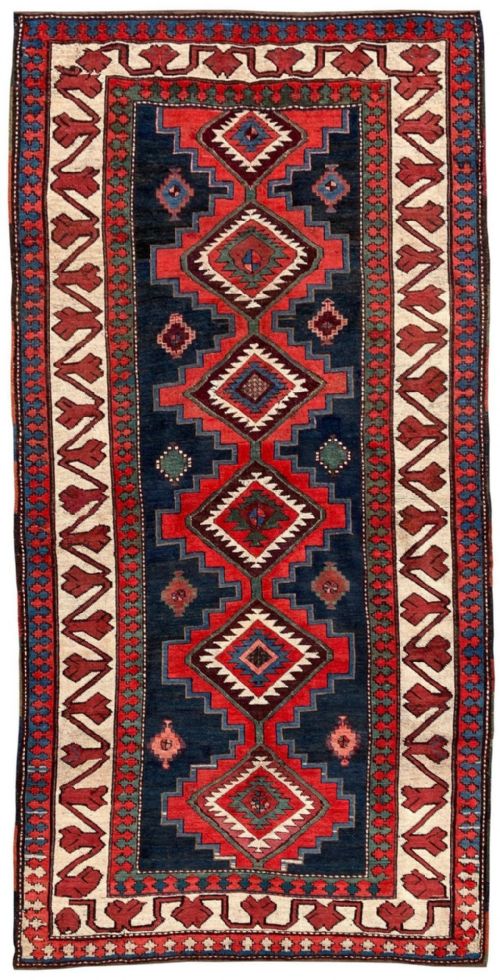
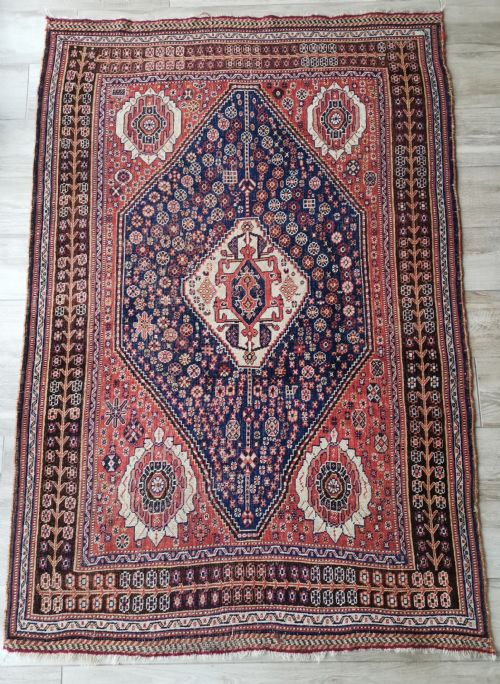
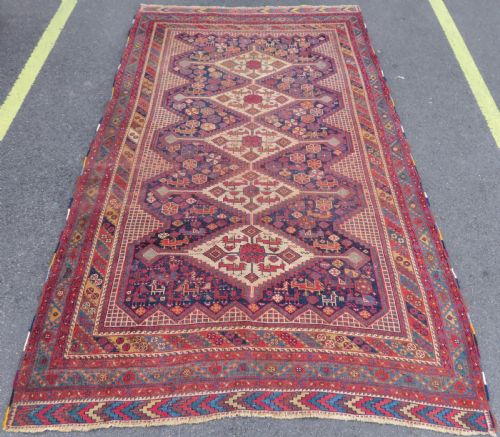
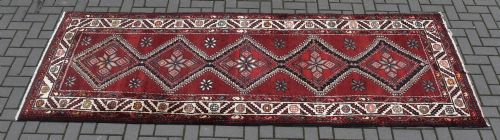
A diamond medallion wool rug is a woven floor covering distinguished by central lozenge motifs, originating predominantly from Persian, Caucasian, and Anatolian weaving traditions. These pieces encompass various formats, from room-size carpets and area rugs to narrow hallway runners and flatweave kilims.
The examples available here span from the late nineteenth century through the early decades of the twentieth century, reflecting traditional village and nomadic craftsmanship. Buyers encounter distinct regional sub-types, including Qashqai, Khamseh, Kurdish, and Kazak productions, each carrying specific tribal iconography.
Most items on this page function practically as durable floor coverings while serving visually as focal points in traditional or eclectic interiors. Their formats range from small hearth rugs to expansive tribal main carpets measuring over four metres in length.
What varies in quality
Quality in these woven pieces depends heavily on the density and precision of the knotting, which dictates the crispness of the geometric diamond medallion and secondary motifs. Tighter structures yield greater durability and sharper definition in intricate tribal patterns.
The complexity and variety of the dye palette also separate standard examples from superior works, particularly where natural dyes create subtle tonal shifts known as abrash. Additionally, the crispness of drawing within the borders and the inclusion of figurative elements like birds or animals elevate the character of a piece.
Current listings feature pieces primarily utilising wool and natural dyes across Anatolian, Persian, and Caucasian styles.
The Diamond Medallion Wool Rug Glossary
- Abrash
- Natural variations of colour within a single field of dye, caused by differences in wool batches or successive dyebaths.
- Warp
- The vertical threads stretched tightly on the loom that form the structural foundation of a knotted rug, often visible at the fringed ends.
- Weft
- The horizontal threads passed across the warps after each row of knots to bind the structure firmly together.
- Kilim
- A flatwoven textile produced without a pile, traditionally utilised as a floor covering, coverlet, or hanging.
- Medallion
- The central ornamental design motif, frequently diamond-shaped, positioned in the middle of the rug field.
Diamond Medallion Wool Rug: Frequently Asked Questions
How do I clean an antique wool rug?
Gentle surface vacuuming without a beater bar removes loose dirt and protects the delicate wool pile from unnecessary friction. Professional specialist cleaning remains essential for deep washing to preserve the natural lanolin and historic dyes.
Water accumulation and harsh chemical detergents damage both the wool fibres and the structural cotton foundations. Prompt blotting of spills prevents staining without disturbing the hand-knotted structure.
Where should I place a hallway runner?
Narrow runner formats suit corridors, entryways, and galley kitchens where foot traffic benefits from a durable wool barrier. Placing them over a quality underlay prevents slipping and cushions the historic foundation against hard stone or timber floors.
Direct, unshaded sunlight near exterior doors can accelerate fading in natural dyes over prolonged periods. Rotating the piece periodically ensures even wear across the length of the runner.
How do I identify tribal designs?
Tribal designs rely on geometric abstraction, repeating motifs, and stylized representations of animals, plants, and pomegranates. Weavers from groups such as the Qashqai, Khamseh, and Kurdish tribes incorporated distinct borders and colour palettes specific to their heritage.
Asymmetrical knots and spontaneous variations in the layout often indicate nomadic or village production rather than urban workshop precision. Familiarity with specific border guards, such as the Shekarlu pattern, helps pinpoint regional origins.
Are flatweave kilims durable?
Flatweave kilims lack a raised pile, relying instead on tightly packed interlocking weft threads that create a sturdy, reversible textile. They withstand normal foot traffic in low-impact areas when supported by an appropriate non-slip rug pad.
Their lightweight nature makes them versatile for wall hanging or placement in dining spaces where chairs move frequently. Regular shaking and careful spot cleaning maintain their structural integrity over decades of use.