




Diamond Cut Decanter
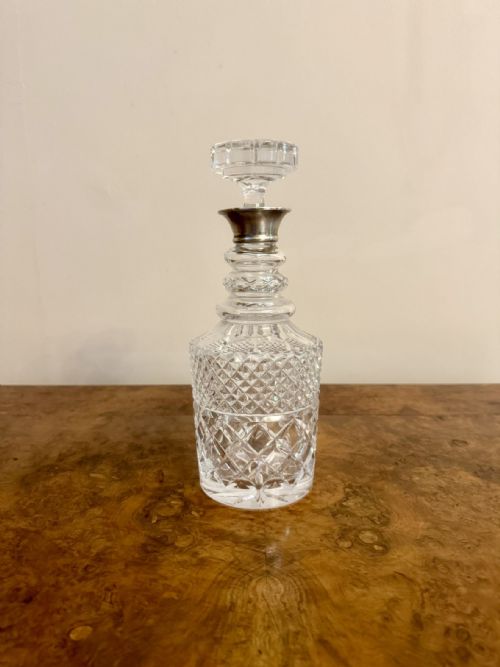
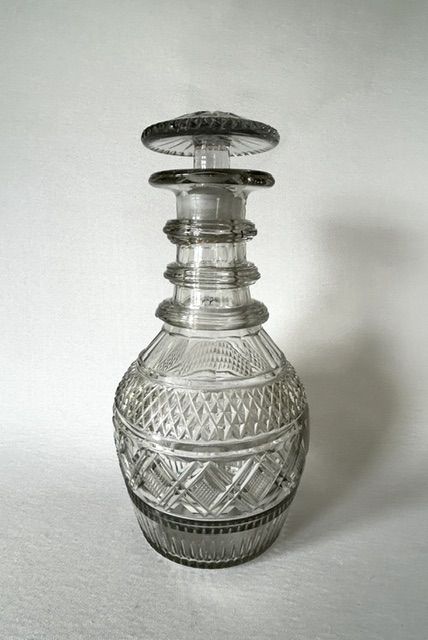
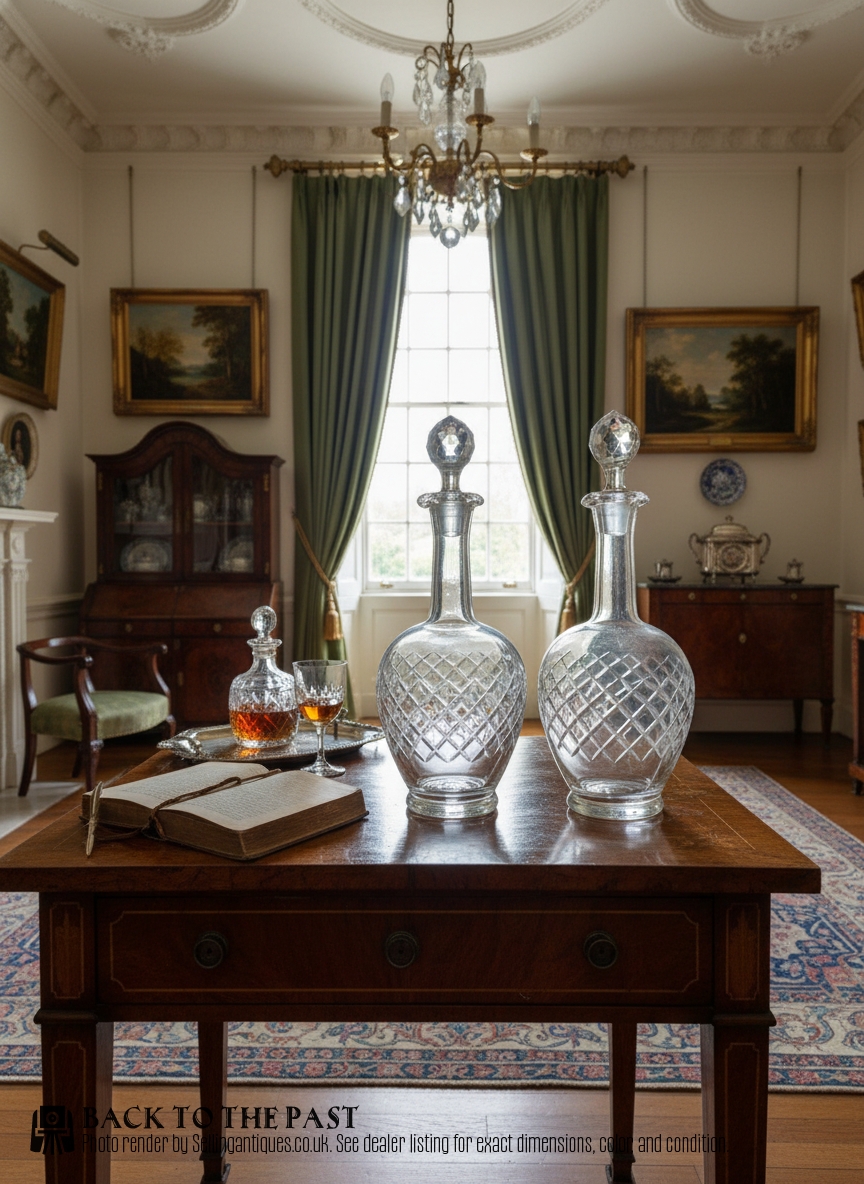
A diamond cut decanter brings light and weight to a sideboard, catching the eye with deep wheel-cut facets.
Diamond Cut Decanter
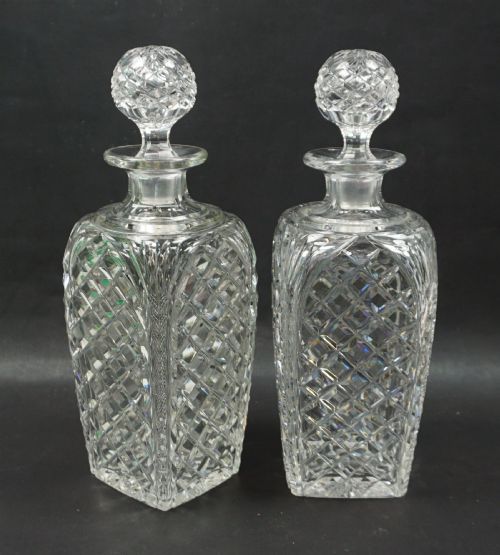
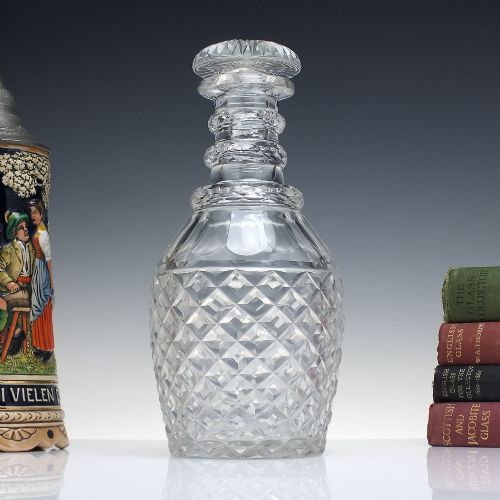
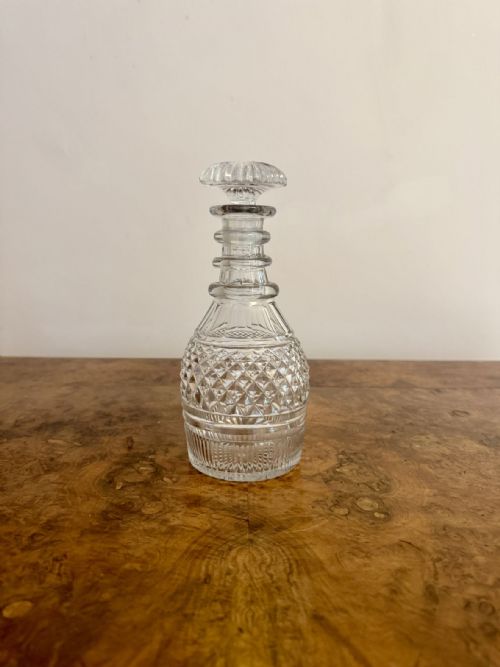
A diamond cut decanter is a heavy vessel designed for holding and serving wine, spirits, or water, shaped through deep geometric facets that catch the light. When you search for this phrase, you encounter functional serving vessels originating from periods ranging from the Georgian era through to the Edwardian years.
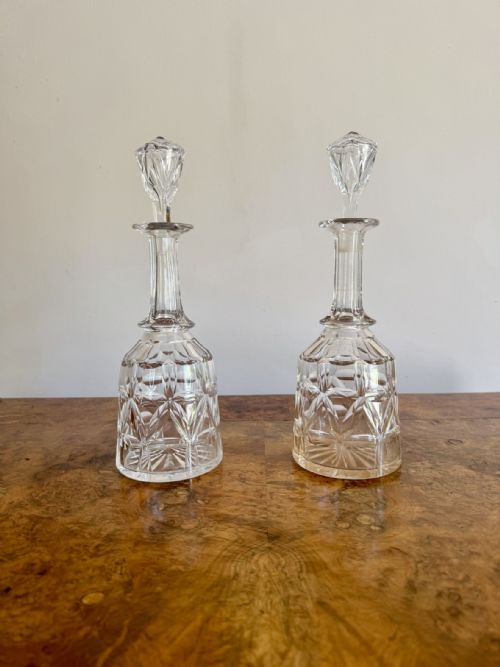
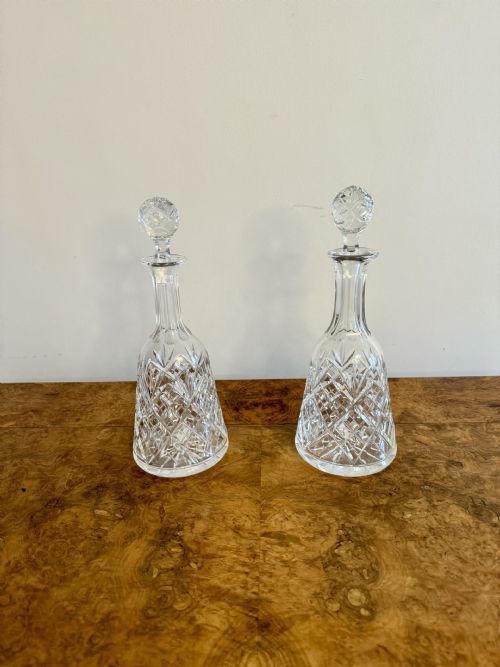
The selections on this page lean heavily towards Edwardian and Victorian examples, alongside Georgian, Regency, and nineteenth-century pieces. You will find square section tapered forms, bell shapes, and claret jugs alongside rarer novelty designs such as the Scottish thistle.
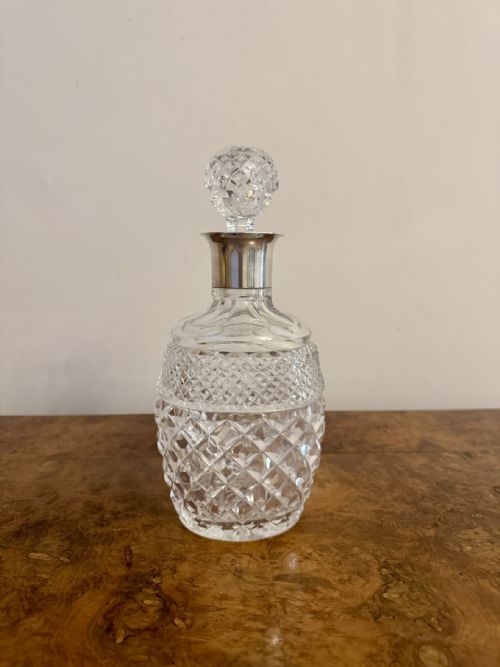
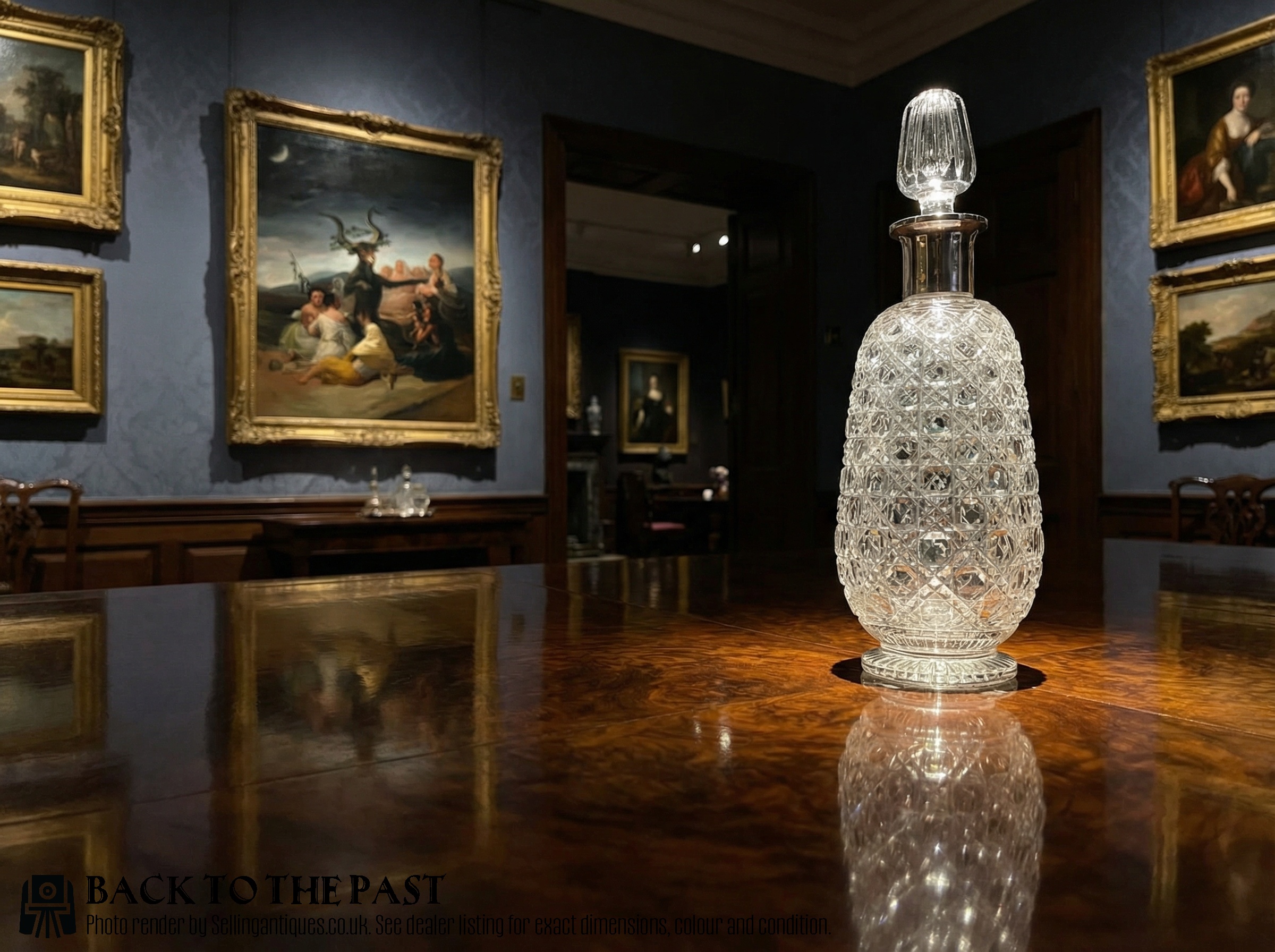
Many examples arrive with matching stoppers, while others incorporate silver plate or sterling silver collars, mounts, and handles. The forms span standard decanters, spirit decanters, ewers, and matched sets accompanied by glassware.
How they were made
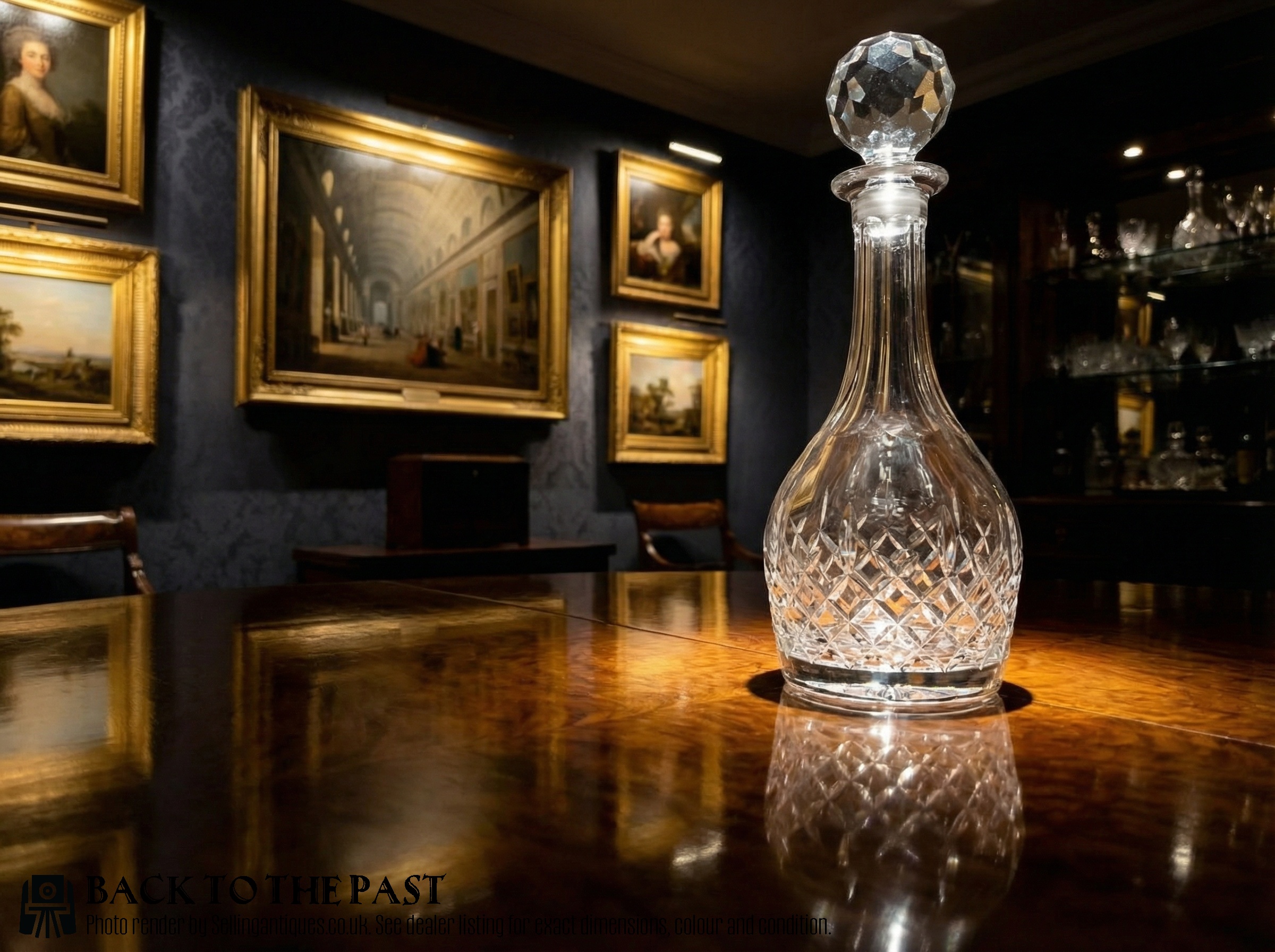
These vessels rely on lead crystal, cut crystal, and glass, shaped by blowing into moulds or free-blowing before being cooled and annealed. Craftsmen then applied rotating abrasive wheels to cut deep geometric patterns into the hardened surface, creating the characteristic diamond facets.
Metal components such as silver plate and sterling silver form secure collars and handles, often hallmarked to indicate the year of manufacture and the silversmith. Mounts are fitted directly to the glass necks, sometimes incorporating hinged lids for claret jugs.
Diamond Cut Decanter Retail Price Guide 2026
Typical asking prices for diamond cut decanter among the pieces listed under this phrase on Sellingantiques today, from the lower quarter to the upper quarter. They describe what is for sale here now, not the wider market.
One exceptional piece takes the literal form of a Scottish thistle, complete with silver plating and cut glass.
What varies in quality
Quality rests upon the depth and crispness of the cutting, where sharp, well-defined edges reflect light cleanly compared to softer, shallower work. The clarity and weight of the glass itself also set superior pieces apart, showing high transparency and substantial heft.
The integration of metalwork dictates overall refinement, with heavy silver-plated or sterling silver mounts and well-fitted stoppers elevating a piece. Matched pairs and complete sets of decanters carry greater distinction than solitary vessels.
Hukin & Heath
The Diamond Cut Decanter Glossary
- Diamond cut
- A pattern of intersecting cuts that creates small, raised pyramid-like facets across the glass surface. This technique maximises the refraction of light through the crystal.
- Claret jug
- A pouring vessel specifically designed for serving red wine, usually featuring a handle and a hinged metal lid. They frequently combine cut glass bodies with silver-plated or sterling silver mounts.
- Silver collar
- A band of silver fitted around the neck of a decanter, often holding the stopper securely and providing a mounting point for handles or pourers. These collars frequently bear English silver hallmarks.
- Spirit decanter
- A smaller scale vessel intended for holding concentrated liquors such as whisky or brandy. They often appear in matching pairs or sets within fitted boxes.
- Ewer
- A pitcher with a large spout and a decorative handle, historically used for pouring water but adapted in glassware for wine and other beverages.
Diamond Cut Decanter: Frequently Asked Questions
What is a diamond cut decanter used for?
These vessels were historically used for serving wine and spirits at the dining table or from a sideboard.
Today, they function both as practical serving containers for holding liquor and as decorative objects that reflect light in a room.
How do I tell an Edwardian decanter from a Georgian one?
Georgian examples often display heavier, hand-blown forms with thick pontil marks and simpler, broader cutting styles.
Edwardian pieces tend to show machine-honed precision in the cutting, brighter metal collars, and more standardised shapes like bell forms.
Are stoppers original to the decanters?
Many decanters retain their original matching stoppers, which are ground to fit the specific neck of that individual vessel.
Replacement stoppers occur frequently, so collectors check whether the glass tone and cutting pattern match the body precisely.
How should I clean an antique decanter?
Resist using harsh abrasive brushes or exposing antique glass to sudden thermal shocks from hot water.
Specialist cleaning beads and mild warm water solutions safely clear internal residue without scratching the inner walls.