



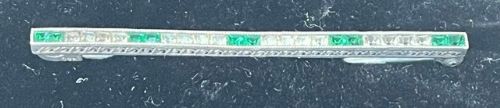

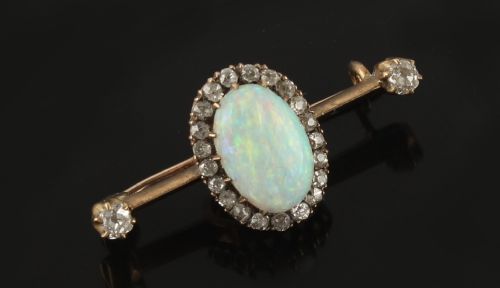


Diamond Bar Brooch
A diamond bar brooch brings together slender precious metal and historic stones to fasten a lapel or knitwear with quiet elegance.
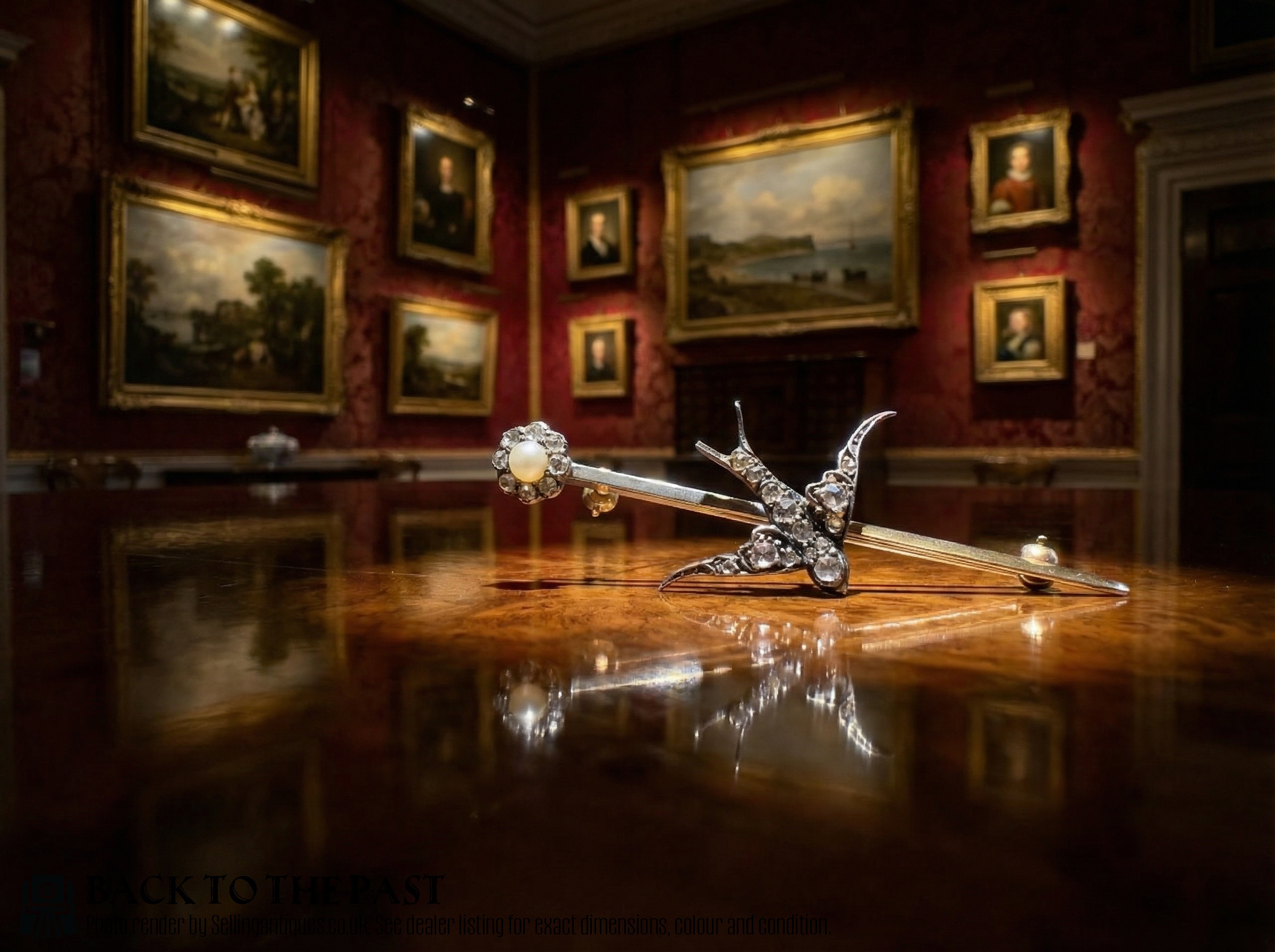
Diamond Bar Brooch
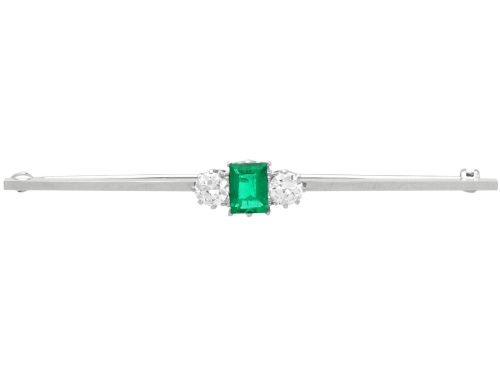
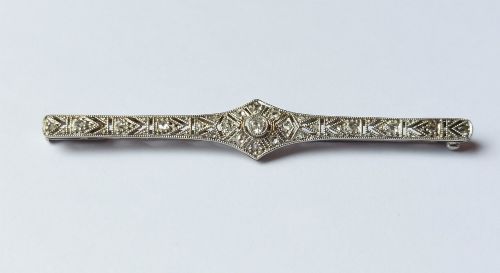
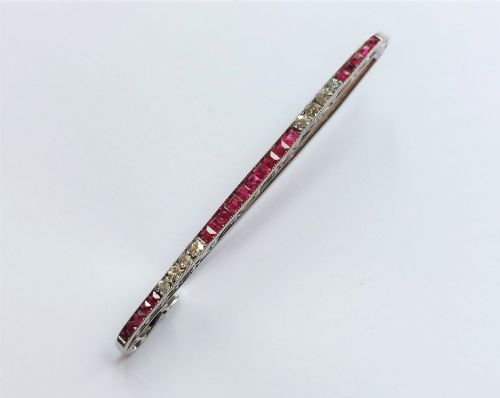
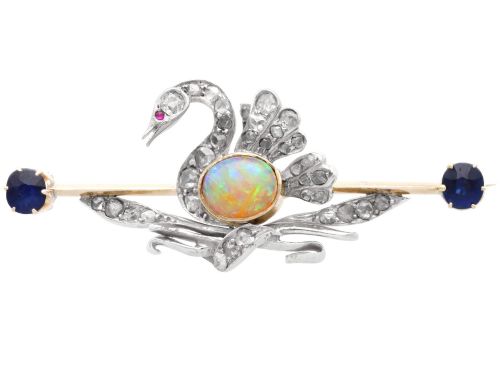
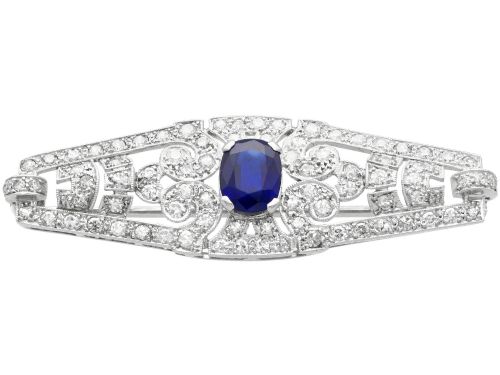
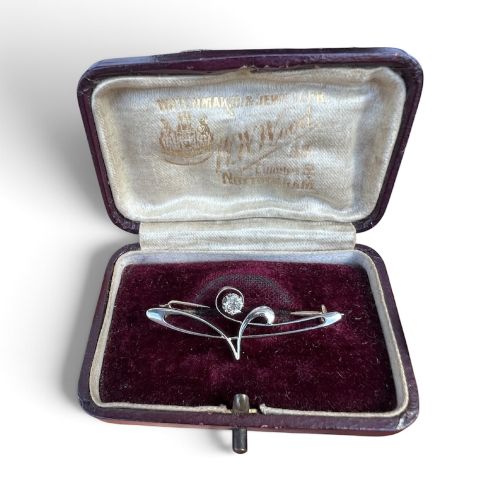
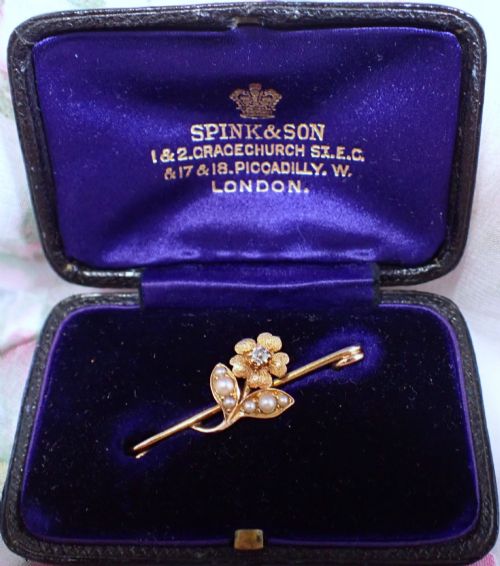
A diamond bar brooch is a classic form of antique jewellery defined by a narrow horizontal pin set with diamonds, frequently accented with rubies, sapphires, emeralds, or pearls. These pieces span periods from the late Victorian era through the Edwardian years and the Art Deco movement up to the mid-twentieth century.
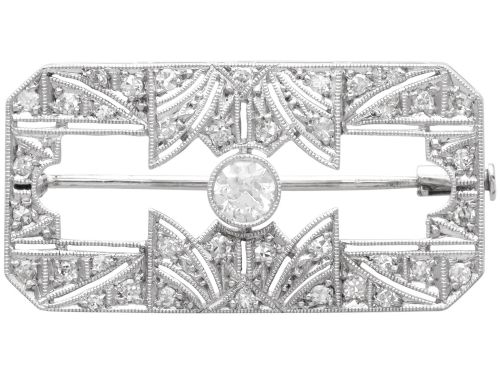
The most common examples on this page are Edwardian and Art Deco designs, often combining platinum and gold to showcase old cut diamonds. Collectors encounter straight linear pins alongside figurative motifs like insects, birds, and clover leaves.
Victorian and Edwardian versions lean towards floral clusters and coloured gemstones, whilst Art Deco pieces favour geometric platinum settings. Each surviving brooch reflects the prevailing aesthetic of its decade of origin.
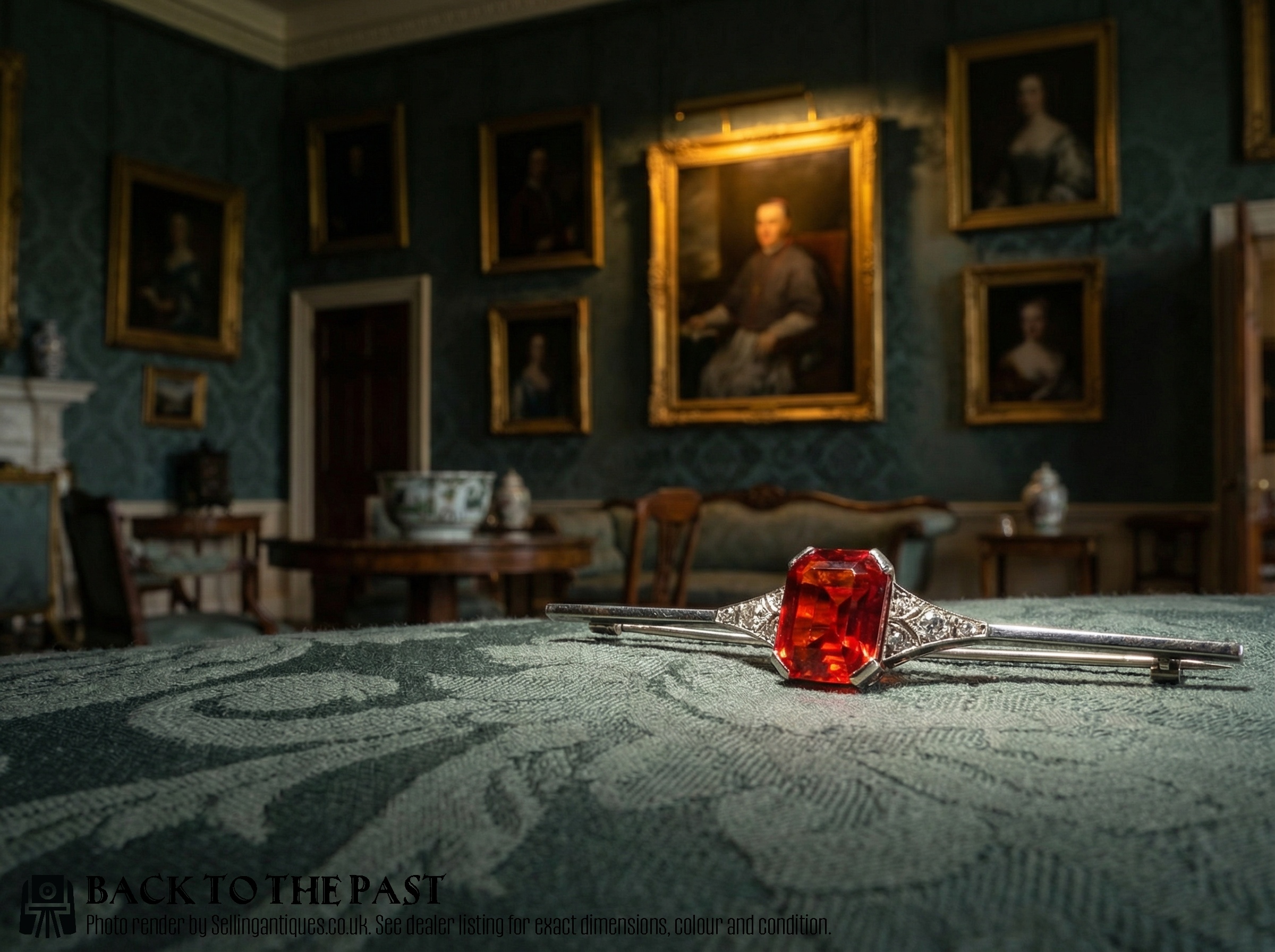
Materials and Construction
Traditional construction relies on combinations of yellow gold, white gold, and platinum, often pairing a gold pin stem with a platinum face to securely hold stones. Goldsmiths utilised silver settings in earlier pieces before platinum became the preferred metal for securing diamonds during the Edwardian and Art Deco periods.
Stones are typically old European cut or rose cut diamonds, hand-set alongside calibrated rubies, sapphires, or natural pearls. Metalwork techniques involve intricate pierced gallery work, millegrain edging, and channel or collet settings.
Diamond Bar Brooch Retail Price Guide 2026
Typical asking prices for diamond bar brooch among the pieces listed under this phrase on Sellingantiques today, from the lower quarter to the upper quarter. They describe what is for sale here now, not the wider market.
Several charming specimens take the form of miniature terriers, monkeys, swallows, and cockerels frozen in diamond and gold.
Quality Variations
Quality in a diamond bar brooch depends on the precision of the metalwork, the matching and cut of the gemstones, and the retention of original components. Finer examples display crisp millegrain detail, balanced proportions, and stones with strong brilliance that fit tightly within their bezels or claw settings.
The choice of materials also elevates a piece, such as the use of platinum rather than silver, or the inclusion of certified natural pearls and unheated coloured gemstones. Survival of original boxes and hallmarks adds significantly to the integrity of the piece.
The Diamond Bar Brooch Glossary
- Old cut diamond
- A hand-faceted diamond shape typical of the nineteenth and early twentieth centuries, featuring a smaller table and higher crown than modern brilliant cuts. These stones display a softer, deeper candlelit sparkle.
- Millegrain
- A decorative technique involving a row of tiny raised metal beads along the edge of a setting. This Edwardian method softens the transition between metal and stone.
- Rose-cut diamond
- An antique stone shape with a flat base and a domed crown of triangular facets resembling an unopened rosebud. They possess a subtle, transparent lustre.
- Collet
- A collar or band of metal that holds a gemstone in place by its girdle. It represents a traditional secure mounting method for antique jewellery.
Diamond Bar Brooch: Frequently Asked Questions
How do I wear a diamond bar brooch?
These pieces fasten securely to jacket lapels, silk scarves, or heavy winter coats using a pin and safety catch mechanism. They also sit neatly on the neckline of a blouse or anchor a knitted cardigan.
Ensure the fabric is sufficiently robust to support the weight of the metal and stones without sagging. Heavier platinum and gold designs require sturdier weaves than delicate lace.
How do I tell an Edwardian brooch from an Art Deco one?
Edwardian brooches frequently utilise platinum-topped yellow gold and feature floral, garland, or insect motifs with delicate openwork. They often incorporate softer rose-cut diamonds and pearls.
Art Deco brooches shift towards rigid geometric lines, symmetrical shapes, and all-platinum or white gold settings. They rely heavily on old European cut diamonds paired with calibrated sapphires or rubies.
Are these brooches suitable for daily wear?
Historic pieces require gentle treatment and regular checks of the pin hinge and clasp to prevent loss. Avoid wearing them during physical activities or while carrying heavy bags.
Store them individually in lined boxes or pouches to protect the stones and metalwork from scratching against other items.
What metals are typically found in these pieces?
The listings feature items fashioned from nine-carat, fifteen-carat, and eighteen-carat yellow and white gold, alongside platinum and silver. Platinum gained widespread use in the early twentieth century for its strength in fine diamond settings.
Earlier Victorian examples frequently pair gold with silver-topped mounts to enhance the white reflection of the diamonds.