

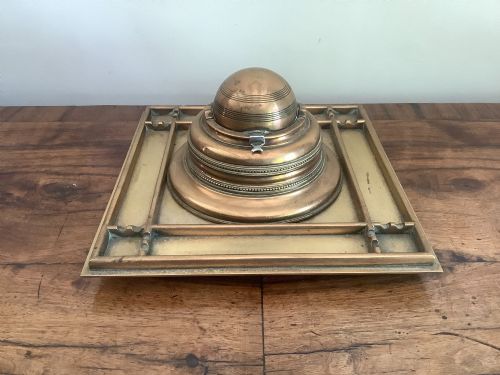


Desk Inkwell with Tray
A desk inkwell with tray brings together a fitted base and one or more ink containers, offering a practical writing centre for any desk.
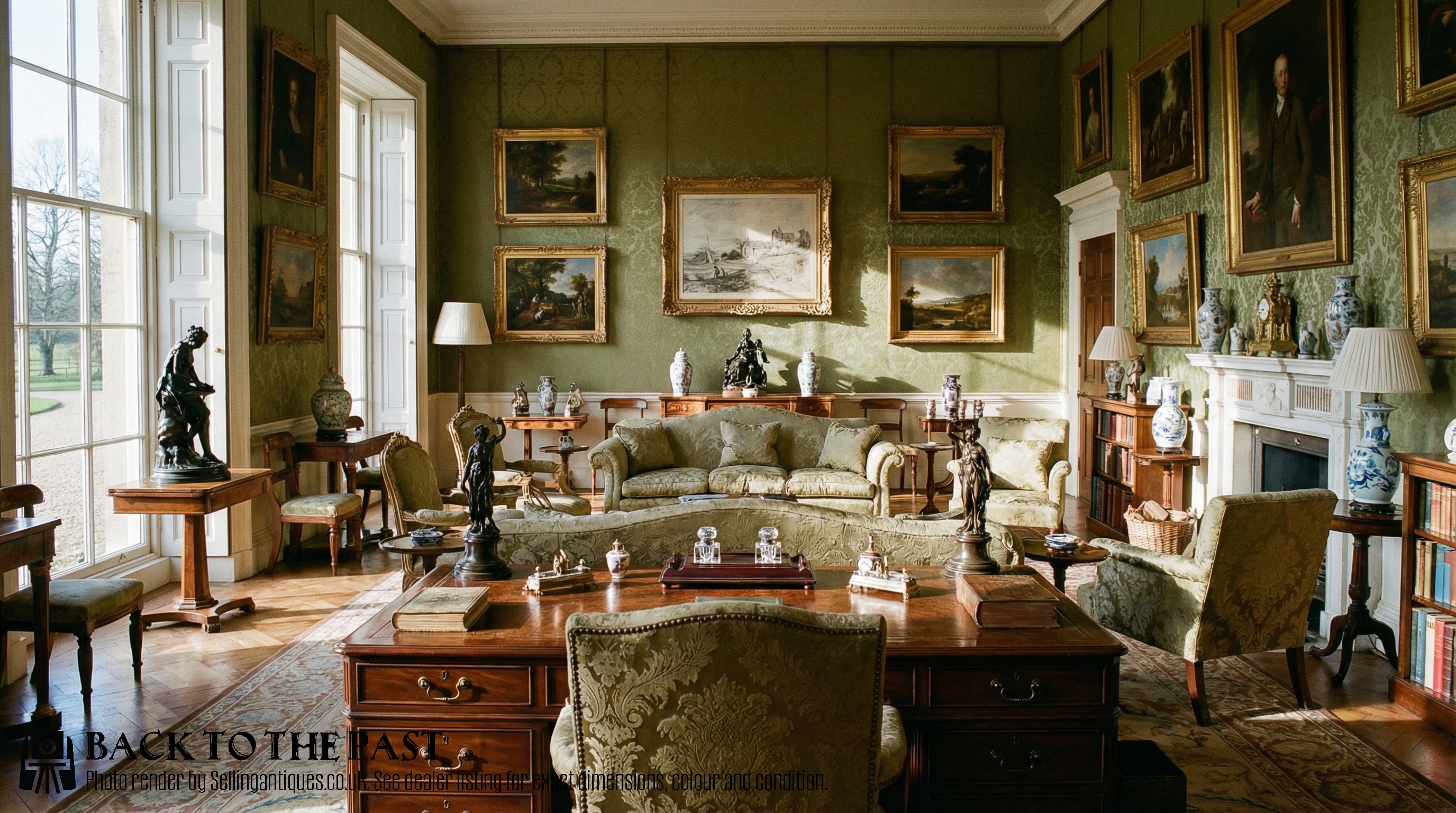
Desk Inkwell with Tray
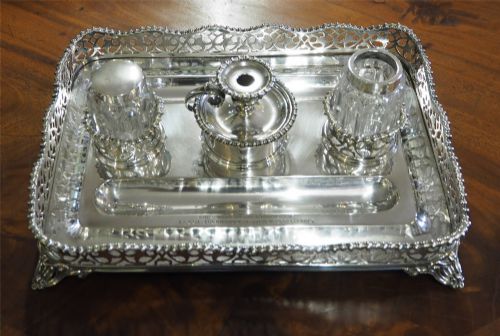
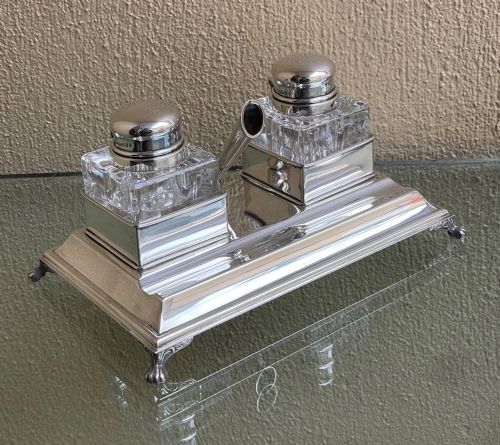
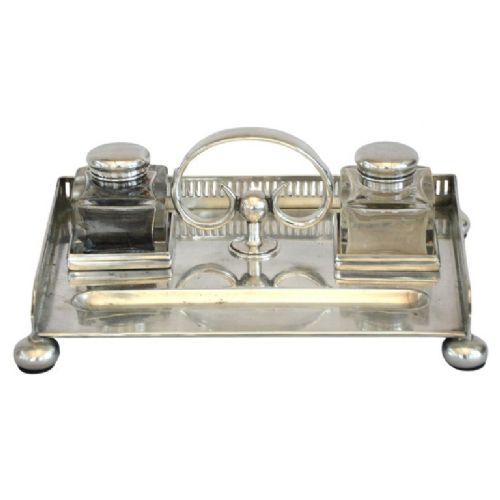
A desk inkwell with tray combines a designated pen rest or flat stand with fitted receptacles for ink, forming an essential writing accessory from the nineteenth and twentieth centuries. These items range from simple wooden and brass trays to elaborate silver-mounted stands equipped with double inkwells, chambersticks, and bells.
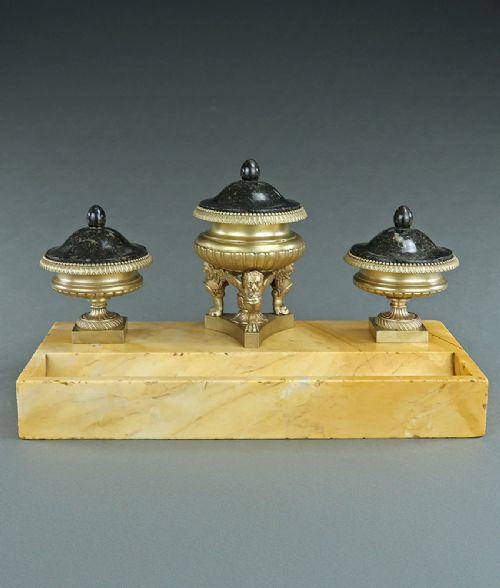
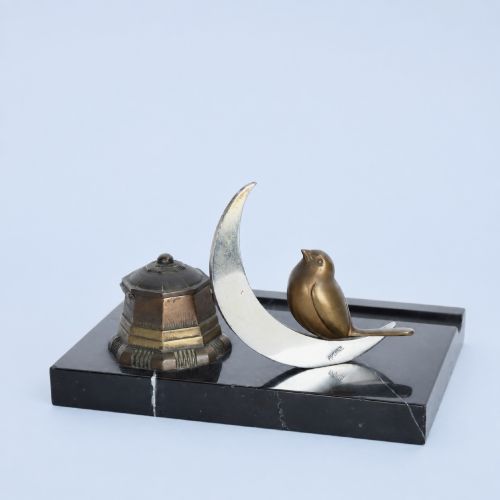
The pieces appearing on this page span several distinct periods, most notably the Victorian era, alongside Edwardian, Art Deco, and mid-century examples. Common formats include designated desk tidies, fitted inkstands, and novelty figural designs featuring glass-eyed owls and birds.
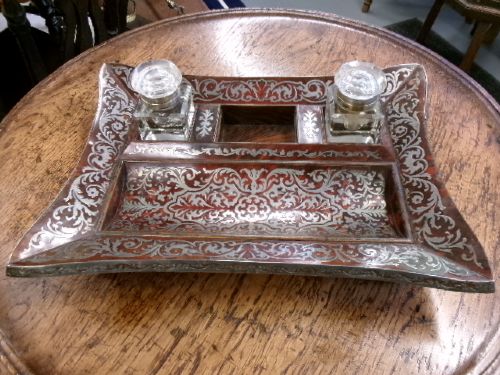
Buyers will find a diverse mix of materials and styles, from classic mahogany and rosewood to striking black marble, bronze, and solid silver. Whether you seek a utilitarian oak stand or a decorative French Napoleon III boulle work piece, these items serve as both historical writing tools and striking desk ornaments.
How they were made
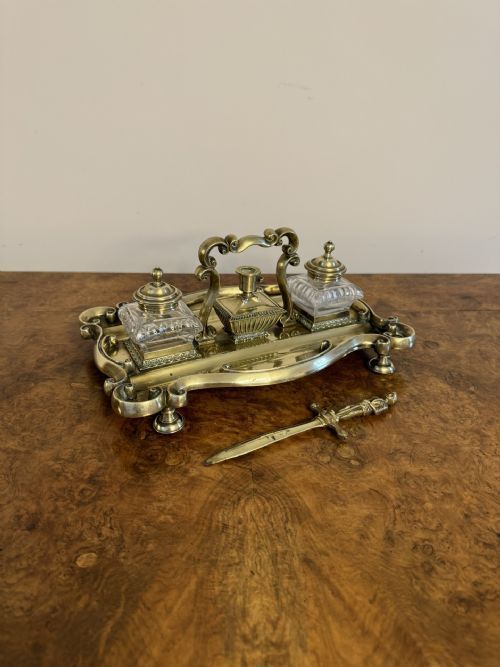
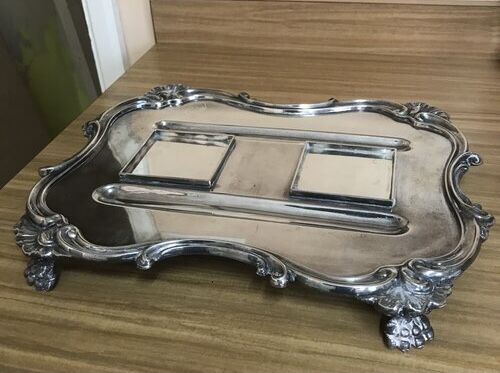
Makers utilised a combination of cast metals, carved timbers, and worked glass to construct these writing accessories. Brass and bronze components were frequently cast and chased, while heavy silver plating and solid sterling silver were applied to mounts, frames, and ink bottle collars.
Wooden trays and stands often involved fine cabinet-making techniques, incorporating exotic veneers like coromandel, satinwood, and rosewood, alongside marquetry and Boulle work inlay. Glass elements, including cut glass bottles and wells, were shaped through pressing or heavy cutting to fit securely into their metal or wooden housings.
Specialised decorative details, such as hand-carved wooden figures or mounted ceramic porcelain inserts, required skilled artisanal labour. Metal frames were often hallmarked to record the silver standard and year of assay, anchoring the physical materials to a precise manufacturing date.
Listings feature desk accessories spanning from the 1850s through to the mid-twentieth century, encompassing Victorian, Edwardian, and Art Deco aesthetics.
What varies in quality
The overall standard of a desk inkwell with tray depends heavily on the grade of materials selected and the precision of its assembly. Superior examples feature heavier gauge silver or bronze, substantial marble bases, and tightly fitted inserts that sit flush within their trays.
Artisanal execution dictates the distinction between standard production and top-tier pieces. Finely chased metalwork, intricate wood inlay, and crisply cut glass bottles demonstrate a level of craftsmanship that elevates utilitarian desk accessories into genuine works of decorative art.
Elkington·Rupert Favell·W M F
The Desk Inkwell with Tray Glossary
- Inkstand
- A comprehensive desk tray designed to hold one or more inkwells, pen rests, and sometimes auxiliary items like stamp boxes or taper sticks. These stands formed the central apparatus for correspondence in writing rooms.
- Boulle work
- An elaborate form of marquetry utilising brass, tortoiseshell, and other materials inlaid into wood surfaces. It is frequently seen on French-influenced nineteenth-century desk accessories.
- Chamberstick
- A small portable candlestick attached to a shallow tray with a handle, occasionally incorporated into larger Victorian desk inkstands to provide lighting during evening correspondence.
- Pen rest
- An integrated channel, bridge, or raised support on a desk tray designed to keep dip pens from rolling onto the writing surface. This feature prevents ink stains on surrounding papers.
- Novelty inkwell
- A decorative ink container styled to represent an animal, human figure, or object, such as an owl with glass eyes. These whimsical pieces were popular across the Victorian period.
Desk Inkwell with Tray: Frequently Asked Questions
What is a desk inkwell with tray used for?
These pieces served as the primary station for writing letters and signing documents before the widespread adoption of the ballpoint pen. They kept wet ink securely housed alongside dip pens and blotting sand.
Today, they function as decorative desktop organizers or collector's display pieces that add period character to a study.
How do I date a silver inkstand?
Dating silver pieces relies heavily on hallmarks stamped directly onto the metal, which indicate the assay office, silver standard, and exact year of manufacture. Stylistic clues such as Rococo Revival curves or Art Deco geometric lines also help determine the period.
Matching the glass liner to the base can further confirm whether the components are original to one another.
Are glass inserts usually original to the tray?
Cut glass and crystal bottles frequently suffered breakage or chipping over decades of daily use, meaning many surviving pieces feature replacement liners. Examining the fit, wear patterns around the collar, and glass tint helps establish authenticity.
Original glass often exhibits period-appropriate manufacturing bubbles and bottom pontil marks.
How should I care for mixed material desk sets?
Care depends entirely on the specific combination of materials present in the stand, whether wood, silver, marble, or bronze. Silver and brass require appropriate metal polishes applied sparingly to avoid damaging surrounding wooden or leather surfaces.
Wooden bases benefit from occasional waxing to preserve the finish, while glass inserts can be washed gently by hand.