



Demitasse Coffee Spoons
Demitasse coffee spoons are small, elegant utensils designed for after-dinner coffee, offering a touch of period charm to the modern table.
Demitasse Coffee Spoons
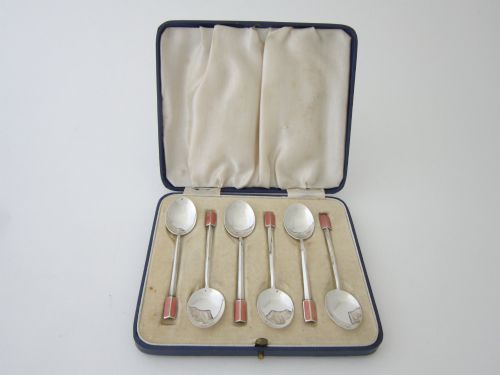
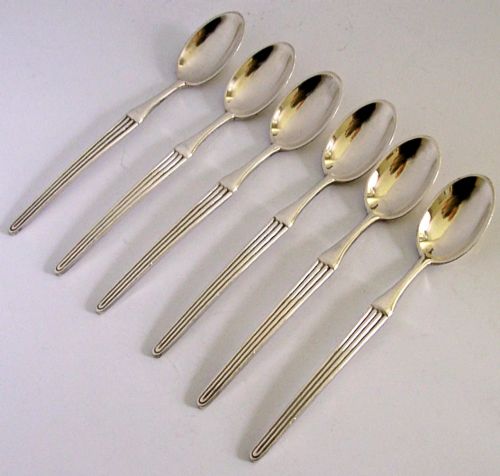
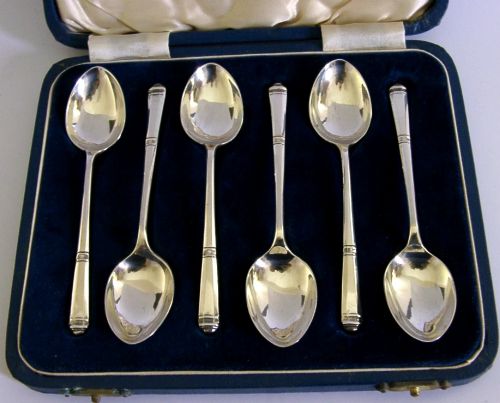
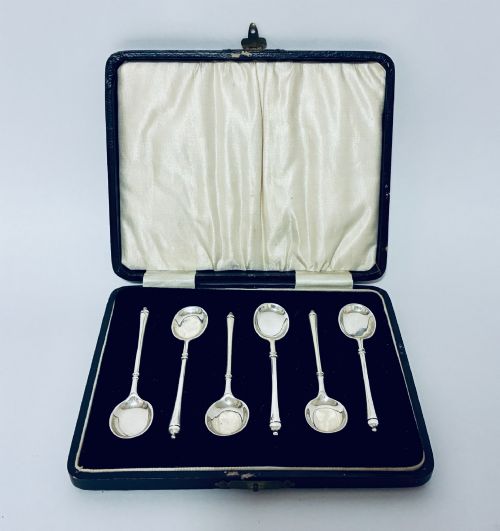
Demitasse coffee spoons are small implements designed specifically for small cups of strong coffee, frequently appearing on this page in cased sets of six. These pieces emerge from periods spanning the Victorian era through the mid-twentieth century, including distinct groupings from the Art Deco and Edwardian phases. A buyer examining this selection will frequently encounter matched boxed sets intended for formal dining or gift presentation.
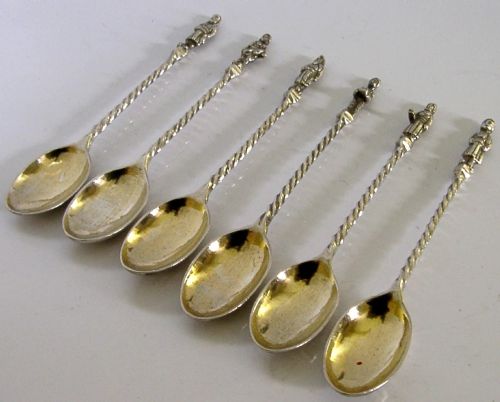
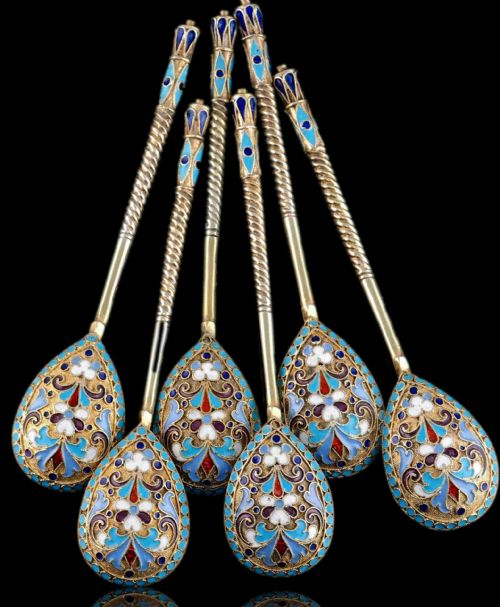
The materials recorded in these listings encompass sterling silver, solid silver, and silver gilt, often enhanced with vibrant enamel work or housed within velvet, satin, and silk lined boxes. Styles range from late Art Nouveau and Arts and Crafts to Ottoman Turkish figural designs and Imperial Russian cloisonne. Most examples originate from British assay offices like London, Birmingham, and Sheffield, alongside continental European workshops.
Within these pages, individual teaspoons and coffee spoons share space with comprehensive cutlery services and complete coffee set accompaniments involving ceramic cans and saucers. While some items present plain polished bowls and stems, others showcase intricate coloured guilloche enamel or parcel-gilt finishes. This variety allows collectors to select either austere modernist forms or highly decorative interwar accessories.
Materials and construction
Makers fashioned these spoons primarily from sterling and solid silver, frequently applying a layer of gold wash known as silver gilt to the bowls for visual contrast and protection against staining. Enamel work provides vibrant colour to the handles and backs of the bowls, fused to the silver base through high-temperature kiln firing. These metallic elements are paired with fitted presentation boxes lined with soft fabrics such as velvet, silk, and satin to secure the fragile items.
Silversmiths utilised traditional stamping, casting, and hand-finishing techniques to shape the slender stems and small bowls characteristic of the form. Hallmarks stamped directly into the metal record the assay town, purity standard, and year of manufacture, providing a reliable record of origin. Enamelling requires meticulous hand-application of powdered glass pigments within fine wire partitions, a process demanding steady precision.
Enamel decoration appears frequently, alongside traditional presentation boxes lined in velvet, satin, and silk.
Indicators of superior standard
The distinction between standard utility items and finer pieces rests upon the crispness of the silversmith's workmanship and the complexity of any decorative additions. Superior examples exhibit deep, legible hallmarks, perfectly uniform bowl shapes, and substantial weight in the hand rather than hollow or flimsy stems. The presence of undamaged guilloche enamel without chipping or crazing elevates a set considerably.
Fitted presentation cases also contribute to the overall standard when they retain their original integrity, silk linings, and functional clasps. Sets featuring coordinated maker's marks across every individual spoon demonstrate greater manufacturing cohesion than assembled groupings gathered together at a later date. Artisanal input from notable design houses further distinguishes exceptional production from standard commercial output.
David Andersen·Walker and Hall·Liberty and Co·Cooper Brothers and Sons·Dmitrii Nikolaevich Nikolaev
The Demitasse Coffee Spoons Glossary
- Demitasse
- A small cup used for serving strong black coffee or espresso, which dictates the diminutive scale of the matching spoons.
- Silver gilt
- Silver objects that have been coated with a thin layer of gold on the surface, sometimes referred to as vermeil.
- Guilloche
- A decorative mechanical engraving technique that produces precise, intricate geometric patterns beneath a translucent layer of enamel.
- Cloisonne
- An ancient enamelwork technique where metal wire is soldered to the metal base to form compartments for coloured paste.
- Assay mark
- An official stamp applied to precious metals indicating the purity of the alloy and the testing office responsible.
Demitasse Coffee Spoons: Frequently Asked Questions
What are demitasse coffee spoons used for?
These miniature spoons serve the specific purpose of stirring sugar into small cups of strong after-dinner coffee or espresso. Their compact size prevents them from tipping over the edge of smaller vessels.
Historically, they formed part of formal dining traditions and were frequently kept in velvet-lined presentation boxes for special occasions. Today, collectors often use them for serving demure portions of condiments or simply display them within fitted cases.
How do I identify Art Deco spoons?
Art Deco pieces display geometric motifs, clean vertical lines, and stylised fan or sunburst patterns on the terminals. Enamel work from this period often uses bold, contrasting primary colours.
Examining the hallmark date letter will frequently confirm a 1920s or 1930s manufacturing window. The overall architectural silhouette distinguishes them easily from flowing Victorian or Edwardian designs.
Are cased sets original to their boxes?
Original fitted cases generally feature interior mouldings that match the exact contour and count of the enclosed spoons. Silk and velvet linings often bear the gold-stamped name of the original retailer.
If the spoons rattle or sit awkwardly within the slots, the set may have been assembled at a later date. Matching maker marks across the silver and the box interior help verify authenticity.
How should I clean silver and enamel spoons?
Silver components require gentle cleaning with a specialised non-abrasive silver cloth to maintain their natural lustre without removing fine detail. Enamel surfaces should avoid harsh chemical dips entirely, as these can permanently damage or discolour the glass paste.
Warm soapy water and a soft brush provide a safe method for removing accumulated dust from intricate handle crevices. Storing them in dry, lined environments prevents tarnishing between uses.