
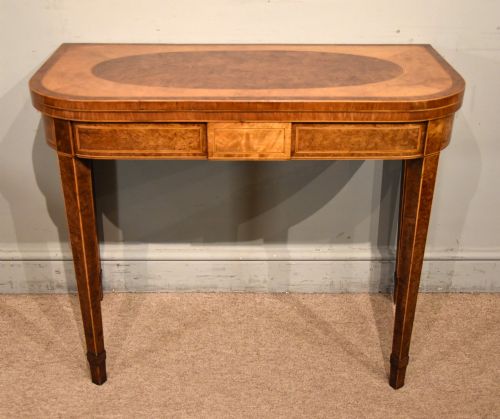
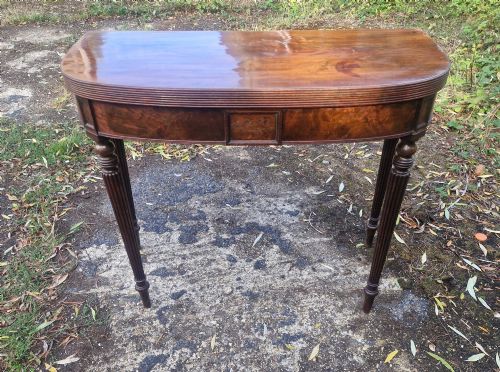
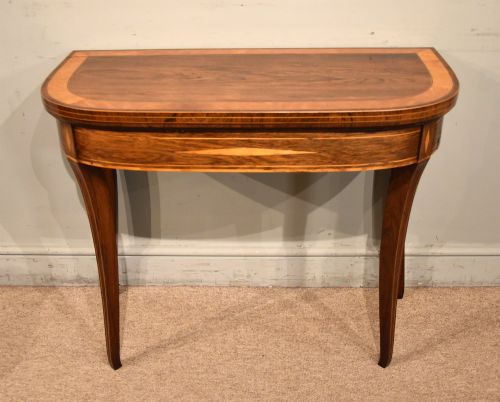

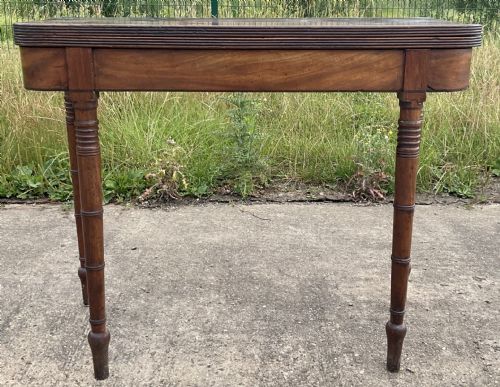
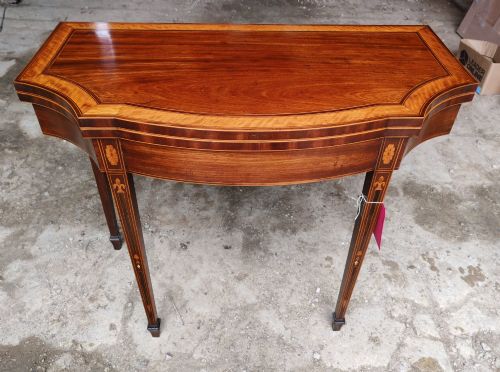
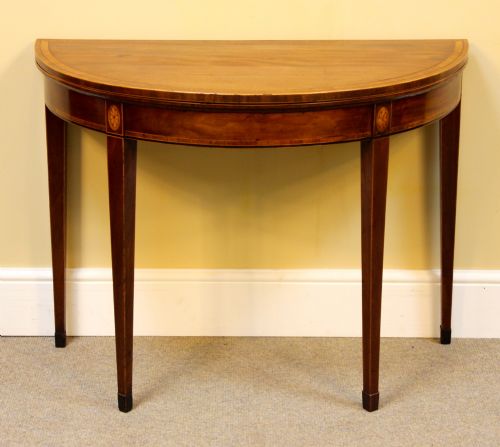
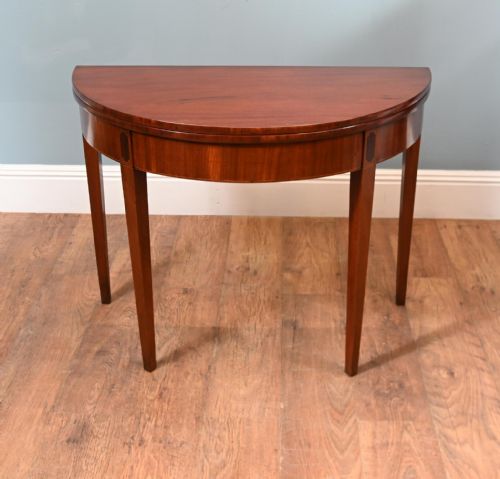
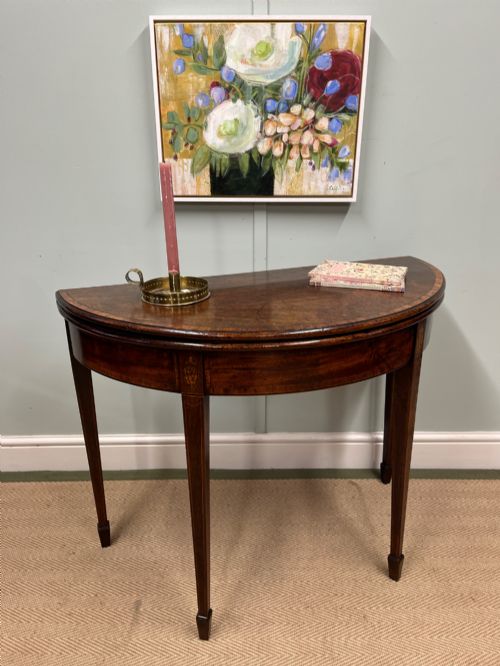


Demilune Foldover Table
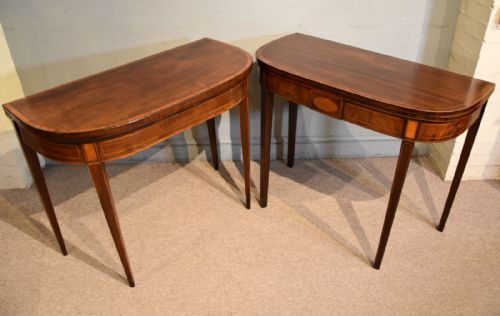
A demilune foldover table brings half-moon elegance to a room, opening on a hinge to reveal a polished surface for cards or tea.
Demilune Foldover Table
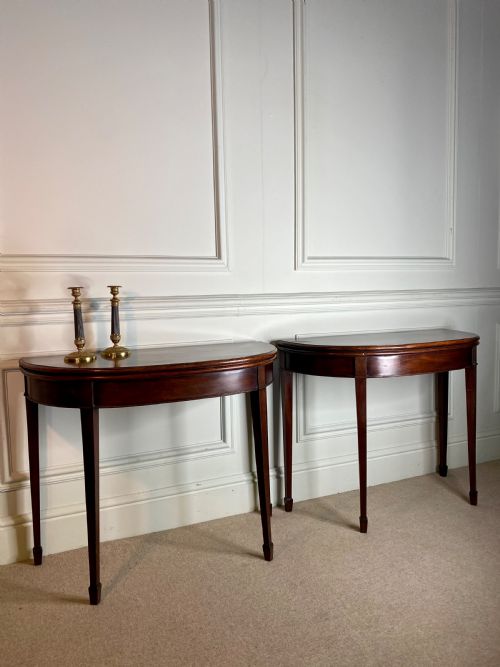
A demilune foldover table is a semicircular piece of furniture designed to sit flat against a wall until opened for use. When you search for demilune foldover table, you encounter forms that served multiple domestic purposes in Georgian, Regency, and later periods.
The pieces listed on this page span the eighteenth century, the Regency era, and nineteenth-century revivals. They appear as tea tables, card tables, games tables, and console tables fashioned with hinged tops.
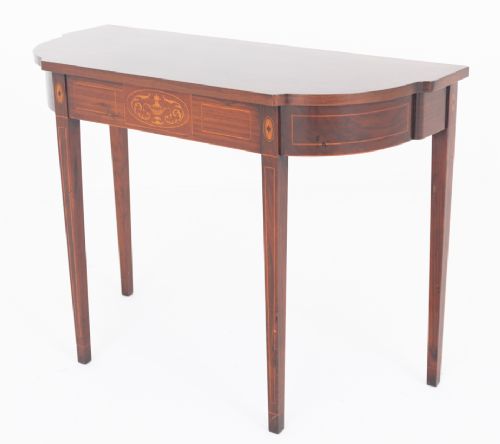
Mahogany and satinwood predominate, alongside walnut and rosewood. Examples range from plain timber to pieces decorated with boxwood inlay, marquetry, and parquetry.
Materials and construction
Cabinetmakers utilised solid timbers and wood veneers over secondary woods, applying boxwood inlay and marquetry to create decorative surfaces on satinwood and mahogany. Brass hinges and fittings secure the folding leaves that transform the half-round top into a full circle or square.
Surfaces feature polished finishes that highlight the grain of rosewood, walnut, and burr yew wood. The structural joinery supports the pivoting or swinging rear leg that holds the second half of the foldover top.
Hidden counter-legs swing out like secret doorways to support the heavy folded top.
Judging quality in folding tables
Quality rests upon the selection of timber veneers and the precision of the wood inlay, where tighter grain and balanced marquetry distinguish finer examples. The smoothness of the hinge mechanism and the stability of the pivoting leg determine how cleanly the top opens and rests.
Proportion and wood selection elevate certain pieces, particularly where satinwood, rosewood, or burr walnut are matched across the foldover top. The crispness of carved details on the legs separates standard production from superior cabinet work.
Gillows
The Demilune Foldover Table Glossary
- Demilune
- A half-moon shape used for tables designed to stand flat against a wall. This profile became popular in the eighteenth century for small side tables.
- Foldover
- A hinged tabletop construction where one half folds back or swings open on a pivot to double the surface area. It allows a console table to function as a card or tea table.
- Marquetry
- Decorative patterns formed by fitting together small pieces of wood veneer of different colours and grains. It frequently decorates satinwood surfaces on Georgian tables.
- Parquetry
- Geometric wood inlay arranged in regular patterns such as cubes or squares. This technique appears on eighteenth-century tabletops.
- Pier table
- A table designed to fit against the wall between two windows. These often share the semicircular shape of demilune furniture.
Demilune Foldover Table: Frequently Asked Questions
How were demilune foldover tables used?
These pieces functioned primarily as side or console tables against a wall when closed. Opening the hinged top provided a stable surface for card games, tea drinking, or writing.
By day they saved floor space in smaller rooms. By evening they transformed into functional furniture for entertaining guests.
How do I tell a Georgian table from a later revival?
Georgian and George III pieces exhibit period timber selection, hand-cut joinery, and natural ageing in the mahogany or satinwood. Later nineteenth-century revival pieces often show different secondary woods and machine-cut elements.
Stylistic cues also help separate original eighteenth-century furniture from Edwardian or Victorian Sheraton Revival copies made around nineteen hundred.
What is the difference between a tea table and a card table?
Tea tables generally feature plain or moulded wooden surfaces intended to hold porcelain teapots and cups. Card tables frequently incorporate baize or felt lining inside the foldover top to muffle the sound of dice and playing cards.
Some examples combine both functions through their dimensions and interior compartments.
How do I live with a foldover table?
Place the piece against a hallway or drawing room wall where its semicircular profile occupies minimal depth. Open the top only when you need an auxiliary surface for cards or display.
Keep polished wooden surfaces away from direct sunlight and excessive heat to protect the antique veneers and finishes.