


Foldover Tea Table
A foldover tea table provides a dual surface that expands from a compact console for social rooms.
Foldover Tea Table
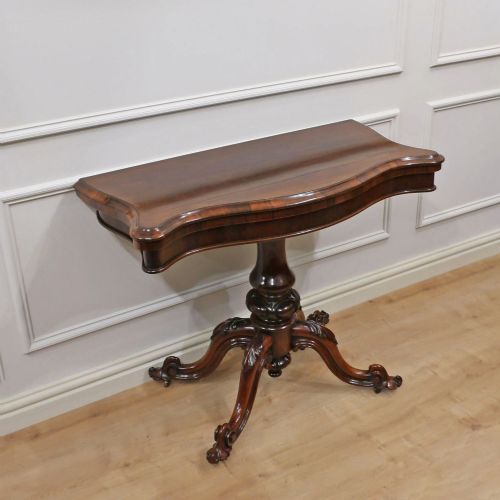
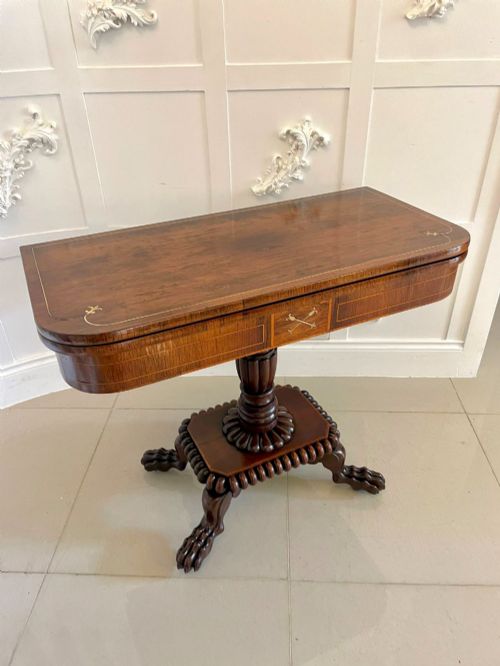
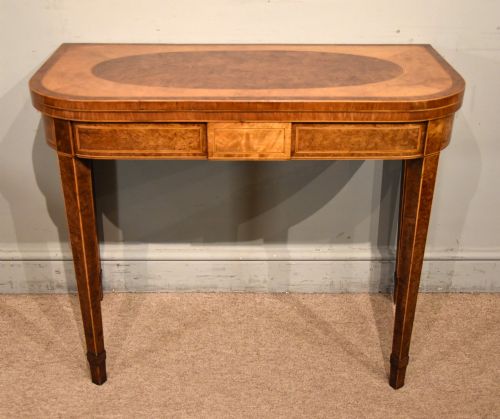
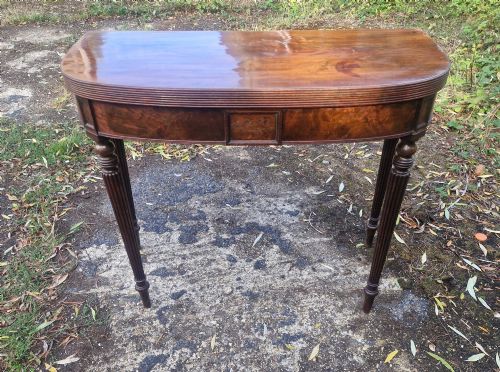
A foldover tea table serves as a versatile piece designed to sit flush against a wall when closed and pivot or unfold to accommodate evening dining or card games.
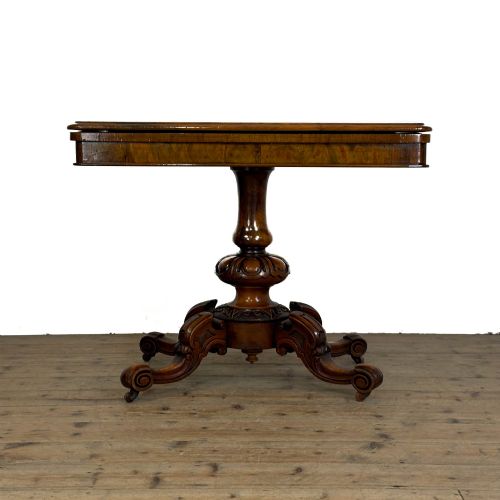
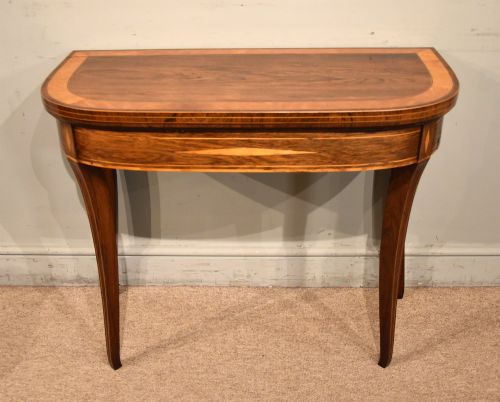
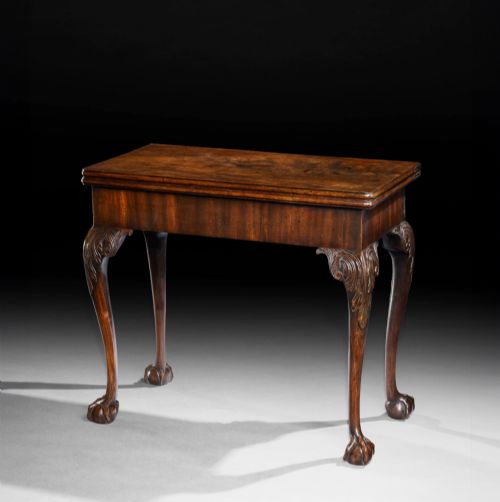
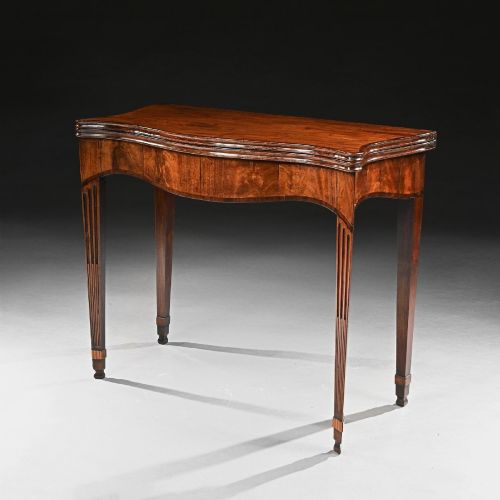
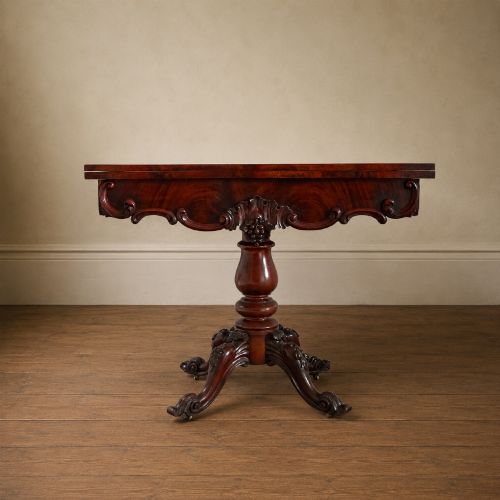
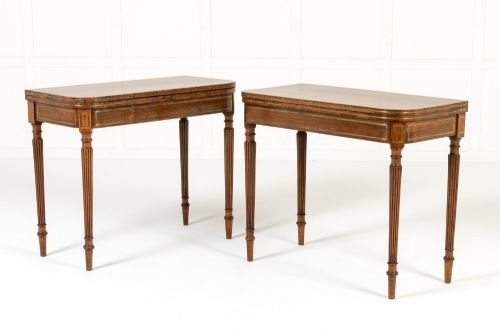
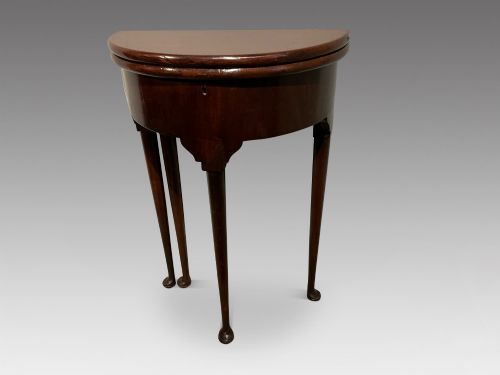
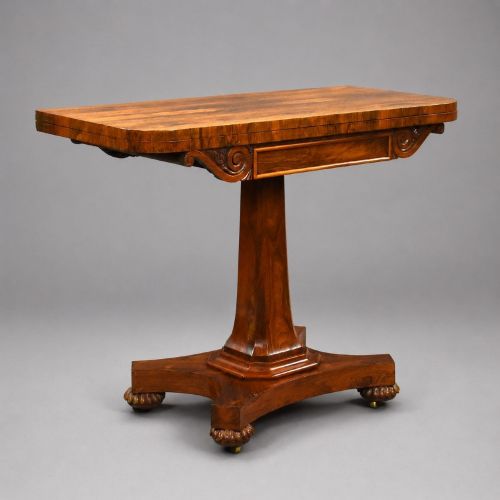
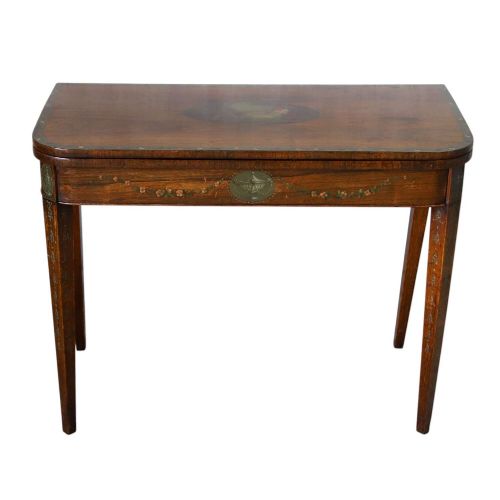
Examples on this page span from the George II and George III periods through the Regency era and into Victorian times, showing shifts from straightforward timber construction to elaborate brass inlay and carved rosewood.
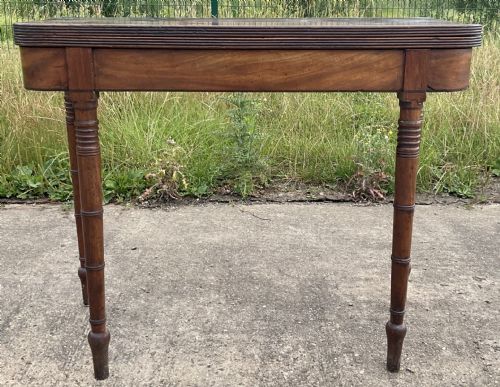
Forms range from straight-sided D-shapes and demilune half-moon consoles to rectangular models supported by central pedestals or tapering legs.
Materials and Construction
Cabinetmakers built these pieces using solid timbers like mahogany, oak, and walnut, frequently applying veneers of rosewood, satinwood, burr yew, or tulipwood across the top surface.
Inlay work utilises contrasting woods alongside brass stringing and brass sabots, while internal mechanisms rely on concertina actions or pivoted leaves to support the open top.
Foldover Tea Table Retail Price Guide 2026
Typical asking prices for foldover tea table among the pieces listed under this phrase on Sellingantiques today, from the lower quarter to the upper quarter. They describe what is for sale here now, not the wider market.
Periods represented span from the 18th century through the Regency, William IV, and Victorian eras.
The Measure of Quality
Superior pieces display careful timber selection, such as figured mahogany or matched burr walnut, where the grain pattern continues seamlessly across the fold when opened.
Fine execution shows in the crispness of carved details, the precision of brass inlay work, and the smooth operation of the pivoting or concertina-action hinge mechanism.
George Bullock·Edwards and Roberts
The Foldover Tea Table Glossary
- Concertina action
- An expanding frame mechanism that pulls out to support all sides of a foldover top when opened. This design allows the table to bear weight evenly across the extended surface.
- Demilune
- A half-moon shape used for console and tea tables designed to stand against a wall. These pieces often feature foldover leaves to create a full circle for use.
- Cross banding
- A narrow strip of veneer laid around the border of a tabletop with the grain running perpendicular to the centre panel. It creates a defined visual frame for the main timber.
- Sabot
- A metal sleeve or mount fitted to the foot of a table leg. It protects the timber base and often incorporates brass castors for mobility.
- Dished gaming wells
- Recessed circular spaces carved into the timber surface of a card table to hold counters or coins securely during play.
Foldover Tea Table: Frequently Asked Questions
How do I use a foldover tea table today?
These tables function well as hallway consoles or slim sideboards when closed against a wall. Opening the hinged top reveals a stable surface suited for dining or display.
Positioning the piece away from direct heat sources protects the timber and veneer from shrinking or splitting over time.
What is the difference between a tea table and a card table?
Tea tables generally feature plain wooden surfaces designed for serving tea or holding decorative objects. Card tables frequently incorporate lined interiors, corner candle recesses, or dished gaming wells for play.
Many listings combine these descriptions because the folding mechanisms served both domestic functions interchangeably.
How do I date a mahogany foldover table?
Earlier 18th-century examples from the George II and Georgian periods often employ pad feet, solid mahogany construction, and simple concertina frames. Later Regency and Victorian pieces favour rosewood veneers, brass stringing, and pedestal bases with castors.
Looking at the construction of the interior hinge and the thickness of the secondary timbers helps confirm the production era.
How do I care for antique wood veneer?
Maintaining these surfaces requires keeping them away from direct sunlight and maintaining steady room humidity. Regular dusting with a dry, soft cloth preserves the original polish.
Harsh chemical sprays and excessive moisture will damage the delicate rosewood or satinwood veneers found on nineteenth-century examples.