
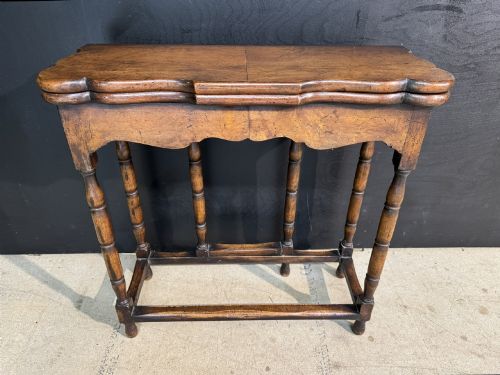
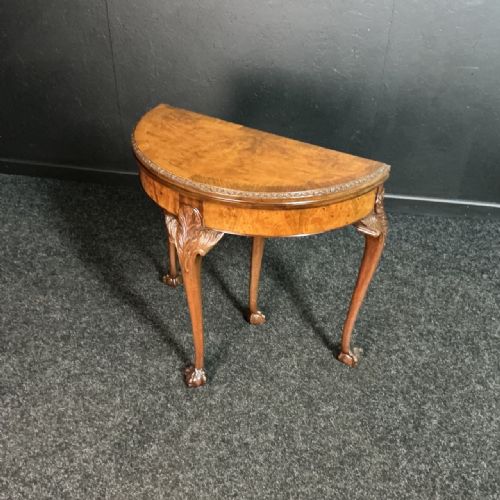
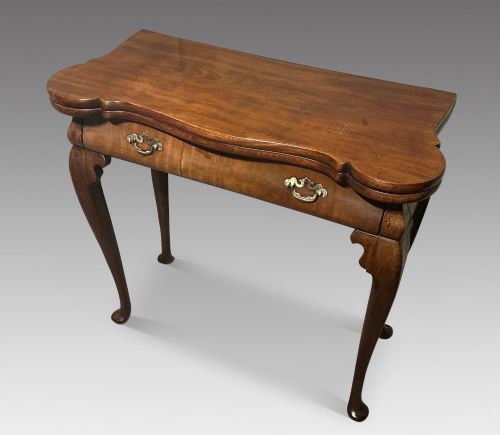
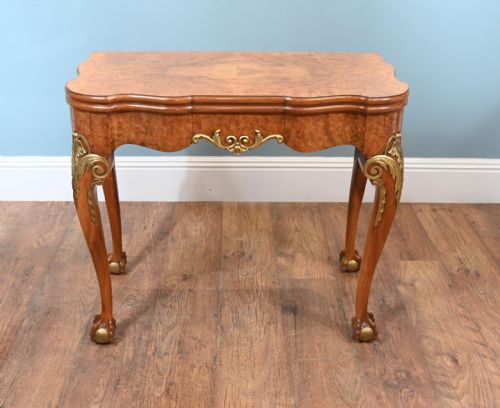




Queen Anne Gaming Table
A queen anne gaming table brings sociable card playing to life in wood, blending period charm with practical folding forms.
Queen Anne Gaming Table
When you search for a queen anne gaming table, you encounter diverse timber furniture designed specifically for indoor leisure, tea, and card games. The selection spans authentic eighteenth-century examples alongside later revival pieces produced across the nineteenth and early twentieth centuries.
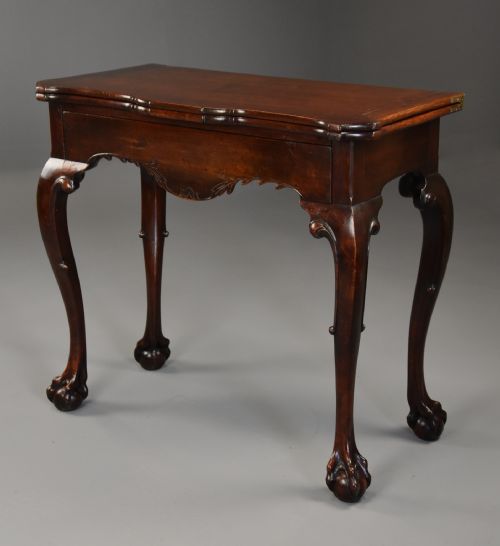
The most common versions met on this page are walnut fold-over card tables and console tables built in the Queen Anne and Georgian styles. These pieces often feature demi-lune shapes or rectangular tops that open to reveal specialised playing surfaces.
What Varies in Quality
The distinction between standard production and top-tier execution rests primarily in the selection of figured burr walnut veneers and timber patination. Master workshops applied careful crossbanding and precise joinery that maintained structural integrity through decades of folding.
Makers known for exceptional craftsmanship, such as documented cabinet firms, achieved superior surface depth and proportion compared to simpler commercial revivals. The crispness of carved details and the balance of the folding mechanism separate everyday items from truly sophisticated examples.
Certain tables hide unusual inlaid bird designs beneath their polished walnut surfaces, waiting to surprise observant players.
Epstein and Co·Howard and Sons Ltd·Maple and Co
The Queen Anne Gaming Table Glossary
- Demi-lune
- A half-moon shape characteristic of console and card tables designed to sit flat against a wall.
- Fold-over
- A hinged top design that doubles the surface area when opened for games or tea.
- Crossbanding
- A decorative border technique where strips of veneer are laid perpendicular to the grain of the main surface.
- Chinoiserie
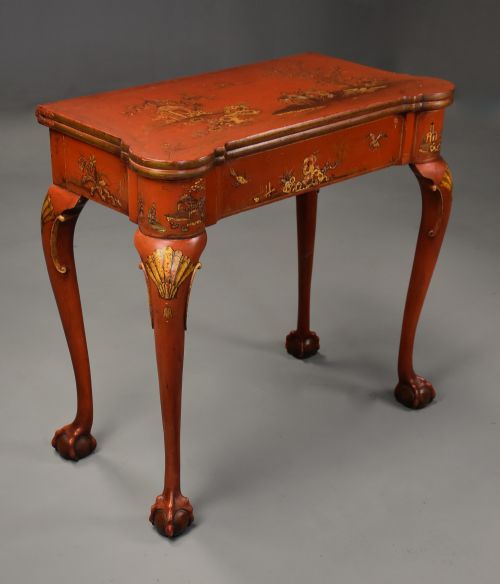
- European decorative motifs inspired by Chinese art, featuring lacquered surfaces and painted scenes.
- Patina
- The deep, lustrous surface appearance developed on wood furniture through age and handling.
Queen Anne Gaming Table: Frequently Asked Questions
What is a queen anne gaming table used for?
These tables served primarily for card playing, social gatherings, and serving tea in domestic drawing rooms during the evening hours.
The folding top allowed households to conserve floor space during the day and expand the surface quickly when guests arrived.
How do I tell an 18th century piece from a revival?
Eighteenth-century originals display natural timber wear, hand-cut joinery, and period construction methods unique to early cabinet makers.
Revival pieces from the early twentieth century often utilise machine-cut elements and standardised hardware while copying historical styles.
Where should I place a gaming table at home?
These pieces fit naturally against living room walls as console tables when folded shut, utilising minimal floor space.
Opened up, they function well in reception rooms or studies where their decorative wood surfaces can be fully appreciated.
Why do some tables feature burr walnut?
Burr walnut provided cabinet makers with highly figured, swirling grain patterns that created striking visual interest on table tops.
This material choice signified higher status and greater skill required in veneer preparation and application.