
Antique Mahogany Flip Table
An antique mahogany flip table offers a clever folding mechanism that transforms a compact wall-standing console into a generous serving or gaming surface.
Antique Mahogany Flip Table
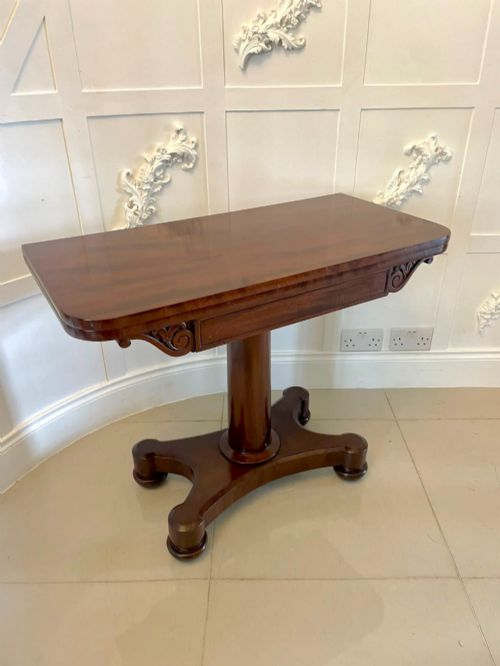
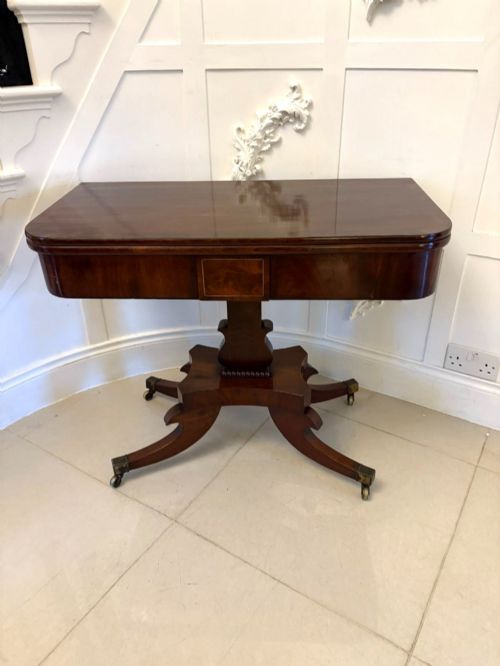
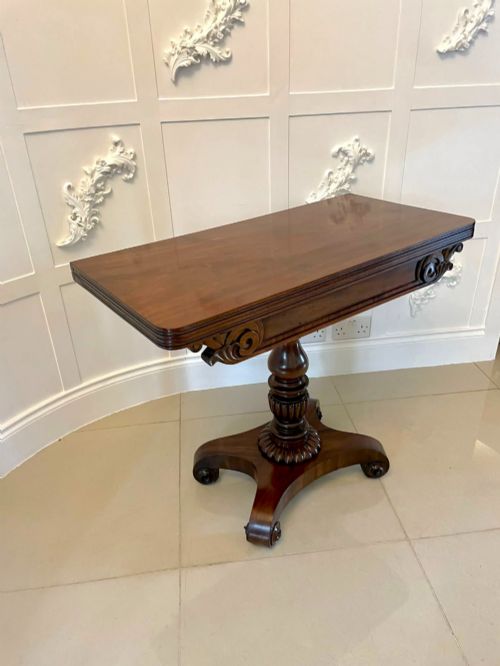
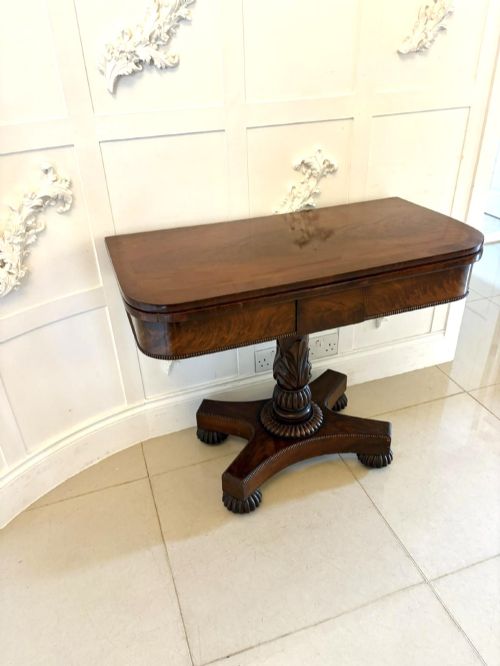
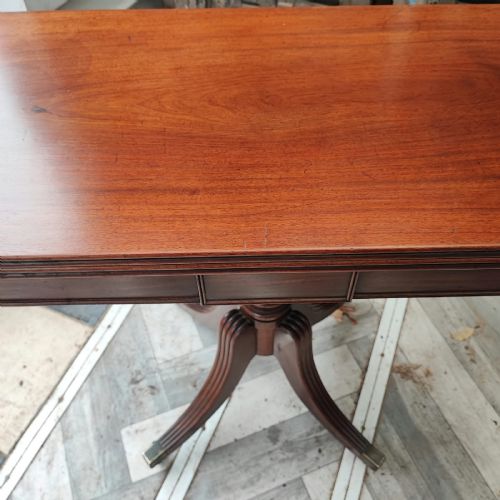
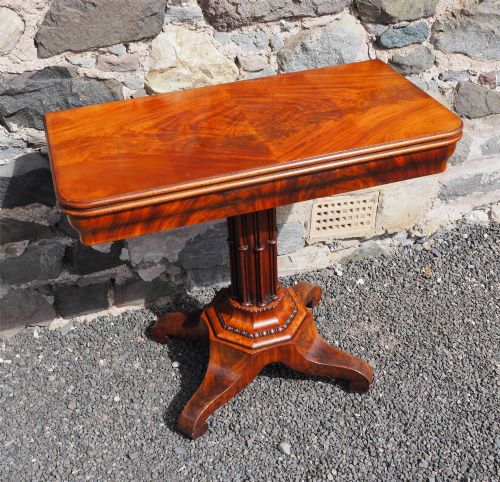
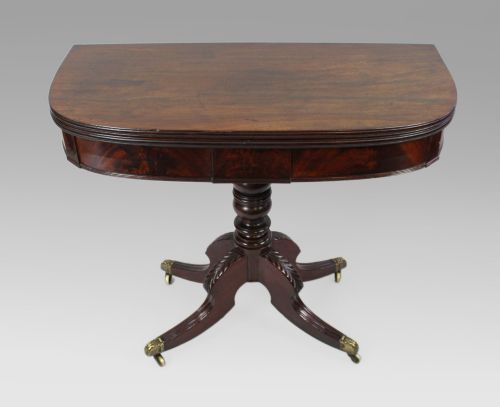
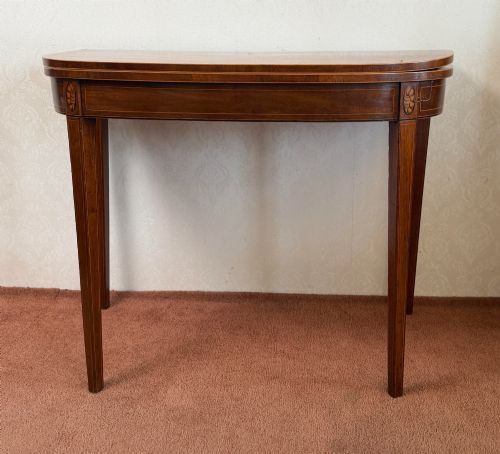
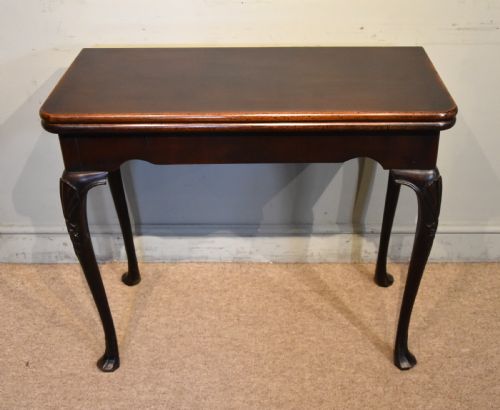
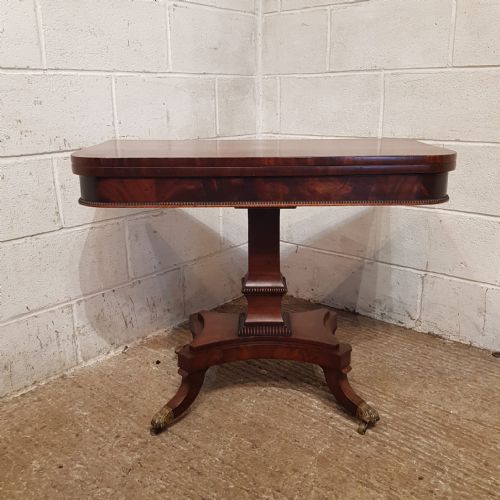
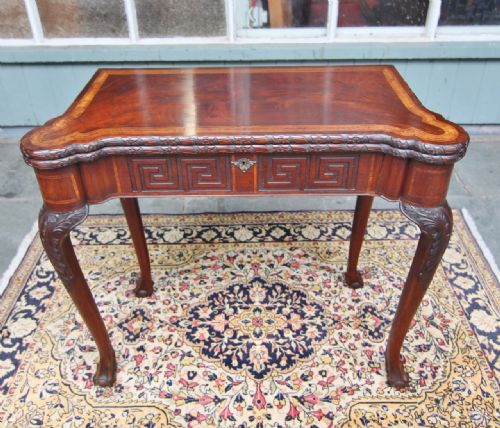
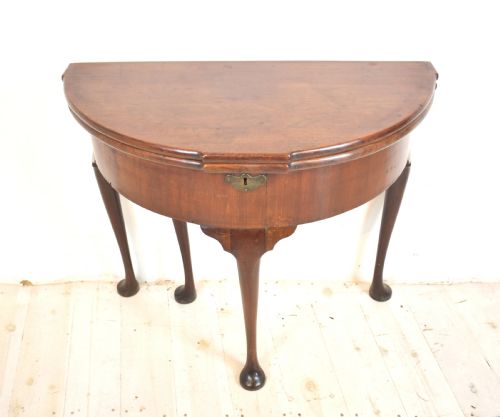
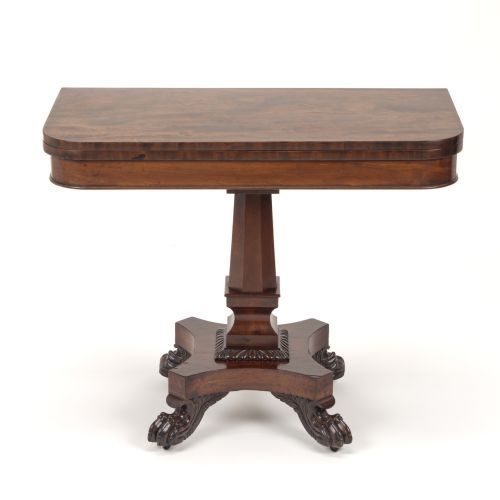
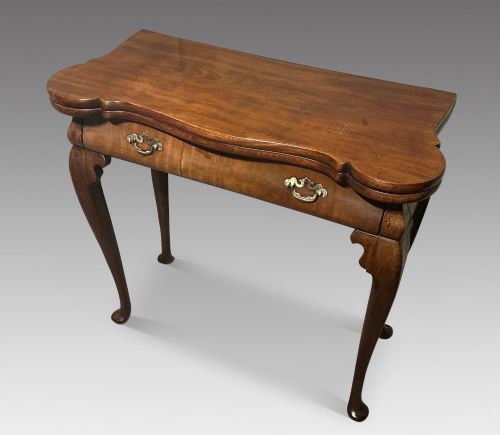
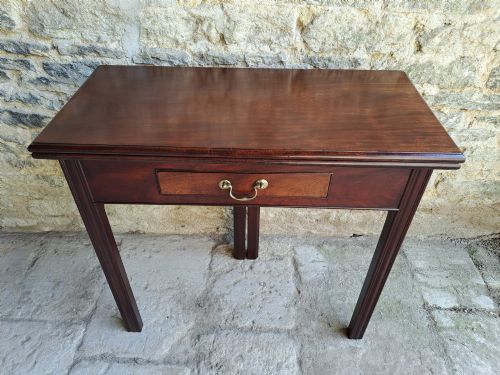
When you search for an antique mahogany flip table, you encounter versatile folding furniture designed primarily for tea, cards, and general side use during the eighteenth and nineteenth centuries. The pieces on this page span Georgian, Regency, and William IV periods, taking forms such as D-shaped tea tables, card tables, and occasional games tables.
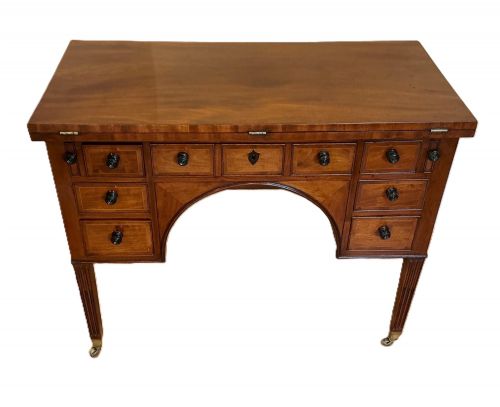
Most examples appear as tea or card tables that double their surface area when the hinged top folds open. You also find larger centre and dining formats alongside library tables, reflecting how cabinetmakers built multi-functional items for formal entertaining and daily domestic life.
How they were made
Cabinetmakers relied heavily on solid mahogany and flame mahogany veneer, occasionally selecting Cuban or Honduras timber for its rich grain. Workshops enhanced these surfaces with satinwood inlay, rosewood, walnut, and polished brass mounts.
Structural engineering matched the aesthetic timber, utilising concertina actions, pivot hinges, and turn-over mechanisms to support the heavy folding leaves. Carved paw feet, sabre legs, and brass details finished the frames securely.
Periods represented stretch from early Georgian eras through the Regency and William IV reigns up to Edwardian times.
What varies in quality
The distinction between standard examples and top-tier pieces rests on the choice of timber and the precision of the mechanics. Highly figured flame mahogany and crisp satinwood inlay elevate a table far above plain stock.
Makers who invested time in complex concertina actions and finely carved paw feet produced pieces that maintain rigid stability when open, whereas simpler pivot designs often feel less substantial.
The Antique Mahogany Flip Table Glossary
- Flip top
- A hinged table surface that turns over or folds out to reveal a larger area underneath. This mechanism allowed compact furniture to serve multiple functions in smaller rooms.
- Concertina action
- An expanding frame mechanism that pulls outward as the table unfolds, providing robust support for all four corners of the opened top.
- Flame mahogany
- A decorative veneer cut from wood where the branch meets the trunk, producing a rippling flame pattern. It appears on the finest Georgian and Regency tops.
- D-shaped
- A table profile shaped like a half-circle or D, designed to stand flush against a wall when closed. Two such tables could often be joined together to form a larger dining surface.
Antique Mahogany Flip Table: Frequently Asked Questions
What were these tables used for?
Georgian and Regency households utilised these versatile pieces as side tables against walls during the day. When guests arrived, the tops flipped open to accommodate tea service or card games.
Their dual nature made them essential for entertaining in parlours and drawing rooms where space remained at a premium.
How do I date a mahogany table?
Dating relies on observing the prevailing style, cabinetmaking techniques, and secondary timbers used in the frame. Georgian pieces often show straight legs or intricate carving, while Regency examples feature sabre legs and brass mounts.
Construction marks and the specific depth of the mahogany colour further help narrow the era of production.
Can I use one as a desk?
Many card and writing tables share similar proportions, making them suitable for occasional laptop or paperwork use when opened. However, you should consider the interior depth and clearance for your knees.
Lined surfaces on card tables, often featuring baize or leather, require care to preserve their historical condition if used daily.