

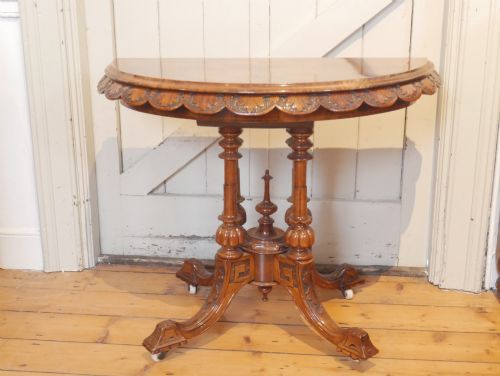

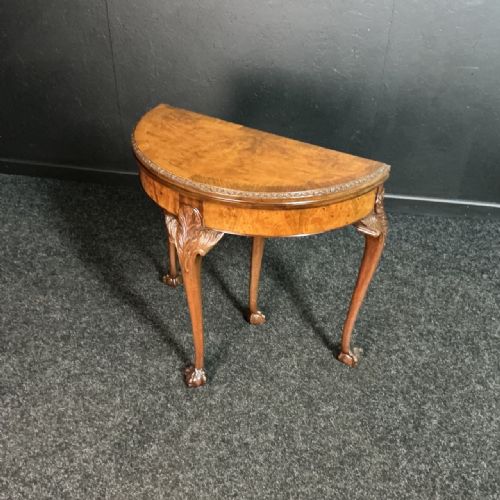
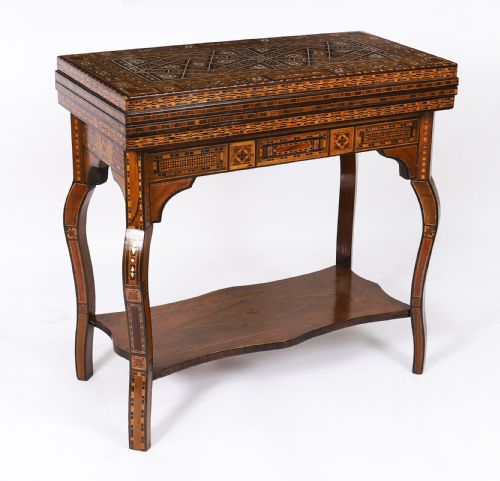
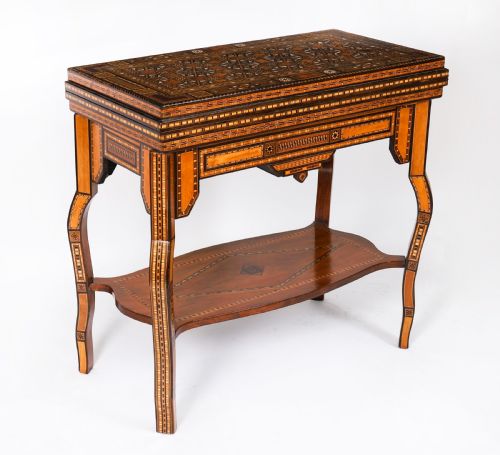
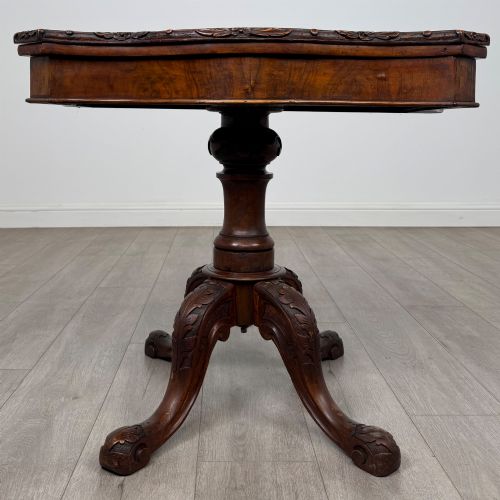
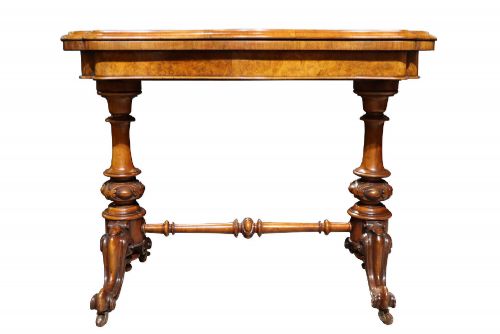
Folding Game Table Walnut
A folding game table walnut offers a clever surface for cards and board entertainment, bringing period wood and craftsmanship into a modern room.
Folding Game Table Walnut
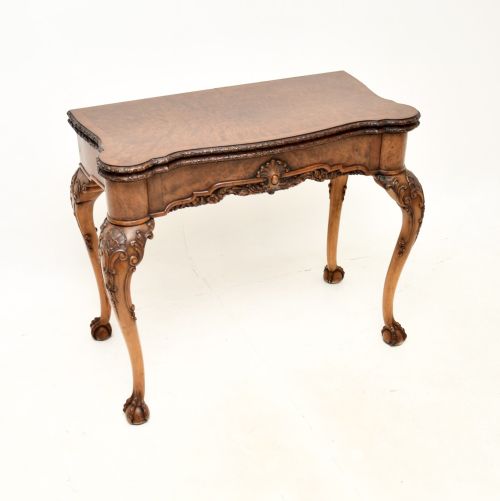
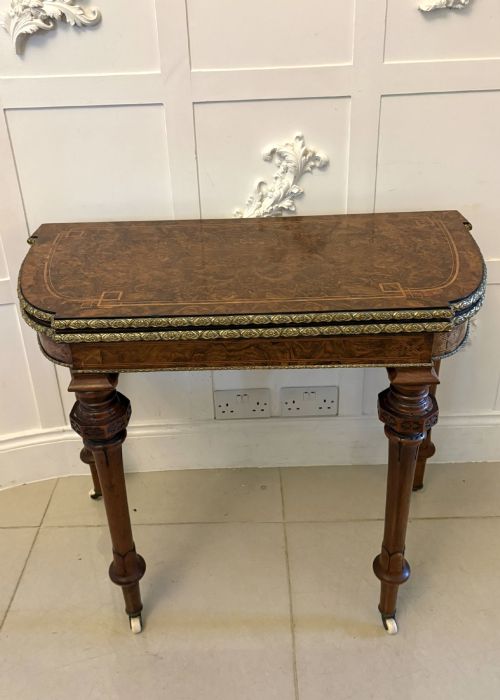
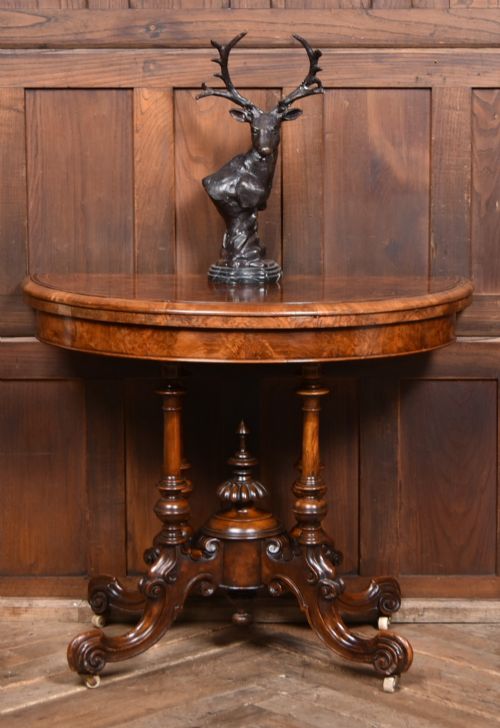
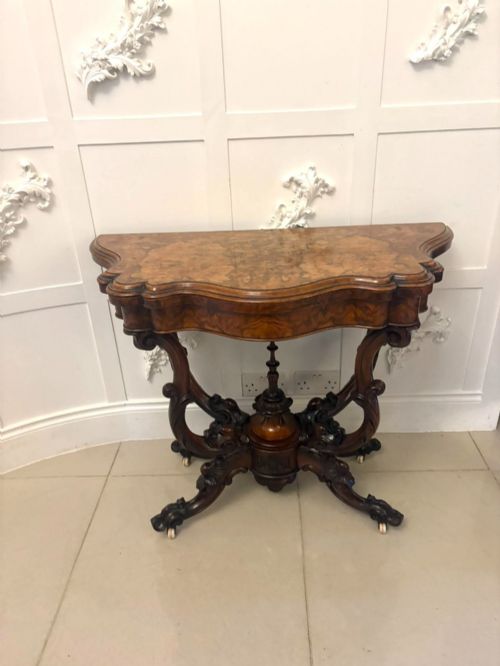
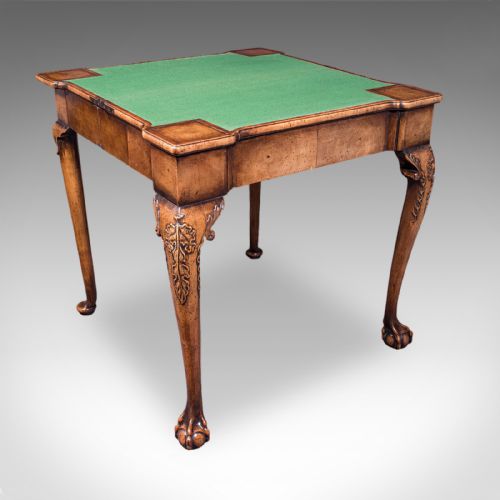
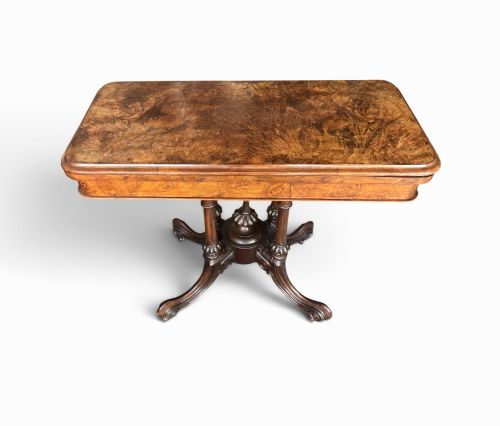
A folding game table walnut serves as a dual-purpose piece that transforms from a compact console or side table into a wider playing surface. The selection spans centuries of design, with Victorian burr walnut examples appearing most frequently alongside Georgian and Edwardian interpretations.
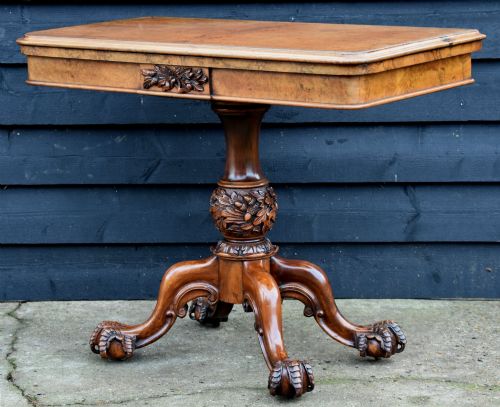
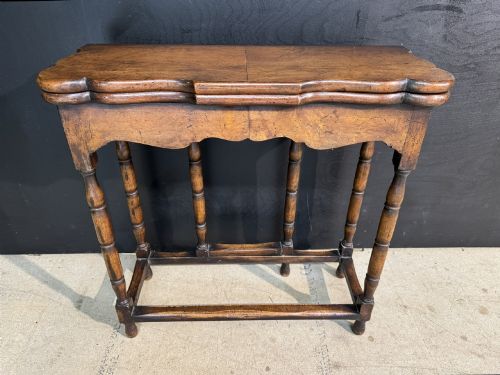
Makers utilised various silhouettes including demi-lune, rectangular, and fold-over tops supported by carved bases, pedestals, or cabriole legs. These surfaces often accommodate specific pastimes, ranging from traditional card games to chess and backgammon.
Origin points stretch across English, Irish, and French workshops, encompassing distinct regional preferences in inlay, marquetry, and wood selection. The resulting objects function as occasional tables, tea tables, or dedicated games hubs.
Materials and Construction
Cabinet makers constructed these pieces using solid walnut, figured walnut, and highly decorative burr walnut veneers applied over secondary timbers like fruitwood. The timber selection dictates the swirling grain patterns and rich brown tones visible across the tops.
Surfaces frequently incorporate intricate marquetry, floral inlays, or contrasting crossbanding, sometimes accented with brass or ormolu mounts. Interior playing areas are typically lined with baize to provide a tactile surface for cards.
Folding mechanisms rely on hinged tops, pivoting leaves, or swivel actions that reveal hidden wells or storage compartments underneath for counters and dice.
Listings feature walnut folding game tables spanning the Georgian, Victorian, and Edwardian eras, incorporating brass, ormolu, and baize materials.
Assessment of Standard
The degree of distinction rests upon the choice of veneer, the precision of the marquetry, and the crispness of any hand-carved elements on the base or supports. Elaborate floral inlays and balanced burr walnut figuring elevate an example above plain or simpler versions.
Structural integrity of the folding mechanism and the smoothness of the pivot or hinge action determine how successfully the table handles daily transition between console and playing positions. High-level execution includes seamless alignment of the folded top with the frieze and legs.
Epstein and Co·Edwards and Roberts
The Folding Game Table Walnut Glossary
- Burr walnut
- A prized timber harvested from tree growths, producing swirling, highly figured grain patterns. It forms the decorative top surfaces of many Victorian examples.
- Baize
- A coarse woollen felt material traditionally used to line the playing surfaces of card and games tables. It provides a soft, non-slip area for dealing cards.
- Demi-lune
- A half-moon shape utilised for console and folding tables designed to sit flush against a wall when closed. The top unfolds to reveal a full circular or serpentine playing surface.
- Marquetry
- Decorative veneer work arranged in pictorial or geometric patterns using various coloured woods. It decorates the tops of many mid-nineteenth-century tables.
- Crossbanding
- A border of veneer laid around the perimeter of a table top with the grain running perpendicular to the centre panel. This technique frames the primary wood.
Folding Game Table Walnut: Frequently Asked Questions
How do I identify a Victorian folding game table walnut?
Victorian pieces typically display rich burr walnut veneers, elaborate carved supports, and internal baize-lined playing surfaces. They often utilise fold-over or swivel top mechanisms characteristic of mid-nineteenth-century cabinet making.
Decoration frequently includes floral marquetry or boxwood stringing across the frieze and top, distinguishing them from plainer Georgian or later Edwardian iterations.
What is the difference between a tea table and a games table?
Tea tables generally feature plain or dished wooden tops designed to hold porcelain, whereas games tables incorporate specialised playing surfaces like baize or inlaid chess boards.
Many walnut examples from the eighteenth and nineteenth centuries double in function, featuring a folding top that conceals a green baize interior when opened.
How do I care for the walnut veneer on my table?
Protect the polished surface by avoiding direct sunlight and excessive heat, which can dry out or crack antique wood and veneer. Use dry microfiber cloths for dusting and apply specialist wax sparingly.
Keep baize linings clean by gentle brushing, and ensure the folding mechanism is supported properly when opening or closing the leaves.
Where should I place a folding game table walnut?
These pieces function well in living rooms or studies as console or side tables against a wall when closed. Opening them requires clear floor space around the piece to allow guests to sit comfortably.
Their compact closed footprint makes them adaptable for rooms where floor space is at a premium.