
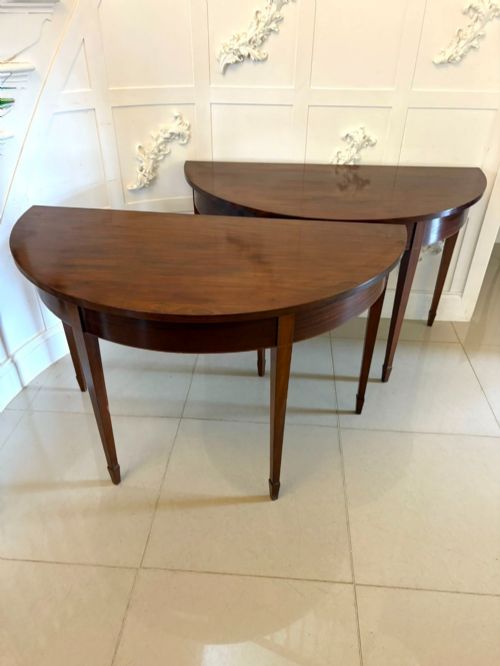


Demi Lune Pier Table
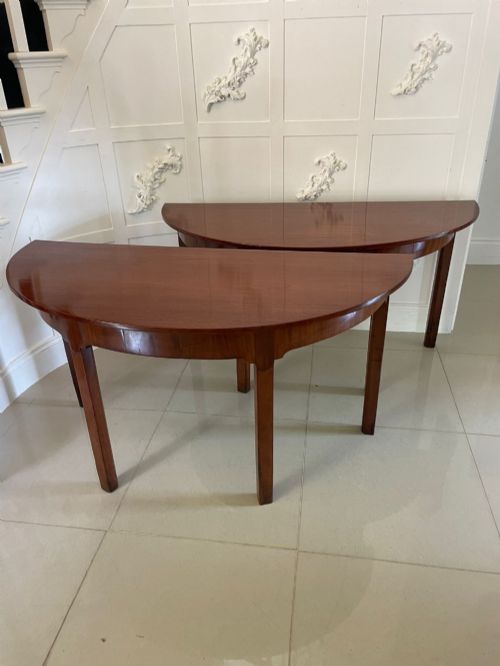
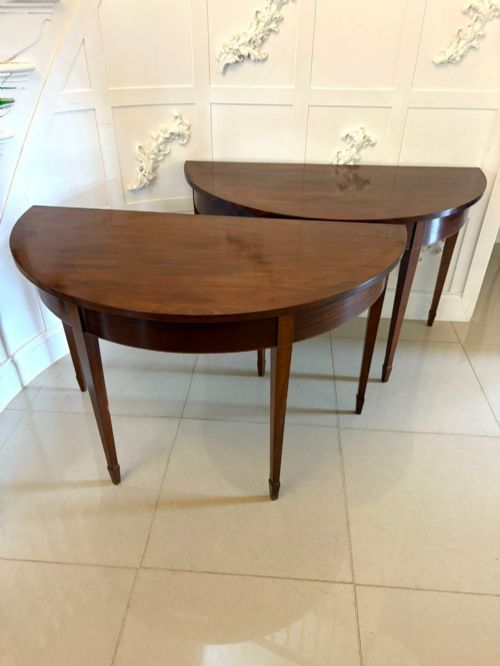
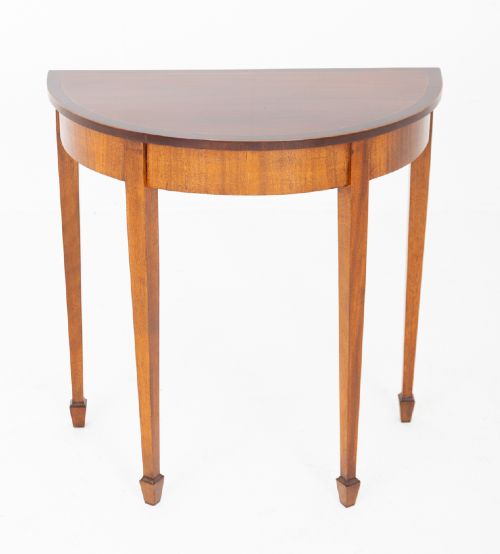
A demi lune pier table brings neoclassical elegance and half moon geometry to a hallway or drawing room.
Demi Lune Pier Table
A demi lune pier table is a semi circular console designed to stand flat against a wall, frequently positioned beneath a mirror or between windows. These pieces emerged as prominent forms during the Georgian period and continued through the Victorian, Edwardian and later revivals.
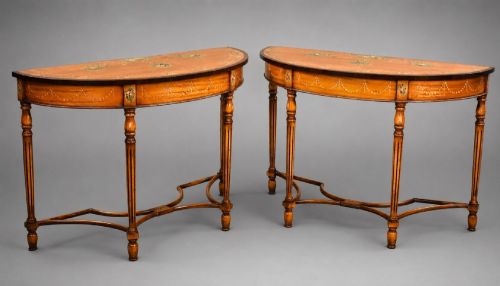
The version most commonly met on this page is constructed from mahogany or satinwood, often decorated with boxwood inlay, marquetry or paint. Examples range from simple vernacular pieces in solid timber to elaborate George III and Sheraton designs featuring neoclassical motifs.
What varies in quality
Quality rests in the precision of the cabinet work, particularly the smoothness of the curved veneering and the crispness of any inlay or carved detail. Superior examples display thoughtful timber selection where grain patterns mirror or complement the semi circular shape.
Design ambition separates standard regional pieces from high style metropolitan works. The presence of fine neoclassical marquetry, painted decoration or balanced proportions elevates a piece from a functional side table to a significant decorative object.
Several tables retain the narrow proportions necessary to squeeze past an opening door in a cramped Georgian hallway.
Seddon, Sons and Sons and Shackleton·Edwards & Roberts
The Demi Lune Pier Table Glossary
- Demi-lune
- Half moon shape. This term describes console and pier tables built with a flat back edge to sit flush against a wall.
- Pier table
- A table designed to stand against the wall between two windows. They frequently match a pier glass mirror mounted above.
- Marquetry
- Inlaid woodwork forming decorative patterns. Craftsmen piece together contrasting veneers to create floral or neoclassical motifs on the table top.
- Crossbanding
- A border of veneer laid around the edge of a table top. The grain runs perpendicular to the central panel to frame the surface.
- Neoclassical
- A style drawing inspiration from classical antiquity. It is characterised by symmetry, straight tapered legs and restrained classical ornamentation.
Demi Lune Pier Table: Frequently Asked Questions
Where should I place a demi lune pier table?
These tables suit narrow spaces such as hallways, entrance passages and landings where a rectangular table would project too far into the room.
They also sit well in drawing rooms against plain wall spaces, often paired with a hanging mirror or a picture above.
How do I distinguish George III from later revival tables?
Authentic 18th century pieces exhibit construction methods appropriate to the period, including hand cut timber framing and authentic timber ageing beneath the finish.
Revival pieces from the Victorian, Edwardian or later eras often employ machine precision, standardised dimensions and distinct secondary woods.
What is the difference between a console table and a pier table?
While both terms describe wall tables, pier tables historically stood against the masonry pier between windows.
Console tables frequently rely on wall brackets for support, though the terms are often used interchangeably in modern descriptions.
Can these tables be used for playing games?
Certain examples incorporate folding tops or hinged leaves designed for card playing.
When closed, they function as standard pier tables, and when opened, they reveal a baize or polished wood playing surface supported by a swing leg.