
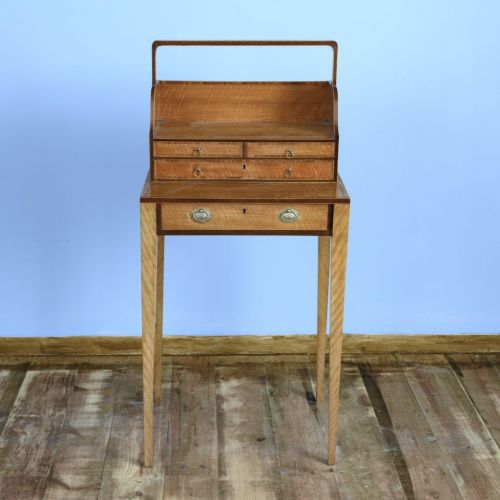


English Satinwood Table
An English satinwood table brings blonde timber grain and refined marquetry into a room, combining Georgian proportion with delicate Regency or Edwardian craftsmanship.
English Satinwood Table
When searching for an English satinwood table, a buyer encounters forms ranging from 18th-century demi-lune console tables and Pembroke tables to Victorian writing desks and Edwardian occasional pieces. The selection spans George III marquetry examples, Regency card tables, and later Sheraton Revival interpretations.
Occasional tables and side tables dominate the offerings, frequently incorporating contrasting timbers such as mahogany, rosewood, and boxwood alongside the primary satinwood veneer. These pieces reflect shifts from neoclassical restraint to the ornate aesthetic and revival styles of the 19th century.
Materials and construction
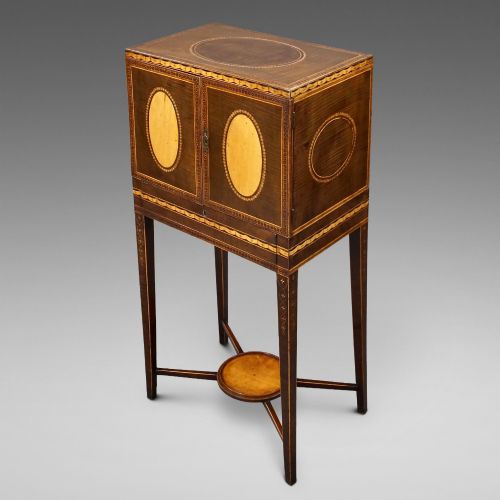
Cabinet makers utilised dense exotic timbers, applying fine satinwood veneers over sturdy foundational woods like mahogany to create contrasting borders and central panels. Marquetry details often combined boxwood, harewood, and fruitwoods to render floral urns, ribbons, or geometric banding.
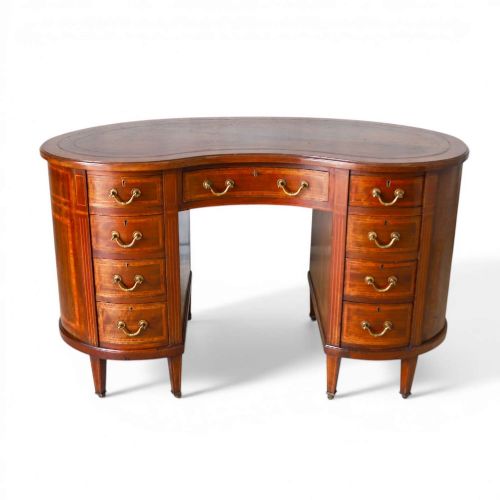
Brass fittings, leather writing inserts, and giltwood embellishments frequently complemented the timber work on higher-status tables, while edge-banding and stringing defined the geometry of console and Pembroke tops.
Listings feature 18th-century Georgian and Regency pieces alongside Victorian, Edwardian, and Art Deco examples incorporating mahogany, rosewood, and brass.
Judging the work
Quality rests in the precision of the marquetry inlay, the crispness of the hand-cut stringing, and the figure of the satinwood timber itself, where chatoyancy and grain depth distinguish superior examples from plain surfaces. The integration of secondary woods and the stability of the carcass timber dictate long-term durability.
The refinement of brass mounts, the retention of original leather surfaces, and the subtlety of painted or polished finishes separate standard production from exhibition pieces designed for Georgian and Victorian drawing rooms.
The English Satinwood Table Glossary
- Satinwood
- A dense, lustrous timber native to tropical regions, prized for its golden-yellow sheen and smooth grain. It forms the primary visual surface on many 18th- and 19th-century side and occasional tables.
- Marquetry
- The art of applying decorative veneer pieces to a structural structure to form pictures or ornamental patterns. Craftsmen utilised contrasting woods like boxwood, tulipwood, and harewood within these designs.
- Pembroke table
- A small drop-leaf occasional table featuring hinged flaps on opposing sides, popular during the Georgian and Regency periods. These versatile pieces often include a single drawer.
- Demi-lune
- A half-moon shape characteristic of console and card tables designed to sit flush against a wall. They frequently display intricate marquetry fans or swags across the semicircular top.
- Stringing
- Thin lines of contrasting wood inlay used to outline the borders of table tops, drawer fronts, and legs. This technique frames the satinwood panels on Sheraton Revival and Georgian furniture.
English Satinwood Table: Frequently Asked Questions
What periods do these tables cover?
The available pieces span the Georgian era through the Regency period and into the Victorian, Edwardian, and Art Deco movements. Makers drew heavily on 18th-century Sheraton designs during later revival periods.
Dates range from the late 18th century up to the 1930s, showing a continuous evolution in how cabinet makers applied satinwood veneers.
How do I care for satinwood surfaces?
Satinwood requires stable indoor humidity away from direct sunlight to prevent the timber from drying out or the veneer from lifting. Gentle dusting with a dry lint-free cloth preserves the polished finish.
Avoid commercial silicone polishes, relying instead on traditional wax applied sparingly to maintain the natural lustre of the wood.
Were these tables used for dining?
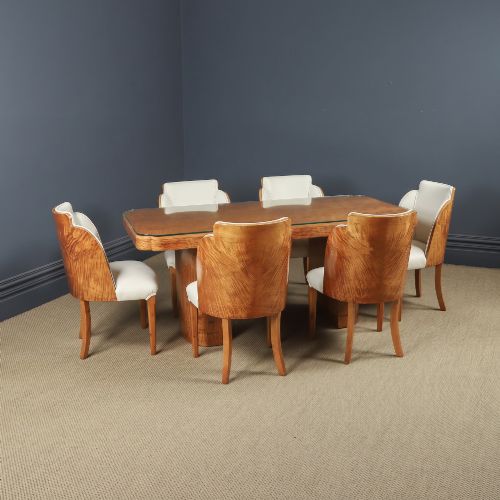
While the majority of satinwood pieces function as occasional tables, side tables, desks, or tea tables, larger dining suites and card tables also appear. Smaller examples served specific drawing room or bedroom purposes.
Console and Pembroke tables were typically deployed for display or light entertaining rather than heavy daily use.
How can I distinguish Sheraton Revival from original Sheraton?
Original Sheraton pieces date from the late 18th century and reflect the direct output of the Neoclassical period. Sheraton Revival items usually date from the late 19th or early 20th century.
Revival pieces often incorporate machine-cut veneers or slightly different secondary woods, while maintaining the characteristic satinwood ground and marquetry motifs of the earlier era.