
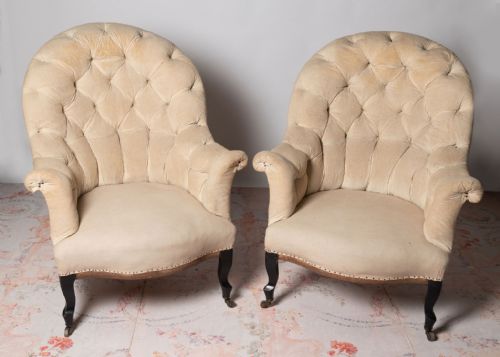


Deep Tufted Easy Chair
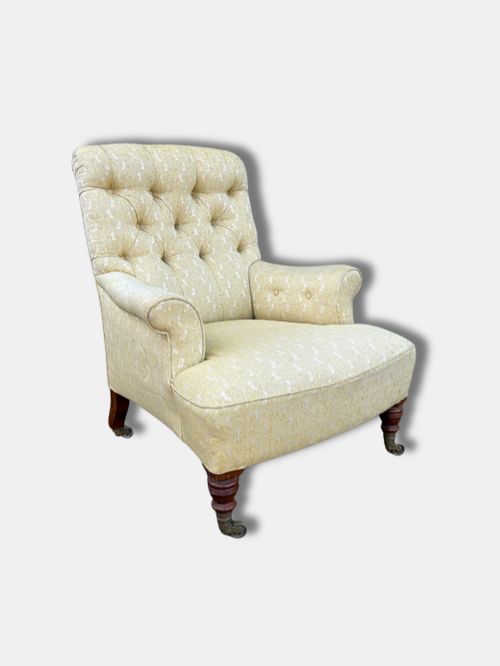
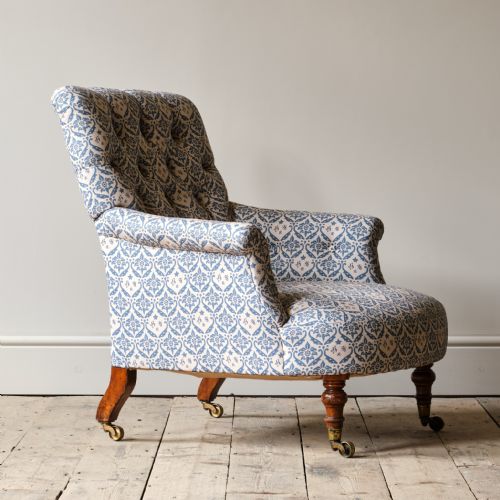
A deep tufted easy chair offers serious comfort paired with traditional upholstery and sprung frames.
Deep Tufted Easy Chair
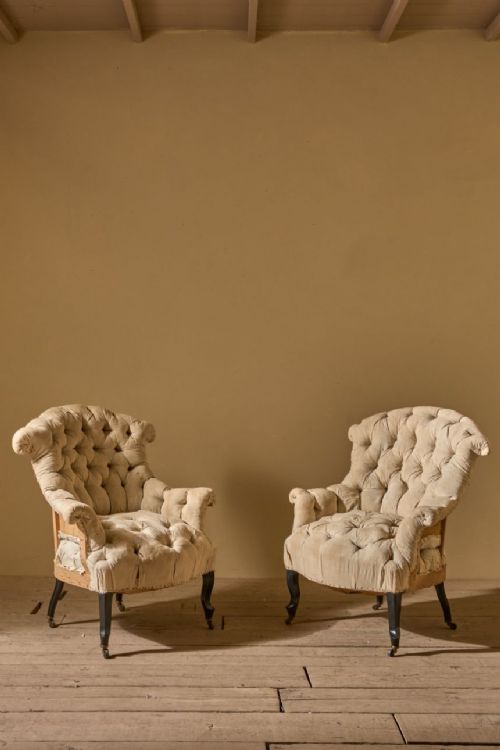
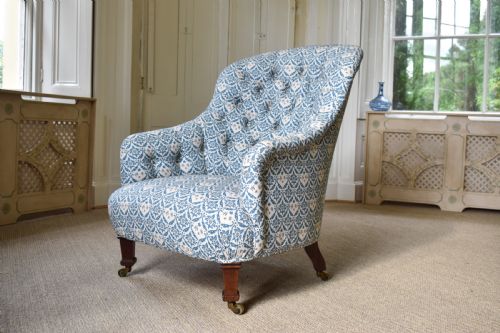
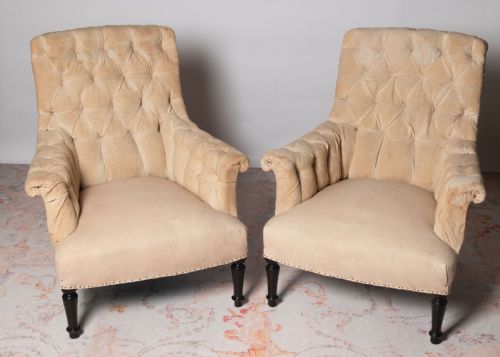
A deep tufted easy chair represents centuries of upholstered seating designed primarily for comfort and formal reception rooms. Buyers searching for a deep tufted easy chair encounter various historic forms, ranging from nineteenth-century English club chairs to French Napoleon III buttoned designs.
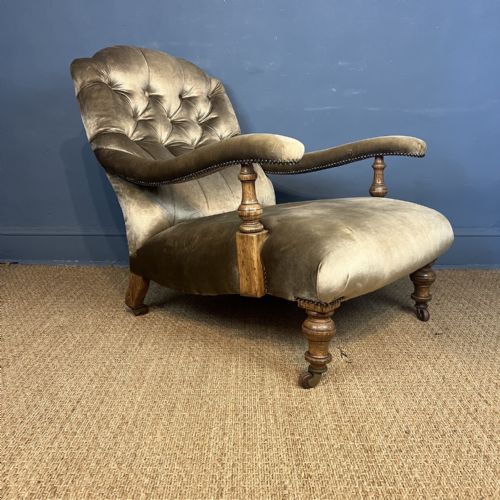
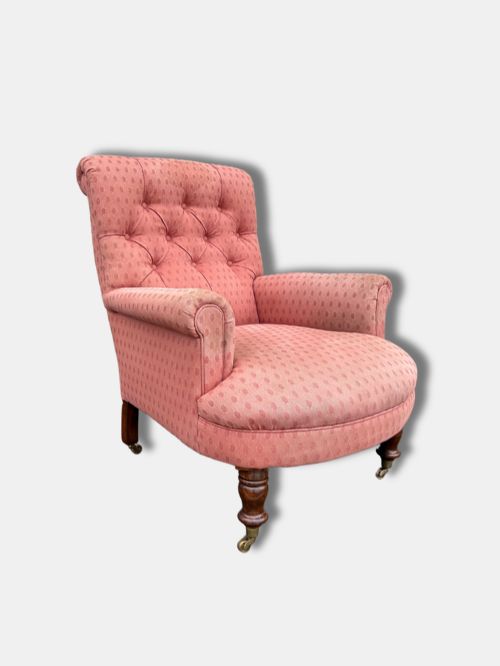
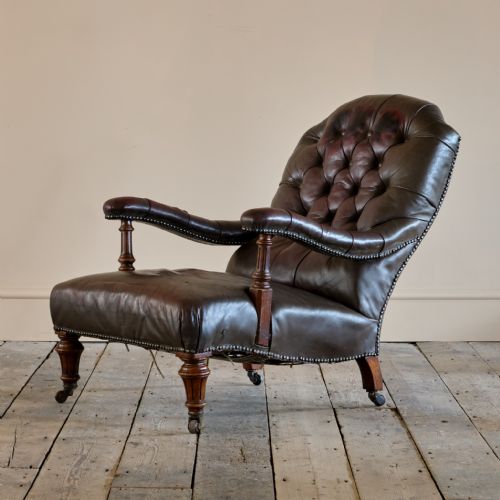
The selections span distinct periods including Georgian wing chairs, Victorian library chairs, and later Edwardian pieces. Examples frequently display deep buttoning, low seats, and generous proportions intended for relaxed lounging.
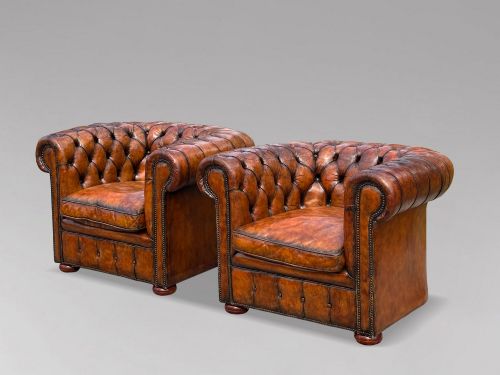
Origin variations include English country house styles, French pairs, and Swedish leather club chairs. Many specimens draw directly upon the characteristic low-slung, sprung architecture associated with nineteenth-century workshops.
How they were made
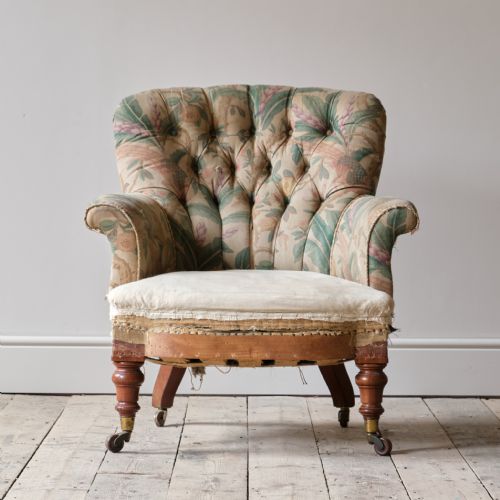
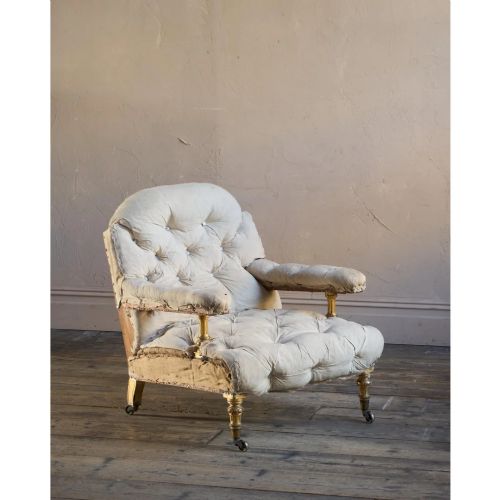
Frames rely on sturdy timbers such as mahogany, walnut, oak, and other hardwoods to support heavy internal springing and padding. Brass elements often appear as functional castors on the feet or decorative upholstery tacks.
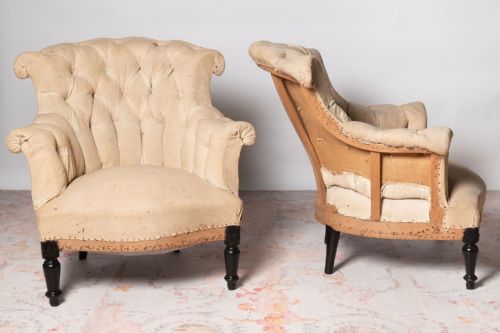
Upholstery techniques involve deep buttoning through thick layers of padding, securing fabric, leather, or velvet directly to the internal webbing and springs. Materials span traditional woven fabrics, ticking, supple leathers, and rich velvets.
Some armchairs hide their maker's identity solely within tiny stamps on wooden castor wheels.
What varies in quality
Quality rests upon the structural integrity of the underlying wooden frame and the retention of the original sprung tension. Pieces retaining authentic makers' stamps, original castors, and period covering demonstrate superior historic provenance.
Proportion and execution of the deep buttoning distinguish finer examples from standard production. Refined tailoring in the velvet, leather, or ticking reflects the skill applied during manufacture.
Howard and Sons·Gillows
The Deep Tufted Easy Chair Glossary
- Button back
- A style of upholstery where depressions are formed in the padding by pulling buttons deep into the stuffing. This technique secures the internal filling while creating a geometric quilted pattern.
- Wing chair
- An armchair featuring projecting side panels attached to the arms and back. These wings originally blocked draughts and trapped heat around the sitter.
- Castor
- A small wheel mounted in a swivel frame attached to the bottom of chair legs. These permit smooth movement across floor surfaces.
- Club armchair
- A deep, low-slung upholstered seat traditionally covered in leather. The form originated in French and English smoking rooms for maximum relaxation.
- Ticking
- A heavy, tightly woven cotton or linen fabric traditionally used as a durable cover for mattresses and interior upholstery foundations.
Deep Tufted Easy Chair: Frequently Asked Questions
What is a deep tufted easy chair?
A deep tufted easy chair is an upholstered seat featuring buttoning pressed into the padding to create a textured, sprung surface designed for relaxation.
These pieces span the Georgian, Victorian, and Edwardian eras, appearing in various forms such as club chairs, library chairs, and country house armchairs.
How do I identify a Howard and Sons armchair?
Howard and Sons armchairs typically feature specific proportions, low sprung seats, and often bear maker stamps or original brass castors.
Many examples from this maker also retain early upholstery treatments such as ticking or structured buttoning.
What materials cover these historic armchairs?
Historic armchairs employ a variety of traditional coverings including leather, velvet, ticking, and patterned fabric.
Underneath these coverings, frames utilise hardwoods like mahogany, walnut, and oak alongside brass castors and metal springs.
Where were club armchairs used?
Club armchairs were traditionally placed in libraries, studies, and drawing rooms as comfortable seating for reading and conversation.
Their deep proportions and supportive sprung backs suited domestic relaxation in nineteenth-century country houses and town residences.