



Decorative Wool Rug
A decorative wool rug brings warmth and deep pattern to a room, drawing on traditions from Persian, Turkmen, and Ottoman weaving centres.
Decorative Wool Rug
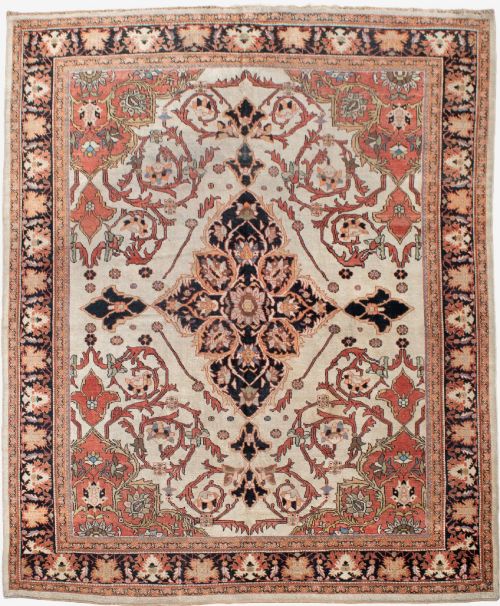
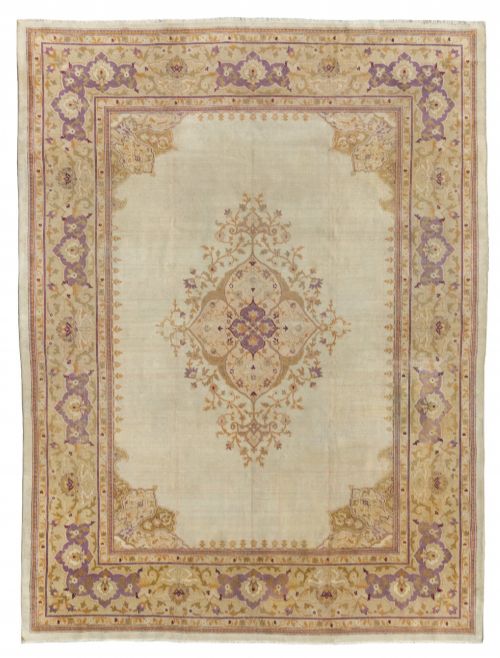
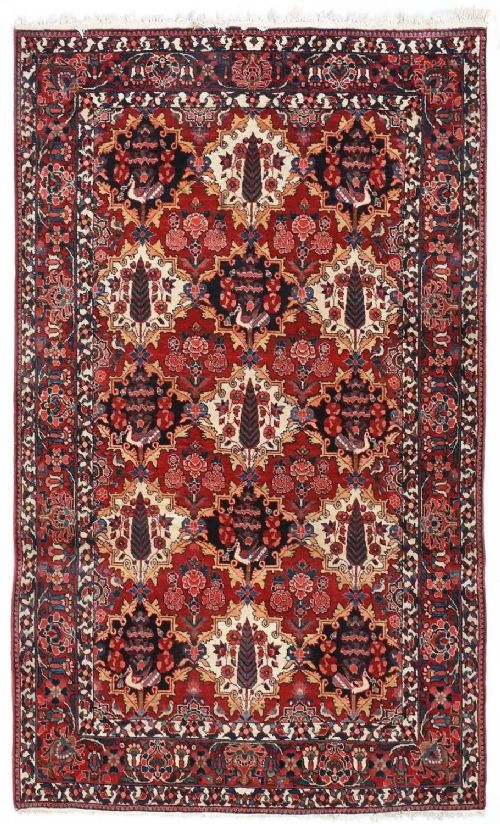
A decorative wool rug encompasses floor coverings, wall hangings, and textiles woven across various regions from the nineteenth century into the mid-twentieth century. Buyers searching this phrase encounter examples ranging from large carpets originating in Heriz, Mahal, and Ushak to smaller tribal rugs and flat-woven kilims.
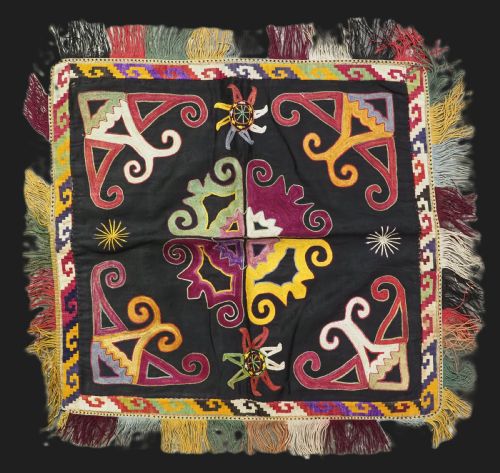
The selection includes specific regional forms such as prayer rugs, torba face pieces, and tent bands alongside traditional Persian and Central Asian formats. These pieces serve both utilitarian floor placement and decorative wall display.
Dated examples span from the mid-nineteenth century through the 1940s, representing diverse aesthetic traditions from Persian workshops to Bessarabian kilims and Chinese Art Deco carpets.
How They Were Made
Makers utilised wool, cotton, and silk, frequently combining hand-spun wool with natural dyes to create durable pile carpets and flat-woven structures. Certain pieces incorporate supplementary materials like glass beads or goat hair for specific decorative or structural details.
Weaving techniques vary from fine knotted pile constructions seen in Kashan and Tekke Turkmen pieces to flat-woven kilim methods and specialised needlepoint work. Regional workshops and tribal groups employed distinct knotting densities and structural foundations tailored to their specific carpets and wall hangings.
Some tent bands carried nomadic household wealth literally on the road, doubling as sturdy architecture and portable art.
What Varies in Quality
Knot density and structural tightness dictate the resilience of the weave, particularly in heavily trodden carpets from centres like Heriz or Sarouk. Finer execution in wool preparation and spinning yields sharper pattern definition and greater longevity.
The chemical stability and source of the dyestuffs influence how colours age, distinguishing uniform natural dye saturation from uneven shifts. Preserved edge bindings, intact original ends, and structural integrity across large formats separate well-maintained examples from heavily distressed pieces.
The Decorative Wool Rug Glossary
- Kilim
- A flat-woven carpet or rug produced without a pile, common in Bessarabian and Near Eastern traditions. These textiles rely on interlocking warp and weft threads to form geometric patterns.
- Torba
- A small Turkmen wall-hanging sack traditionally used for storage within a tent. They frequently display characteristic gul motifs and curled leaf designs.
- Prayer rug
- A small rug featuring a mihrab niche design intended to indicate the direction of prayer. These pieces often concentrate fine floral details around the central arch.
- Tent band
- A long, narrow woven textile used structurally and decoratively inside nomadic tents. Examples include piled or flat-woven bands from Kyrgyz and Turkoman makers.
- Kelleh
- A long, rectangular format of Persian carpet suited to narrow rooms. These rugs typically display extended medallion designs flanked by complex border guards.
Decorative Wool Rug: Frequently Asked Questions
How do I clean an old wool rug?
Maintenance requires gentle surface care suited to natural fibres and traditional dyes. Heavy washing risks destabilising natural dye compounds and older wool foundations.
Professional specialist cleaning is advised for accumulated dirt, while regular light vacuuming without a beater bar protects the pile from premature wear.
Can these rugs be used on heated floors?
Natural wool and cotton foundations respond well to moderate ambient temperatures, though excessive direct heat can dry out older animal fibres.
Using a breathable underlay helps distribute heat evenly and prevents the rug from sliding across smooth flooring surfaces.
How do I identify a tribal rug from a workshop carpet?
Tribal rugs typically display geometric memory patterns, irregular asymmetric designs, and a denser, heavier handle associated with nomadic production. Workshop carpets generally show balanced symmetrical medallions, precise curvilinear floral motifs, and structured urban weaving.
Materials and palette also offer clues, as nomadic groups often utilised local hand-spun wool and distinct regional dye mixtures.
What is the difference between a kelim and a pile rug?
A kelim is constructed using a flat-weave technique without knots, resulting in a thin, reversible textile with sharp geometric boundaries. A pile rug is made by tying individual tufts of wool around the warp threads, creating a dense, plush surface.
Flat weaves function well as lightweight wall hangings or summer floor coverings, while piled carpets provide greater cushion and warmth.