



Decorative Rosewood Box
A decorative rosewood box brings rich grain and careful detail to a desk or table, offering a neat home for letters, jewellery or tea.
Decorative Rosewood Box
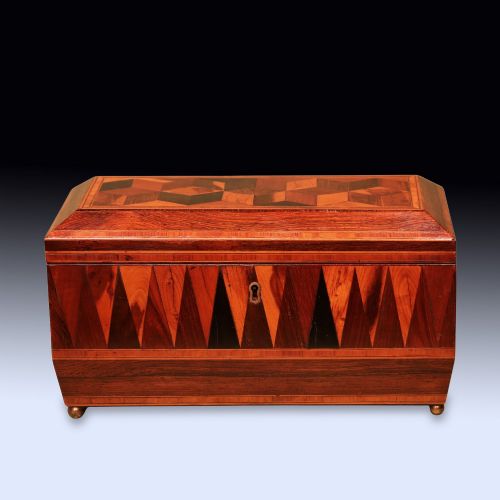
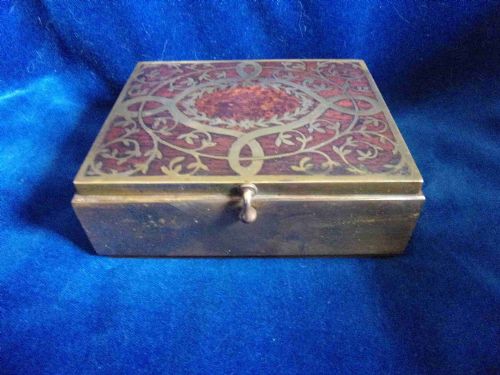
A decorative rosewood box serves various domestic purposes, appearing frequently as a tea caddy, sewing box, music box, or writing slope across this selection. These pieces date principally from the Regency and Victorian eras, alongside Chinese and early twentieth-century examples.
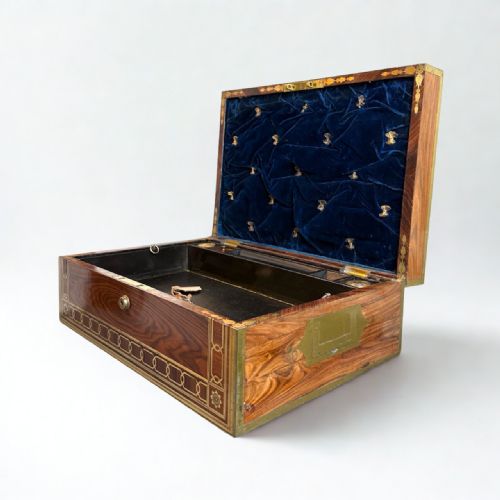
Tea caddies and writing boxes dominate the offerings, built to hold dry leaves or writing implements with partitioned interiors. Other forms include glove boxes, trinket boxes, and musical boxes equipped with bells and multiple airs.
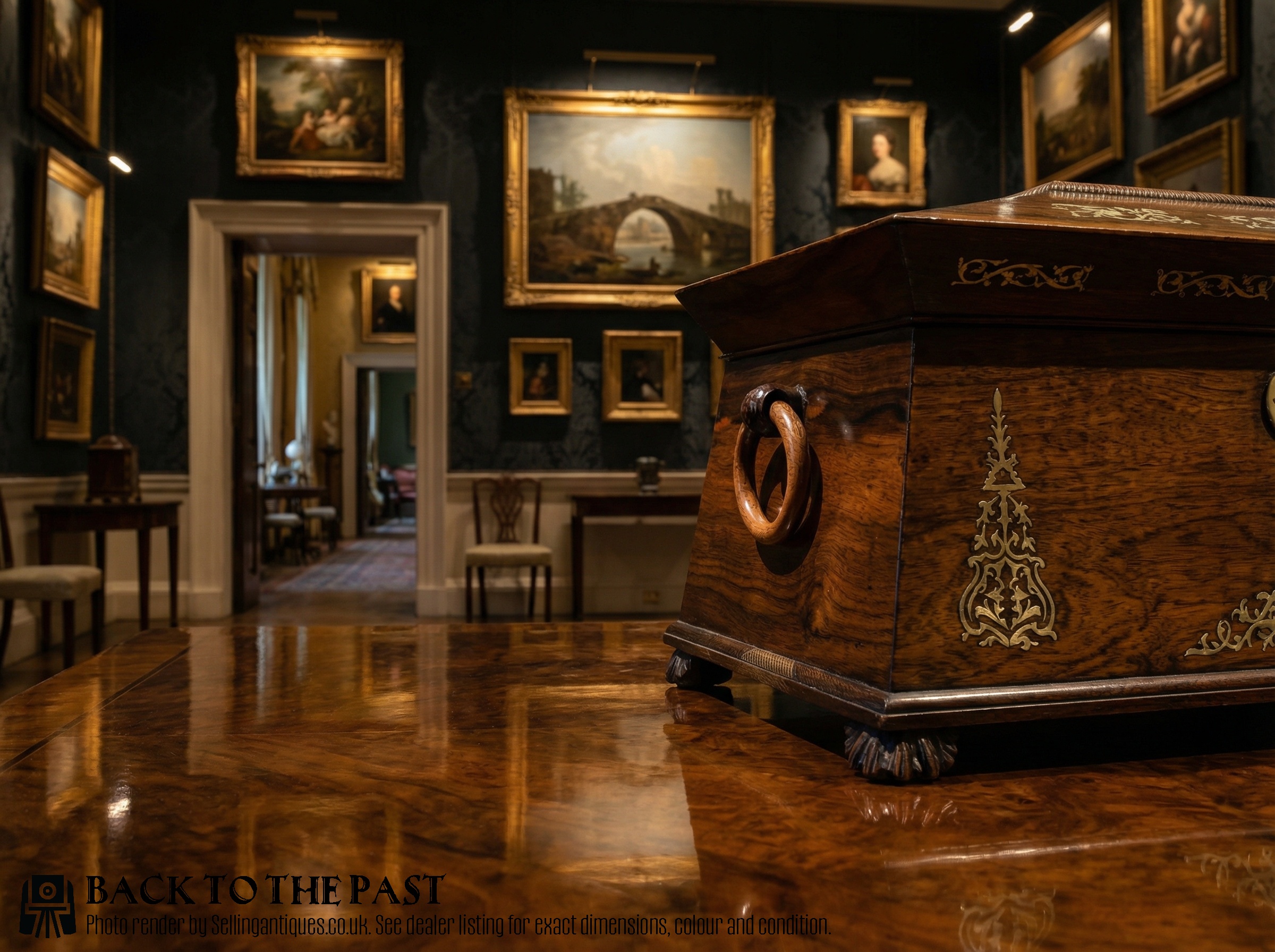
The materials span solid and veneered rosewood, often enriched with contrasting timbers and metalwork. Buyers find everything from sarcophagus-shaped sewing chests to Tunbridge Ware mosaic pieces.
What varies in quality
The refinement of the inlay work and the precision of the parquetry patterns distinguish finer boxes from simpler production. Subtle details, such as matching grain across the lid and sides or the presence of original brasses and working locks, elevate a piece.
Internal fittings also drive distinction, particularly where compartment lids, velvet-lined trays, and working musical movements remain intact. The crispness of carved elements and the complexity of Tunbridge Ware micro-mosaic panels set the upper tier apart.
Decorative Rosewood Box Retail Price Guide 2026
Typical asking prices for decorative rosewood box among the pieces listed under this phrase on Sellingantiques today, from the lower quarter to the upper quarter. They describe what is for sale here now, not the wider market.
Listings feature boxes from the Regency, Victorian, and Chinese Republic periods, constructed in rosewood with brass, mother of pearl, and Tunbridge Ware inlay.
Erhard and Sohne
The Decorative Rosewood Box Glossary
- Tea Caddy
- A box designed for storing loose tea leaves, often featuring internal lidded compartments to keep different blends separate.
- Tunbridge Ware
- A type of decorative woodwork originating from Tunbridge Wells, characterised by intricate mosaic designs assembled from tiny coloured wood prisms.
- Marquetry
- The art of applying decorative veneer pieces in wood, shell, or metal to form pictorial or geometric patterns on a wooden surface.
- Sarcophagus
- A box shape featuring a domed or sloping lid atop a heavy, flared base, popular for Regency and Victorian caddies and sewing boxes.
- Writing Slope
- A portable desk with a hinged, slanted writing surface that opens to reveal compartments for pens, ink, and stationery.
Decorative Rosewood Box: Frequently Asked Questions
What were tea caddies used for?
Tea caddies held expensive tea leaves securely under lock and key in the dining room or drawing room. Servants typically kept the key, measuring out portions for each pot.
Inside, twin compartments often flanked a central mixing bowl for blending green and black teas.
How do I care for rosewood?
Rosewood benefits from stable indoor humidity and shelter from direct sunlight to prevent the timber from splitting or fading. Gentle dusting with a dry cloth keeps the surface clean without stripping the polish.
Avoid liquid cleaners and silicone sprays, which can damage aged French polish.
What is Tunbridge Ware?
Tunbridge Ware is nineteenth-century English woodwork decorated with detailed mosaic patterns made from natural-coloured woods. Craftsmen glued thousands of tiny wooden blocks together to create pictures of flowers, butterflies, or geometric borders.
These mosaics were then sliced thinly and applied as veneer to boxes and small trinket cases.
How do I spot a Regency box?
Regency boxes often feature architectural proportions, sarcophagus silhouettes, and bold brass stringing or inlay. The period favours clean classical lines and rich dark rosewood grain accented with geometric brass work.
Foot styles often include ball feet or carved paw feet.
Where were writing slopes placed?
Writing slopes sat upon library tables, desks, or even laps while travelling, providing a firm inclined surface for correspondence. Their interior compartments organised paper, sealing wax, and inkwells.
When closed, they formed neat decorative objects for the Victorian parlour.