




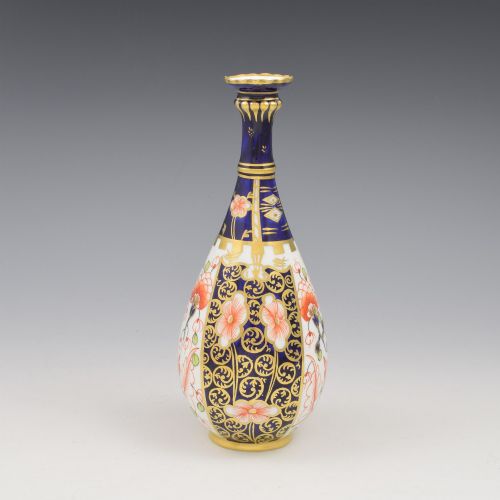
Decorative Imari Porcelain
Decorative imari porcelain brings together rich iron-red and cobalt-blue palettes on plates, chargers, and vases for cabinet display or table service.
Decorative Imari Porcelain
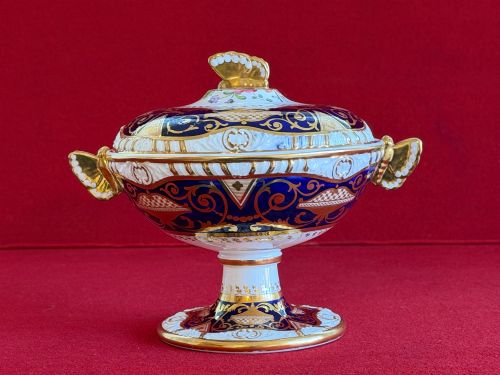
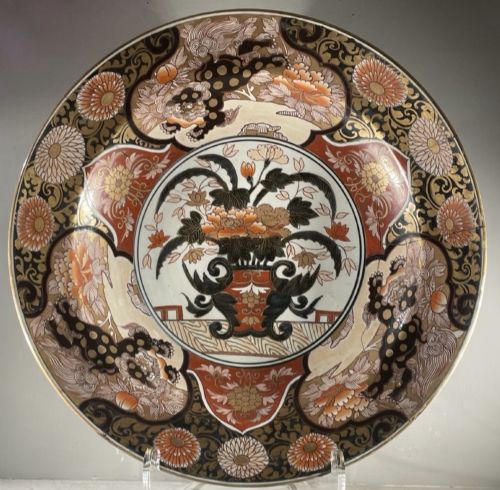
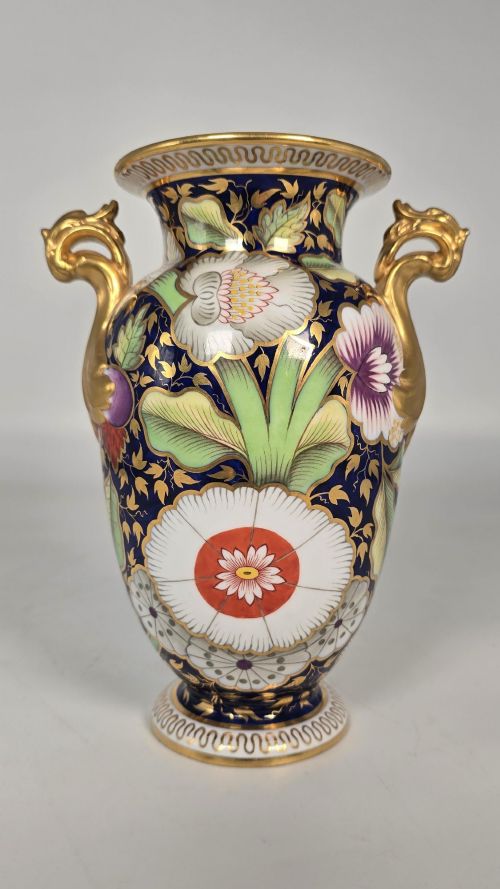
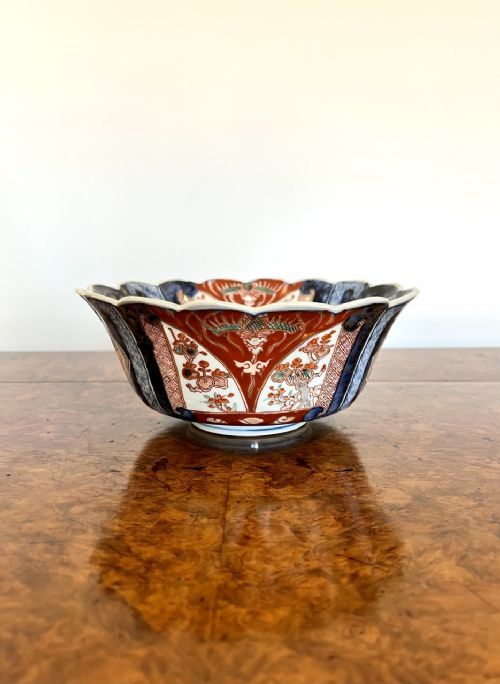
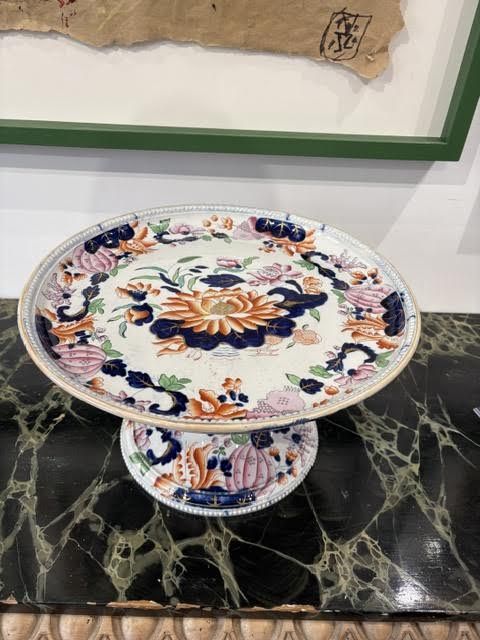
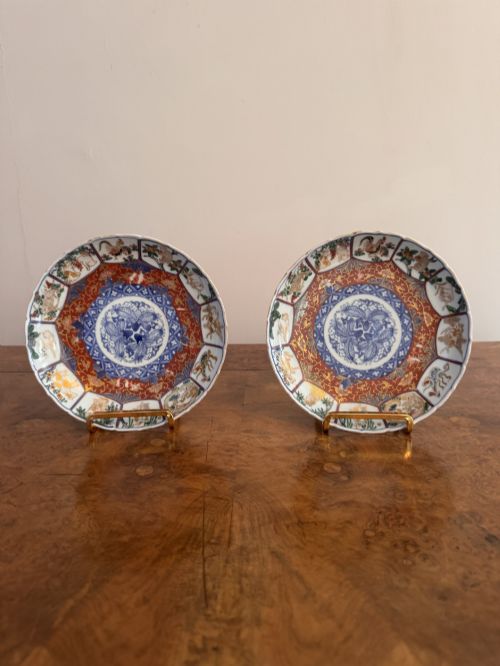
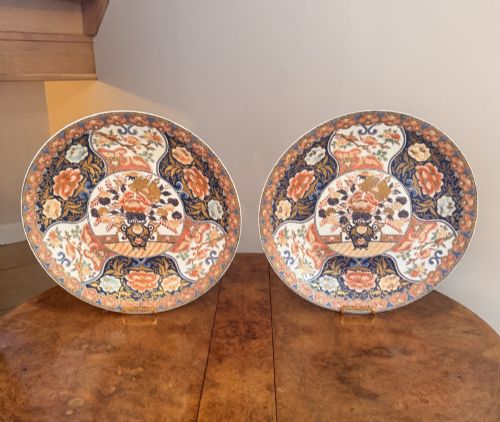
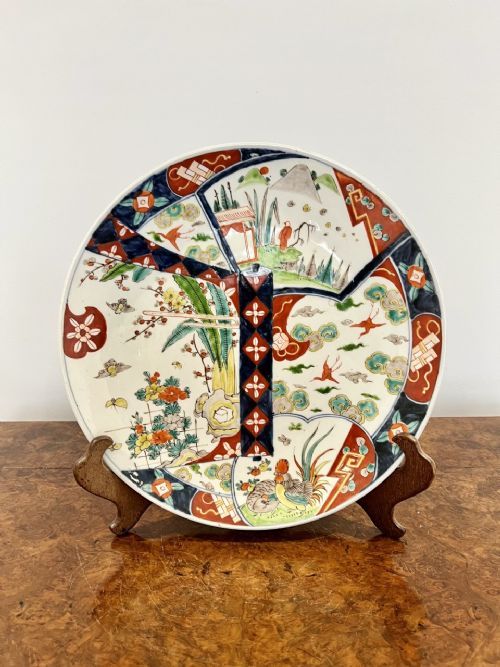
When you search for decorative imari porcelain, you encounter a distinct group of ceramics spanning Japanese export wares and English adaptations from the eighteenth century through to the mid twentieth century. The selection on this page centres heavily on Japanese production from the Meiji period and the year nineteen hundred, alongside English bone china and ironstone interpretations by makers such as Royal Crown Derby and Spode.
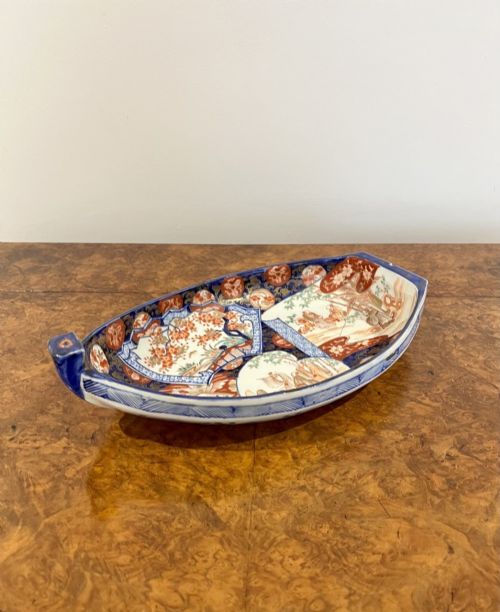
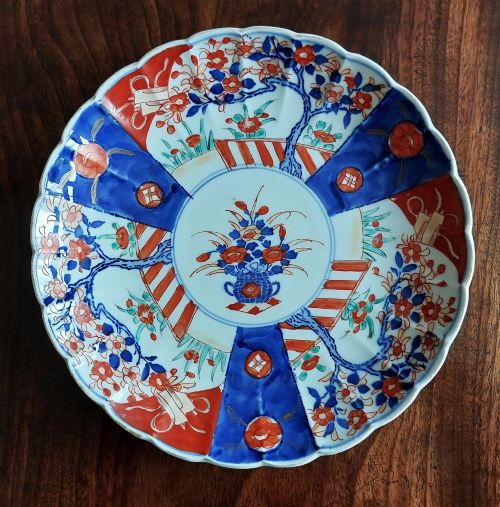
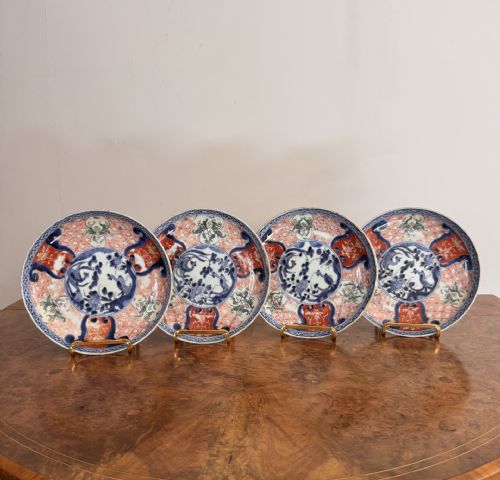
Formations take multiple shapes across the listings, ranging from large floor-standing vases and deep chargers to scalloped dishes, leaf-shaped plates, and twin-handled vessels. Japanese pieces originate from kilns in areas like Arita, while English potteries adapt the traditional palette onto domestic forms including dessert services, jugs, and teapots.
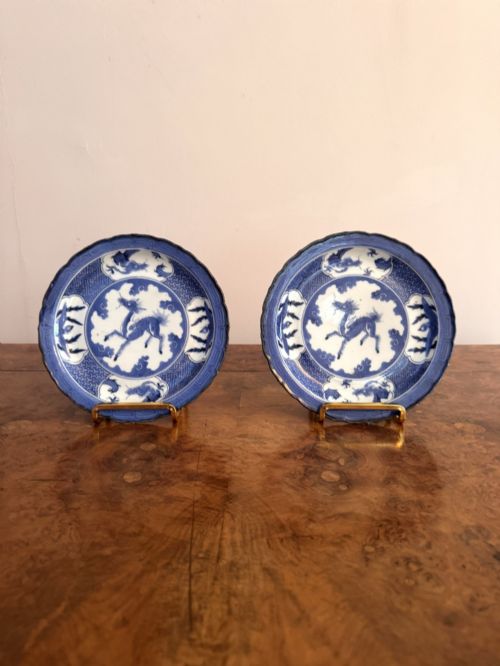
Buyers meet both blue and white variations and richly enamelled polychrome surfaces finished with gilding. These objects reflect a long history of cross-cultural trade and stylistic borrowing between Asian ceramic traditions and European domestic interiors.
How they were made
Production relies on porcelain or ironstone bodies shaped by hand or moulded into specialised forms such as scallop edges, square plates, and lidded jars. Glaze is applied to seal the ceramic body before initial firing.
Decoration combines underglaze cobalt blue with overglaze enamels in iron red, supplemented by gold leaf or gilding applied during subsequent lower-temperature firings. Ormolu mounts are sometimes added to Chinese and Japanese plates to enhance their decorative status in European rooms.
Decorative Imari Porcelain Retail Price Guide 2026
Typical asking prices for decorative imari porcelain among the pieces listed under this phrase on Sellingantiques today, from the lower quarter to the upper quarter. They describe what is for sale here now, not the wider market.
The listings feature both Japanese export ceramics from the Meiji and Showa periods and nineteenth-century English ironstone and bone china wares.
What varies in quality
Differentiation across these pieces rests on the crispness of the underglaze painting and the density of the polychrome enamel work. Superior examples exhibit fine brushwork and careful alignment between the blue underglaze outlines and the red and gold overglaze infill.
The weight of the ceramic body and the precision of moulded details, such as scalloped rims, pierced serving trays, and lobed bowls, separate standard production wares from exceptional output. The preservation of the gold leaf and enamel surface without excessive rubbing dictates the visual impact of each vessel.
Royal Crown Derby·John Davenport of Longport·Keeling and Co
The Decorative Imari Porcelain Glossary
- Imari
- A style of ceramic decoration originating in Japan, characterised by a palette of underglaze blue, iron red, and gold. It was widely exported to Europe and subsequently copied by English potteries.
- Meiji Period
- An era in Japanese history spanning from eighteen sixty-eight to nineteen twelve, associated with significant export of decorative arts including fine porcelain chargers and vases.
- Charger
- A large decorative plate intended for display on a wall or sideboard rather than for functional dining use. These items frequently display intricate panel designs in the imari palette.
- Enamel
- Opaque glass-like material applied over the fired glaze in patterns of red, green, and other colours, then fixed with a low-temperature firing. It provides the characteristic raised texture on imari wares.
- Gilding
- The application of gold leaf or gold paint to ceramic surfaces to highlight rims, handles, and decorative motifs. Its intact preservation contributes to the condition of the piece.
Decorative Imari Porcelain: Frequently Asked Questions
What is decorative imari porcelain?
Decorative imari porcelain comprises ceramic plates, bowls, chargers, and vases decorated in a traditional palette of cobalt blue, iron red, and gold. The selection includes Japanese export pieces alongside English interpretations.
These items range from nineteenth-century Japanese Meiji examples to twentieth-century English bone china services produced by factories like Royal Crown Derby.
How were these pieces used?
Many larger chargers, plates, and vases were made specifically for display in cabinets or on sideboards within period interiors. Other forms, such as dessert services, teapots, and serving dishes, served functional roles at the dining table.
Export wares often balanced domestic utility with ornamental appeal, reflecting their status as luxury goods in European households.
How do I live with imari porcelain?
These ceramics suit placement on open shelving, sideboards, or dining tables where their bright palette adds colour to a room. Wall-mounted chargers and decorative plates make strong focal points above mantelpieces.
Care involves gentle dusting and hand washing when necessary, avoiding abrasive cleaners that might damage the delicate overglaze enamels and gold leaf.
How do I tell Japanese and English imari apart?
Japanese export pieces, particularly from the Meiji period, typically feature finer porcelain bodies and traditional Japanese motifs arranged in distinct panels. English versions often use bone china or ironstone bodies stamped with nineteenth-century factory marks.
English interpretations such as those by Spode or Royal Crown Derby frequently adapt the traditional colour scheme onto familiar European table shapes.