





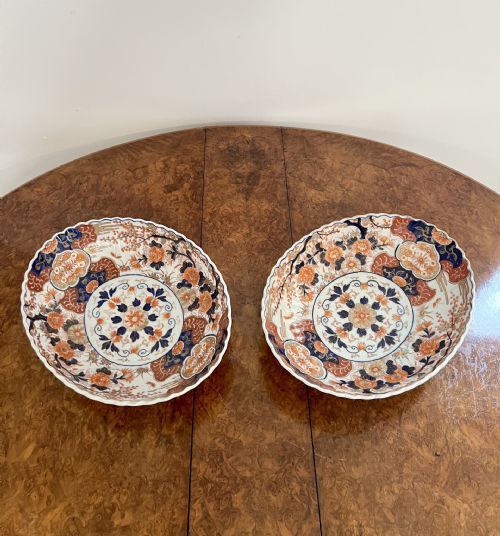


Decorative Imari Display Dish
These decorative imari display dish items bring striking cobalt and iron-red palettes to walls and cabinets, offering centuries of ceramic artistry.
Decorative Imari Display Dish
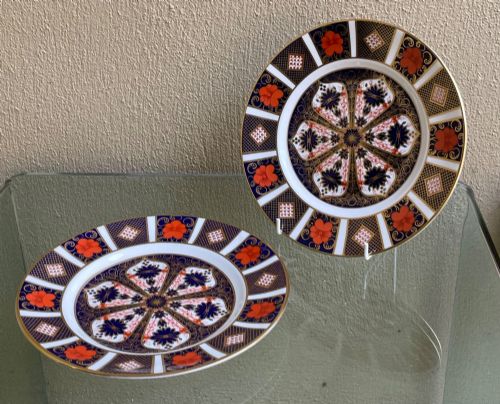
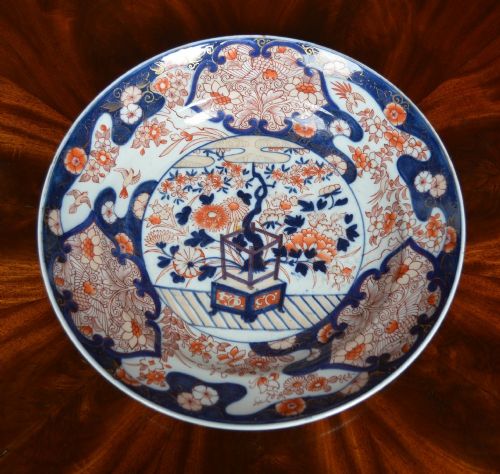
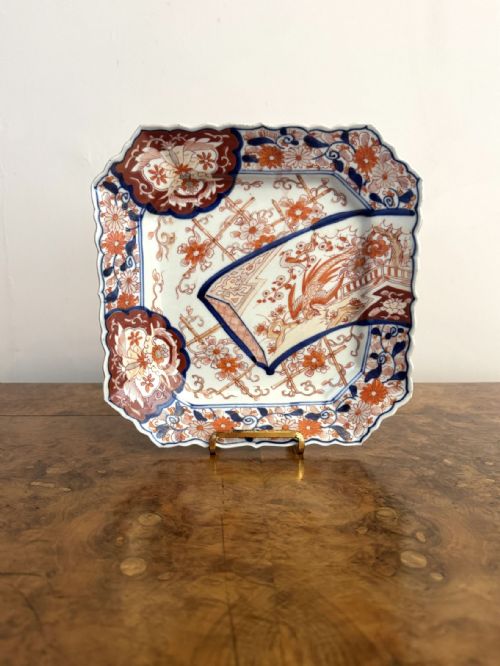
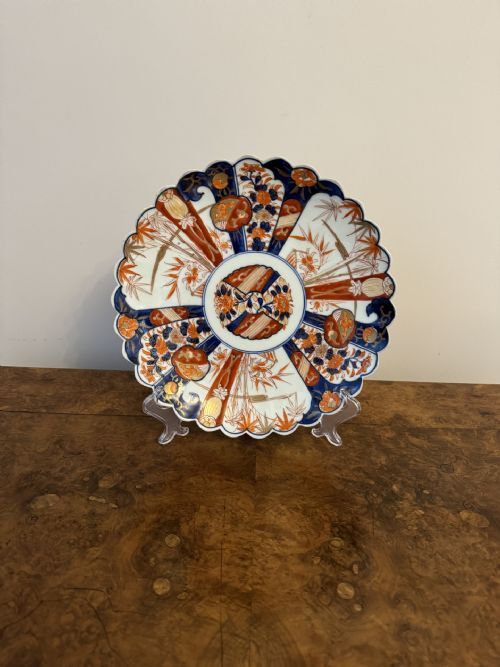
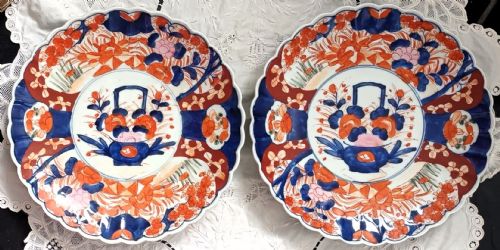
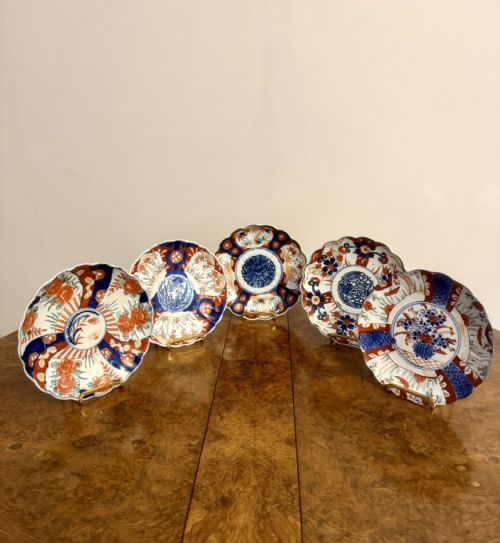
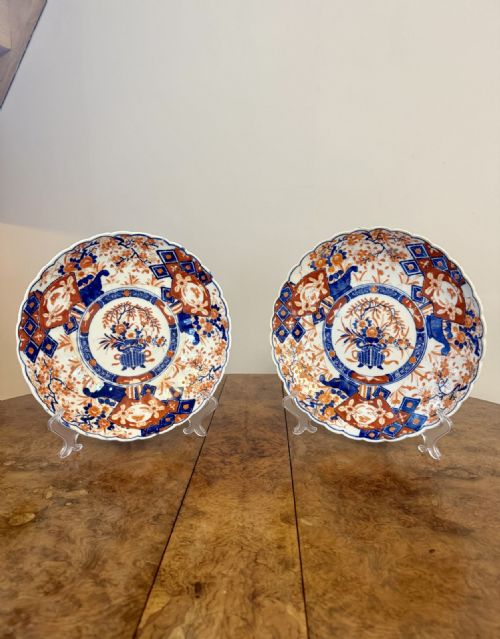
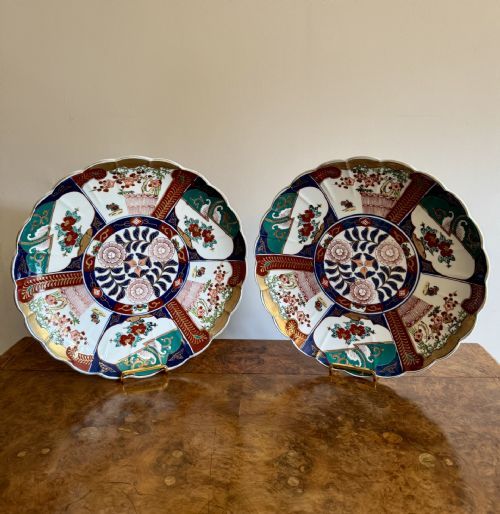
A decorative imari display dish brings vibrant patterns of blue, red and gold into a room, typically taking the form of a round charger, plate or scalloped bowl. These pieces originate primarily from Japanese traditions such as the Meiji period, alongside Chinese export wares and British adaptations from the nineteenth and twentieth centuries.
Buyers will most frequently encounter nineteenth-century Japanese plates and chargers featuring traditional motifs like floral arrangements, birds, or figurative scenes involving the Seven Lucky Gods. The selection spans standard circular formats as well as square plates, hexagonal bowls and ribbon-edged variations.
The aesthetic bridges domestic utility and pure display, designed originally to catch the eye on sideboards or walls. Whether sourced from eighteenth-century origins or mid-century British makers like Royal Crown Derby, each object maintains the characteristic palette associated with the style.
What Varies in Quality
The crispness of the hand-painted brushwork dictates the visual success of the piece, separating rapid commercial output from more considered artistic work. Finer examples display precise control over cobalt underglaze lines and carefully registered enamel details that sit cleanly within the design boundaries.
The application of gold leaf and gilding introduces another tier of distinction, where richer metallic elements elevate the overall richness of the palette. Surface preservation also plays its part, as well-maintained enamel vibrancy without heavy rubbing preserves the original visual impact intended by the maker.
Listings span from early eighteenth-century pieces up to mid-twentieth-century British interpretations in porcelain and stoneware.
Royal Crown Derby·John Ridgway
The Decorative Imari Display Dish Glossary
- Charger
- A large decorative plate traditionally used for ceremonial display rather than dining. These pieces measure significantly larger than standard tableware and usually feature complex pictorial designs.
- Cobalt Underglaze
- A blue pigment applied directly to the unglazed ceramic body before the transparent glaze layer is added. This technique protects the pigment beneath the glassy surface during high-temperature firing.
- Imari Style
- A ceramic aesthetic originating in Japan and defined by a distinct palette of cobalt blue, iron red and supplementary gold. The style was widely emulated by European potteries during later centuries.
- Meiji Period
- A historical era in Japan spanning from eighteen sixty-eight to nineteen twelve, associated with a surge in export ceramics and decorative arts sent to Western markets.
- Scalloped Edge
- A decorative rim shaped into a series of rhythmic, curved indentations rather than a simple circular cut. This treatment adds textural interest to plates and bowls.
Decorative Imari Display Dish: Frequently Asked Questions
How were decorative imari display dishes used historically?
These pieces were primarily manufactured for visual display on walls, sideboards, or large cabinets rather than for daily dining use. Wealthy households utilised them to showcase vibrant ceramic artistry and status.
Over time, collectors transitioned them into dedicated cabinet pieces or hung them securely using specialised wire display brackets to protect the glazed surfaces.
How do I distinguish between Japanese and British imari?
Japanese examples, particularly from the Meiji period, typically utilise fine-grained porcelain bodies and hand-painted motifs featuring traditional imagery like koi carp or figures. The brushwork tends to feel fluid and expressive.
British makers such as Royal Crown Derby adapted the aesthetic onto alternative ceramic bodies during later decades, often incorporating distinct registry marks or factory stamps on the reverse.
What does Arita mean in relation to these dishes?
Arita refers to the Japanese town and surrounding region where the production of porcelain first began in the seventeenth century. It stands as the historic heartland of Japanese ceramic manufacturing.
Pieces associated with this region laid the technical and stylistic foundations for the imari tradition before it expanded into international export markets.
Can I hang these heavy chargers on the wall?
Many large chargers feature substantial porcelain bodies that require robust, purpose-built wall mounting hardware rather than simple decorative wire loops. Ensuring the weight is evenly distributed prevents accidental slips.
It is advisable to consult a professional framer or hardware specialist to select a secure bracket that accommodates the specific diameter and weight of the dish.