


Decorative Horology Clock
These decorative horology clock examples combine precise mechanical timekeeping with ornate Victorian and French styling to anchor a room.
Decorative Horology Clock
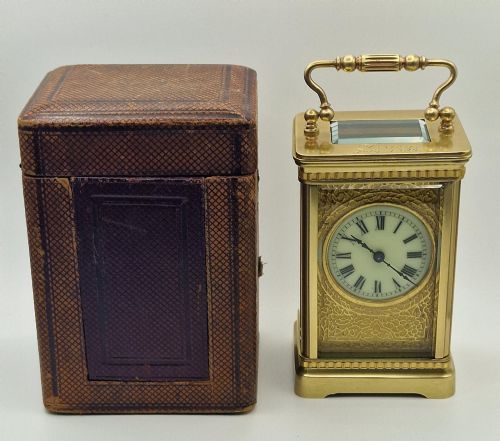
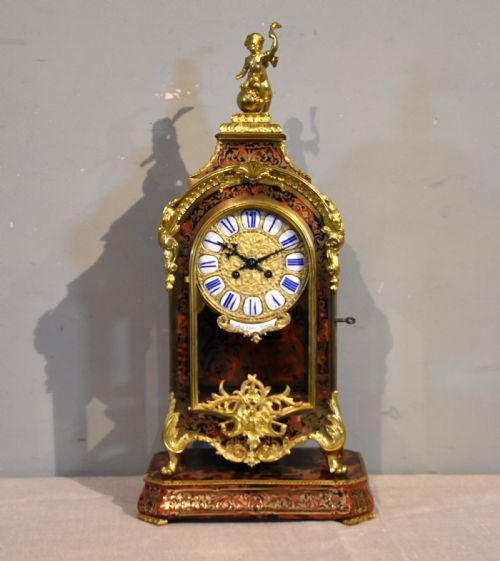
A decorative horology clock bridges the gap between mechanical engineering and interior decoration, appearing in forms such as substantial mantel clocks, portable carriage clocks, and intricate bracket clocks. The selection on this page draws heavily from Victorian and nineteenth-century French traditions, alongside Edwardian and mid-twentieth-century examples.
Buyers encounter architectural mantel clocks alongside glazed carriage designs that display the escapement within. Many pieces adhere to revival aesthetics including French Rococo, Louis XV, Neoclassical, and Directoire movements.
Origin points span London workshops and Parisian makers, offering both British bracket timepieces and continental gilt bronze or ormolu creations. Each object type carries distinct regional characteristics in its dial layout and case architecture.
Materials and construction
Casework relies on a combination of cast brass, gilded bronze, ormolu, and ebonised or mahogany woods. Finer examples incorporate tortoiseshell veneer or feature protective glass domes over skeleton movements.
Dials frequently utilise white enamel with painted Roman or Arabic numerals, framed by elaborate cast metal bezels. Complex mechanisms employ fusee movements and repeating strike complications housed within heavy brass frameworks.
Paul Garnier hid his signatures so cunningly inside his Series I carriage clocks that owners still discover them decades later.
Factors determining quality
The sophistication of the brass casting and the crispness of the ormolu chasing define the upper tier of decorative horology clocks. Substantial weight in the case metal and depth in the gilding distinguish superior French and British workshops.
Movement complexity, such as the inclusion of repeating strikes, fusee setups, or signed dials by known makers, elevates a piece significantly. The integrity of the timber veneer, undamaged enamel dials, and original glass components preserve the overall standard.
Le Roy Paris·Paul Garnier·Winterhalder and Hofmeier·John Bennett
The Decorative Horology Clock Glossary
- Ormolu
- Gilt bronze created by applying finely ground high-carat gold mercury amalgam to a bronze object. It provides a warm, lasting metallic lustre on nineteenth-century clock cases.
- Fusee
- A conical pulley used with a cord or chain to maintain even torque as the clock mainspring unwinds. This mechanism ensures consistent timekeeping accuracy across the power reserve.
- Capucine
- A type of portable French alarm clock featuring striking mechanisms and a carrying handle on top. These travel timepieces often sit within protective leather cases.
- Skeleton clock
- A timepiece with an open framework designed to expose the gear train and movement to view. They are frequently displayed beneath glass domes.
- Repeater
- A mechanism that chimes the hours and quarters upon demand when a lever or cord is activated. It allowed owners to check the time in the dark.
Decorative Horology Clock: Frequently Asked Questions
How do I wind a mechanical clock?
Use the designated key to turn the winding square clockwise until firm resistance indicates the mainspring is fully tensioned. Avoid over-winding to protect the delicate internal teeth.
Ensure you support the clock case steadily during the process, particularly with heavier bronze or marble mantel models.
Where should I place a bracket clock?
Position your bracket clock on a sturdy, level surface away from direct sunlight and damp environments. Wall brackets or heavy sideboards provide stable foundations that prevent vibration interference.
Keeping the clock away from draughts helps maintain consistent oil viscosity within the gear train.
What is a fusee movement?
A fusee movement uses a conical drum and a fine chain to equalise the power delivered by the mainspring. As the spring relaxes, the chain leverages a wider section of the cone to sustain steady force.
This system represents a hallmark of quality British clockmaking throughout the nineteenth century.
How do I identify French carriage clocks?
French carriage clocks feature rectangular brass brass-framed glass cases with folding carrying handles on top. The escapement is often visible through a glass panel on the upper surface.
Dial faces generally feature enamel chapters, and the movements frequently include alarm or repeating complications.
Can these clocks be repaired?
Professional horologists can service and restore most mechanical movements by cleaning gear trains and rebushing worn pivot holes. Specialist conservation preserves the original patina of the brass and timber.
Regular professional maintenance every few years keeps the intricate striking and timekeeping functions operating smoothly.