

Decorative Glass Centerpiece
When a decorative glass centerpiece crosses your path, you are looking at a focal point designed to anchor a room.
Decorative Glass Centerpiece
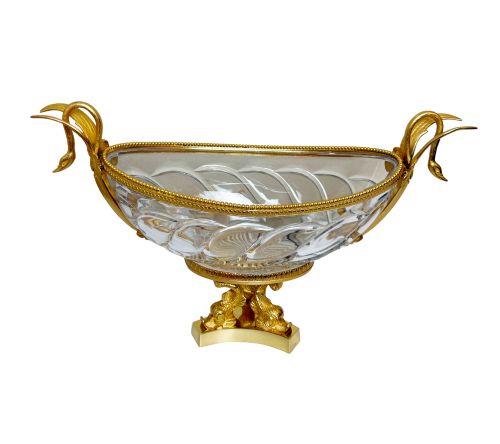
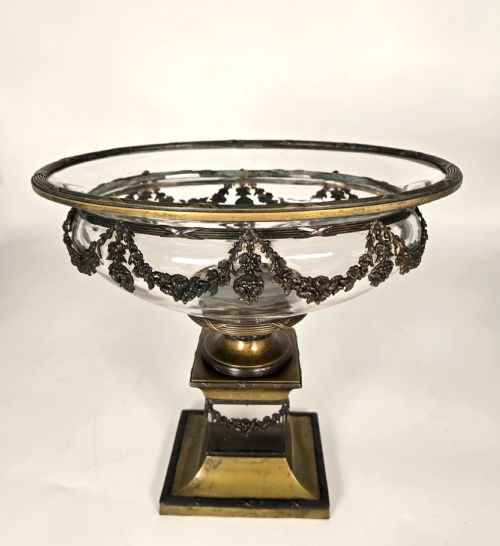
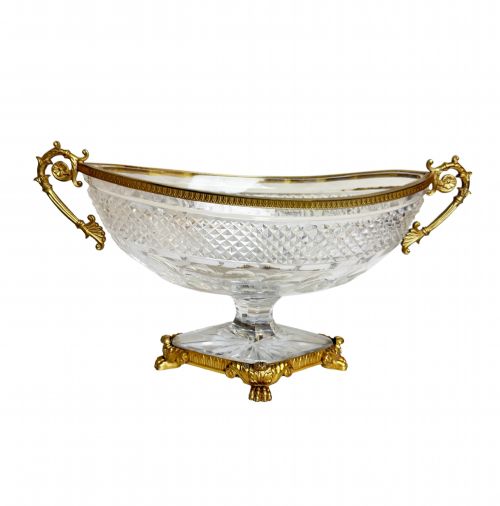
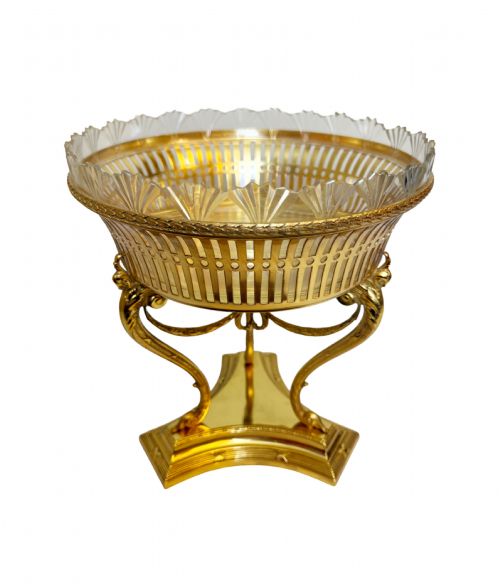
A decorative glass centerpiece serves as a prominent table ornament, often taking the form of a large bowl, epergne, or pedestal dish designed to draw the eye in a formal setting. These pieces emerge from periods ranging across the Victorian era, the Edwardian years, and the Art Nouveau and Art Deco movements, reflecting changing domestic tastes.
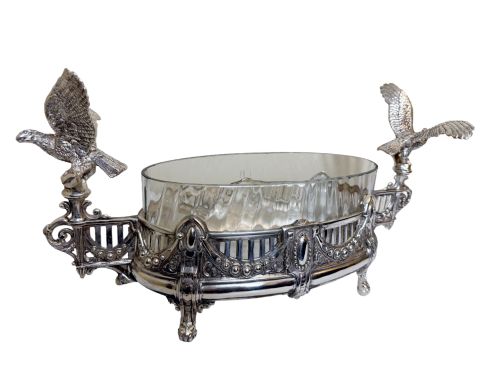
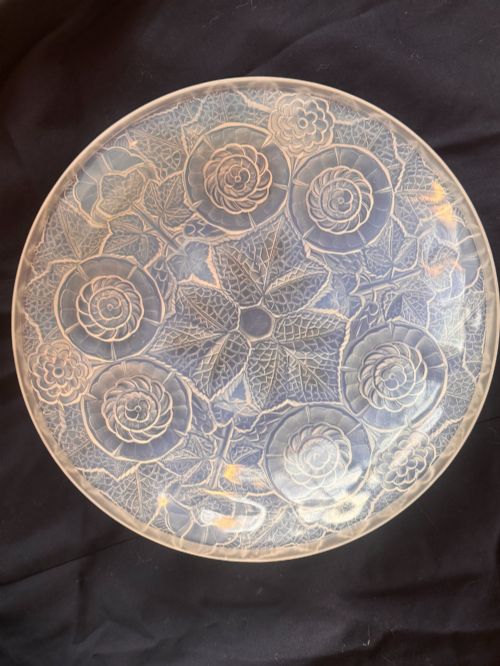
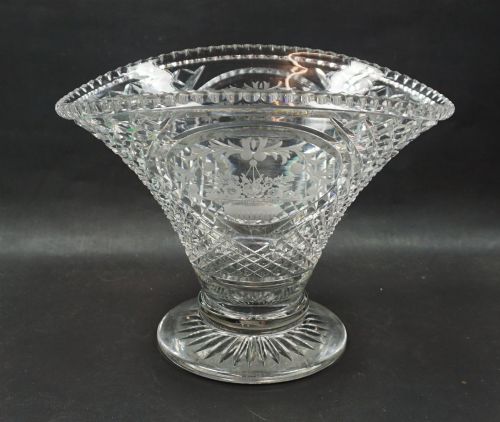
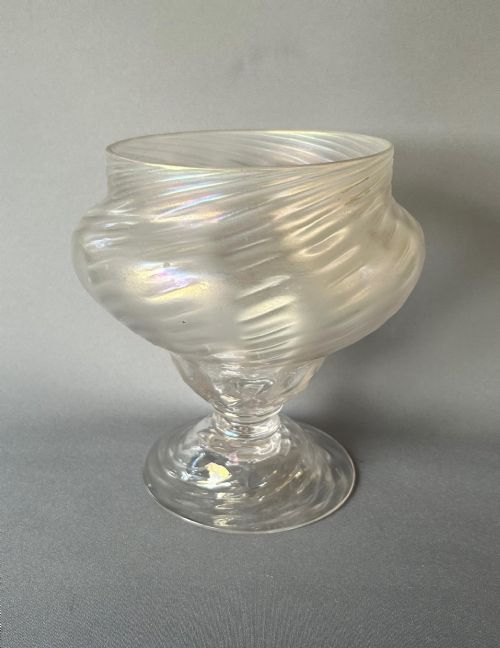
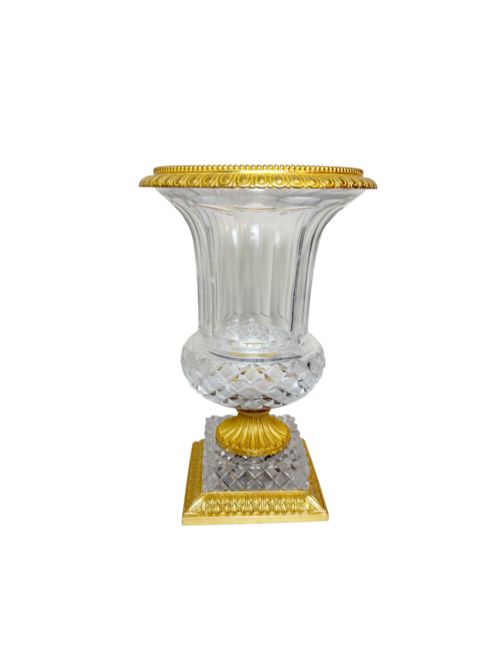
The versions most commonly met here include heavy cut crystal vessels, iridescent art glass bowls, and moulded opalescent dishes. Many incorporate mounts of gilt bronze, ormolu, or silver, bridging the gap between delicate glassware and architectural metalwork.
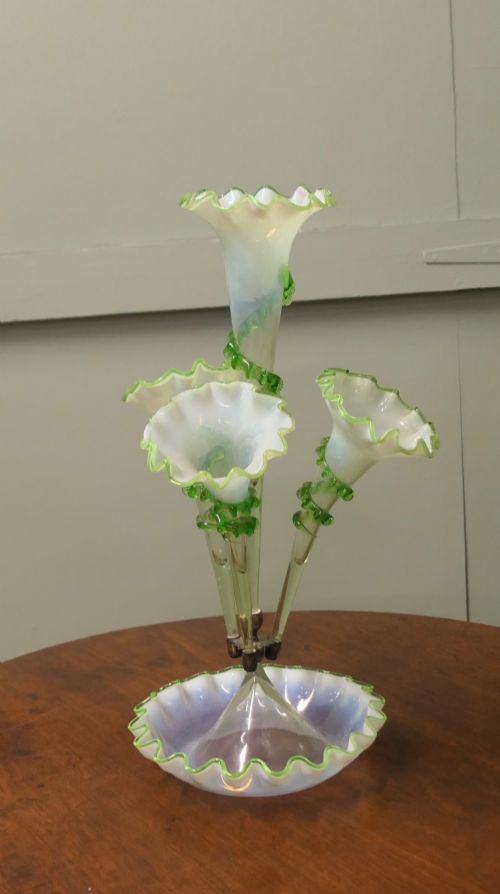
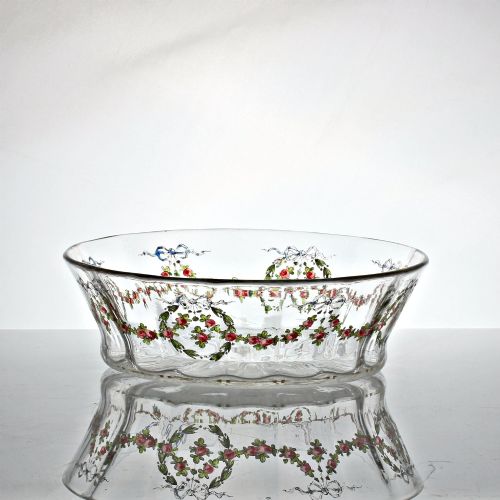
Origins span English workshops, French glassmakers, Belgian factories, and Bohemian studios, showcasing a wide geographic reach in domestic table decoration. Buyers encounter everything from trumpet-laden epergnes to shallow footed bowls meant for display.
Materials and methods
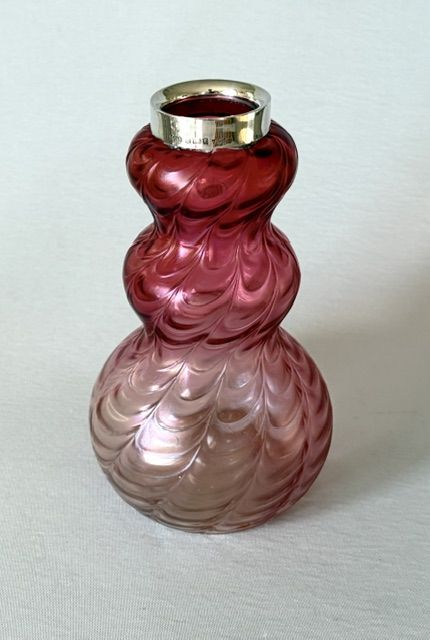
Makers shaped these pieces using hand-blown, moulded, or cut glass techniques, often employing lead crystal or specialised coloured glass like vaseline, uranium, and opalescent varieties. Iridescent effects were achieved through chemical treatments applied to the hot glass surface, creating shimmering metallic sheens.
Metal components such as gilt bronze, ormolu, and silver plate were cast and chased separately before being fitted to the glass bodies. Engraved and gilded ornamentation added further surface detail to crystal urns and vases.
Decorative Glass Centerpiece Retail Price Guide 2026
Typical asking prices for decorative glass centerpiece among the pieces listed under this phrase on Sellingantiques today, from the lower quarter to the upper quarter. They describe what is for sale here now, not the wider market.
Listings feature pieces spanning the Victorian era through the Art Deco period, incorporating lead crystal, opalescent glass, and gilt bronze mounts.
Judging quality in glassware
Quality rests in the crispness of the glass cutting, the depth of the moulded relief, and the weight of the metal mounts. Superior pieces display sharp engraving and smooth, balanced proportions without distortion in the glass body.
The integration between the glass insert and its bronze or silver base indicates the level of craftsmanship involved. Well-executed pieces show precise mounting and harmonious colouration, particularly in iridescent and opalescent examples.
René Lalique·Walsh Walsh·Webb England·Kralik·Val St Lambert·Loetz·Stuart·Monart·Baccarat·Tiffany
The Decorative Glass Centerpiece Glossary
- Epergne
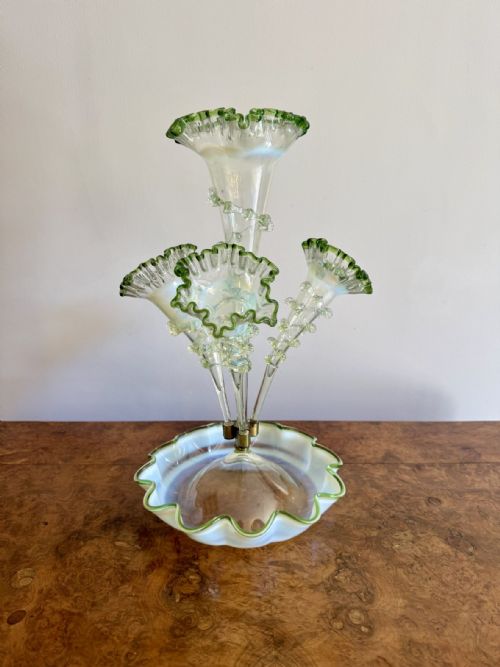
- A centrepiece table ornament featuring a central dish with multiple branching trumpets or vases for holding fruit or flowers. They appear frequently in Victorian silver and glass configurations.
- Opalescent glass
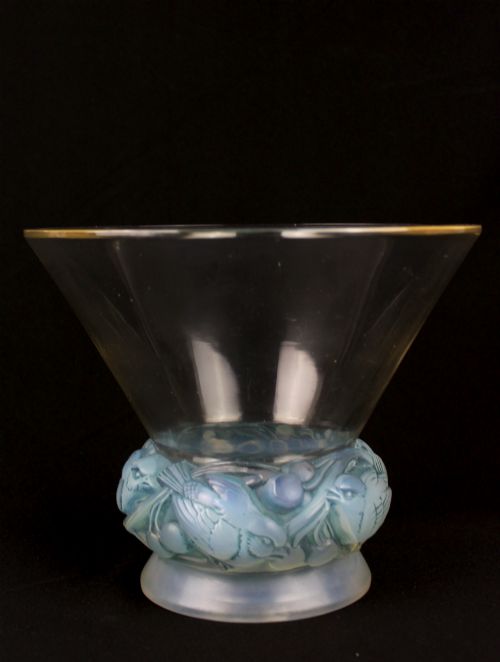
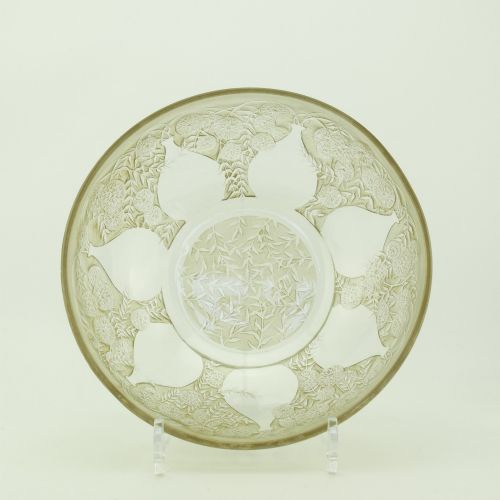
- Glass that exhibits a milky, bluish lustre by reflected light and a warm amber or orange tint by transmitted light. It became a signature medium for 20th-century French mould-pressed vessels.
- Ormolu
- Gilt bronze mounts applied to furniture, porcelain, and glass vessels. The technique involves applying a finely ground high-carat gold amalgam to bronze.
- Iridescent glass
- Glass treated with metallic oxides while hot to produce a rainbow-like sheen. This effect defines much of the Art Nouveau output from makers like Loetz and Tiffany.
- Vaseline glass
- Glass coloured with uranium oxide, yielding a distinct yellow-green hue that fluoresces brightly under ultraviolet light. It enjoyed popularity during the nineteenth century.
Decorative Glass Centerpiece: Frequently Asked Questions
How do I use a decorative glass centerpiece?
These vessels suit dining tables, sideboards, or console tables as standalone display objects or functional containers for fruit and floral arrangements.
Larger footed bowls and epergnes create natural focal points in a room without requiring additional decoration.
How can I tell Art Nouveau from Art Deco?
Art Nouveau pieces feature organic, flowing lines inspired by natural forms, often with iridescent surfaces and floral motifs. Art Deco designs favour geometric symmetry, stylised flower heads, and bold moulded relief.
Makers active across both periods show this transition clearly in their choice of bowl shapes and surface patterns.
What is an epergne used for?
An epergne functions as a multi-tier table centrepiece designed to hold sweets, fruit, or flowers across its central bowl and branching trumpets.
Victorian dining customs relied on these elaborate glass and metal structures to elevate food service.
How do I clean antique glass centerpieces?
Wash glass gently with lukewarm water and mild soap, avoiding harsh abrasives that might damage engraved or iridescent surfaces. Metal mounts require careful dusting and should be kept dry to protect gilt bronze and ormolu finishes.