





Decorative Gilded Table Clock
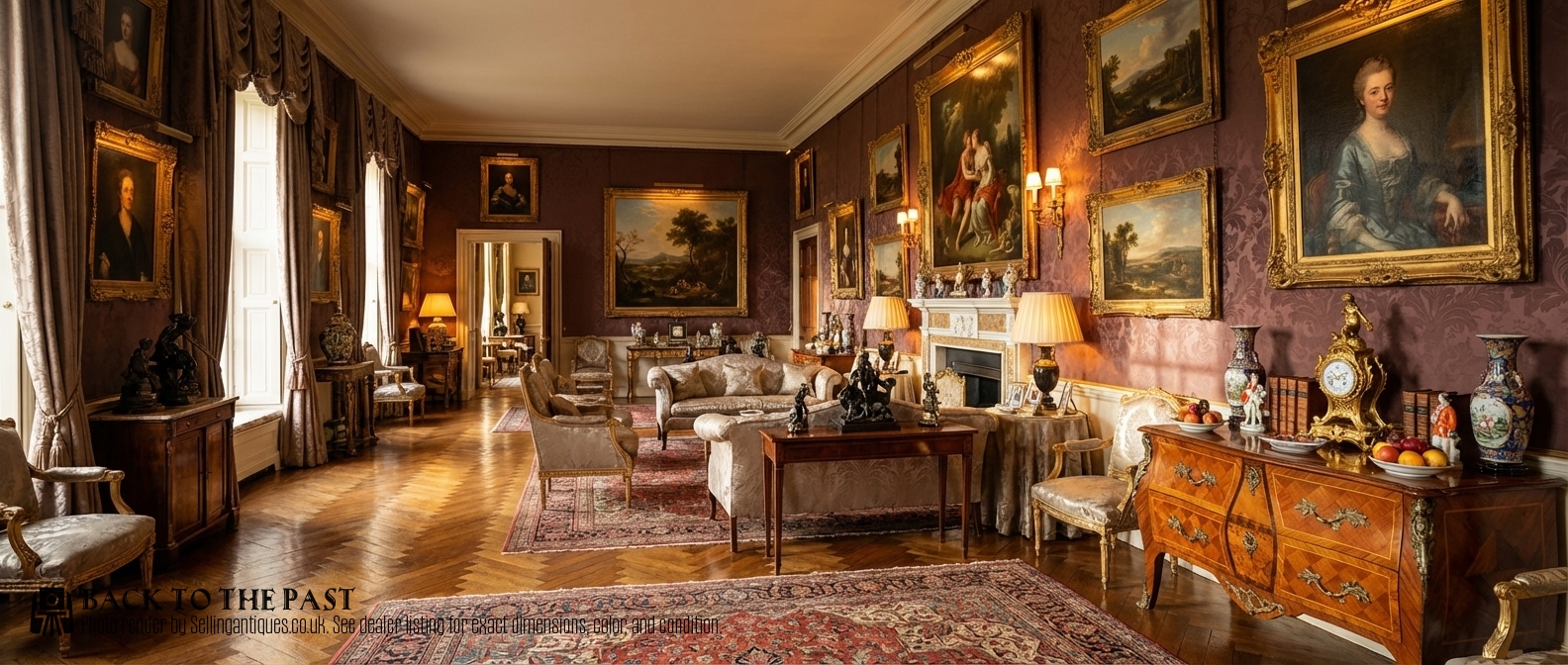
A decorative gilded table clock brings shimmering brass, ormolu and porcelain into a room, catching the light on a mantelpiece or desk.
Decorative Gilded Table Clock
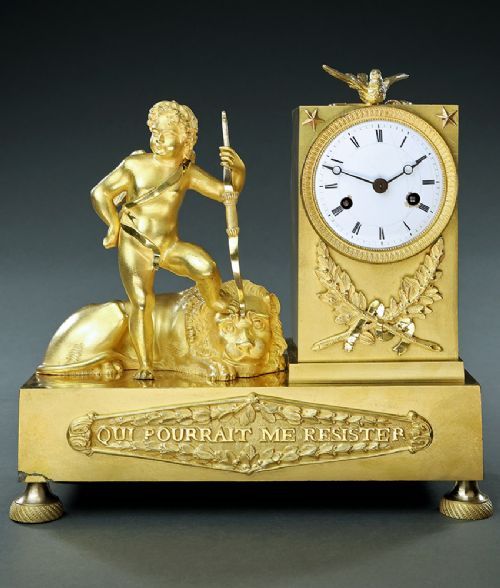
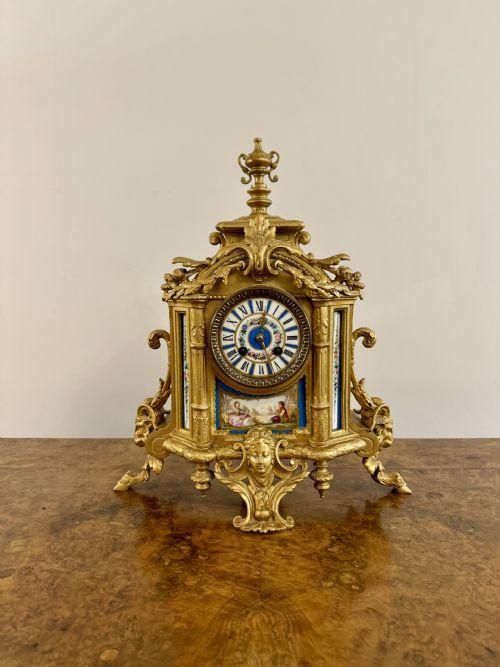
A decorative gilded table clock combines timekeeping with elaborate sculptural casting, often taking the form of a mantel clock, carriage clock or desk clock. When searching for a decorative gilded table clock, buyers encounter pieces originating predominantly from nineteenth-century France alongside Regency examples.
Most entries date from the Victorian era and the latter decades of the nineteenth century, though earlier eighteenth-century Regency pieces also appear. Forms range from large multi-piece clock sets to petite boudoir clocks and crystal regulators.
How they were made
Casting and fire-gilding formed the basis of ormolu and gilt bronze production, creating deep metallic lustre through the application of mercury and gold amalgam. Cases combined cast bronze or brass frames with inset porcelain panels, painted enamel dials, and bevelled glass panels.
Movement assembly relied on precision brass gears, escapements, and fusee or eight-day spring-driven mechanisms housed within the metallic and marble housings. Craftsmen also incorporated organic elements such as tortoiseshell and carved marble into the structural cases.
Listings feature eighteenth and nineteenth-century periods, utilising materials such as ormolu, marble, porcelain, and glass across various mantel and carriage clock forms.
What varies in quality
The crispness of the bronze chasing and the depth of the mercury gilding determine the visual hierarchy of these timepieces. Finer examples display sharp sculptural relief in figures like Diana or Cupid, whereas lesser pieces show softer, shallower casting detail.
The integration of hand-painted porcelain panels, signed movements by notable makers, and the preservation of original fire-gilt surfaces separate standard production clocks from exceptional horological works.
Le Roy Paris·Thuret·PH Mourey·Henri Jacot·Japy Freres
The Decorative Gilded Table Clock Glossary
- Ormolu
- Gilded bronze produced by applying a mercury and gold amalgam to a bronze base and firing it. This technique creates a durable, rich golden finish characteristic of nineteenth-century French pieces.
- Fusee
- A conical pulley used in spring-driven clocks to maintain even power delivery as the mainspring unwinds. It ensures consistent timekeeping accuracy across the running period.
- Crystal Regulator
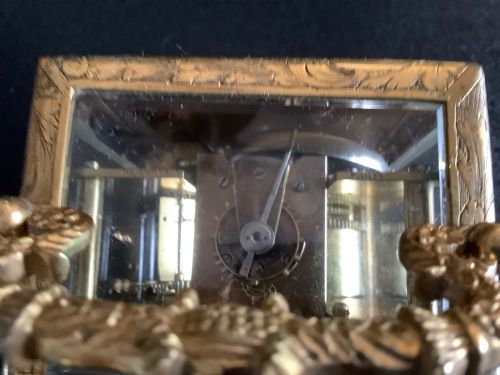
- A mantel clock housed within glazed glass panels that reveal the mechanical movement from multiple sides. These often feature mercury pendulums and brass frames.
- Pendule d'Officier
- A portable military-style carriage clock fitted with a handle and striking mechanism. Originating for travel use, these combine practical robustness with decorative gilt mounts.
- Japy Freres
- A prominent nineteenth-century French clockmaking firm known for producing quality brass movements. Their mechanisms appear frequently in decorative mantel clocks of the period.
Decorative Gilded Table Clock: Frequently Asked Questions
How do I wind a decorative gilded table clock?
Most nineteenth-century mechanical clocks utilise a key inserted into the dial face to tension the internal springs. Care must be taken not to over-wind the mainspring.
Eighty-day and fusee movements require steady, measured turns until resistance is felt, ensuring the gear train engages properly without placing undue strain on the mechanism.
Where should I place a gilt bronze clock?
These clocks suit stable, level surfaces away from direct sunlight, moisture, and extreme temperature fluctuations. Mantelpieces, desks, and console tables provide ideal display settings.
Ensure the surface is completely flat so the pendulum swings evenly and the escapement ticks in a steady, regular rhythm.
How do I identify a French Empire clock?
French Empire clocks typically feature rigid symmetrical designs, military motifs, and classical figures drawn from antiquity. Ormolu mounts often depict laurel wreaths, columns, and mythological subjects.
Materials commonly include fire-gilded bronze paired with contrasting dark bronze patination, reflecting the neoclassical tastes of the early nineteenth century.
What is the difference between a carriage clock and a mantel clock?
Carriage clocks are compact, portable timepieces fitted with folding carrying handles and protective glass panels designed for travel. They usually feature platform escapements.
Mantel clocks are larger, heavier stationary pieces cast in bronze, marble, or porcelain, intended to sit permanently upon a shelf or fireplace mantel.
How do I care for ormolu metalwork?
Ormolu surfaces require gentle dusting with a soft, dry brush to prevent the accumulation of dirt in recessed chasing. Avoid abrasive commercial metal cleaners.
Harsh chemical polishes can strip away the delicate gold layer of fire-gilded bronze, permanently damaging the historic finish and reducing the lustre.