




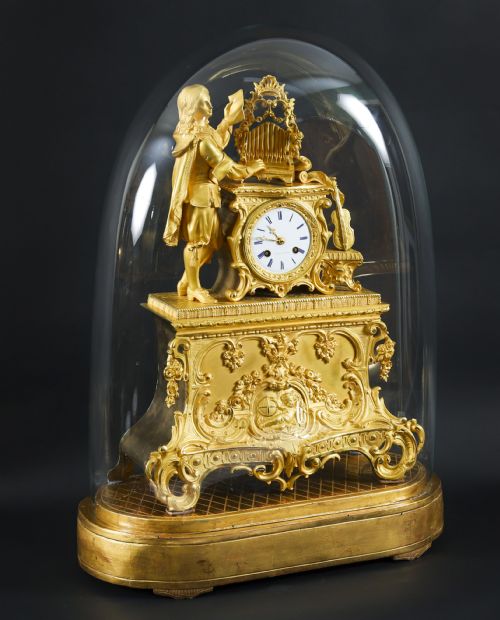
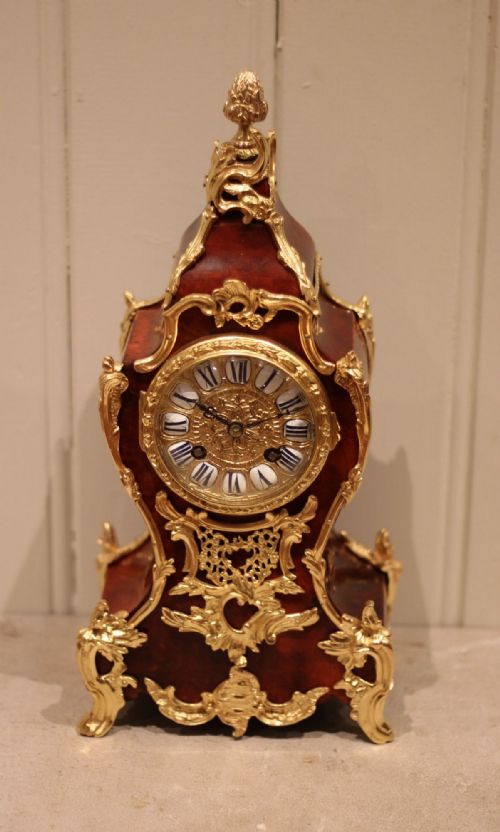

Louis XV Ormolu Clock
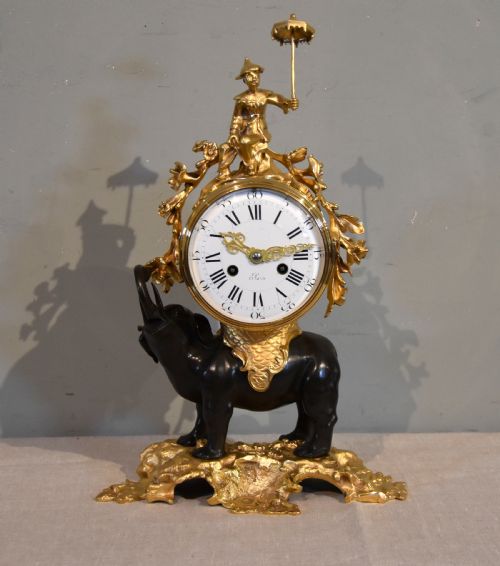
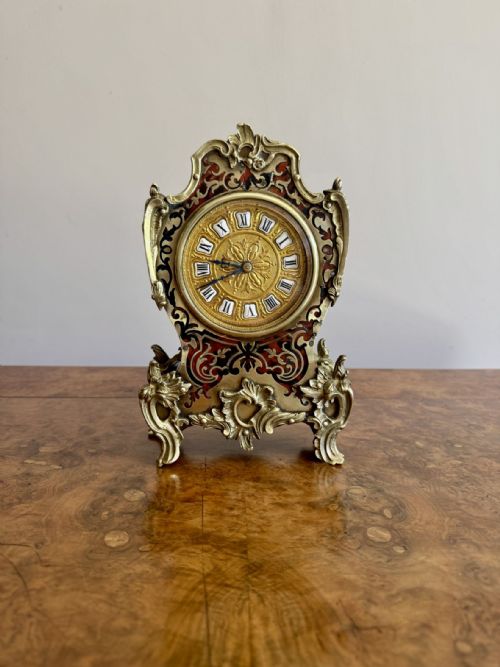
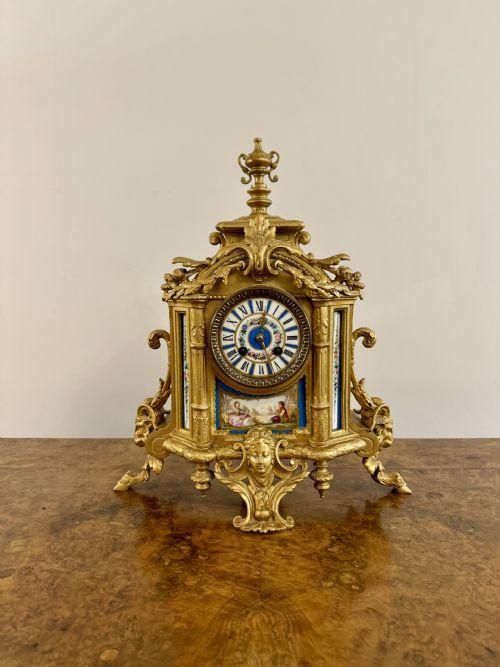
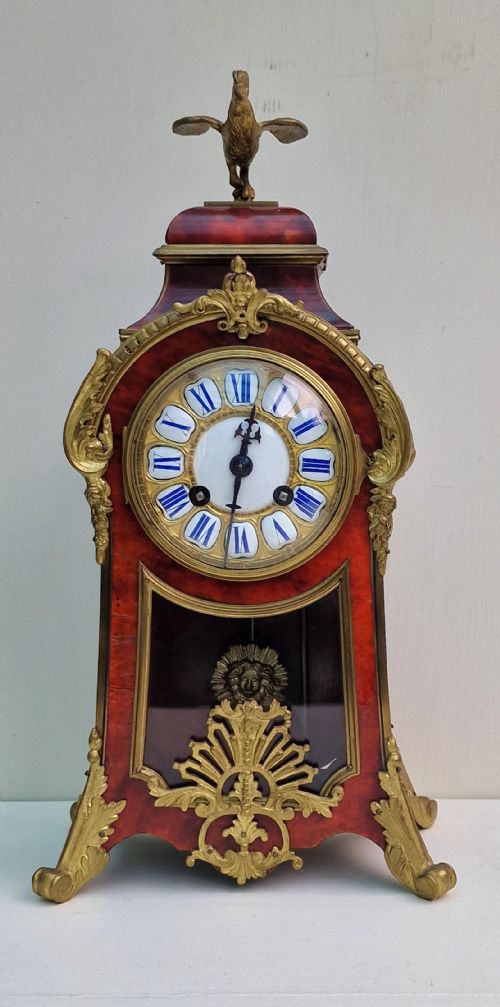
When you search for a louis xv ormolu clock, you encounter ornate nineteenth-century French timepieces driven by craftsmanship and exuberant Rococo revival design.
Louis XV Ormolu Clock
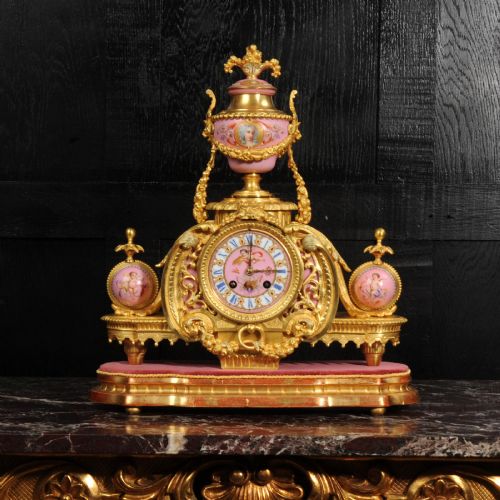
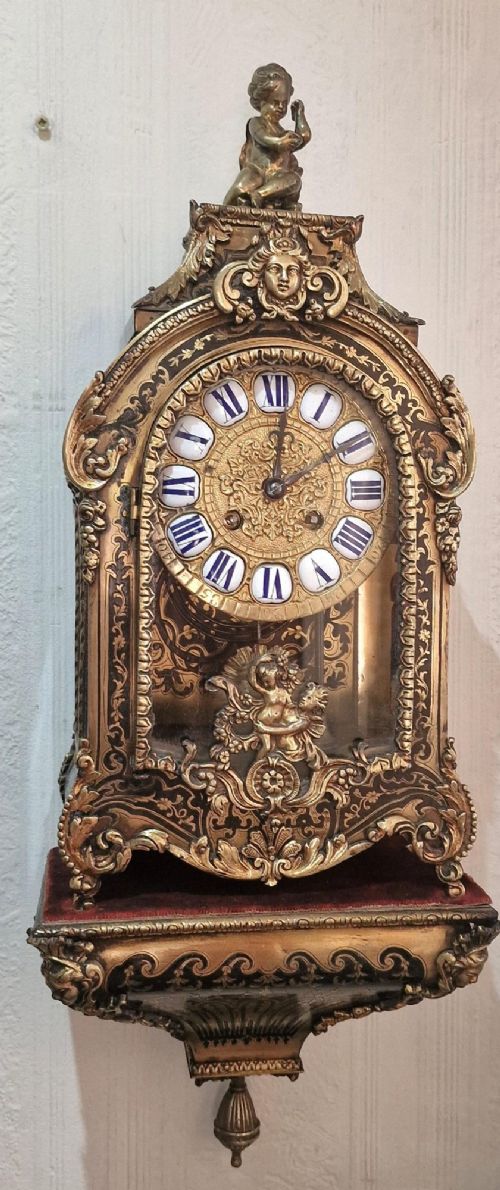
A louis xv ormolu clock typically manifests as a mantel clock, shelf clock, or larger bracket clock accompanied by matching wall brackets or pedestal supports. These pieces emerge predominantly from nineteenth-century French workshops operating during the Victorian era and the broader Revival period.
The aesthetic embraces sweeping asymmetrical curves, naturalistic scrollwork, and florid botanical motifs characteristic of the Rococo movement. Many examples integrate side garnitures, such as candelabras or urns, forming unified decorative sets intended for formal mantelpieces.
Makers also adapted the Louis XV vocabulary into varied formats, including miniature bedside timepieces, drum head designs, and tall longcase clocks. While the core styling looks back to eighteenth-century royal courts, the physical objects themselves reflect nineteenth-century French horological manufacturing.
Materials and construction
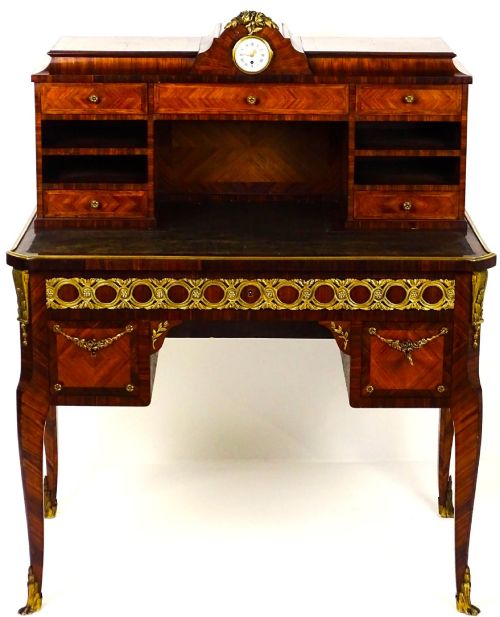
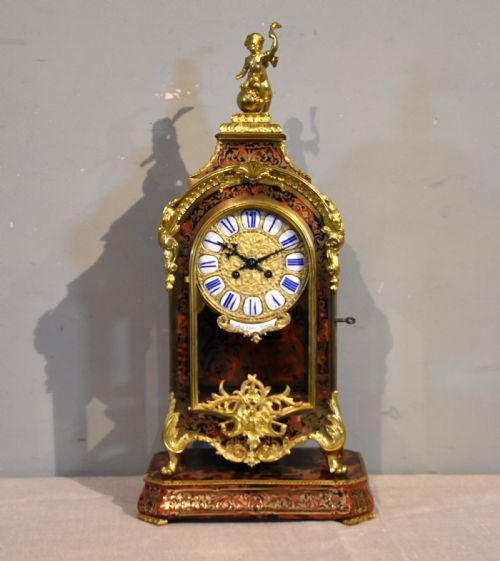
Makers utilised cast bronze and brass, applying mercury gilding or electroplating to achieve the bright, durable surface finish known as ormolu. This metallic framework frequently combines with exotic timber veneers like kingwood and tortoise-shell inlay executed in the Boulle technique.
Clock dials commonly feature individual white enamel cartouches painted with Roman or Arabic numerals, protected beneath curved glass bezels. Selected luxury models incorporate hand-painted Sèvres porcelain panels depicting pastoral scenes or floral reserves set directly into the gilded bronze housing.
The inventory records longcase clocks, wall-hung cartel clocks, and miniature bedside timepieces alongside standard mantel models.
Assessing craftsmanship and execution
Quality reveals itself first in the crispness of the bronze chasing, where finer examples display sharp, hand-finished botanical details rather than soft, mass-produced contours. The weight and thickness of the cast metal casing also signal superior workshop standards.
Internal movements produced by noted French horologists provide mechanical reliability alongside sculptural beauty. The integration of matching serial numbers across movement plates and pendulum bobs indicates an intact, original assembly rather than a later composite.
Achille Brocot·Paul Sormani·Delettrez·Leroy Paris·Leon Message·Jollet et Cie·Samuel Marti·Vincenti et Cie·Louis Japy·Lemerle Charpentier et Cie·Japy Freres·Raingo Paris·Charles Hour
The Louis XV Ormolu Clock Glossary
- Ormolu
- Gilded bronze or brass achieved through the application of gold leaf or mercury gilding. This technique provides the bright metallic finish characteristic of French decorative arts.
- Boulle
- A method of marquetry utilising tortoiseshell and brass inlay developed in France. It frequently adorns the wooden cases supporting or framing antique clocks.
- Garniture
- A set of matching decorative objects, such as a clock flanked by two candelabras or vases. These suites were designed to display in unison on a mantelpiece.
- Cartouche
- A distinct plaque or panel on a clock dial bearing an individual numeral. These segments are usually formed from white enamel.
- Portico clock
- A monumental clock design featuring architectural columns supporting the movement housing. They often incorporate marble alongside gilded bronze mounts.
Louis XV Ormolu Clock: Frequently Asked Questions
How do I wind a mechanical French clock?
You use a suitably sized winding key inserted into the dial holes, turning it gently until resistance indicates the mainspring is fully tensioned.
Care should be taken not to overwind the movement, as this can strain the internal brass gears and springs.
Where were these clocks originally displayed?
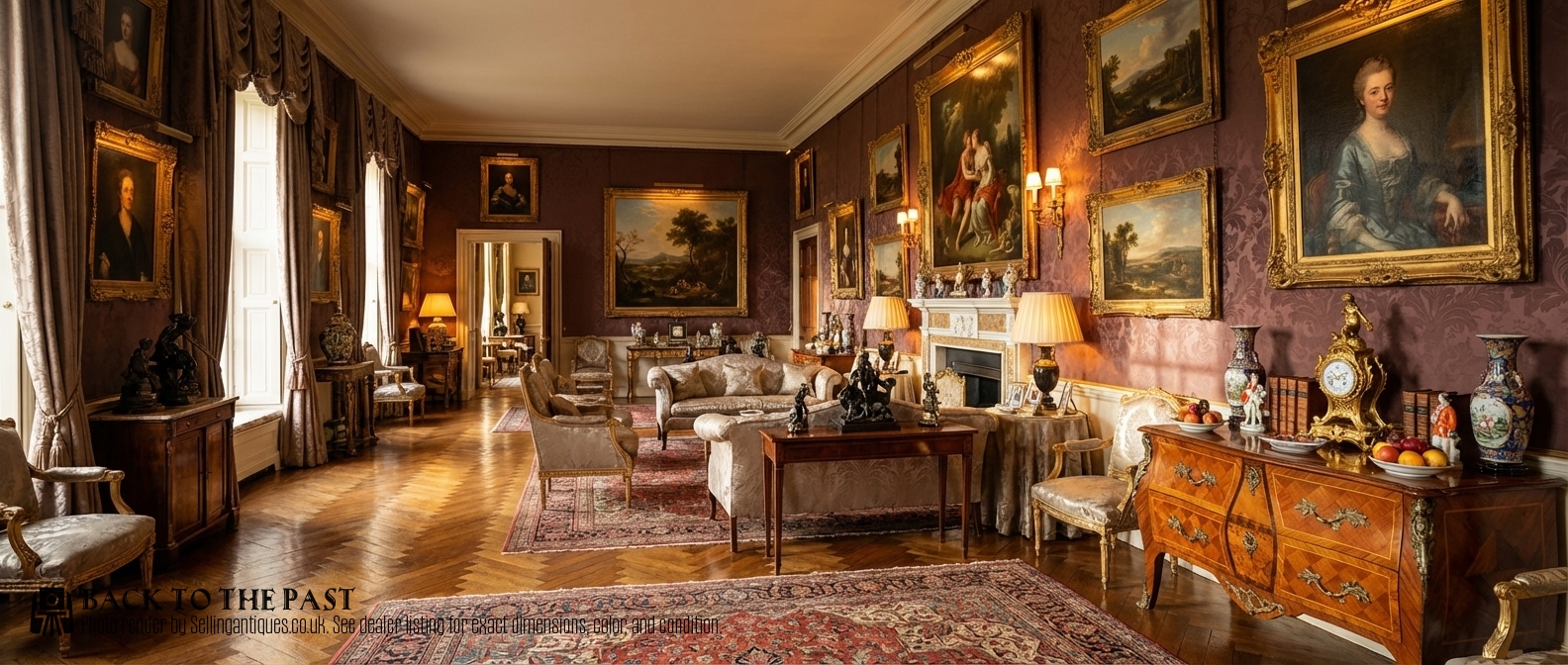
These decorative objects occupied prominent positions on salon mantelpieces, drawing room sideboards, and dedicated wall brackets within nineteenth-century bourgeois and aristocratic homes.
Their substantial reflective surfaces and sculptural forms were intended to catch candlelight and demonstrate domestic refinement.
What is a clock garniture set?
A clock garniture is an ensemble consisting of a central timekeeper accompanied by two matching side pieces, such as candelabras or urns.
These coordinated sets were manufactured to create a balanced, symmetrical display across a fireplace mantel.