



Decorative Enamelled Wall Art
Decorative enamelled wall art brings vibrant colour and meticulous metallic detail to an interior, drawing the eye instantly.
Decorative Enamelled Wall Art
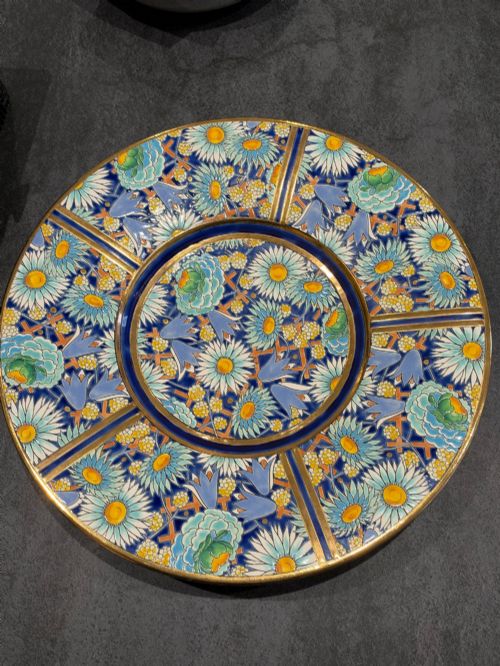
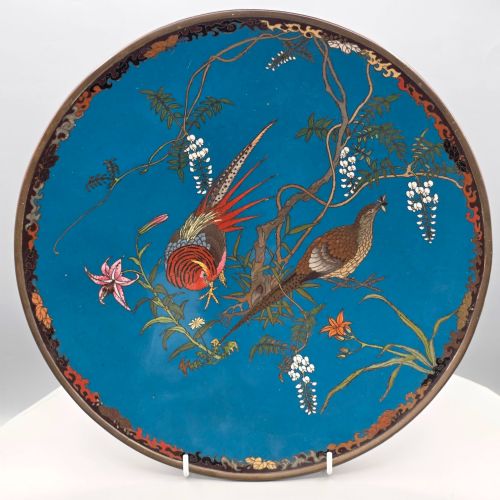
Decorative enamelled wall art comprises plates, chargers, and tiles designed primarily for display rather than utility. When exploring decorative enamelled wall art, collectors encounter striking examples from the nineteenth century, including Japanese Meiji period pieces and European works.
The selection ranges from large Japanese cloisonné chargers featuring birds, samurai, and koi to French Limoges enamel paintings on copper and Arts and Crafts copper chargers. These items are chosen for their rich palettes and elaborate pictorial scenes mounted securely on vertical surfaces.
How they were made
Maker utilise vitreous enamel fused onto metal bases such as copper or brass, often employing fine metal wire for cloisonné cell work. Some pieces incorporate porcelain bodies or wood frames, combining traditional glazing and firing techniques.
The process demands precise temperature control during kiln firing to vitrify the coloured glass pastes. Artisans then polish the metallic ribbons and surfaces to achieve a smooth, lustrous finish.
Decorative Enamelled Wall Art Retail Price Guide 2026
Typical asking prices for decorative enamelled wall art among the pieces listed under this phrase on Sellingantiques today, from the lower quarter to the upper quarter. They describe what is for sale here now, not the wider market.
Listings feature items spanning the nineteenth century, including Meiji period Japanese cloisonné and Arts and Crafts copper work.
What varies in quality
Quality depends on the precision of the enamel work and the complexity of the design, such as intricate pictorial detailing of birds or aquatic life. Superior examples display flawless fusion without pitting in the glassy surface.
The intricacy of the wirework and the depth of the polychrome palette distinguish finer production. Earlier nineteenth-century specimens often exhibit greater hand-finishing subtleties compared to later iterations.
The Decorative Enamelled Wall Art Glossary
- Cloisonne Enamel
- A technique where thin metal wires form raised partitions to hold coloured enamel pastes before firing. This creates intricate linear patterns across the surface of plates and chargers.
- Totai Shippo
- A specific Japanese method involving enamel applied over a porcelain body rather than traditional metal. It yields a distinctive texture resembling natural surfaces like tree bark.
- Charger
- A large ornamental plate traditionally used for display rather than dining. These form the primary canvas for many nineteenth-century enamel designs.
- Mon
- A Japanese emblem or crest used to indicate family lineage or identity. They frequently appear as decorative motifs within Meiji period enamelwork.
- Limoges
- A French city renowned for its production of painted enamel plaques on copper. These works often depict classical portraits or narrative scenes in rich polychrome hues.
Decorative Enamelled Wall Art: Frequently Asked Questions
How do I hang heavy enamel chargers safely?
Heavy chargers require robust, adjustable brass or steel wall spring hangers that distribute weight evenly across the rim. Ensure the fixing engages securely with solid wall anchors rather than standard plasterboard.
Check the stability of the mount periodically to prevent accidental slippage. Proper clearance prevents the metal rim from rubbing directly against the wall surface.
What is the difference between cloisonne and painted enamel?
Cloisonné relies on soldered metal wires to create distinct cells that segregate different coloured enamel pastes before firing. This produces a tactile, compartmentalised design with visible metallic outlines.
Painted enamel, such as Limoges work, applies pigments directly onto a flat copper base using brushwork without wire partitions. This technique allows for fluid, painterly gradients similar to canvas art.
How do I date a Japanese enamel charger?
Dating relies on stylistic clues, framing methods, and signatures found on the reverse or front of the piece. Nineteenth-century Meiji examples often feature complex wirework and specific avian or aquatic motifs.
Consulting period markers helps distinguish mid-nineteenth-century Edo period pieces from later Meiji productions. Subtle variations in the brightness of the enamel palette also guide chronological placement.