

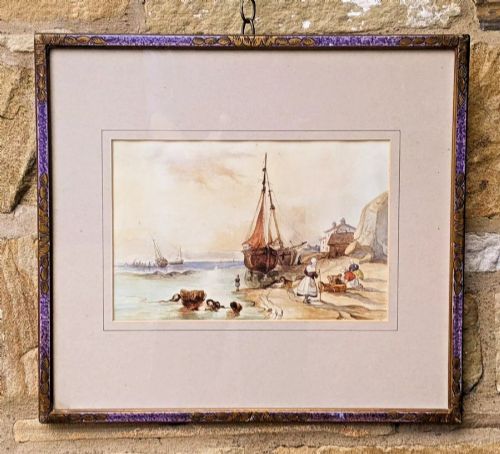


Traditional Nautical Watercolour Painting
A traditional nautical watercolour painting captures the temper of the sea on paper, offering buyers a genuine window into maritime history.
Traditional Nautical Watercolour Painting
A traditional nautical watercolour painting portrays maritime scenes, including fishing harbours, coastal boat yards, and open seascapes. These works capture ships and boats in various conditions, ranging from calm coastal waters to choppy marine expanses.
Most examples found on this page date from the nineteenth century and the Victorian period, though mid-century works also appear. Common subjects feature named vessels such as the barque Garthpool or the Mary Brack, alongside busy ports like Scarborough and Whitby.
Buyers encounter formats classified broadly as wall art, fine art paintings, and specific watercolour paintings. These pieces reflect enduring maritime interests through traditional artistic interpretations of British and European coastal life.
How they were made
Artists painted these works using watercolour pigment applied directly to paper. This technique allowed for subtle washes of colour that effectively rendered the shifting tones of the sky, sea, and coastal atmosphere.
Finished watercolours were housed behind glass within wooden frames, occasionally embellished with gold leaf or hand enamelled polychrome details. Oak frames also feature among the surviving works, protecting the delicate paper surfaces from atmospheric moisture and handling.
Traditional Nautical Watercolour Painting Retail Price Guide 2026
Typical asking prices for traditional nautical watercolour painting among the pieces listed under this phrase on Sellingantiques today, from the lower quarter to the upper quarter. They describe what is for sale here now, not the wider market.
Several watercolours faithfully record the names of long-gone working vessels, turning anonymous coastal views into precise historical snapshots.
What varies in quality
Quality in these watercolours rests largely upon the skill of the brushwork and the precision with which the artist captures maritime anatomy and atmospheric conditions. Stronger examples display a confident handling of water, light, and rigging detail that brings the vessel and sea to life.
The presentation also influences the overall character, with period frames incorporating wood, gilt, or hand enamelled work adding significantly to the historical integrity of the piece. Works by recorded marine artists generally exhibit superior draughtsmanship compared to anonymous topographical views.
Henry Barlow Carter·Thomas Bush Hardy·Robert Leslie Howey·James Aitken
The Traditional Nautical Watercolour Painting Glossary
- Watercolour pigment
- A water-soluble colour medium used on paper to create translucent washes and fine details. It forms the primary medium for all the paintings listed here.
- Barque
- A sailing vessel with three or more masts, having the foremast and mainmast square-rigged and the mizzenmast fore-and-aft rigged. This specific ship type appears in maritime art records.
- Coble
- A type of open fishing boat traditionally used on the north-east coast of England. These distinctive vessels are noted in regional marine paintings.
- Victorian
- Pertaining to the reign of Queen Victoria, a period strongly represented in nineteenth-century British marine art. This era produced much of the traditional output seen today.
- Gilt wood
- Wood coated with a thin layer of gold leaf or gilt paint. Frames finished in this manner frequently house nineteenth-century watercolours.
Traditional Nautical Watercolour Painting: Frequently Asked Questions
What subjects do these paintings show?
These works focus on maritime themes, depicting sailing ships, fishing boats, and coastal harbours. Scenes range from specific vessels like the barque Garthpool to busy ports such as Whitby and Scarborough.
Artists captured the daily life of the sea, recording everything from quiet boat yards to stormy open waters. The imagery reflects a deep historical connection to maritime trade and coastal communities.
How should I frame and hang a watercolour?
Watercolours require framing behind glass to protect the paper surface from dust, moisture, and handling. Original frames, such as those made from oak or featuring gilt wood, should be preserved where possible.
Position paintings away from direct sunlight to prevent the watercolour pigments from fading over time. Stable indoor humidity levels will also help protect both the paper and the historic frame.
How do I identify a nineteenth-century marine painting?
Nineteenth-century works typically display paper supports, specific Victorian framing styles, and traditional subject matter involving sailing vessels. Signatures or inscriptions often name the ship, location, or artist.
The materials used, including period wooden frames and specific watercolour pigments, point directly to the nineteenth-century origins of the artwork. Stylistic conventions of Victorian marine art also aid in dating.