


Decorative Earthenware Urn
These decorative earthenware urn objects span the nineteenth and twentieth centuries, bringing diverse international pottery traditions and forms to a room.
Decorative Earthenware Urn
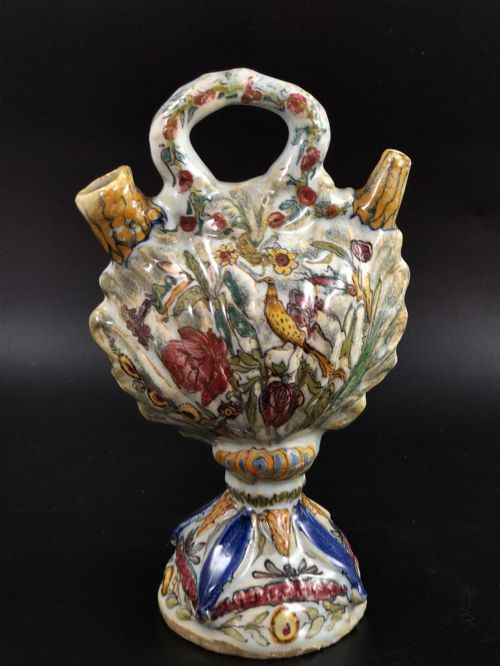
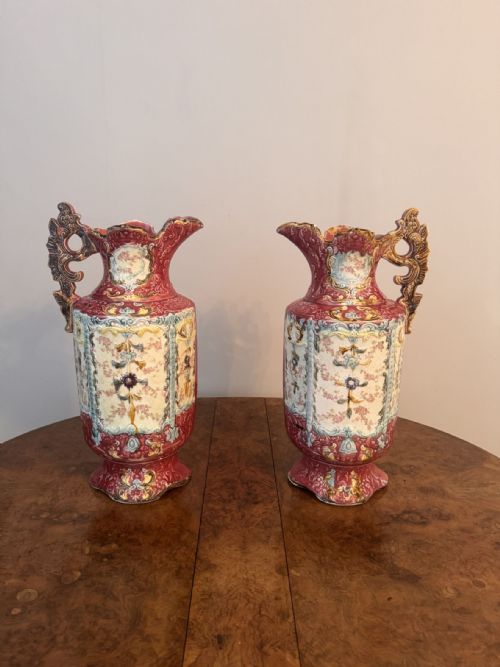
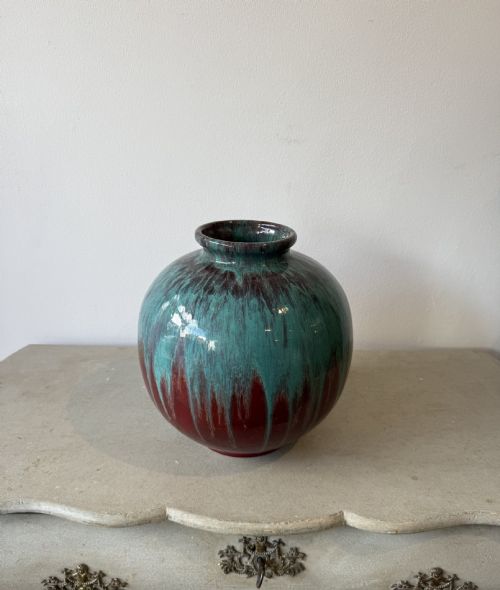
A decorative earthenware urn groups together vessel forms such as vases, jardinieres, pilgrim flasks, ewers and koro spanning from the eighteenth century through the Art Deco period.
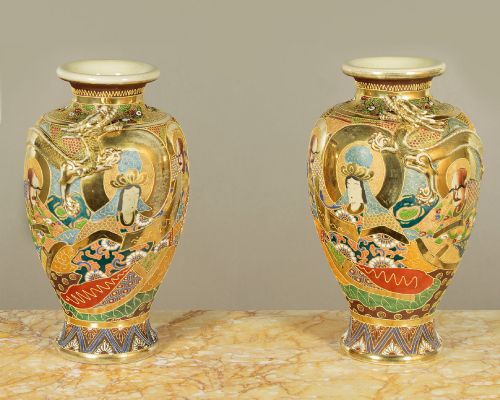
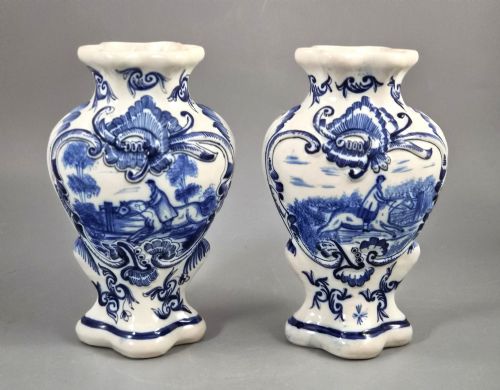
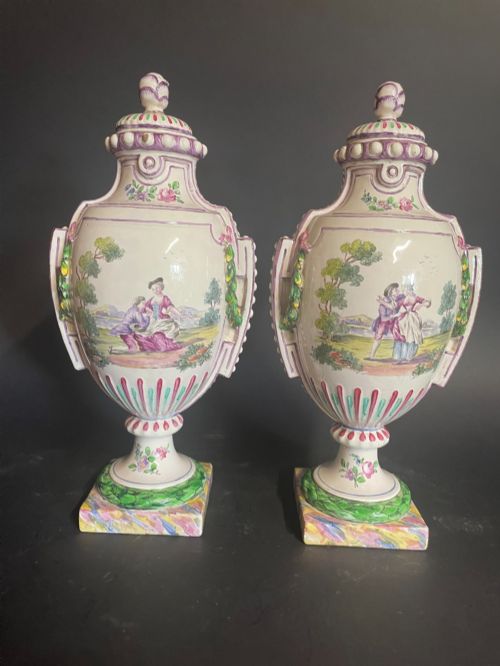
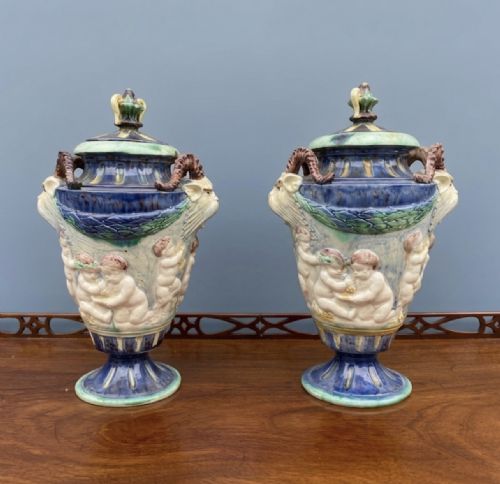
The selections on this page draw heavily from Japanese Satsuma production alongside European majolica, faience and earthenware works from makers in England, France, Italy and Germany.
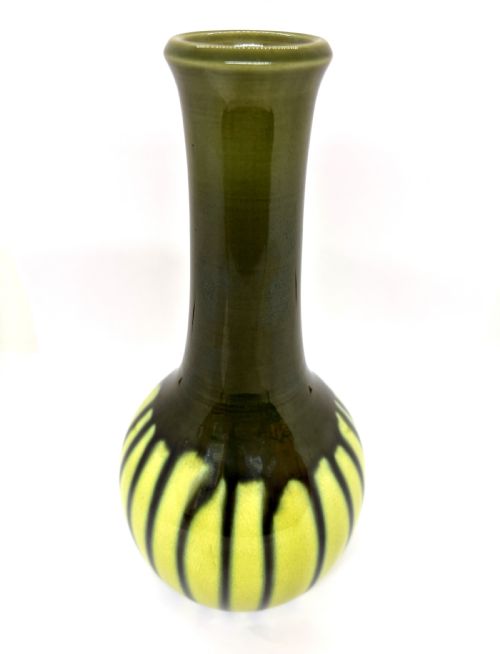
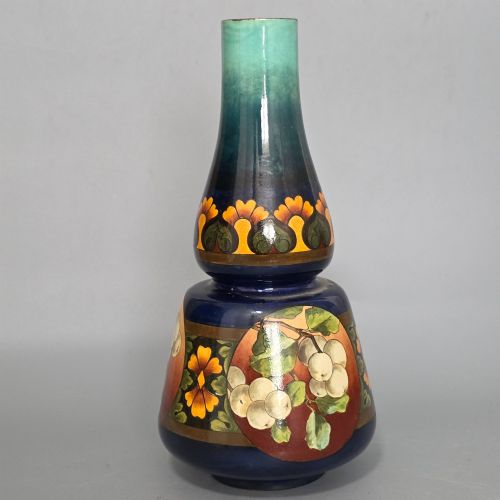
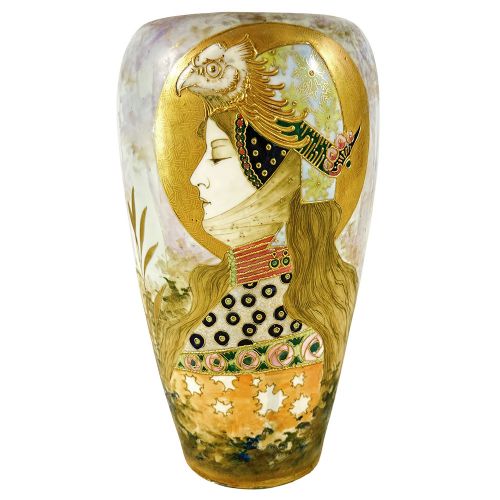
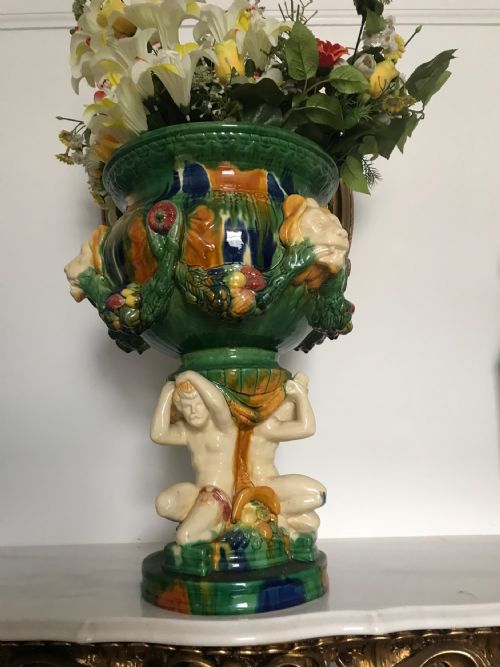
Buyers encounter everything from miniature Satsuma pieces to monumental majolica planters and covered urns reflecting Victorian, Art Nouveau and Meiji aesthetics.
Materials and techniques
Potters shaped earthenware, stoneware and ceramic bodies on the wheel or in moulds before applying glazes, enamel colours and gold leaf decoration.
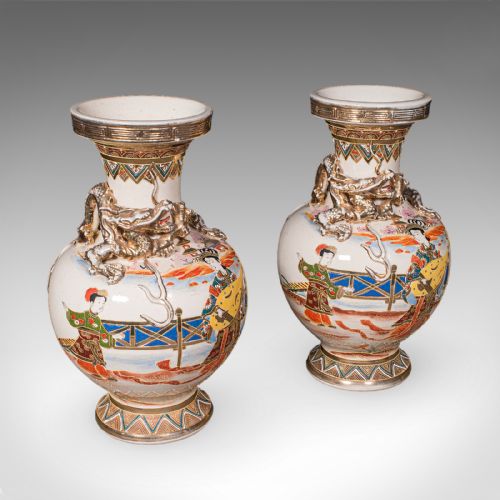
Many items incorporate hand-painted figural scenes and floral panels, while others utilise raised moriage work, cobalt painting and transfer-printed Chinoiserie motifs.
Kiln firing fixed the coloured glazes and metallic gilding onto the clay body, sometimes followed by additional enamel work and low-temperature finishing.
The listings on this page span the 18th, 19th and early 20th centuries, covering both European ceramic traditions and Japanese Meiji period exports.
Assessing the work
Execution of hand painting dictates the distinction between standard production items and exhibition pieces, particularly in the precision of facial expressions and landscape detail.
Application density and preservation of heavy gilding and raised moriage define the visual success of Satsuma and majolica surfaces.
Complexity of form, such as figural base stands, bamboo-handle designs and fitted covers, separates simpler utilitarian vessels from ambitious decorative showpieces.
Fourmaintraux Courquin·Burmantoft s Pottery·Doulton Lambeth·Reissner Stellmacher and Kessel·Mugello·Makuzu Kozan·Robert T Lallement·Kinkozan·Miles Mason
The Decorative Earthenware Urn Glossary
- Earthenware
- Porous pottery fired at lower temperatures, requiring a glaze to hold liquids. It forms the primary body for majolica, faience and Satsuma wares.
- Majolica
- Opaque tin-glazed earthenware decorated with coloured metal oxides. Victorian iterations often employed vibrant relief modelling.
- Moriage
- A Japanese decorating technique using piped slip to build up raised dots and outlines before gilding. It creates textured surfaces on Satsuma ceramics.
- Ewer
- A large jug with a fluted spout and curved handle. These pieces match urns in decorative pairing schemes.
Decorative Earthenware Urn: Frequently Asked Questions
How do I display a decorative earthenware urn?
These vessels suit prominent placement on side tables, mantels or dedicated pedestals where their painted panels remain visible.
Pairing matching vases or urns creates symmetry on larger surfaces while single monumental pieces function well as focal points.
Were these urns meant for holding flowers?
While many forms served as flower vases or jardinieres, others functioned purely as decorative objects or incense burners.
Earthenware requires caution with water over long periods, making liner use advisable for antique vessels.
How do I distinguish Satsuma ware?
Satsuma ceramics feature an ivory-coloured, crackle-glazed earthenware body painted with detailed enamels and heavy gold leaf.
Most pieces originate from Japan during the Meiji period and frequently bear artist signatures or clan crests on the underside.
What defines majolica?
Majolica is characterised by colourful lead or tin glazes applied directly over a moulded earthenware body.
Victorian makers expanded the technique to include large planters, pedestals and classical urns with sculptural relief.