
Decorative Classical Urns
Decorative classical urns bring the formal symmetry of antiquity into nineteenth-century interiors through cast metals, carved marble, and painted porcelain.
Decorative Classical Urns
Decorative classical urns draw heavily on ancient Greek and Roman vessel forms, reimagined by nineteenth-century makers for domestic display, libraries, and gardens. The pieces on this page span the 17th to the 20th centuries, with a strong concentration of Victorian and French Empire examples produced during the grand tour era.
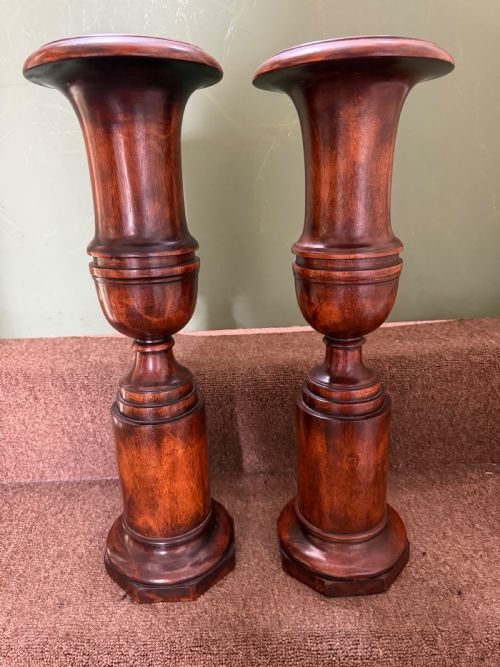
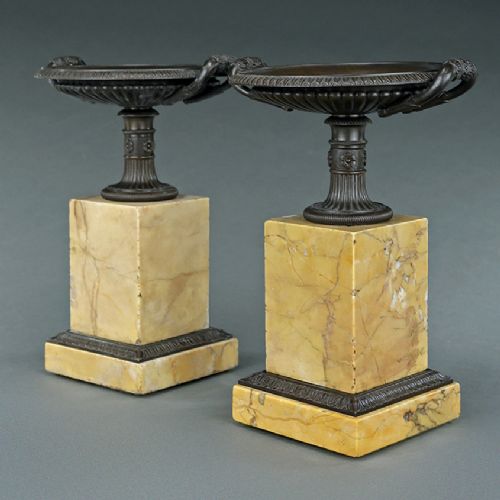
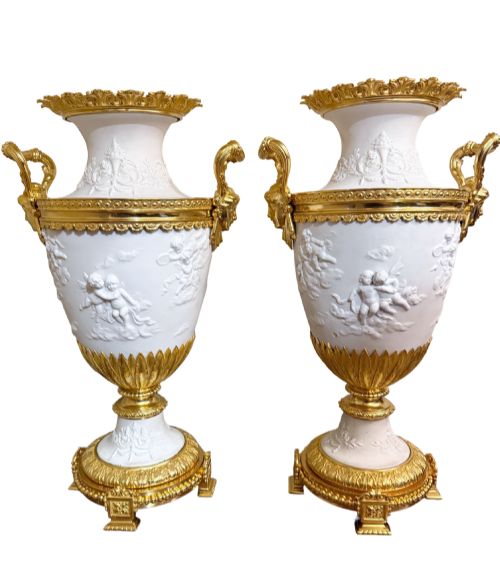
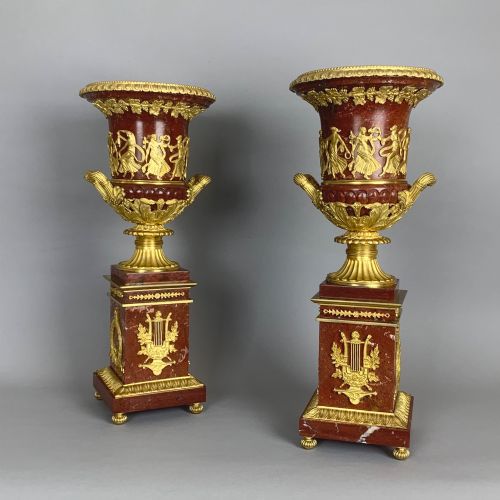
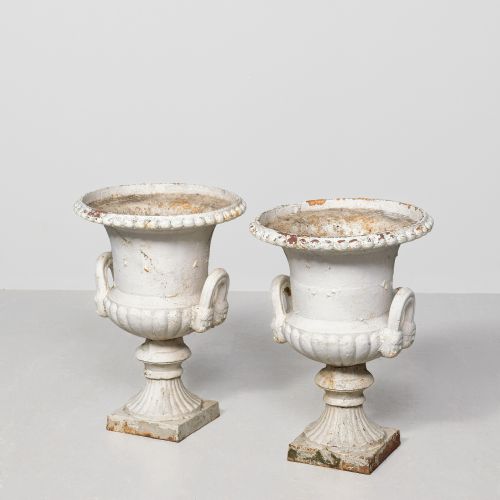
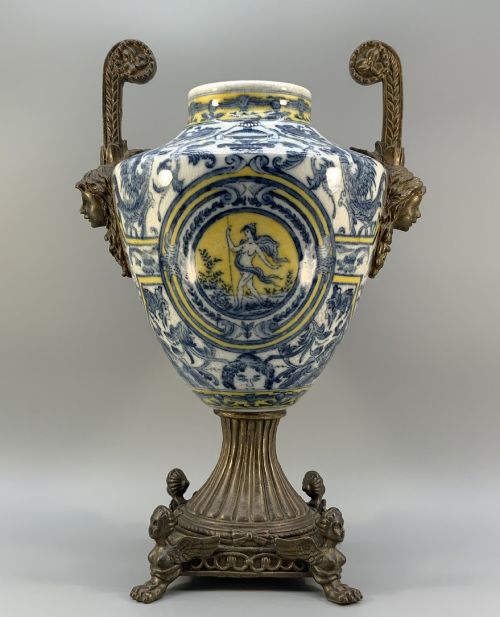
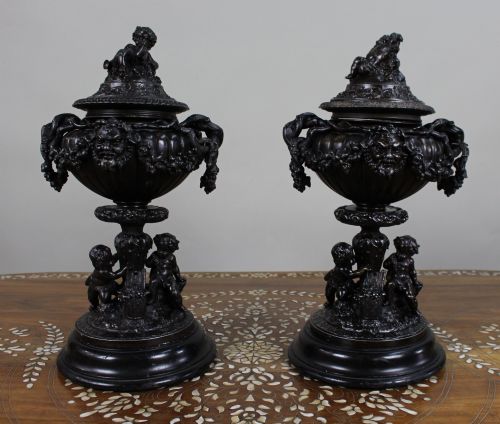
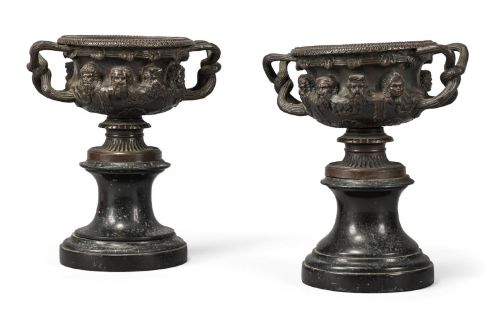
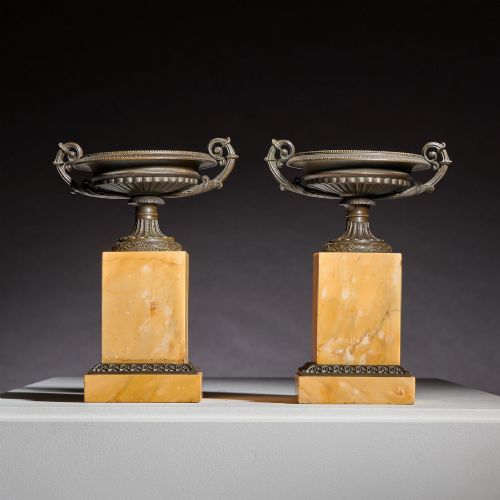
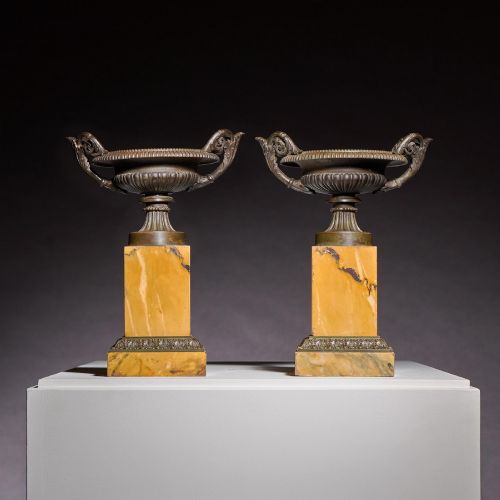
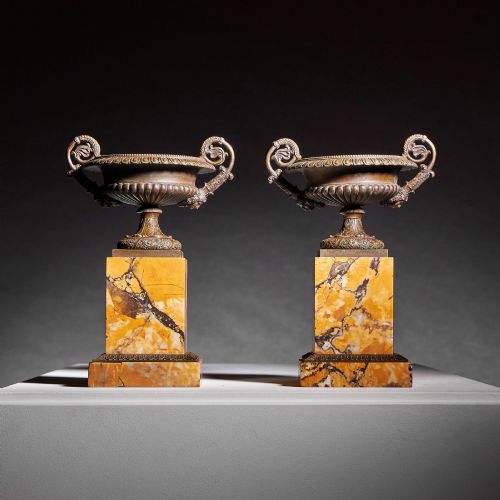
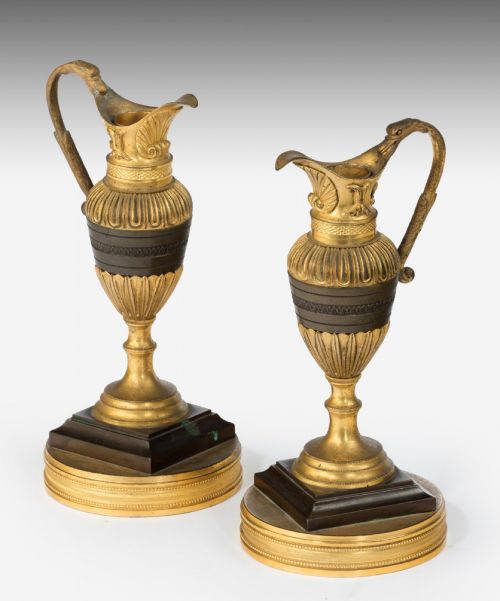
Forms vary from robust cast iron garden campana shapes to diminutive porcelain vases mounted in gilt bronze. Buyers encounter pedestal-mounted tazzas, ewers with bacchic masks, and lidded vessels designed to echo antique archaeological finds.
Materials and Construction
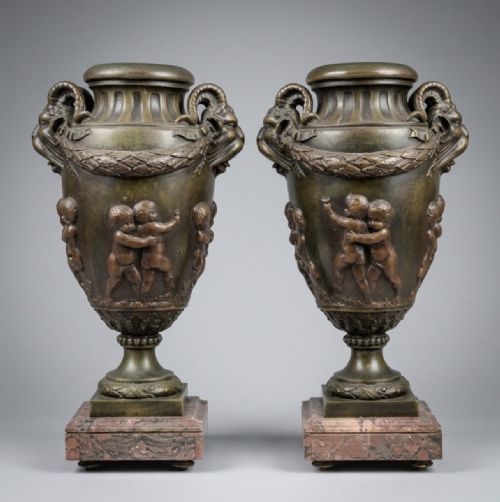
Foundries utilised bronze, brass, cast iron, and spelter for metal bodies, often combining patinated surfaces with cast or chased ormolu mounts. Foundries such as Val d'Osne produced durable cast iron garden pieces, while French workshops favoured fine bronze cast with classical figures and foliate handles.
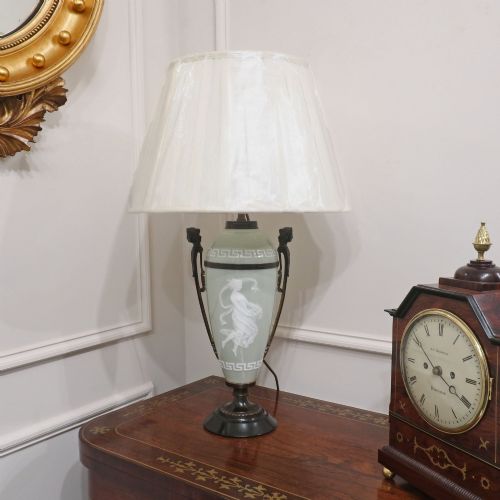
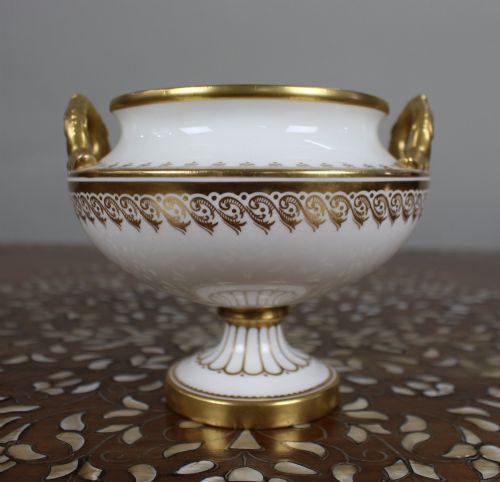
Carved marble and white onyx form stable plinths and bodies, frequently paired with gilt bronze mounts. Ceramic examples combine porcelain, faience, and jasperware with pate sur pate decoration, occasionally incorporating intricate hand-painted classical scenes.
Listings feature 19th-century cast iron garden pieces alongside delicate porcelain and gilt bronze table objects.
Assessing Quality and Execution
The distinction between standard production and superior execution rests on the crispness of the casting and the depth of the chasing in metalwork. Fine examples exhibit sharp relief in classical motifs such as acanthus leaves and putti, whereas lesser pieces show softened details from worn moulds.
Material selection also dictates standing, with solid sienna marble bases, heavy fire-gilded ormolu, and fine porcelain bodies representing the upper tier of nineteenth-century manufacture over simple spelter or painted cast iron.
Andrew Handyside·Val d'Osne Foundry·Ridgeways·Sevres·Capodimonte·Wedgwood
The Decorative Classical Urns Glossary
- Campana
- A bell-shaped urn form with a flared rim and footed base, frequently seen in cast iron and porcelain. This silhouette derives directly from excavated Roman garden vessels.
- Ormolu
- Gilt bronze produced by applying a mercury and gold amalgam to a bronze base, then firing to leave a rich golden layer. It provides bright decorative contrast against dark patinated bronze.
- Tazza
- A shallow saucer-like cup or bowl mounted on a stem and foot, often fashioned from marble and bronze. These pieces were popular souvenirs during the grand tour.
- Pate sur pate
- A ceramic technique where wet white slip is built up in successive layers on a coloured clay body to create a low-relief cameo effect. It requires great skill from the ceramic artist.
- Spelter
- An alloy of zinc and lead used as a less expensive substitute for bronze, typically painted with a dark bronze-like finish. It was widely utilised for decorative nineteenth-century mantle ornaments.
Decorative Classical Urns: Frequently Asked Questions
What is a campana urn?
A campana urn is a classical vessel shaped like an inverted bell, featuring a wide flared rim and a tapered body resting on a pedestal. These forms were modeled after ancient pottery and stone vases discovered in archaeological digs.
In nineteenth-century settings, they served as prominent indoor decorative objects or sturdy garden ornaments cast in iron.
How were grand tour urns used?
Grand tour urns and tazzas were acquired by travellers touring the cultural centres of Italy and France during the nineteenth century. They served as tangible proof of classical education and refined taste.
Collectors displayed them on library tables, mantelpieces, and pedestals to bring classical antiquity into their homes.
What is the difference between bronze and spelter?
Bronze is a durable copper alloy that takes a deep, stable patina and allows for sharp, crisp casting details. It was the preferred material for high-end decorative objects.
Spelter is a softer, zinc-based metal that was cheaper to produce and typically painted to resemble bronze. It requires gentler handling due to its brittle nature.
How do I identify French Empire style?
French Empire style draws heavily on the imperial motifs of ancient Rome, featuring strict symmetry, military trophies, and classical gods. Ormolu mounts are frequently heavy and sharply chased.
Pieces from this aesthetic often incorporate dark patinated bronze contrasted with bright gilt bronze and sienna marble.