
Decorative Ceramic Pair
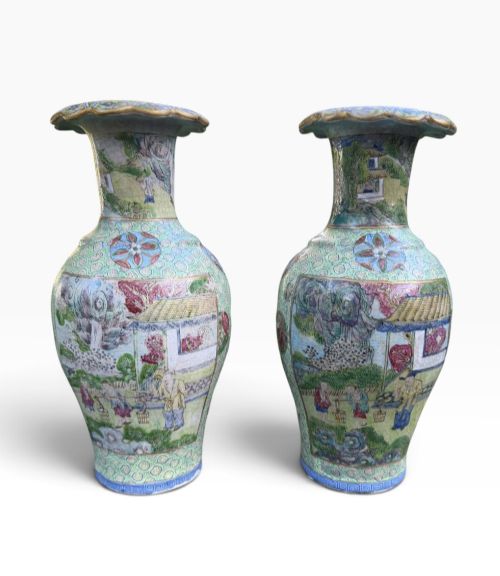
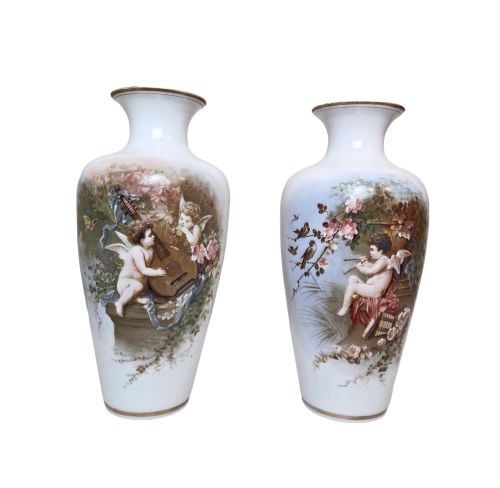
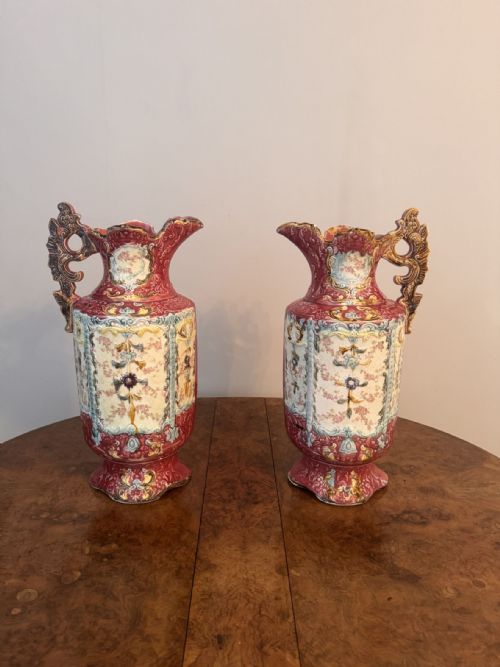
These decorative ceramic pair selections span centuries of global pottery, offering symmetrical visual balance for mantelpieces and side tables.
Decorative Ceramic Pair
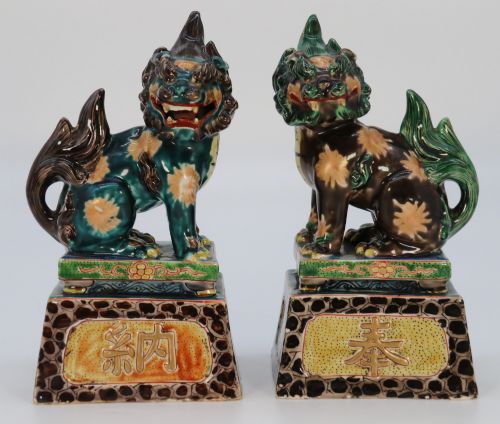
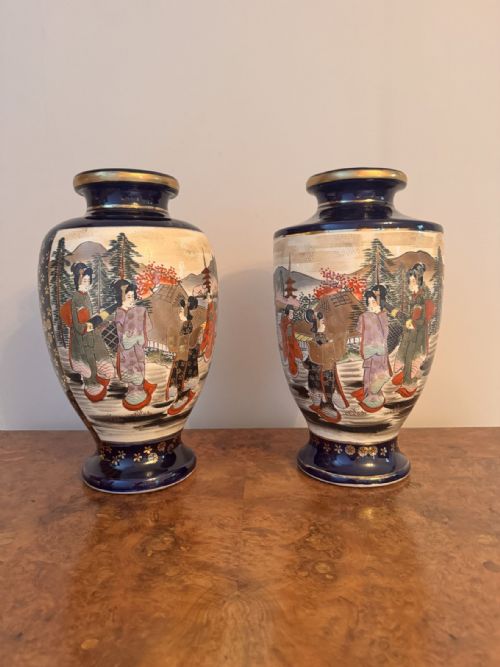
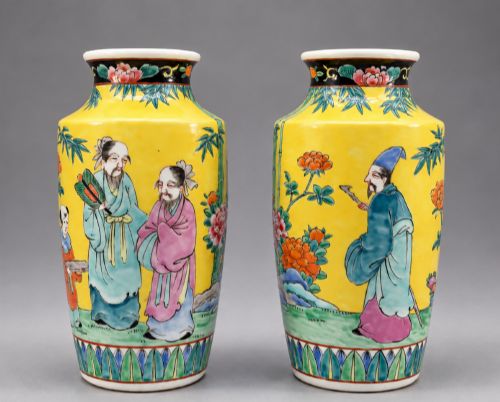
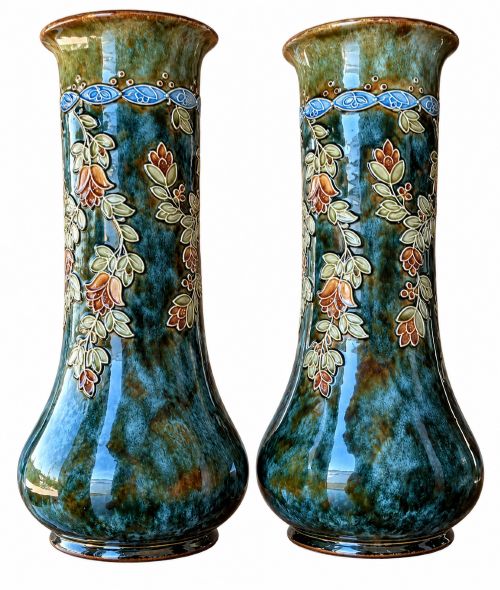
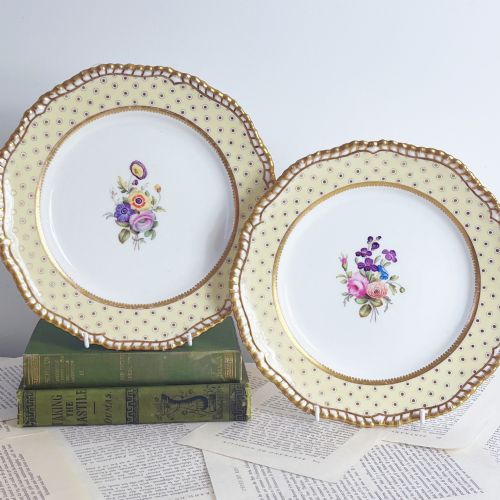
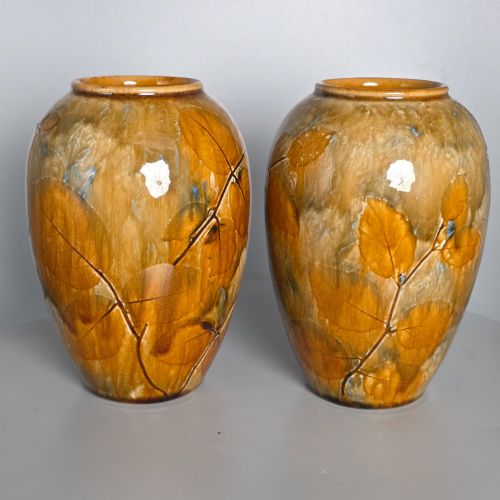
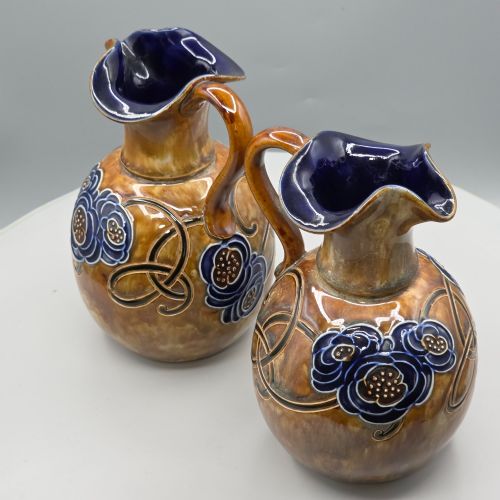
A decorative ceramic pair consists of matched or complementary objects created simultaneously for balanced display, covering forms such as vases, plates, ewers, and figurines. They originate from British, European, and Asian workshops across the nineteenth and early twentieth centuries.
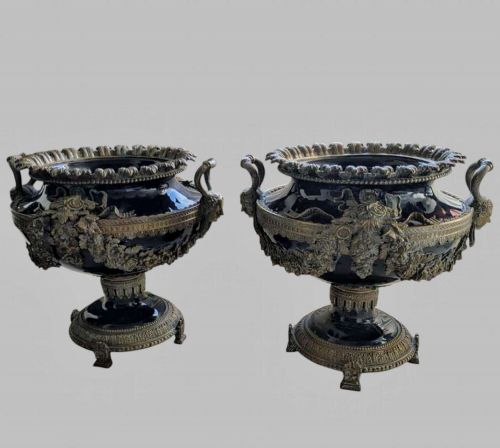
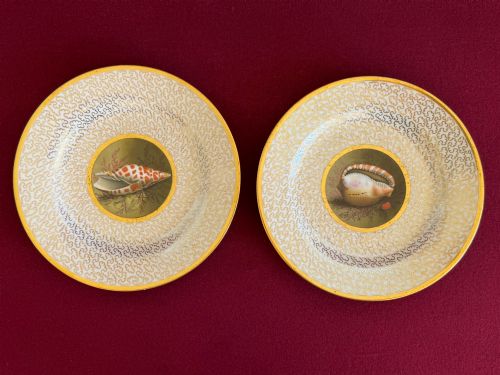
The selection on this page relies heavily on Victorian and Edwardian periods, stretching from Regency designs through to the Art Nouveau and Arts and Crafts movements. Vases and decorative plates dominate the groupings, alongside occasional lamps, urns, and sculptural figures.
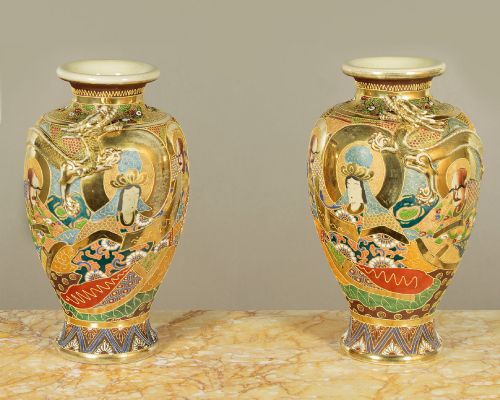
Buyers encounter everything from English ironstone and earthenware to Japanese Satsuma and Imari porcelains, as well as French faience. Each matching duo provides symmetrical arrangement options for traditional and period interiors.
How they were made
Potters shaped these vessels using earthenware, stoneware, and fine porcelain bodies, often employing moulds for uniform dimensions across the two pieces. Glazes were then applied by hand, utilising techniques ranging from simple blue and white painting to complex multi-fired enamels.
Decoration frequently incorporated gilding, gold leaf, and enamel detailing over the ceramic base. Certain makers added hand-sculpted elements or applied metal mounts, such as gilt bronze trim, to complete the functional or ornamental pieces.
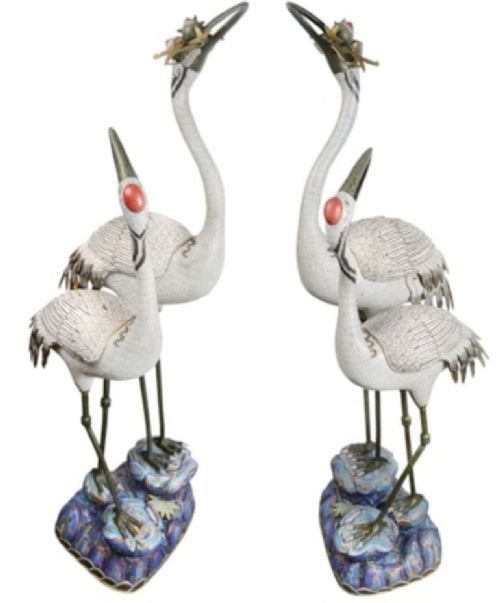
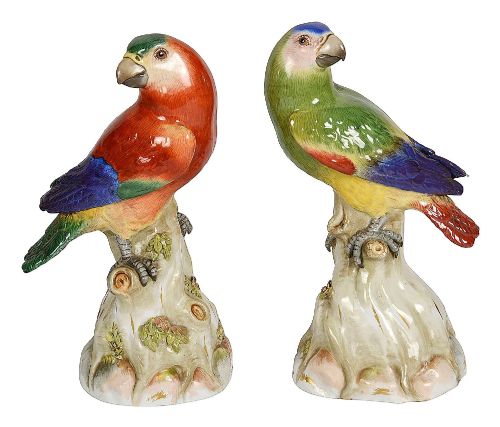
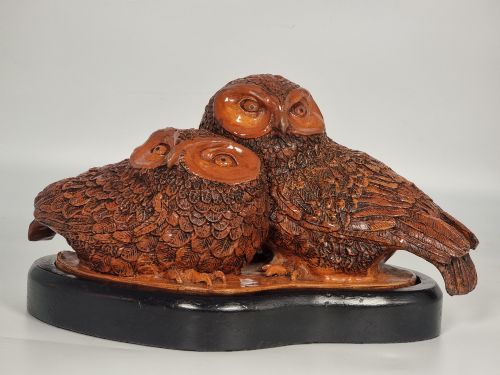
Several ceramic pairs take the form of attentive dogs, parrots, and watchful stone china owls.
What varies in quality
Quality in a decorative ceramic pair rests upon the crispness of the moulding and the precision of hand-painted details. Superior examples exhibit deliberate brushwork and well-defined glazes rather than hurried application.
The execution of supplementary materials, such as gilding or bronze mounts, dictates the upper tier of production. Matched symmetry and complete preservation of the original painted surfaces distinguish finer artistic output from standard commercial output.
Royal Doulton·Spode·Meissen·Wedgwood·Helena Wolfsohn Dresden
The Decorative Ceramic Pair Glossary
- Earthenware
- Porous pottery fired at lower temperatures, requiring a glaze to hold liquids. It forms the body for many traditional decorative figures and vessels.
- Stoneware
- Dense ceramic fired at higher temperatures until vitrified, making it naturally impermeable. It supports sturdy utilitarian and artistic forms alike.
- Imari
- Japanese export porcelain style featuring distinct underglaze blue and iron red highlights. It influenced many European potteries during the nineteenth century.
- Faience
- Tinned-glazed earthenware produced across continental Europe. It typically displays colourful hand-painted motifs on an opaque white background.
- Baluster
- Architectural column shape with a swelled lower portion, frequently used for vase profiles. This curving silhouette provides stability and visual weight to mantel ornaments.
Decorative Ceramic Pair: Frequently Asked Questions
How are decorative ceramic pairs displayed?
These items traditionally sit symmetrically on either side of a fireplace mantel, sideboard, or mirror. Collectors also place matching urns or vases on dedicated pedestals.
Matching sets create visual harmony within a room, though variations in height or posture can occur in figurative pairs like birds or dogs.
What periods do these pairs represent?
The pieces span the nineteenth century through the early twentieth century, including Victorian and Edwardian eras. Later examples stretch into the nineteen-twenties and thirties.
Stylistic shifts move from Regency and Rococo Revival towards Art Nouveau, Arts and Crafts, and Japanese Meiji periods.
How do I identify the material?
Porcelain provides a fine, vitreous white body that often shows translucency when held to light. Earthenware and stoneware present heavier, opaque structures with varying surface textures.
Glazes, enamels, and gilding sit on top of these foundational ceramic bodies, sometimes accompanied by metal mounts or wooden bases.
Were these items used or decorative?
Many objects served an ornamental purpose from creation, intended for display on cabinets and tables. Others functioned as tableware, including dessert plates, bowls, and serving ewers.
Conversion into lamps also occurred later in the history of certain larger vases and urns.