





Decorative Ceramic Charger Dish
When you handle a decorative ceramic charger dish, you meet centuries of hand-painted porcelain, faience and earthenware made for display.
Decorative Ceramic Charger Dish
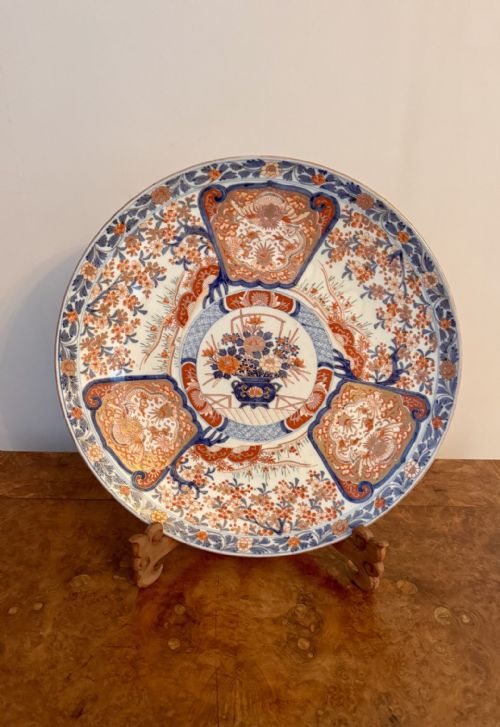
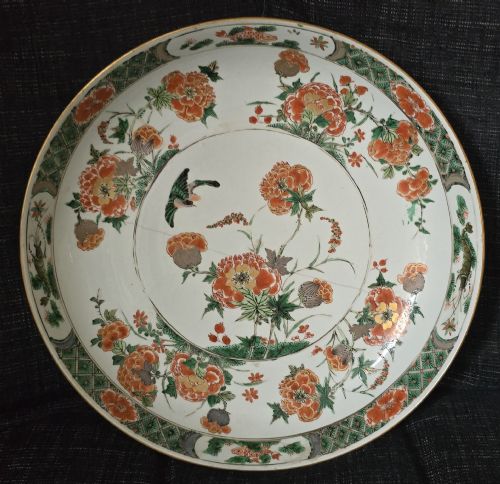
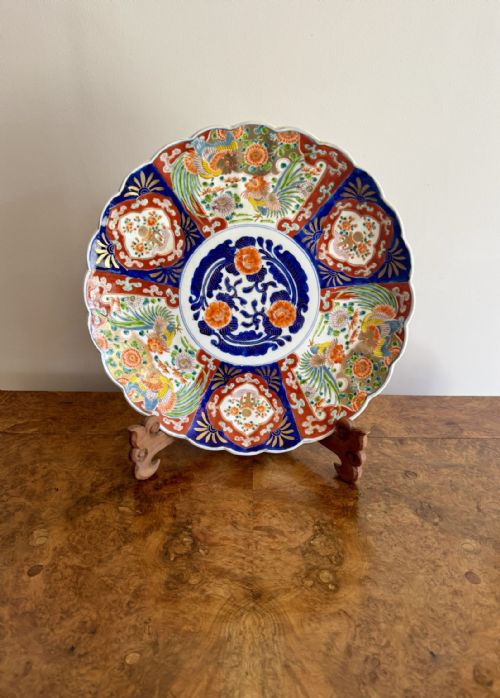
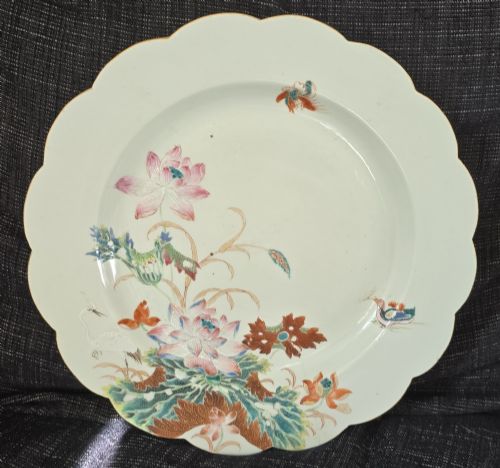
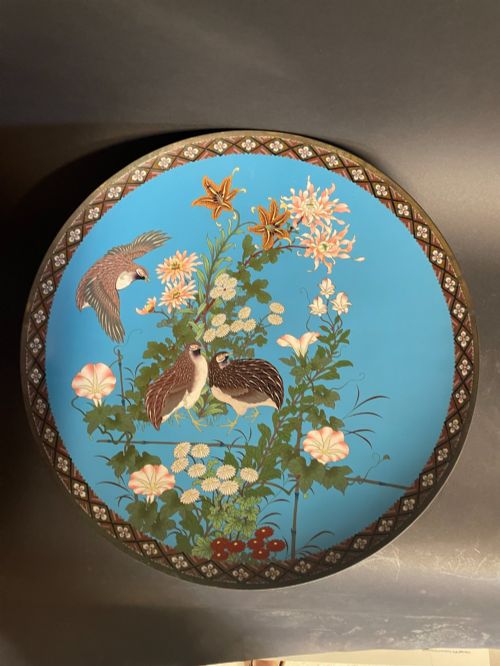
A decorative ceramic charger dish is a large plate or shallow bowl intended primarily for display rather than dining. The examples you encounter on this page span from the seventeenth century through the early twentieth century, originating from Japanese, Chinese and European workshops.
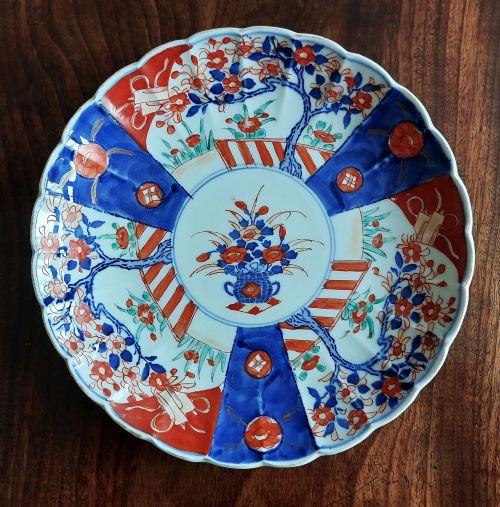
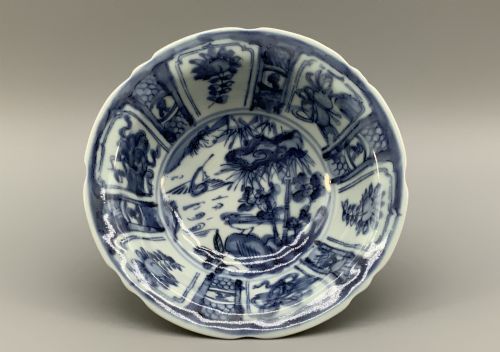
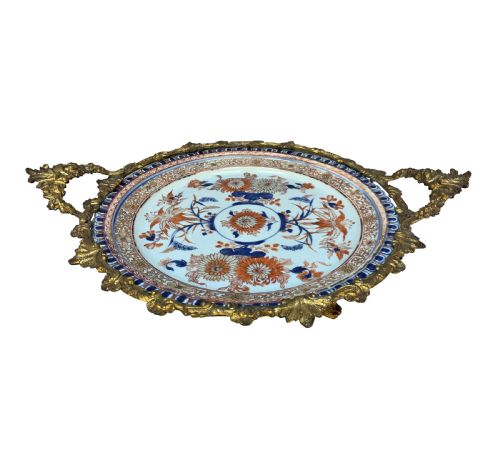
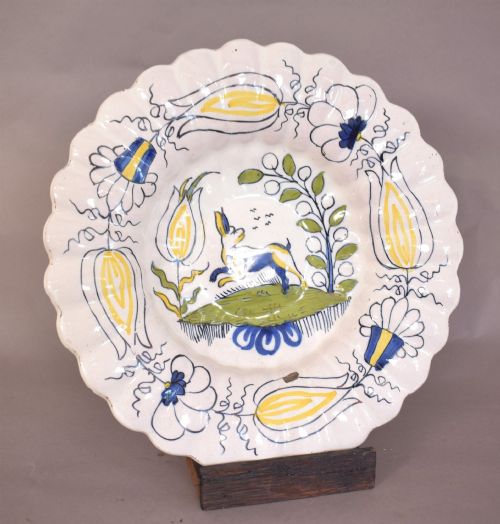
The forms vary from grand scalloped chargers to lobed bowls and cabinet plates. Japanese Imari and blue and white porcelain appear frequently alongside Delft faience and English earthenware.
How they were made
Makers utilised ceramic bodies including porcelain, soft-paste porcelain, ironstone and tin-glazed earthenware. Artisans applied hand-painted glazes, enamel, and occasionally gold leaf or ormolu mounts to finish the surface.
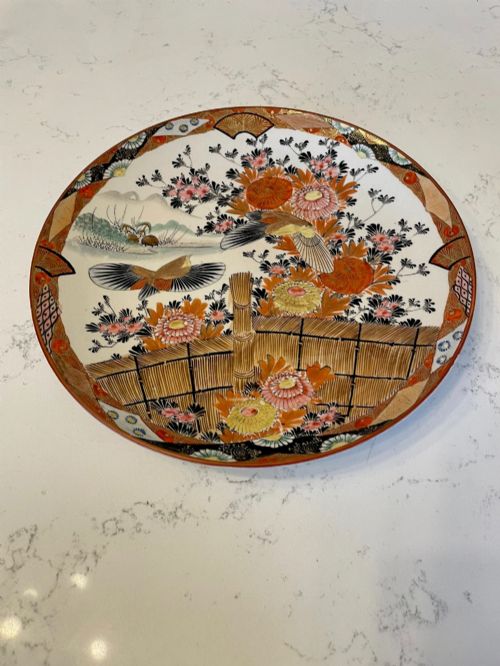
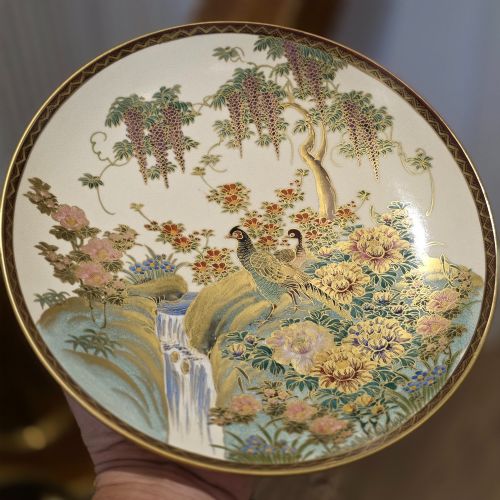
Firing techniques allowed for intricate blue and white designs, polychrome palettes, and transferware patterns. Surface embellishments such as moriage add textured relief to Satsuma wares.
Peacocks, wisteria and hidden birds occasionally peer out from behind the intricate painted peonies on Satsuma chargers.
What varies in quality
The fineness of the hand-painted brushwork distinguishes standard production from exceptional examples, particularly in the precision of floral, bird and figural motifs. The control of the glaze firing and the complexity of the palette, such as rich cobalt blues combined with iron red and gilt, define the upper tier.
The crispness of moulding on scalloped, lobed or square edges also marks the distinction between ordinary and superior specimens.
John Ford·Richard Sebright·Ambroise Michel·John Davenport of Longport·William Yale
The Decorative Ceramic Charger Dish Glossary
- Charger
- A large decorative plate or dish traditionally meant for display on a sideboard or wall rather than for table service.
- Imari
- A style of Japanese export porcelain characterised by a palette of underglaze blue, iron red, and gold.
- Tin-Glazed Earthenware
- Pottery covered with a white tin-opacified glaze that provides a smooth surface for painted decoration, encompassing Delft and faience.
- Cabinet Plate
- A decorative plate intended for display in a cabinet or on a wall rather than everyday dining.
- Moriage
- A Japanese ceramic technique using raised clay slip to create textured decorative patterns on the surface.
Decorative Ceramic Charger Dish: Frequently Asked Questions
What is a decorative ceramic charger dish used for?
These large dishes served primarily as ornamental display pieces on walls, dressers or sideboards rather than functional tableware.
Their substantial size and intricate painted designs made them focal points in domestic interiors across Europe and Asia.
How do I identify Japanese Imari ware?
Japanese Imari pieces typically feature a distinct palette combining underglaze blue with iron red and gilt highlights over porcelain.
They often incorporate detailed floral, bird or geometric patterns on scalloped or lobed edges.
What is the difference between Delft and faience?
Delft specifically refers to tin-glazed earthenware produced in the Dutch town of Delft, known for its blue and white Chinoiserie or European motifs.
Faience is the broader continental European term for tin-glazed earthenware produced in France, Spain and Italy.
How should I display a heavy charger plate?
Due to their weight and size, large chargers require sturdy plate stands designed for secure tabletop display or professional wall-mounting brackets.
Ensure the mounting hardware supports the specific weight of porcelain or earthenware.