





Decorated Porcelain Vase
A decorated porcelain vase brings painted colour and ceramic form together, offering a focal point for a mantelpiece or side table.
Decorated Porcelain Vase
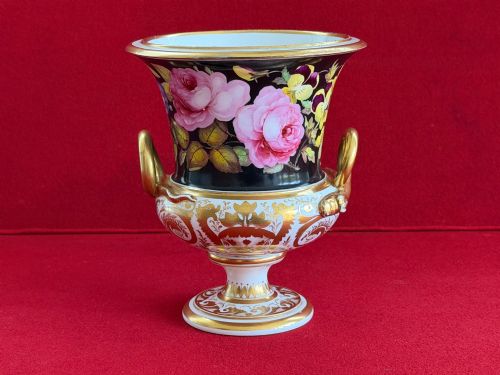
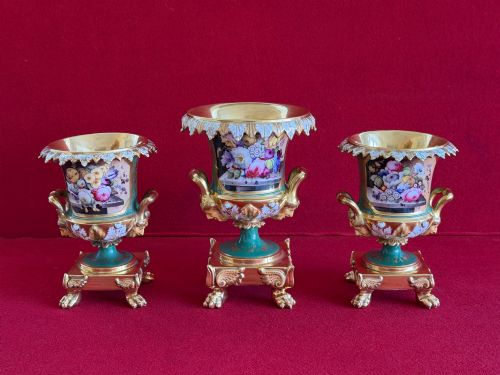
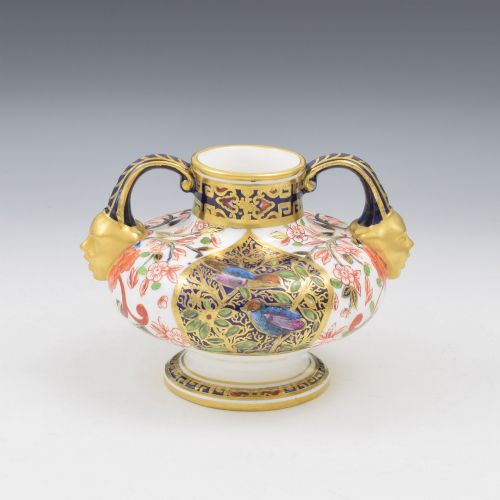
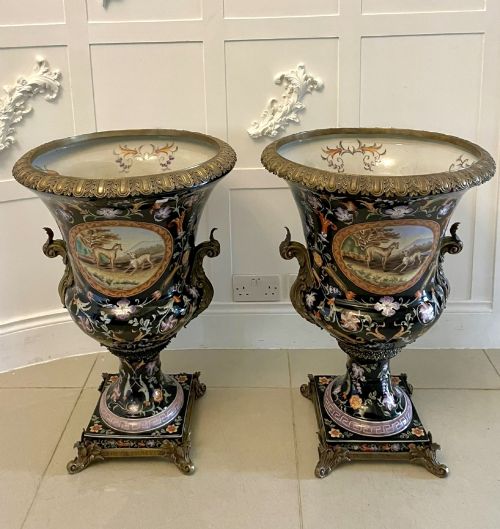
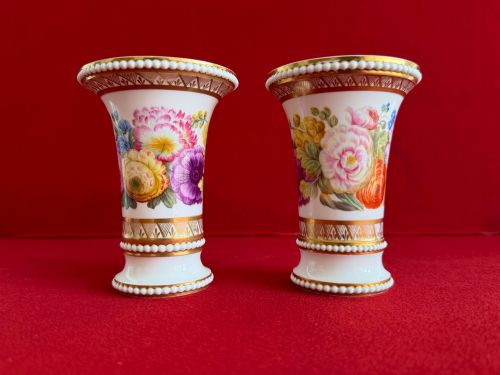
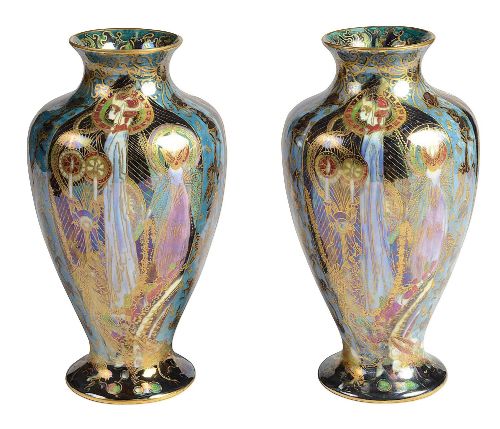
A decorated porcelain vase serves as a vessel for display, taking forms such as baluster bodies, urns, garnitures, spill vases, and jardinières. These objects emerge from various periods including the Georgian, Regency, Victorian, and Edwardian eras, alongside Japanese Meiji and Edo periods.
British factories like Derby, Spode, Minton, and Royal Worcester sit alongside French, German, and Japanese workshops in this selection. Buyers find pieces shaped for specific domestic uses, from slender spill vases to large country house garnitures and mounted jardinieres.
How They Were Made
Potters shaped porcelain, earthenware, and ironstone on the wheel or in moulds before firing the ceramic body. Artisans then applied enamel paint, cobalt grounds, and metallic highlights such as gold leaf and gilding to the surface.
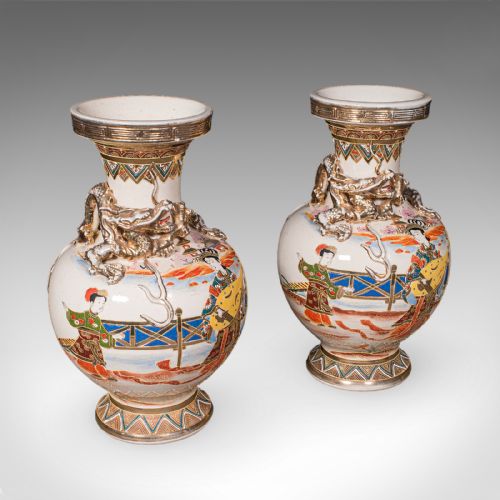
Many items incorporate additional materials, featuring brass mounts, bronze fittings, or carved wooden stands. Specific decorative techniques include raised moriage work and transfer printing combined with hand-painting.
Decorated Porcelain Vase Retail Price Guide 2026
Typical asking prices for decorated porcelain vase among the pieces listed under this phrase on Sellingantiques today, from the lower quarter to the upper quarter. They describe what is for sale here now, not the wider market.
Several spill vases carry painted highland cattle whose steady gaze seems to follow anyone walking past the mantelpiece.
What Varies in Quality
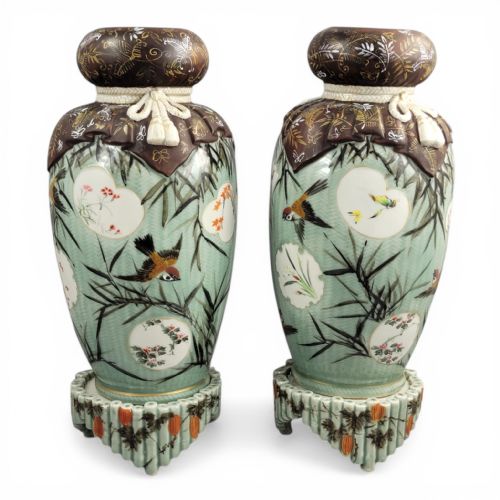
The skill of the painting distinguishes standard production from exceptional pieces, particularly when signed by named ceramic artists who executed detailed botanical, animal, or figurative scenes. The crispness of the porcelain moulding and the precision of the gilding also indicate the standard of manufacture.
Design attribution to influential figures or documented factory pattern numbers elevate the status of a piece. The survival of matching garniture sets or original covers likewise influences the standing of these ceramic works.
Derby Porcelain·Spode Porcelain·Minton Porcelain·Royal Crown Derby·Wedgwood·Flight Barr and Barr·Royal Worcester·Kinkozan·Doulton Burslem·Ernst Wahliss·Samson of Paris·Dresden
The Decorated Porcelain Vase Glossary
- Garniture
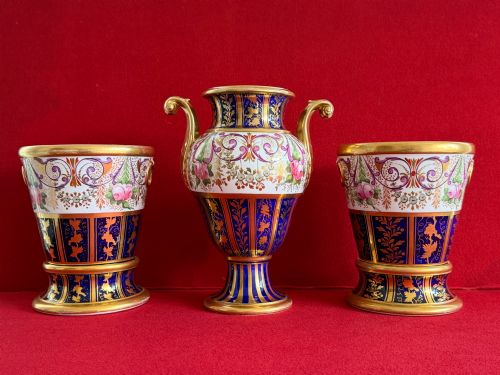
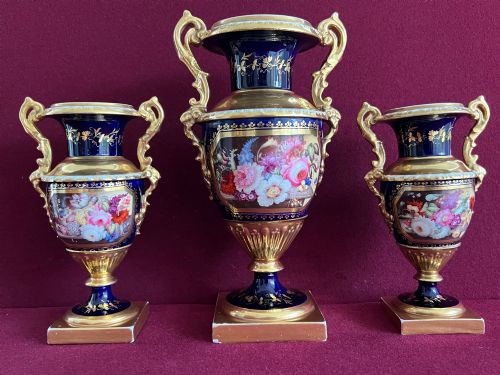
- A set of matching vases or pots, usually three or five in number, designed to sit together on a mantelpiece or cabinet. These sets often comprise a central vase flanked by two smaller companion pieces.
- Spill vase
- A small, narrow vessel designed to hold slender tapers of wood or rolled paper used for lighting fires and candles. They appear frequently in pairs on nineteenth-century mantelpieces.
- Moriage
- A Japanese ceramic decorating technique using slip trailed from a tube to build up raised patterns and figures. This tactile decoration often receives hand-painted colour and gilding.
- Imari palette
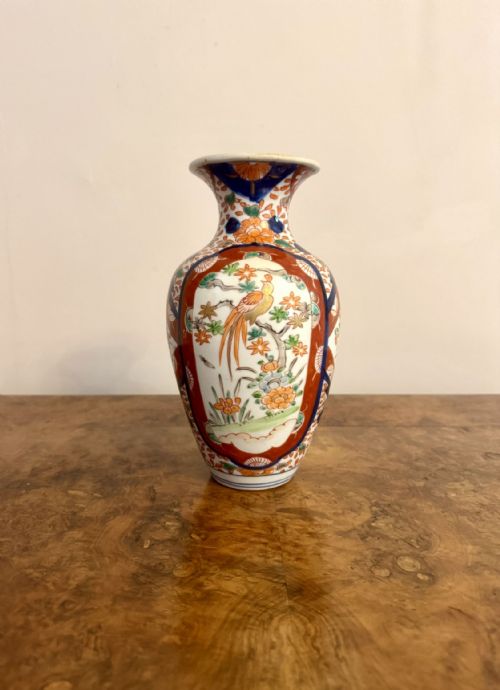
- A traditional decorative style originating in Japan, characterised by underglaze blue, iron red, and gold highlights on a white ceramic ground. European factories copied this distinctive colour scheme extensively.
Decorated Porcelain Vase: Frequently Asked Questions
What is a garniture?
A garniture is a matched set of three or more vessels, such as vases or urns, made to decorate a chimney piece or sideboard together as a unified display.
These sets usually feature a taller central piece balanced by a pair of slightly smaller matching vessels on either side.
How were spill vases used?
Spill vases held thin wooden spills or rolled paper tapers that homeowners used to transfer a flame from the hearth to candles and lamps.
Placed on mantelpieces, these small vessels kept the lighting spills close to hand before the invention of matches.
What is an Imari decorated vase?
An Imari vase displays a distinct palette dominated by cobalt blue underglaze, iron red, and generous amounts of gold leaf.
Originating in Japan, this decorative scheme became widely popular across European porcelain and ironstone factories during the eighteenth and nineteenth centuries.