
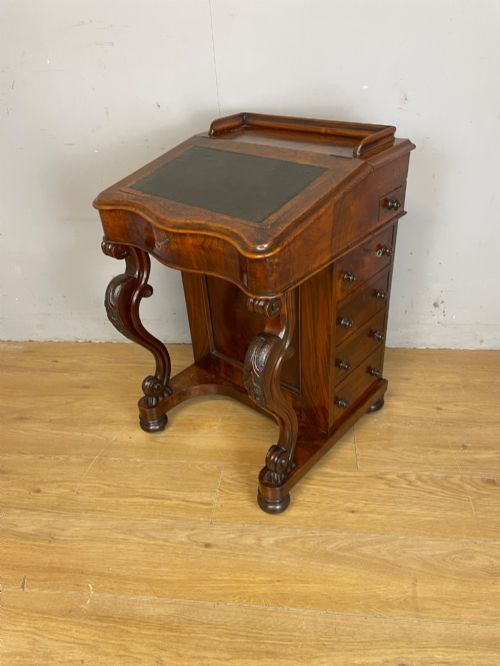
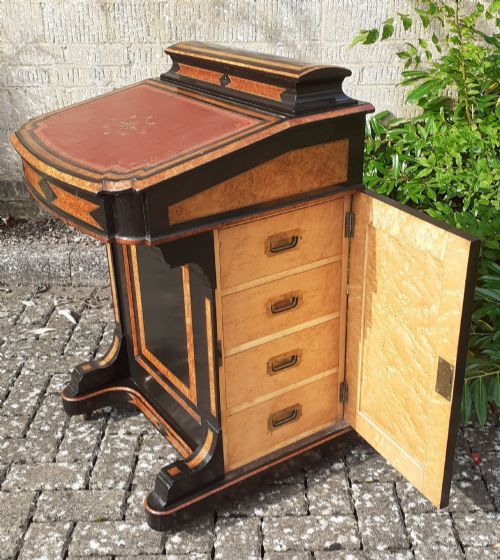
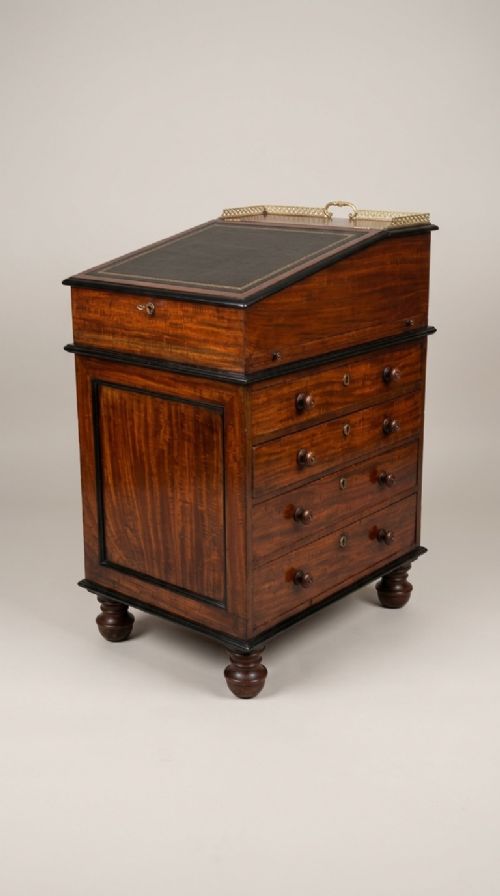
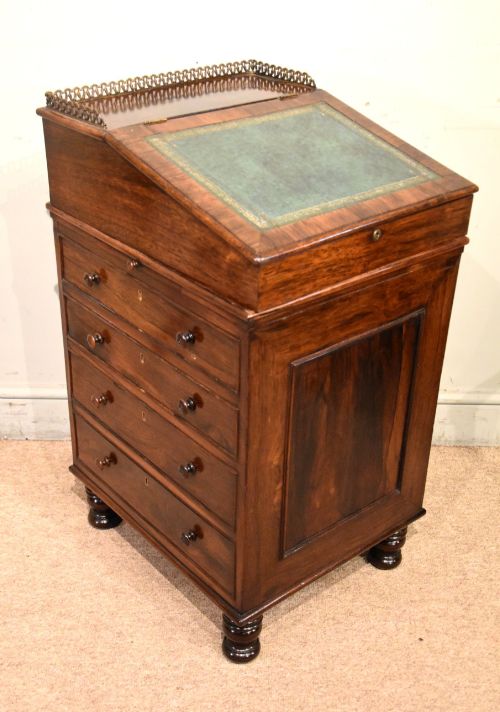
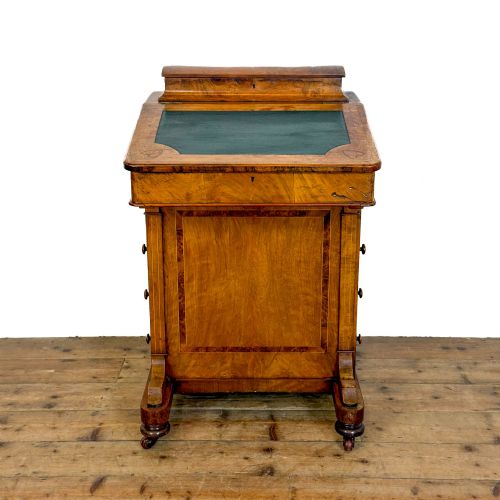
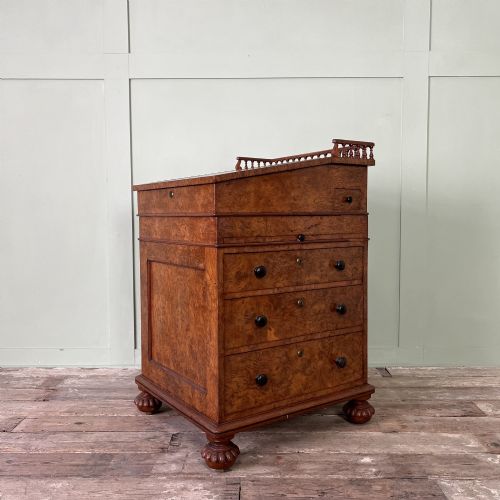


Davenport Writing Desk
When you search for a davenport writing desk, you seek a compact, slope-fronted writing cabinet intended for correspondence.
Davenport Writing Desk
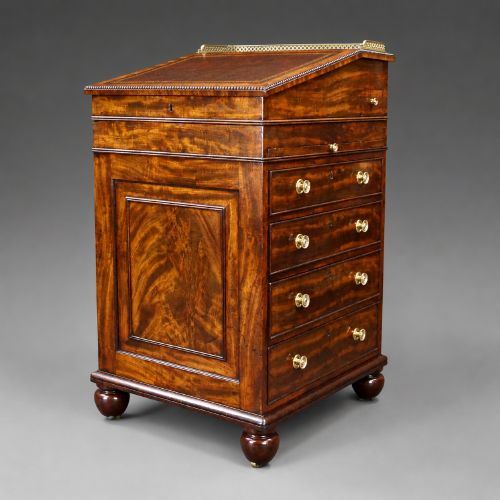
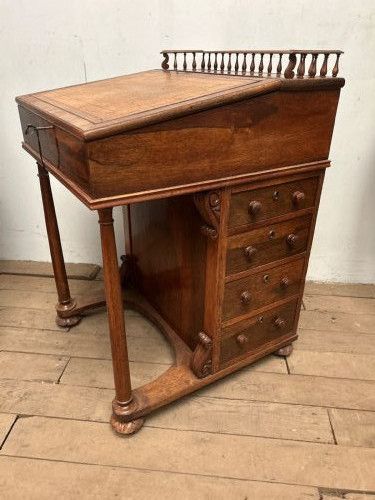
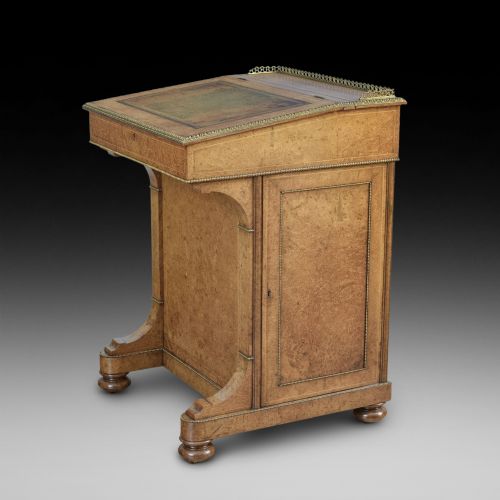
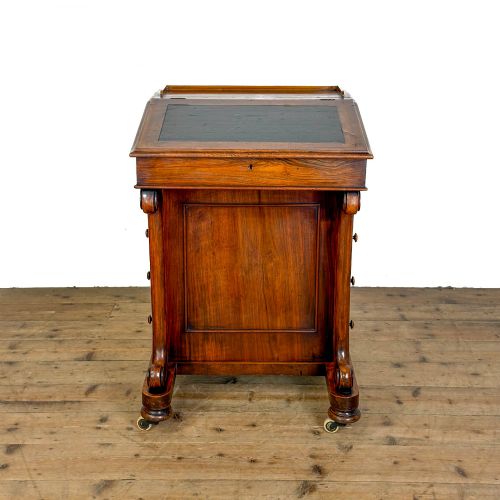
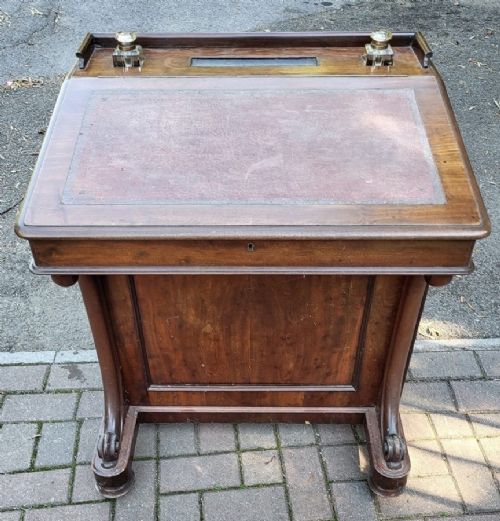
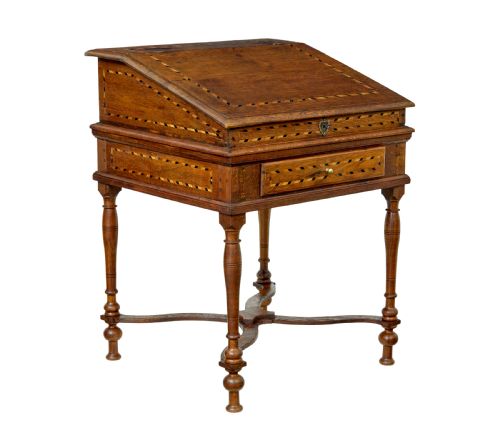
A davenport writing desk combines a sloping desktop for writing with a set of internal drawers, typically supported by a pedestal base. The form emerged in the Georgian and Regency periods, continuing in popularity through the Victorian era.
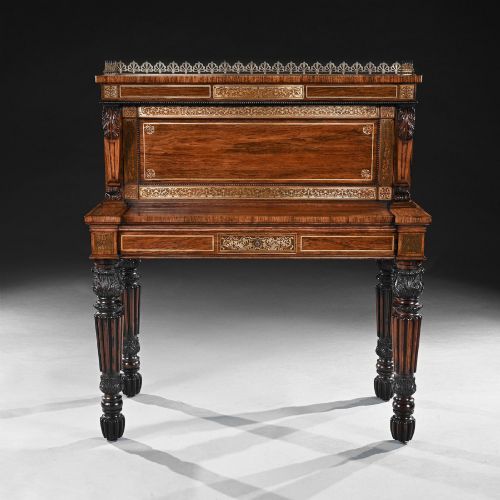
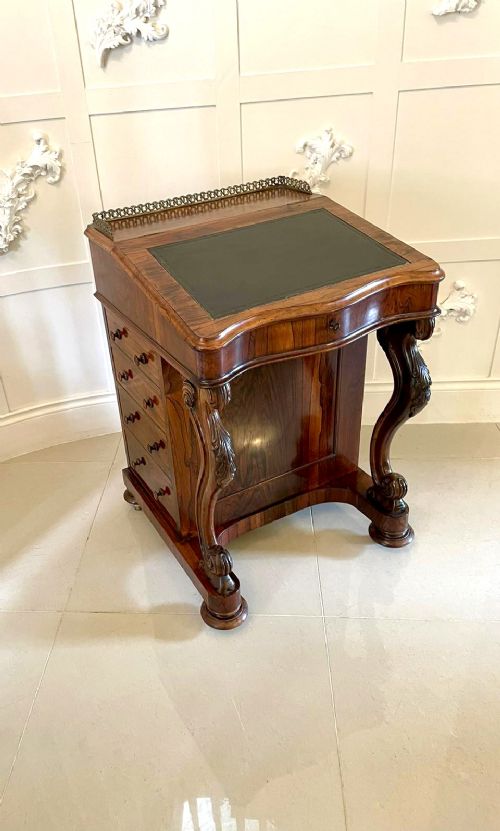
Most pieces encountered on this page date from the nineteenth century, ranging from early Regency examples to mid-Victorian burr walnut models. Variants include piano-top designs and pop-up stationery cabinets.
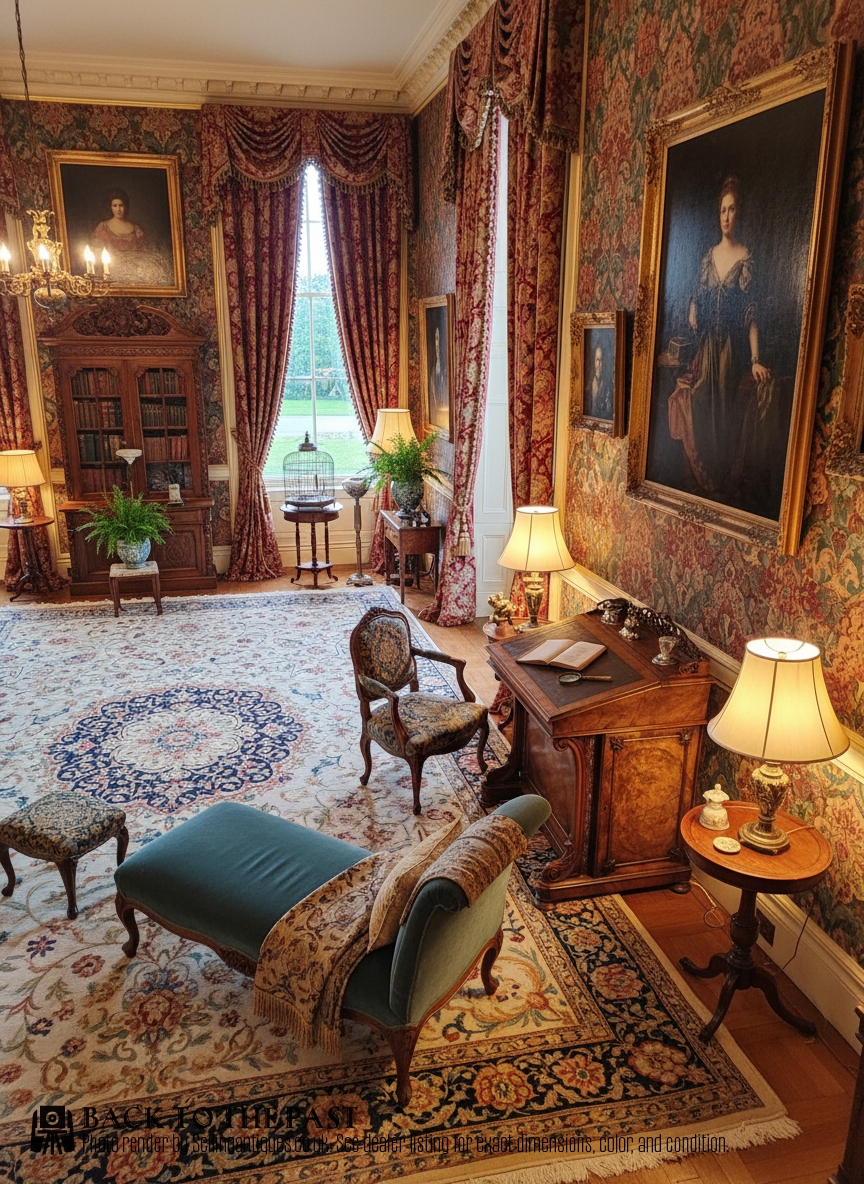
These compact writing pieces were designed for domestic studies, drawing rooms, and boudoirs where space was at a premium yet practical storage for letters and papers remained necessary.
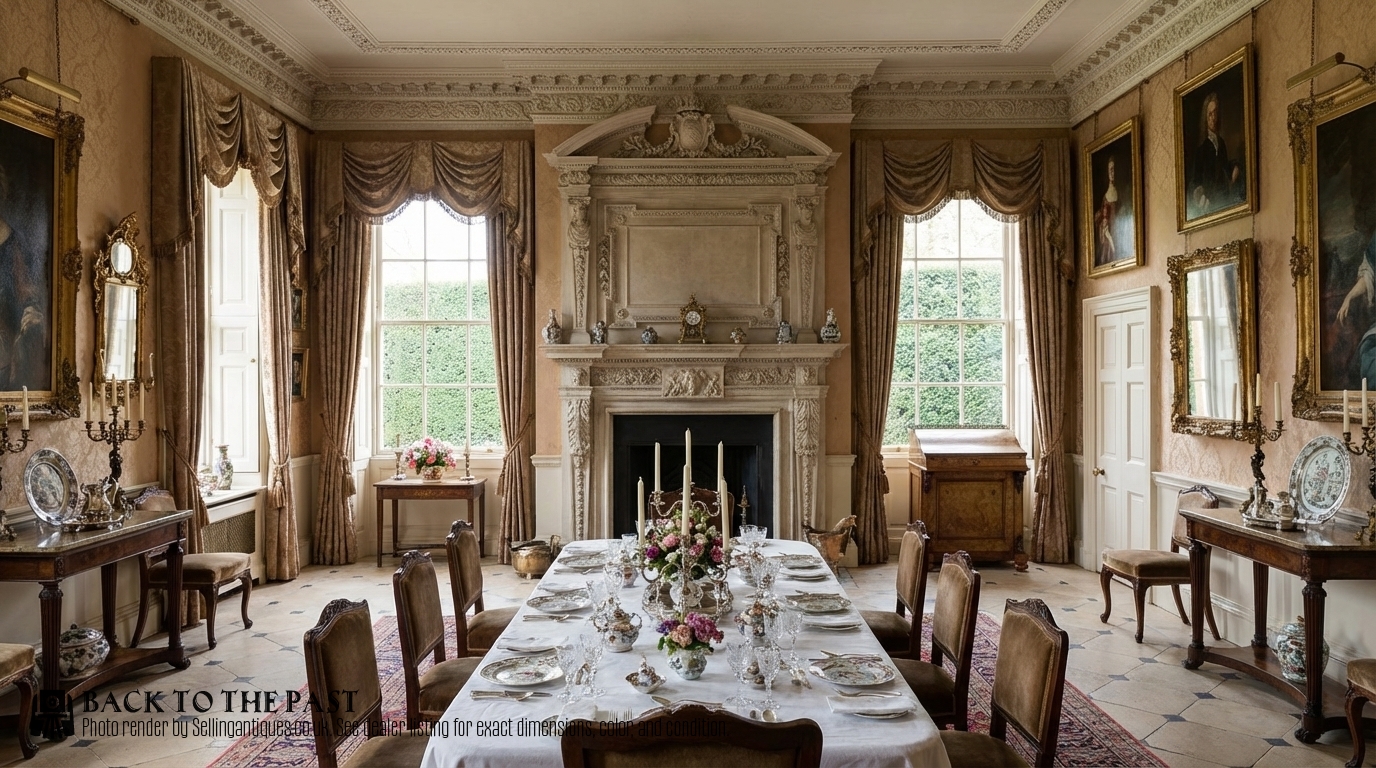
Materials and Construction
Cabinetmakers utilised dense hardwoods such as mahogany and rosewood for early models, later favouring burr walnut and figured walnut veneers to create decorative patterned surfaces.
Many examples incorporate secondary woods such as oak and pine within the drawer linings, whilst interiors often feature satinwood and boxwood inlay detailing around small pigeonholes.
Davenport Writing Desk Retail Price Guide 2026
Typical asking prices for davenport writing desk among the pieces listed under this phrase on Sellingantiques today, from the lower quarter to the upper quarter. They describe what is for sale here now, not the wider market.
Some nineteenth-century examples hide secret compartments for stamps and gold sovereigns behind dummy book spines.
Evaluating Quality
The distinction between standard production and top-tier work rests on the choice of timber and the precision of the cabinetmaking. High-quality pieces feature exceptionally figured veneers, such as flame mahogany or burr walnut, matched symmetrically across the writing slope and drawer fronts.
Gillows·Gillow and Company·Lamb of Manchester·Saunders and Woolley
The Davenport Writing Desk Glossary
- Davenport
- A compact writing desk featuring a sloping top hinged to open over a set of drawers. It typically sits on a pedestal base with drawers opening to the side.
- Burr Walnut
- A veneer taken from the knotted growths of walnut trees, yielding a highly swirled and mottled grain pattern. Cabinetmakers prized this material for its decorative visual impact.
- Pedestal
- The solid supporting base of the desk that houses the vertical tier of drawers. This structural element distinguishes davenports from standard four-legged writing tables.
- Satinwood
- A lustrous, yellow-toned timber used primarily for internal drawer construction and fine stringing inlay. Its bright contrast complemented darker cabinet woods.
- Marquetry
- The art of applying pieces of veneer to a structure to form decorative patterns and pictorial designs. It frequently appears on Victorian walnut surfaces.
Davenport Writing Desk: Frequently Asked Questions
How were davenport writing desks used?
These desks served primarily for personal correspondence, letter writing, and the storage of stationery. The sloping lid provided a comfortable surface for handwriting, while the side drawers held inkwells, quills, and paper.
Designed for domestic settings, they allowed individuals to manage private affairs in drawing rooms or bedrooms without needing a full-sized library desk.
How do I tell a Regency davenport from a Victorian one?
Regency models tend to utilise mahogany or rosewood, often featuring cleaner architectural lines, brass gallery rails, and occasionally lyre-shaped supports. They reflect the earlier, classical restraint of the early nineteenth century.
Victorian examples frequently showcase burr walnut with elaborate marquetry inlay, floral motifs, and more complex mechanisms like piano tops. The timber choice and decorative ornamentation generally clarify the period of manufacture.
Are the drawers on both sides functional?
Most standard davenports feature drawers opening on one side only, while the opposite side displays decorative false drawer fronts to maintain visual balance when the desk stands freestanding.
Certain larger or custom-built models incorporate drawers or cupboards on both sides, though single-drawer banks with dummy counterparts remain the standard arrangement.