


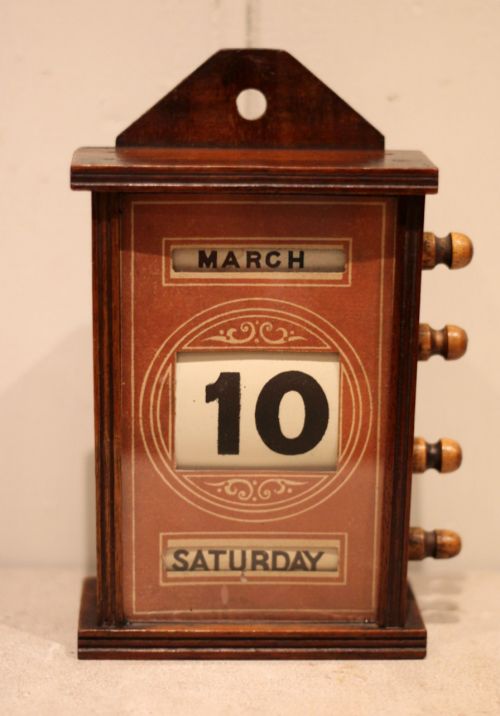


Dated Wooden Box
A dated wooden box records a precise year in grain, iron, or paint, carrying personal history forward from centuries past.
Dated Wooden Box
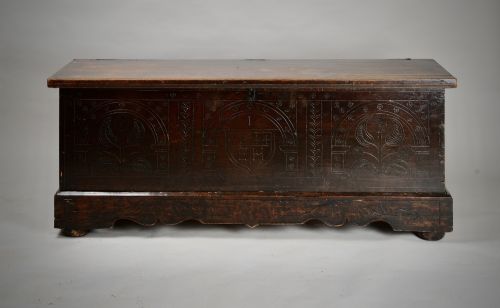
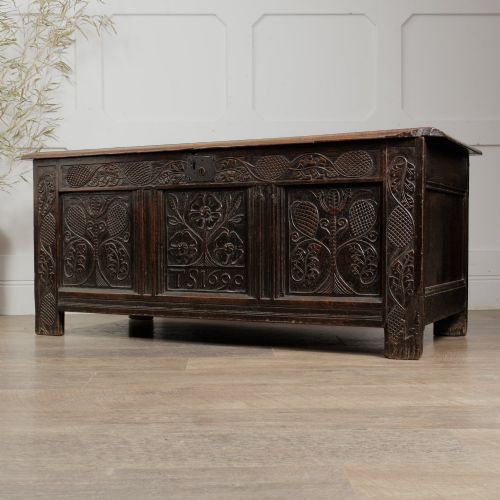
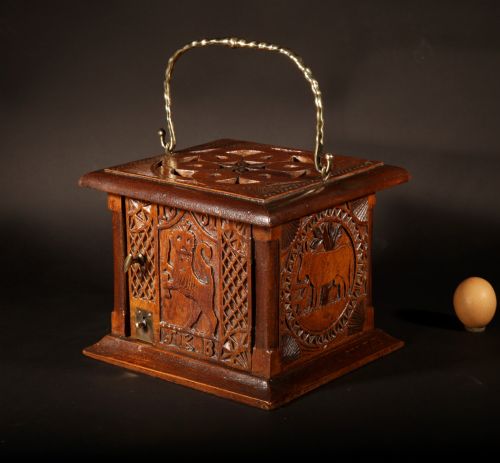
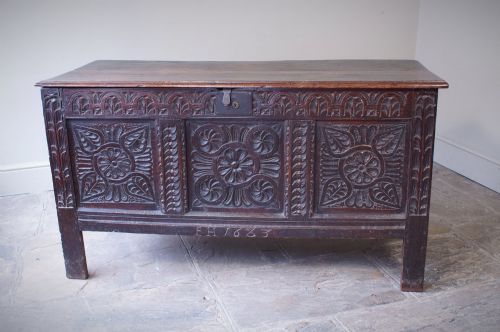
A dated wooden box spans sturdy seventeenth-century oak coffers and nineteenth-century Scandinavian painted pine marriage chests designed to preserve valuables, documents, and textiles. These functional containers often bear carved, painted, or inscribed years alongside initials, marking births, marriages, or estate milestones.
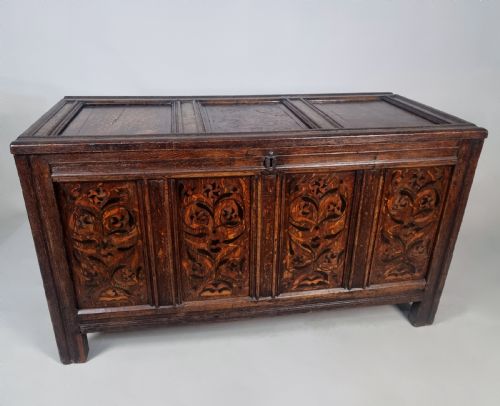
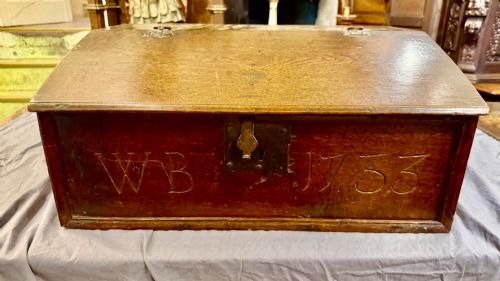
Buyers meet robust forms ranging from small Bible and desk boxes to large dome-top blanket chests and coffers. Seventeenth-century examples rely on heavy joined oak panels and iron hardware, while later nineteenth-century pieces frequently display vibrant folk art paintwork from Sweden and Hungary.
How they were made
Carpenters constructed early boxes utilising solid oak, elm, or limewood assembled with pegged joints, iron strap hinges, and wrought iron locks. Surfaces received crisp chip carving, marquetry inlay, or incised lettering to permanently display the commissioning date.
Later nineteenth-century storage vessels utilised pine and mahogany, often enhanced through hand-painted pigments, scrubled finishes, or applied mouldings. Artisans inscribed dates and initials using fine paintbrushes, branding irons, or gouging chisels directly into the timber.
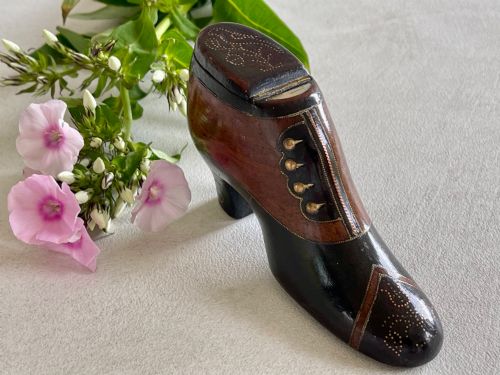
One remarkably specific nineteenth-century survivor takes the miniature form of a carved wooden snuff shoe complete with double openings and tiny carved birds.
What varies in quality
Quality rests in the integrity of the original construction and the clarity of the inscription. Crisp, untouched chip carving and original ironwork elevate a piece above examples with replaced hinges or later surface alterations.
The preservation of original painted surfaces on Scandinavian and Hungarian folk art chests dictates distinction. Intact historical pigments and clearly legible contemporary dates separate exceptional survivals from heavily restored or later painted equivalents.
The Dated Wooden Box Glossary
- Coffer
- A large heavy box utilised for storing valuables, linens, or documents. These sturdy containers often feature robust joined construction and iron reinforcement.
- Bible box
- A small sloping-lidded desk box originally built to house family scriptures and writing materials. Many rest on tables or desks for daily record keeping.
- Marriage chest
- A painted wooden trunk commissioned to celebrate a wedding, frequently displaying the couple's initials and a specific year. These large vessels formed a core part of a bride's household dowry.
- Treen
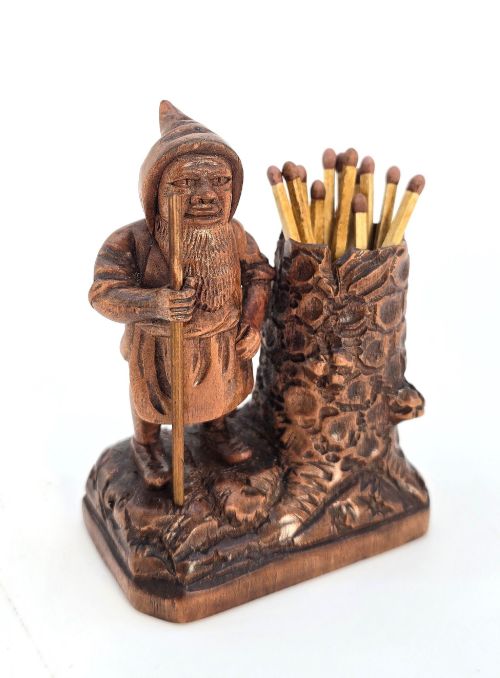
- Small domestic wooden objects fashioned by hand, ranging from snuff boxes to match holders. These items showcase traditional turning and carving skills.
- Folk art
- Traditional decorative craftsmanship produced within regional communities, often utilising bright painted pigments and geometric chip carving. This style defines many nineteenth-century Scandinavian boxes.
Dated Wooden Box: Frequently Asked Questions
How were these boxes used originally?
These boxes served secure storage functions for household valuables, legal deeds, Bibles, and precious textiles. Families relied on them to protect important possessions from dampness and theft.
Smaller variants sat upon tables for everyday correspondence or writing tasks, while massive chests held blankets and heavy garments at the foot of beds.
How can I tell the period of a wooden box?
Dating relies on examining construction methods, timber species, and hardware alongside any inscribed dates. Seventeenth-century examples utilise joined oak with hand-forged iron hinges, whereas nineteenth-century pieces often feature pine boards and painted finishes.
Tool marks, joinery techniques, and the style of the lettering provide clear physical evidence of the era in which the box was built.
Are painted finishes on these boxes original?
Original painted surfaces display natural wear, stable craquelure, and integrated patination that matches the age of the underlying timber. Pigments settle into the grain over generations rather than sitting evenly on top.
Close inspection under magnification reveals whether decorative paintwork aligns with the inscribed date or represents a later nineteenth-century folk revival.
How do I care for an antique wooden box?
Protect the timber by placing the box away from direct sunlight, heating vents, and rapid humidity changes. Stable indoor environments prevent wood shrinkage and cracking.
Apply a microcrystalline wax sparingly to nourish dry oak or pine surfaces, avoiding modern liquid polishes that can degrade historic painted finishes or bare wood.