


18th Century Bible Box
An 18th century bible box is a solid timber repository built to secure sacred texts and family records, offering robust craftsmanship that anchors a traditional interior.
18th Century Bible Box
An 18th century bible box is a compact wooden chest designed to store scriptures, documents and personal valuables securely within the home. These pieces emerge predominantly from seventeenth and eighteenth century workshops, encompassing English country oak examples alongside distinct Welsh vernacular designs.
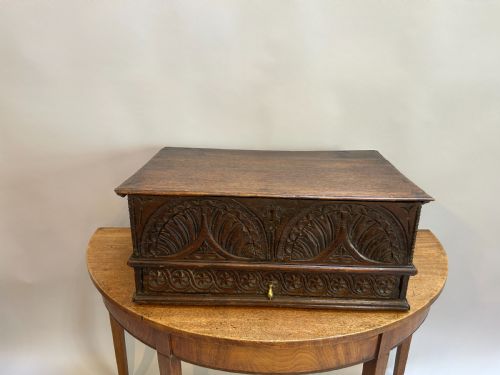
The version you are most likely to encounter on this page is constructed from solid oak, sometimes featuring carved friezes, internal drawers or inlaid decoration utilising holly and bog oak. Many survive as tabletop desks or desk boxes, while others are found mounted on later stands or raised on turned feet.
Regional variants include the Welsh coffer bach, a miniature chest often bearing owner initials and dates, reflecting domestic life and personal craftsmanship. Simpler document boxes and deed boxes share the same fundamental proportions and heavy hinged lid construction tailored for portability and security.
How They Were Made
Makers relied principally on solid oak, selected for durability and joined with traditional methods to withstand daily handling. Secondary woods such as elm and fruitwood appear alongside decorative contrasting elements like holly and bog oak inlay.
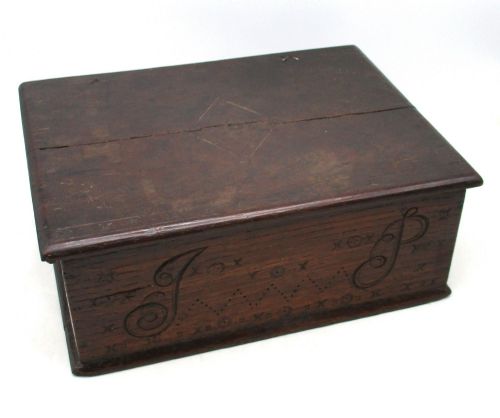
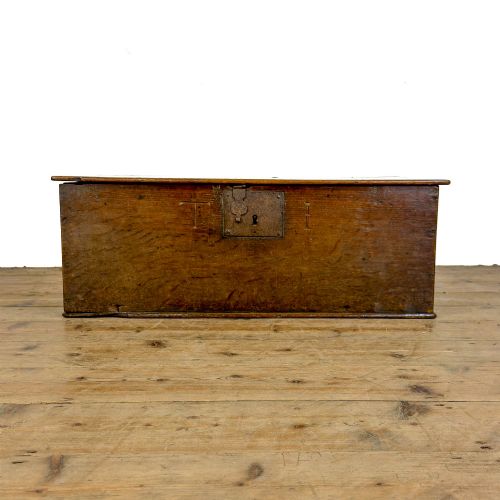
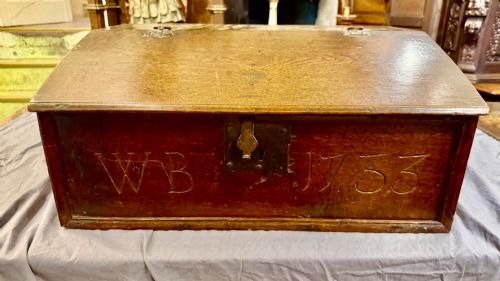
Iron hinges, brackets and brass fittings provide structural reinforcement and secure closure for lids that double as writing slopes. Carved friezes and incised initials or dates personalise the exterior surfaces, executed with simple hand chisels and gouges.
Several boxes preserve the original owner initials and marriage dates carved directly into the oak by the maker.
What Varies in Quality
Quality rests in the crispness of the carved decoration and the integrity of the timber selection across the lid and panels. Pieces retaining their original feet, stands or internal fittings command greater regard than those altered or mounted on later supports.
The presence of dated inscriptions, owner initials and complex inlay work distinguishes finer vernacular items from utilitarian storage containers. Surface patination, developed through centuries of handling, completes the distinction between ordinary workshop output and superior examples.
The 18th Century Bible Box Glossary
- Bible box
- A small lidded wooden chest historically used to store a family bible and important documents. These pieces often double as portable writing desks.
- Vernacular
- Regional furniture built by local craftsmen using available native timbers rather than following strict metropolitan design rules. This style prioritises function and local tradition.
- Frieze
- The horizontal decorative band running along the upper portion of the box front. Carvers frequently embellished this area with geometric patterns or foliate motifs.
- Bog oak
- Subfossil oak timber retrieved from peat bogs, prized for its deep dark coloration. Craftsmen used it for contrasting inlay work on lighter woods.
- Writing slope
- An angled desktop surface designed to facilitate comfortable handwriting. Many bible boxes doubled in purpose when placed upon tables or stands.
18th Century Bible Box: Frequently Asked Questions
What was a bible box used for?
These boxes served as secure storage for a family bible, important deeds, contracts and writing materials in eras before fitted furniture became common.
Placed on tables or desks, the hinged lid often doubled as a sloping writing surface for correspondence and household accounts.
Are these boxes meant to sit on stands?
While most were originally designed to sit on tables, chests or joined stools, some examples were paired with stands during later periods.
Listings frequently distinguish between tabletop boxes and those mounted on period or later stands, which altered their function into small desk furniture.
How can I identify a Welsh coffer bach?
A coffer bach is a miniature Welsh chest that typically incorporates a small drawer beneath the main lidded compartment and rests on feet.
These pieces often display owner initials, dates and distinctive regional construction details unique to domestic Welsh carpentry.
What timbers were used to build them?
Oak is the predominant timber found in these pieces, valued for its strength and widespread availability across British workshops.
Secondary materials include elm, fruitwood and contrasting inlays of holly and bog oak used to decorate panels and friezes.