


Dated 17th Century Coffer
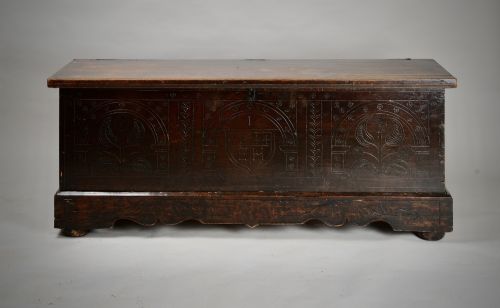
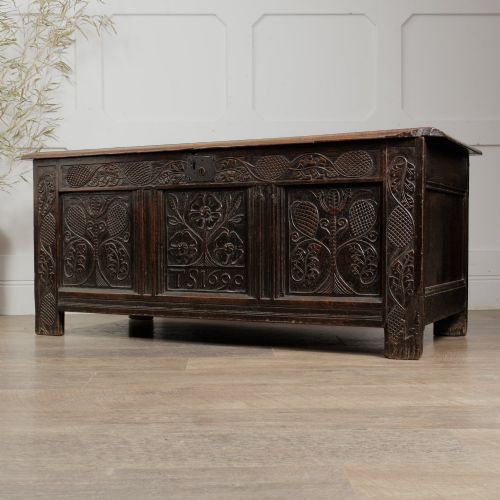
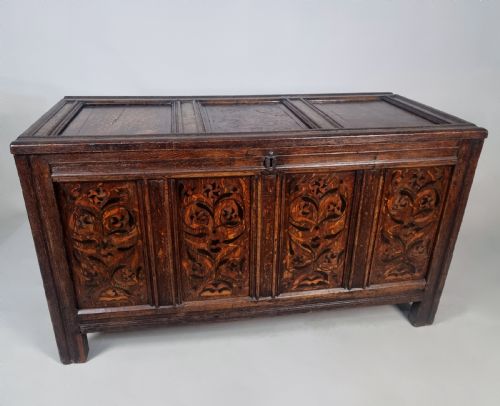
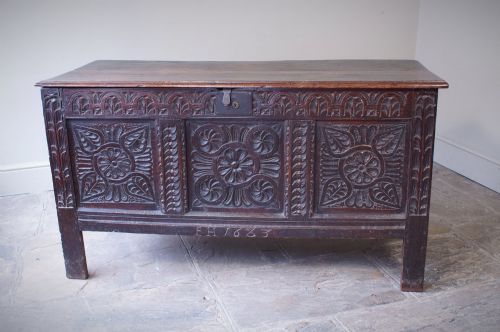
A dated 17th century coffer carries tangible centuries of domestic history through carved dates, initials, and robust timber construction.
Dated 17th Century Coffer
A dated 17th century coffer forms a sturdy storage chest for household goods, often inscribed with specific years and initials to mark a marriage or lineage. You encounter these substantial pieces in regional variations such as Welsh, Lancashire, and Lakeland styles.
The selection ranges from large paneled chests and cassoni to smaller desk boxes, bible boxes, and document boxes designed for securing papers. Oak dominates the material record, frequently paired with iron hardware and occasional mixed inlay woods.
Jacobean and William & Mary influences appear across the periods seen, which stretch from the core 1600s into later eighteenth-century interpretations. These items served as central pieces of furniture in early homes, holding linens, valuables, and legal documents.
How they were made
Makers built these coffers using solid oak timbers joined by frame and panel construction to accommodate seasonal wood movement. Iron hinges, lock plates, and straps reinforced the lids and corners against heavy use.
Surface ornament relied on hand carving, panel moulding, and occasional marquetry or mixed inlay woods rather than applied veneers. Inscribed dates and initials were frequently gouged or incised directly into the wood grain.
Several chests preserve the original owner's initials alongside dates like 1658 and 1695, carved into the oak for posterity.
What varies in quality
The distinction between ordinary and superior pieces rests on the crispness of the original hand carving and the integrity of the timber structure. Regional school details, such as the specific panel layout of a Lakeland or Lancashire piece, indicate the workshop standard.
Original ironwork, contemporary locks, and legible inscribed dates or initials elevate the historical interest of a chest. Alterations to the base timbers or replaced lids shift a piece away from its original form.
The Dated 17th Century Coffer Glossary
- Coffer
- A heavy wooden chest used for storing valuables, linens, and documents before the widespread use of wardrobes and drawers. They often feature flat lids suitable for serving as a table or bench.
- Cassone
- An Italian-style chest adapted in various European traditions, functioning primarily as a large storage receptacle for household goods. These pieces occasionally incorporate marquetry or mixed inlay woods.
- Bible box
- A small tabletop or desk box built to store religious texts and writing materials securely. They frequently double as document boxes with sloping or flat hinged lids.
- Marquetry
- The art of applying decorative veneer pieces in various woods to form geometric or pictorial patterns on a surface. This technique appears on specific Cromwellian examples.
- Joined oak
- Furniture constructed using mortise and tenon joints secured by wooden pegs rather than simple nailed boards. This method defines the primary structural integrity of seventeenth-century English woodwork.
Dated 17th Century Coffer: Frequently Asked Questions
What did people store in a dated 17th century coffer?
Households used these chests to safeguard precious textiles, woolen blankets, family silver, and important legal papers. Because houses lacked fitted closets, the coffer provided the main secure storage in a room.
The flat lids also allowed the chests to function as casual seating or temporary tables when space was at a premium. Smaller versions like bible boxes sat on tables to keep texts and writing tools clean and dry.
How do I care for an oak coffer?
Keep the timber away from direct heat sources and sudden temperature shifts that cause the oak panels to shrink or split. Apply a microcrystalline wax periodically to nourish the dry wood and maintain the surface sheen.
Avoid using modern liquid polishes or silicone sprays, which sink into the open grain and attract dust. Gentle cleaning with a soft, dry cloth preserves both the old timber and any original carved details.
Why do some coffers have initials carved on them?
Carved initials typically marked the names of a newly married couple who received the chest as a wedding gift or household foundation piece. The addition of a specific year commemorated that exact milestone.
Over centuries, these markings helped families trace the heritage of the furniture as it passed down through generations. They remain key evidence for dating regional English and Welsh workshop output.
Are these chests heavy to move?
Solid oak construction and thick iron hardware make seventeenth-century chests exceptionally heavy and substantial. Moving them generally requires two people to lift them safely without straining the corner joints.
Despite their weight, their modular form was designed to allow households to transport their valuables during travel or relocation. The heavy lids lift on traditional pin hinges rather than modern mechanisms.