


Dated 17th Century Chest
A dated 17th century chest is a heavy oak repository bearing its year of creation, offering tangible historical depth for an interior.
Dated 17th Century Chest
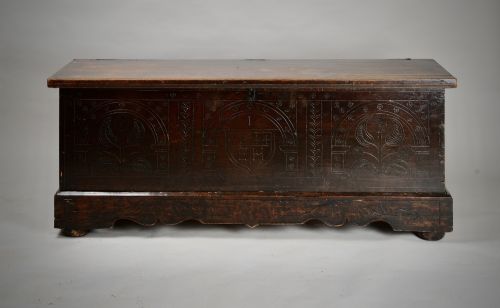
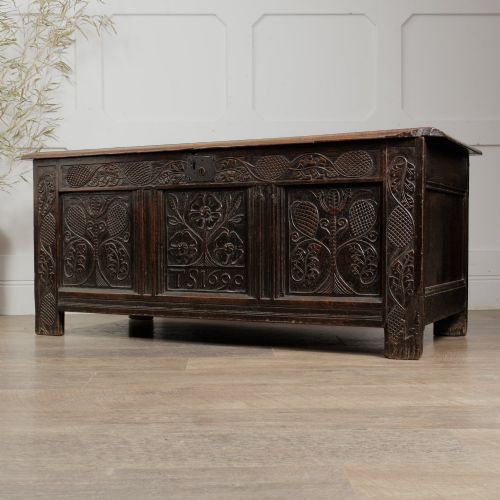
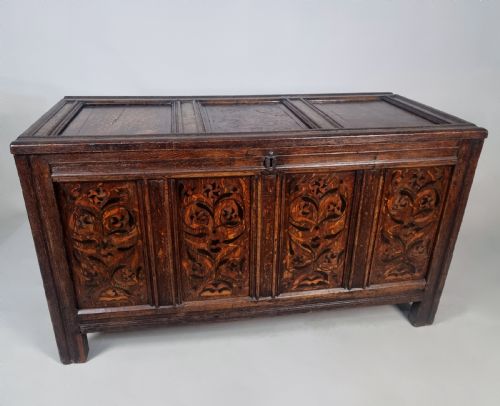
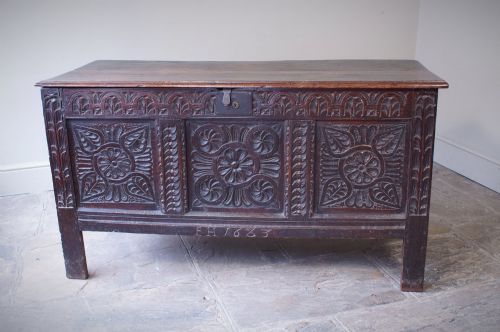
A dated 17th century chest encompasses solid timber storage vessels, from large panelled coffers to compact Bible and document boxes bearing carved or inscribed dates. The examples found here span the seventeenth century proper alongside later 1800 and 18th century pieces reflecting earlier styles.
Buyers meet regional variations including Welsh, Lakeland, and Lancashire formats, often built as joined oak structures with iron hinges and locks. These domestic and utilitarian forms served varied roles in households before modern cabinetry replaced them.
How they were made
Makers utilised solid oak, constructing bodies with framed panels and sturdy pegged joints to withstand movement in unheated rooms. Iron hardware such as strap hinges and lock plates secured the lids and contents.
Decoration involved chip carving, panel moulding, and occasional mixed inlay woods or marquetry, as seen on Cromwellian examples. Surfaces relied on natural timber grain rather than heavy modern finishes.
Some boxes retain personal initials carved alongside their dates, preserving the exact mark of their original seventeenth-century owners.
What varies in quality
The crispness of original carving and the integrity of joined oak framing distinguish superior examples from heavily altered ones. Crisp regional characteristics, such as specific Lakeland or Welsh motifs, elevate a piece.
The presence of untouched period ironwork and legible contemporary dates adds historical weight. Timber selection and the survival of original surface patination define the upper tier of these pieces.
The Dated 17th Century Chest Glossary
- Coffer
- A large wooden chest used for storing valuables, linen, or documents. These heavy boxes formed central pieces of household furniture in the seventeenth century.
- Joined oak
- Furniture constructed using mortise and tenon joints secured by wooden pegs rather than modern fasteners. This method provides robust structural integrity.
- Marquetry
- Inlay work using various tinted woods to create decorative patterns on furniture surfaces. This technique appears on specific mid-seventeenth-century pieces.
- Bible box
- A small desktop box with a sloping lid designed to hold sacred texts and writing materials. They often sit on larger tables or chests.
Dated 17th Century Chest: Frequently Asked Questions
How were these chests used?
Households utilised these vessels to secure valuable textiles, family documents, and silver. Their robust construction allowed them to double as benches or tables in smaller rooms.
Over time, smaller variations like deed boxes and Bible boxes migrated to tabletops for daily administrative tasks.
How do I live with one?
Position your chest away from direct heat sources and radiators to prevent the solid oak panels from splitting. A stable room temperature preserves the historic timber and ironwork.
Use the top surface to display lamps or ceramics while keeping the interior for accessible storage.
How do I tell periods apart?
Examine the construction methods and decorative motifs, comparing joined oak panels with later framing styles. Seventeenth-century work often displays distinct chip carving and pegged joints characteristic of the era.
Inscribed dates provide a clear reference point, though one must distinguish contemporary inscriptions from later additions.
What is regional oak?
Regional oak furniture reflects the local traditions and toolsets of distinct areas like Lancashire, Wales, or Lakeland. Craftsmen in these regions incorporated specific moulding details and proportions unique to their workshops.
These local traits help historians attribute unlabelled pieces to specific geographic communities.