

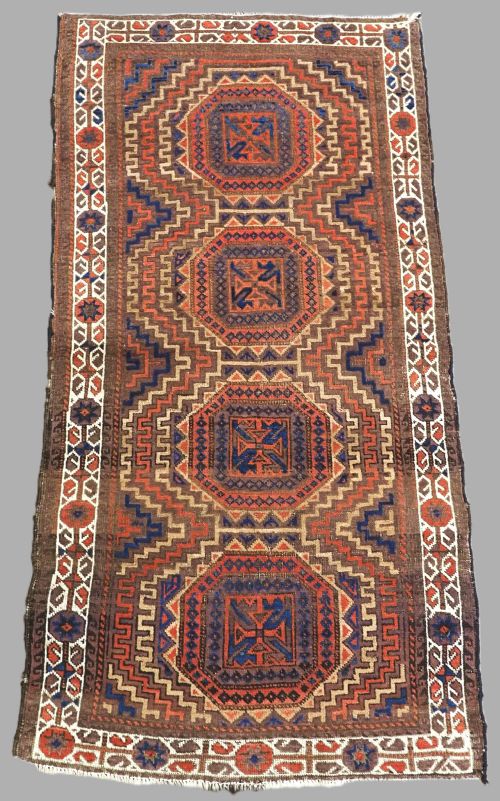
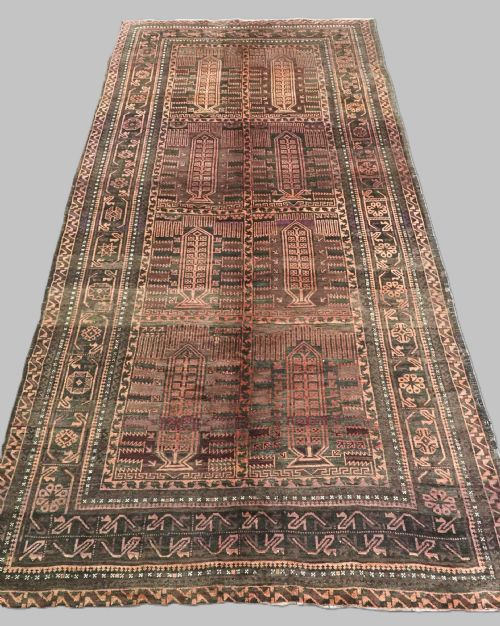
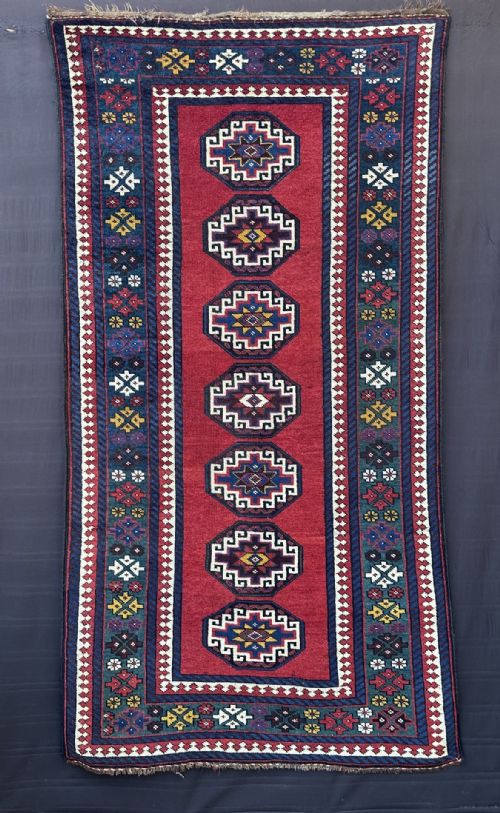
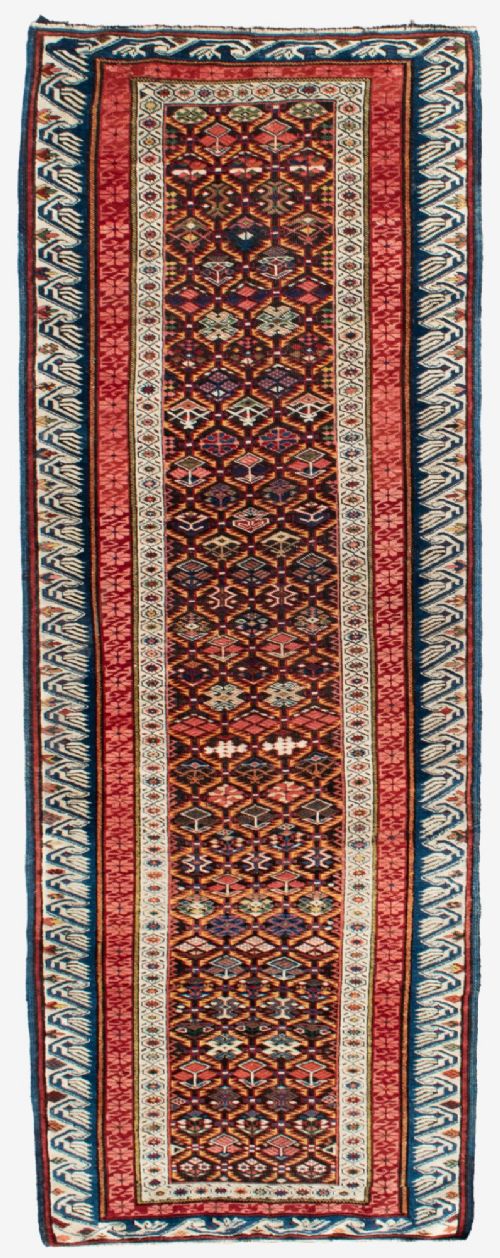


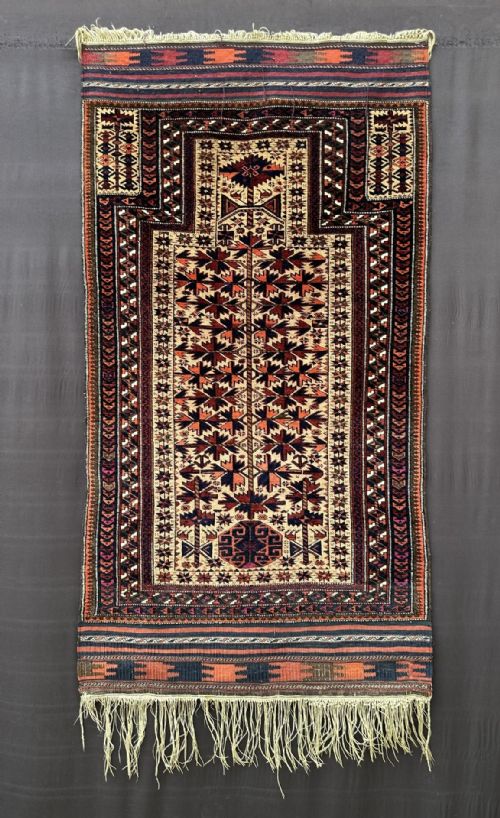
Dark Wool Rug
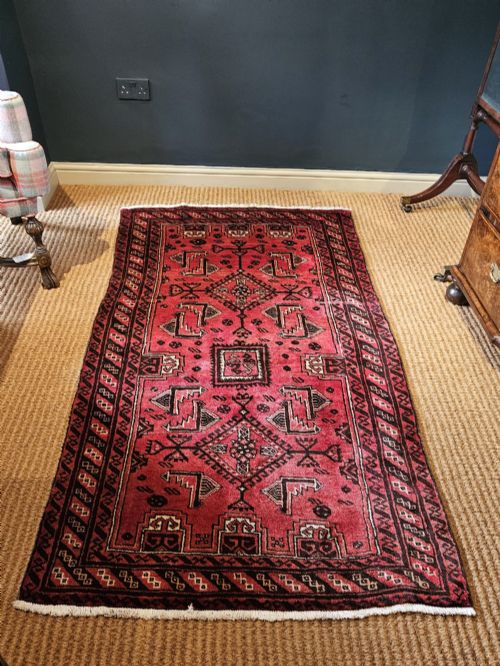
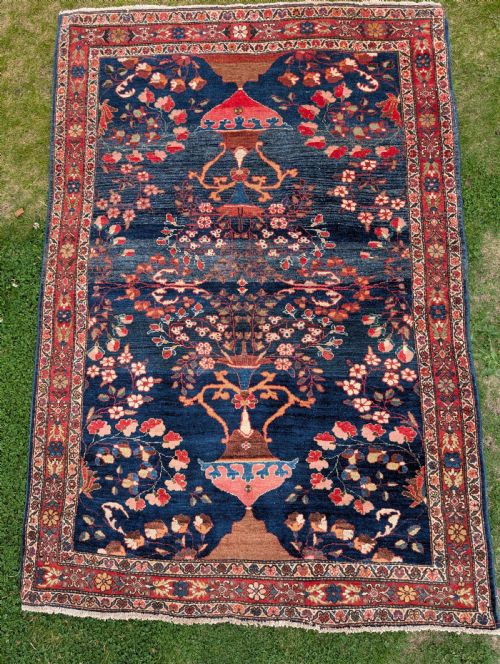
A dark wool rug brings warmth and deep, earthy colour to a room through centuries of traditional nomadic weaving.
Dark Wool Rug
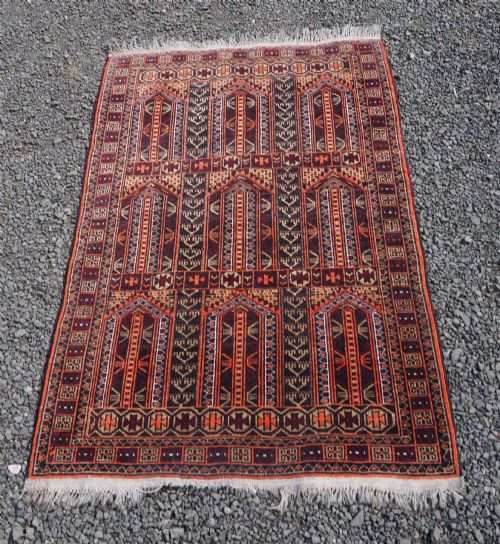
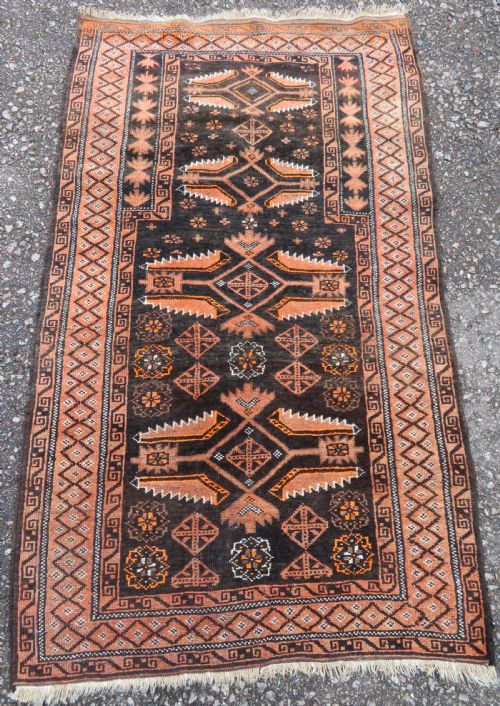
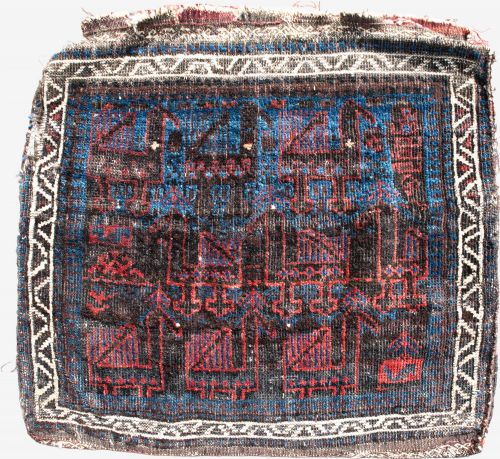
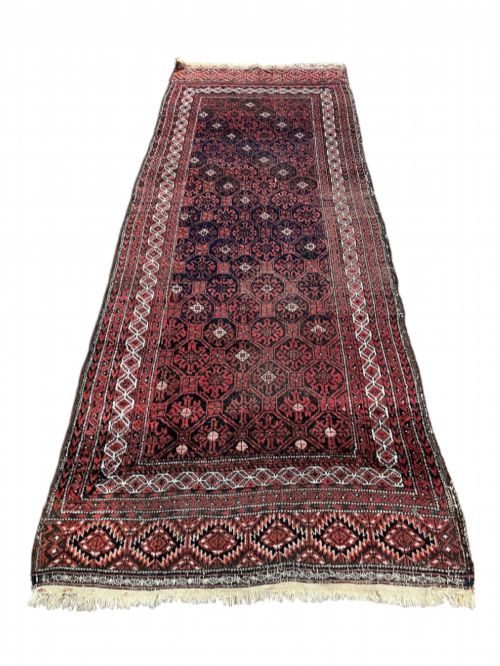
A dark wool rug encompasses tribal carpets, village runners, and small utility bags originating from Persian, Afghan, Caucasian, and Turkmen weaving traditions.
The pieces found here date predominantly from the late nineteenth century through to the early decades of the twentieth century, reflecting traditional dyeing and knotting methods.
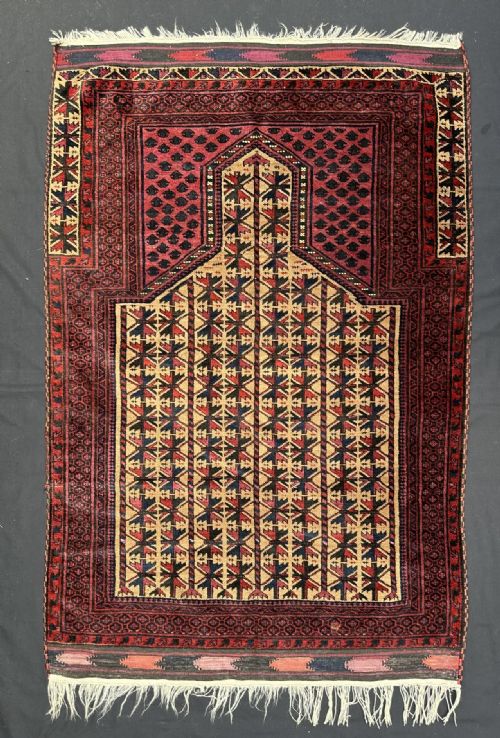
Buyers seeking a dark wool rug will encounter formats ranging from large carpets and long runners down to square prayer rugs, saddle bags, and bread sofrehs.
What varies in quality
Quality rests on the density and crispness of the weave, the depth and stability of the natural dyes used, and the integrity of the original wool pile.
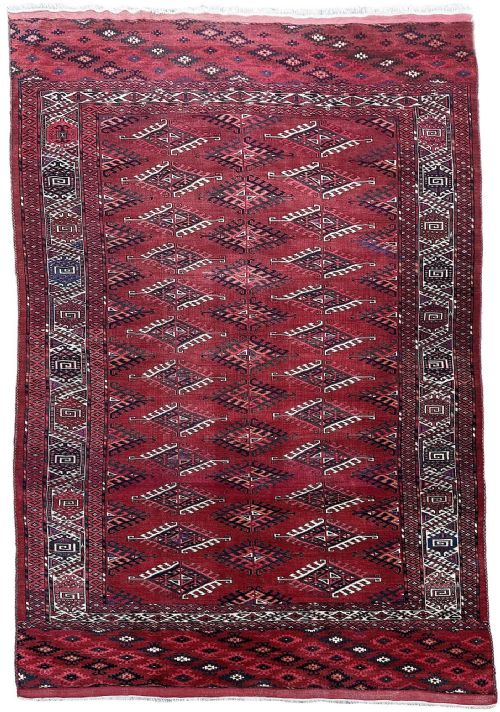
Tribal precision in executing traditional motifs, such as guls, mihrabs, and geometric borders, distinguishes finer pieces from simpler utilitarian items.
Listed periods span from the mid-nineteenth century through the 1930s, covering multiple regional tribal styles.
The Dark Wool Rug Glossary
- Gul
- An octagonal medallion motif repeated across Turkmen and Baluch carpets. This design element forms the primary decorative anchor for many tribal rugs.
- Sofreh
- A flatwoven spread or cloth used for dining, kneading bread, or storing household goods. These functional textiles share the same wool and dye characteristics as larger floor rugs.
- Mihrab
- An arched design representing the prayer niche found in Islamic architecture. Prayer rugs frequently incorporate this motif to indicate direction.
- Torba
- A small storage bag produced by Turkmen tribes. They were traditionally hung inside tents for domestic organisation.
- Baluch tribal
- A designation for rugs woven by nomadic and semi-nomadic groups inhabiting the borderlands of Persia and Afghanistan. These pieces typically display dark palettes and geometric patterns.
Dark Wool Rug: Frequently Asked Questions
How do I clean an antique wool rug?
Regular gentle vacuuming without a rotating brush lifts surface dust from the wool fibres.
Professional specialist cleaning remains necessary for deeper washing to protect natural dyes.
Are these rugs suitable for high traffic areas?
Hand-spun wool and tight knotting provide natural resilience against daily wear in busy rooms.
Placing a quality underlay beneath the rug prevents sliding and reduces friction on the foundation.
How can I tell the age of a tribal rug?
Indicators include the use of early aniline or natural dye palettes, hand-spun wool characteristics, and structural wear patterns.
Specific regional motifs and tribal attributions also help narrow down the period of production.
What is the difference between a rug and a runner?
Rugs are generally square or proportioned close to standard rectangular dimensions for open floor placement.
Runners feature an elongated narrow format specifically designed for hallways, corridors, or alongside beds.