

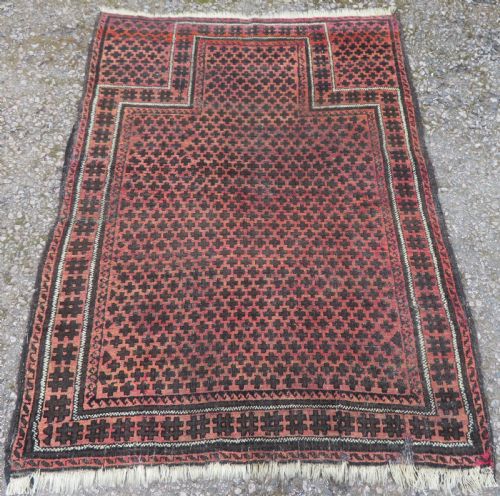


Dark Wool Prayer Mat
A dark wool prayer mat brings tribal heritage and deep indigo or charcoal tones into a room.
Dark Wool Prayer Mat
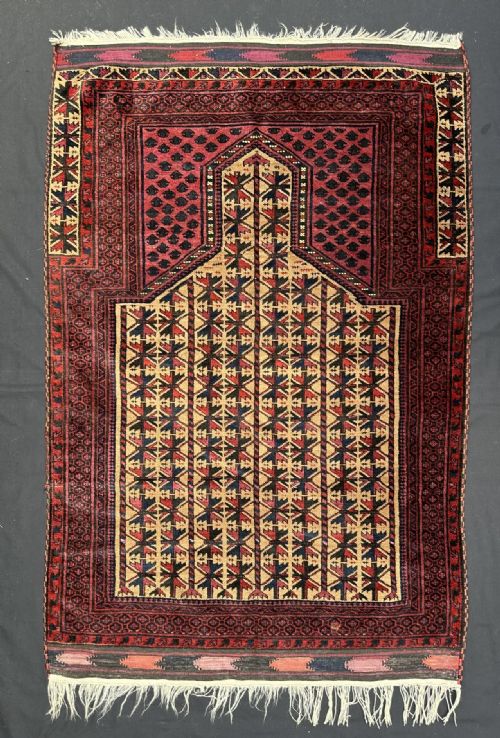
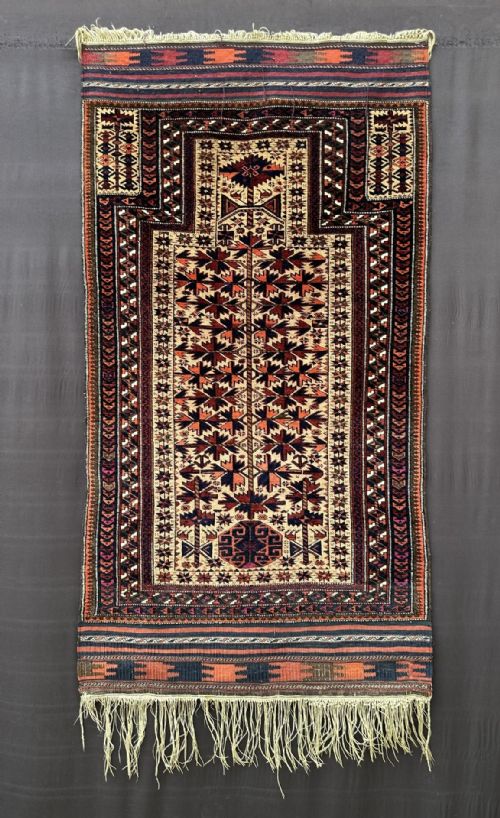
When you search for a dark wool prayer mat, you encounter antique nomadic and village rugs created by tribal groups across Persia, Afghanistan, and the Caucasus. These textiles served a specific devotional purpose, woven with defined arched niches known as mihrabs to direct the user.
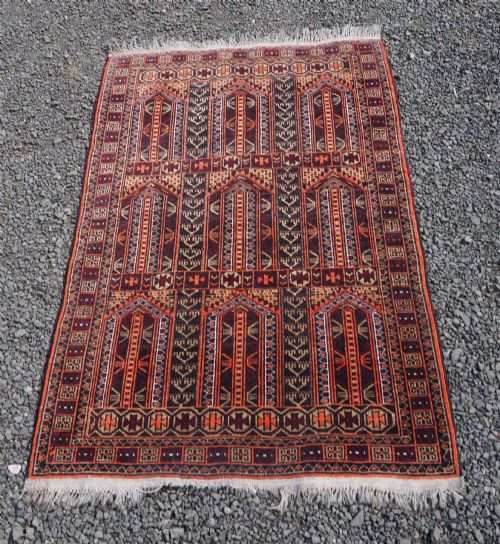
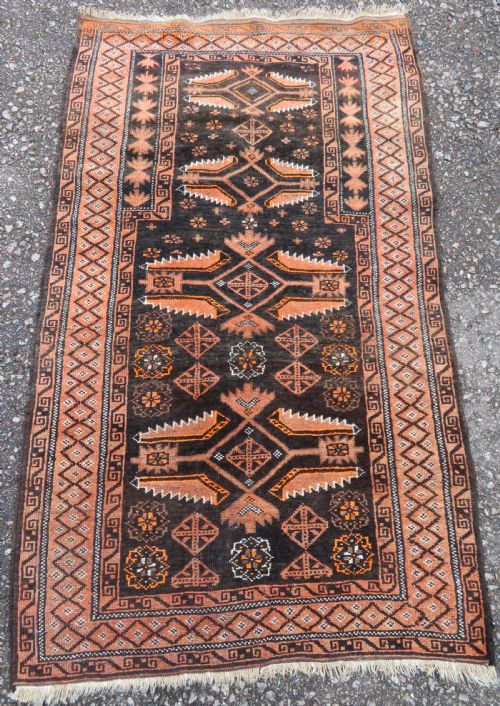
The pieces on this page lean heavily towards Afghan Baluch, Timuri, and Caucasian traditions spanning the late nineteenth and early twentieth centuries. You will frequently find single, double, or triple mihrab formats decorated with traditional motifs like lotus leaves and rams horns.
Village and tribal weavers produced these floor coverings using durable materials suited for daily utilitarian use. Their formats remain compact, designed for personal prayer rather than expansive chamber decoration.
Materials and construction
The weavers relied entirely on natural wool for the pile and structure, sometimes pairing it with cotton for foundations. This heavy reliance on locally sourced wool yields the dense, resilient pile characteristic of these nomadic carpets.
Weavers hand-wove each mat using traditional upright looms, incorporating indigenous dyeing methods to achieve deep, moody colour palettes. The resulting textile combines structural longevity with a supple handle derived from untreated animal fibres.
The listings here feature wool and cotton constructions exclusively attributed to nineteenth and early twentieth-century tribal workshops.
Assessing quality
Quality rests in the precision of the tribal motifs and the depth of the wool pile. Finer examples display crisp geometry within the mihrab arches and a balanced distribution of secondary symbols like stars.
The handling of the wool also distinguishes superior pieces, showing a dense and uniform knot density that preserves the integrity of the design. Wear patterns tell a story of authentic age rather than structural failure, separating robust tribal craft from compromised specimens.
The Dark Wool Prayer Mat Glossary
- Mihrab
- The arched niche found on prayer rugs, designed to point toward Mecca during daily devotions. Its shape often varies from a single arch to multiple tiers.
- Baluch
- A designation for rugs produced by nomadic and semi-nomadic tribes residing across the borderlands of Persia and Afghanistan. These pieces typically feature dark, saturated wool grounds.
- Timuri
- A tribal grouping associated with distinctive dark wool weaves sharing geographic and stylistic ties with Baluch production. Their carpets frequently incorporate intricate field designs.
- Marasali
- A specific attribution for Caucasian prayer rugs known for disciplined geometric layouts and fine knotting. They originate from the Caucasus region.
- Seh Mihrab
- A design term denoting a prayer rug featuring three distinct arched niches across the field. This variant appears frequently in Afghan village weaving.
Dark Wool Prayer Mat: Frequently Asked Questions
How do I clean a wool prayer mat?
Surface dirt lifts easily with gentle vacuuming using a suction-only attachment to protect the delicate antique wool pile.
Professional textile cleaning remains essential for deep restoration, avoiding harsh household detergents that strip natural lanolin from the fibres.
Can I place these mats on the floor?
These antique pieces withstand normal foot traffic when paired with a breathable, non-slip underlay that prevents sliding and friction.
Positioning them in lower-traffic zones or hanging them as wall textiles preserves the integrity of the nineteenth-century weave.
How do I identify a Timuri rug?
Timuri pieces typically display deep blue or dark brown wool grounds paired with specific tribal motifs like the Dokhtar-e-Qazi design. Their geographic origins span the borderlands of northeast Persia and northwest Afghanistan.
Examination of the structural materials and knotting style helps differentiate them from standard Persian village counterparts.