



Dark Wool Area Carpet
A dark wool area carpet brings rich texture and grounding depth to an interior, drawing on centuries of nomadic and village weaving traditions.
Dark Wool Area Carpet
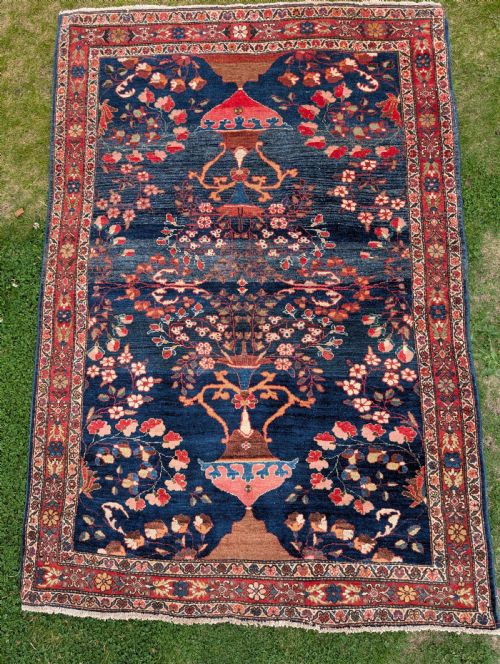
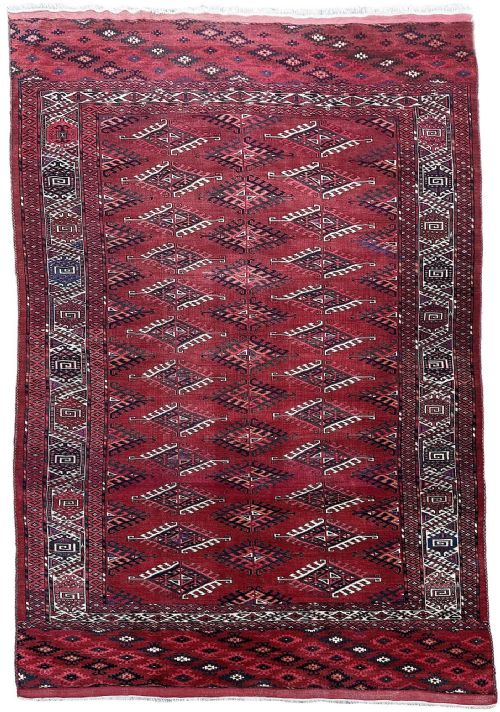
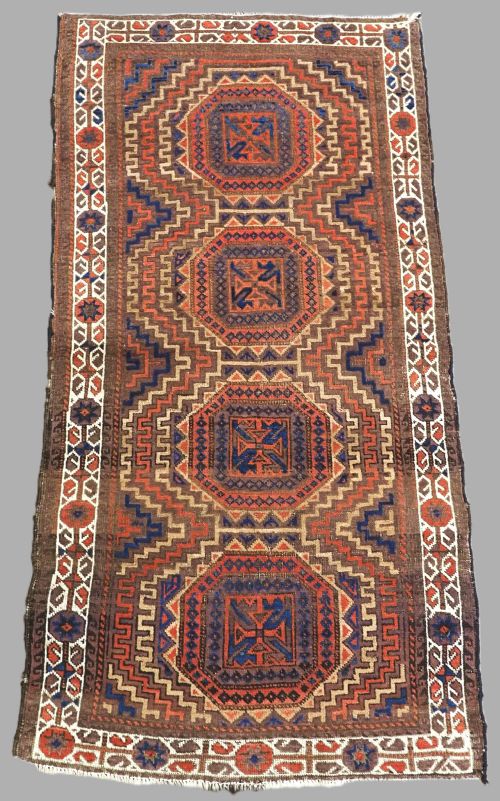
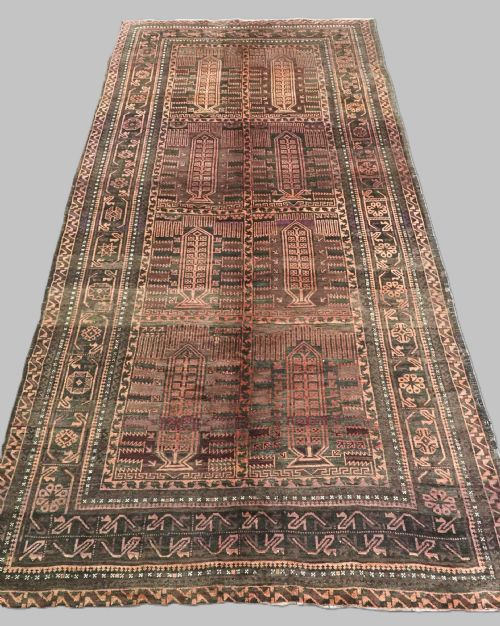
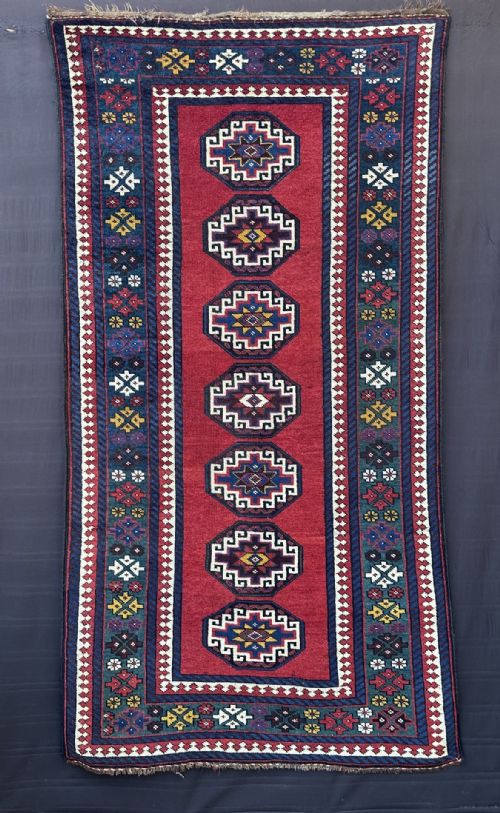
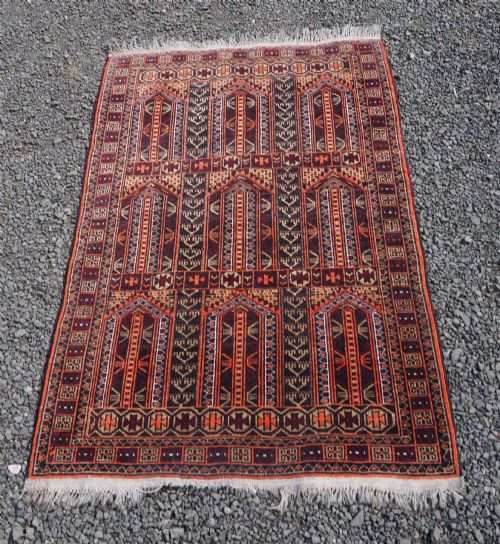
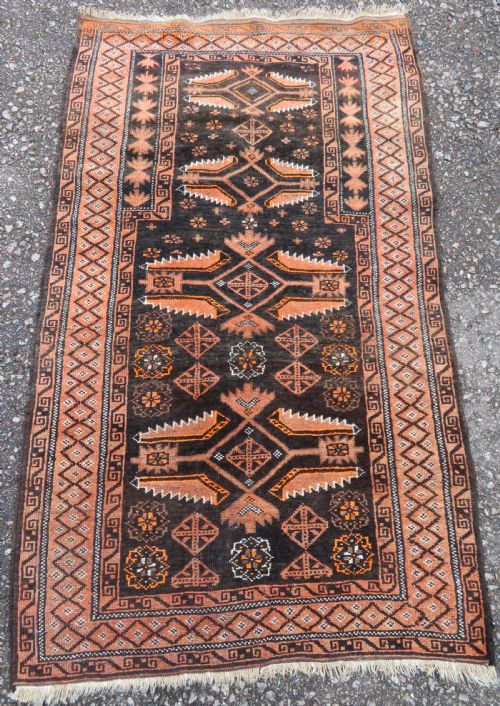
A dark wool area carpet serves as a robust floor covering defined by deep, saturated tones and traditional motifs. When searching for a dark wool area carpet, buyers encounter pieces originating from Persian, Afghan, and Turkmen weaving traditions, often categorized under styles such as Baluch tribal or Persian tribal.
The selection on this page spans from the late nineteenth century through to the early decades of the twentieth century. These items include room-sized carpets, smaller area rugs, and specialised formats such as prayer rugs and kilims.
Village and nomadic weavers produced these textiles for domestic use or regional trade rather than commercial export. Consequently, each piece reflects the specific cultural iconography and geometric patterns of its maker's community.
How they were made
The construction of a dark wool area carpet relies primarily on hand-spun wool for the pile, foundations, and borders, sometimes supplemented by cotton or goat hair for structural strength. Weavers utilised natural dyes to achieve deep indigo, madder, and charcoal shades that develop a rich patina over time.
Many examples incorporate supplementary materials such as silk highlights or hand-spun wool to add subtle contrast to the dark field. The knotted pile or flatwoven structure is secured on traditional horizontal or vertical looms set up in nomadic camps and settled villages.
Listings feature pieces utilising wool, cotton, and natural dyes across nineteenth and early twentieth-century periods.
What varies in quality
The quality of a dark wool area carpet depends heavily on the fineness of the knotting and the preparation of the wool. Tightly packed knots and dense, resilient hand-spun wool create a durable surface that withstands heavy foot traffic while retaining structural integrity.
The depth and complexity of the natural dye palette also determine a piece's standing. Subtle variations in tone, known as abrash, indicate skilled dyeing processes and contribute to the visual movement across the dark field.
The Dark Wool Area Carpet Glossary
- Abrash
- Natural colour variation within a field of a rug, caused by shifts in dye batches or hand-spun wool. This tonal variation adds depth and character to darker wool surfaces.
- Gul
- A repeating octagonal or medallion motif commonly found in Turkmen and Baluch carpets. These tribal emblems often indicate the specific weaving group or clan.
- Kilim
- A flatwoven textile produced without a pile, resulting in a lightweight rug with a clean, graphic appearance. These pieces are often reversible and feature sharp geometric patterns.
- Mihrab
- An arch-shaped design element that mimics the prayer niche found in mosques, characteristic of prayer rugs. It guides the placement and orientation of the weaver's or user's devotions.
Dark Wool Area Carpet: Frequently Asked Questions
Where were these carpets originally made?
These carpets originate from regions across Persia, Afghanistan, and Central Asia, created by nomadic tribes and settled village communities.
Weavers in areas such as Baluchistan, Khorasan, and Turkmenistan produced these textiles using localized designs passed down through generations.
How do I care for a wool carpet?
Regular gentle vacuuming without a rotating brush helps prevent dust accumulation in the wool pile. Professional cleaning should be utilised periodically to maintain the integrity of the natural dyes.
Keeping the rug away from prolonged direct sunlight preserves the deep tones of the dark wool. Using a quality underlay also reduces friction and wear beneath the backing.
What is the difference between a main carpet and an area rug?
Main carpets are traditionally larger room-sized floor coverings designed to anchor a major living space or tent interior. They often feature more complex border arrangements and larger repeating field patterns.
Area rugs are scaled for smaller spaces, bedside placement, or specific focal points within a room. Their proportions accommodate more intimate settings while maintaining the same structural techniques.
How can I identify tribal designs?
Tribal designs are typically distinguished by geometric motifs, repeating guls, and stylized representations of flora or fauna rather than elaborate court curves. These patterns reflect the immediate environment and cultural symbols of the weaving group.
Asymmetry and spontaneous design changes also point toward nomadic production, where weavers worked from memory rather than rigid paper cartoons.