


Dark Wood Work Box
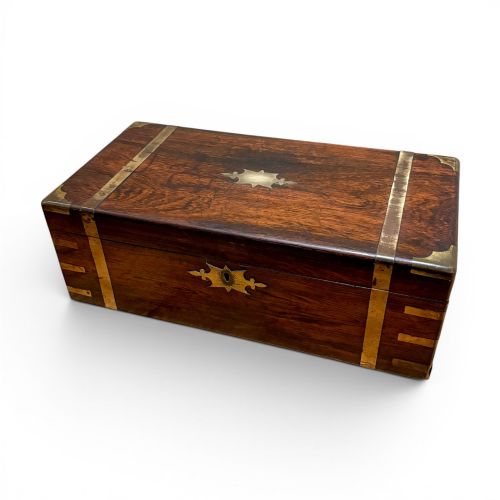
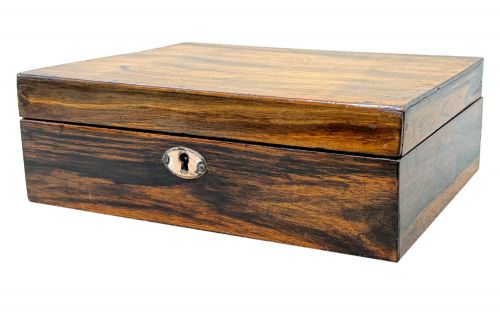
A dark wood work box is a practical receptacle designed for sewing and keepsakes, offering rich tones and refined craftsmanship for domestic use.
Dark Wood Work Box
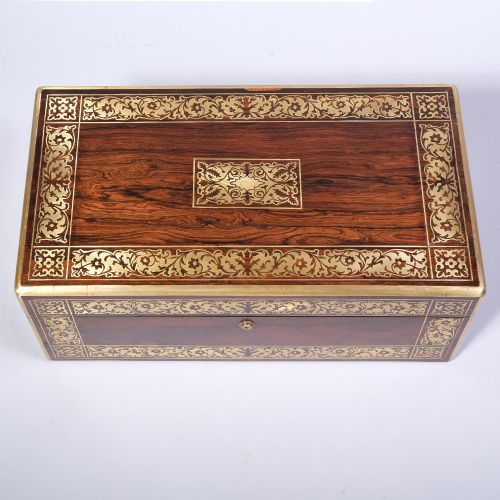
Rosewood and mahogany are the primary timbers encountered on this page, often augmented by boxwood stringing, brass inlay, and marquetry. These materials provide the dark, rich ground characteristic of the category.
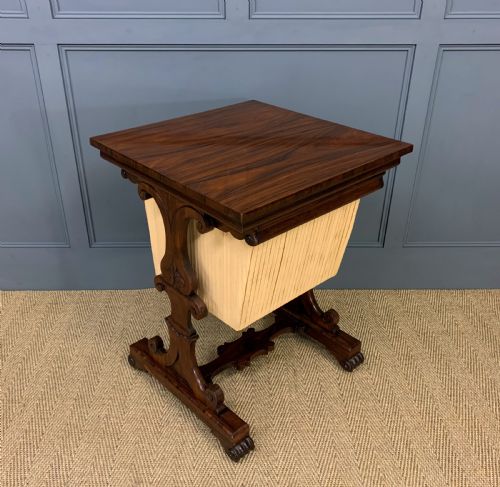
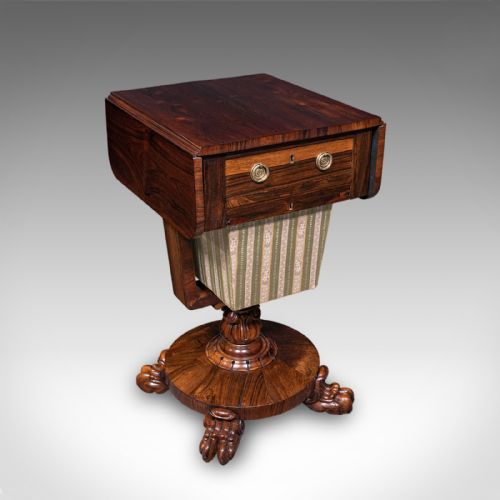
The forms range from freestanding sewing tables with drop leaves and fitted interiors to smaller tabletop boxes and caskets. Their origins include English workshops alongside continental examples.
Materials and Construction
Cabinet makers utilised dense hardwoods such as rosewood, mahogany, and coromandel, selecting them for their deep colour and stable grain. These timbers were frequently worked into solid carcases or applied as fine veneers over secondary woods.
Decoration relied on precision techniques including brass stringing, mother-of-pearl inlay, and marquetry. Internal fitments often incorporated lidded compartments, velvet-lined wells, and dedicated spaces for thread spools and needles.
Snuff shoes shaped like miniature wooden footwear remind us that Georgian gentlemen once kept their tobacco in carved wooden galoshes.
Assessing Quality and Execution
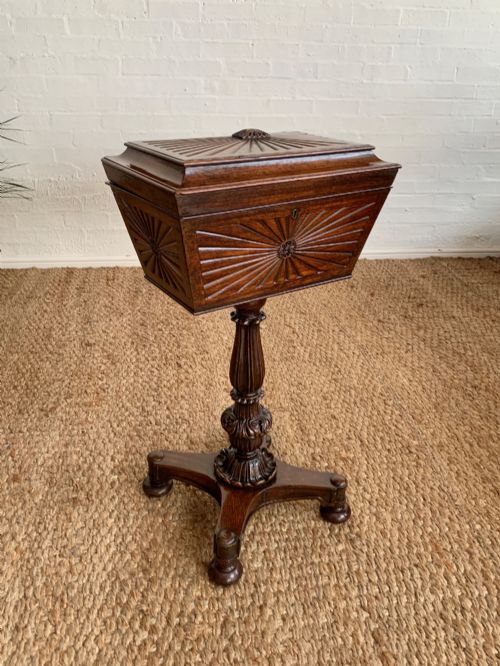
Quality rests in the selection of the timber figure and the precision of the joinery and inlay. Superior examples display seamless matching of grain across surfaces and finely carved details such as sunburst motifs or pedestal bases.
The interior fitment dictates much of the distinction at the upper end of the range. Complete, original velvet linings, intact lidded compartments, and functioning locks with keys elevate a piece significantly above simpler containers.
The Dark Wood Work Box Glossary
- Rosewood
- A dense, heavily figured timber with dark brown and black grain patterns. It was favoured throughout the Regency and Victorian eras for high-status furniture and boxes.
- Coromandel
- An exotic, heavily variegated Asian hardwood prized for its dark brown colour and striking black stripes. It appears on luxury boxes and tables from the nineteenth century.
- Marquetry
- The art of applying pieces of veneer to a structure to form decorative patterns and pictures. Makers used various contrasting woods to create floral or geometric motifs.
- Caddy Top
- A hinged lid with a moulded, stepped profile resembling a tea caddy. This form frequently crowns nineteenth-century work boxes and tables.
- Writing Slope
- A portable box with a slanted, hinged writing surface that opens to reveal storage for stationery and ink. Many share construction methods and timbers with work boxes.
Dark Wood Work Box: Frequently Asked Questions
What is a dark wood work box used for?
These boxes and tables were originally designed to hold sewing implements, threads, and domestic paraphernalia. Today, they serve equally well as decorative storage for letters, jewellery, and modern keepsakes.
The compartmentalised interiors make them practical for organising small items while adding period character to a room as side tables or desk accessories.
How do I identify a Victorian work box?
Victorian examples often feature rosewood or mahogany construction, frequently enhanced with mother-of-pearl inlay, brass banding, or marquetry. They date from the mid-nineteenth century onwards and typically include fitted wooden trays beneath the lid.
Construction details such as machine-cut dovetails or specific lock stamps can help narrow down the date within the reign.
Are these boxes suitable for daily use?
Most of these pieces are sturdy enough for everyday storage of lightweight items. Care should be taken with delicate veneers and original french polished surfaces.
Placing them away from direct sunlight and heat sources helps preserve the dark wood timbers and internal fabric linings.
How do Regency and Georgian work boxes differ?
Georgian and Regency pieces tend to display restrained classical proportions, often relying on the natural grain of mahogany or rosewood rather than heavy embellishment. Brass inlay and sarcophagus shapes became more prominent during the Regency period.
Earlier eighteenth-century boxes often feature simpler construction in oak or walnut, reflecting the domestic styles of the period.