


Dark Wood Window Stool
These dark wood window stool pieces bring long lines and firm seats to a bay or hallway, offering a low place to sit by the glass.
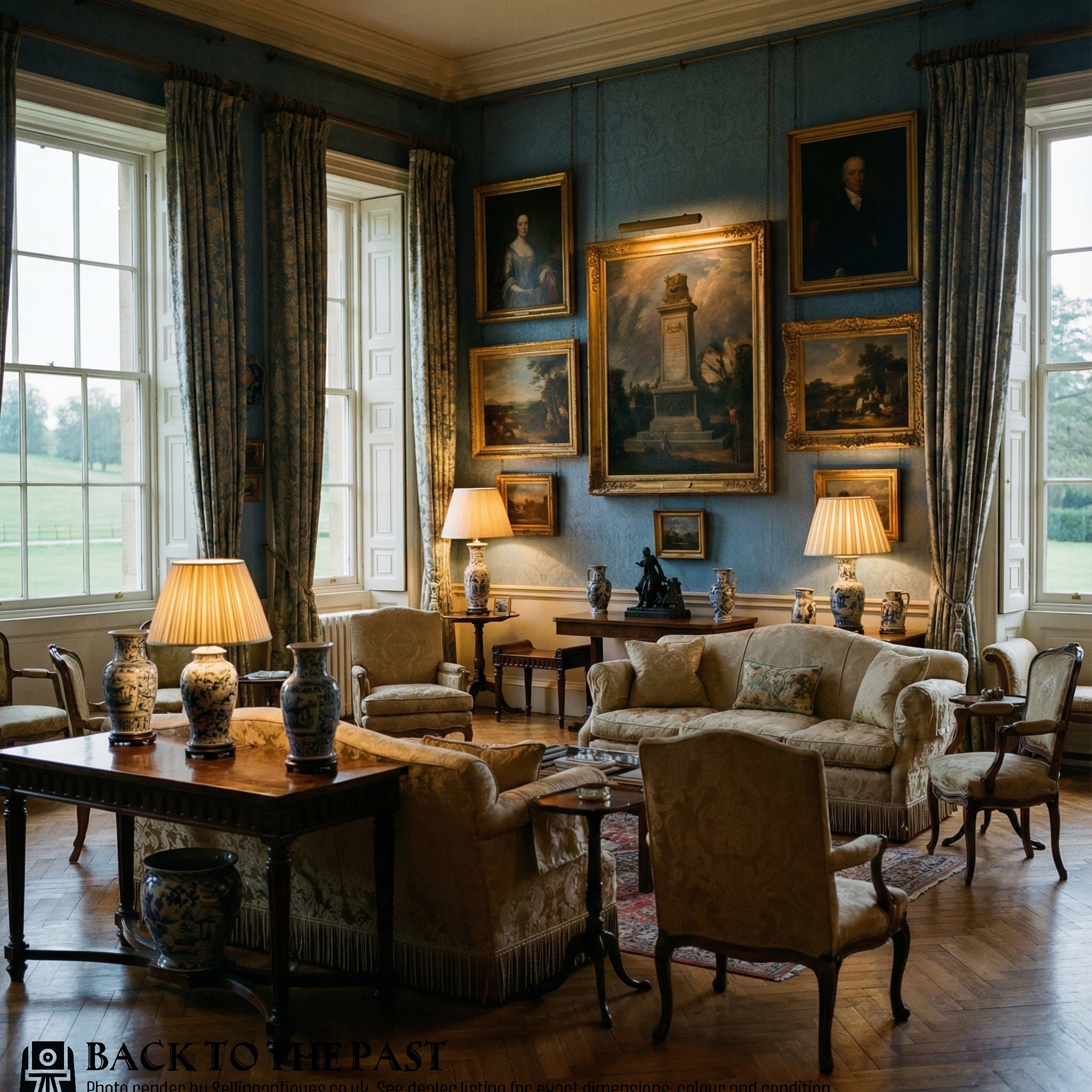
Dark Wood Window Stool
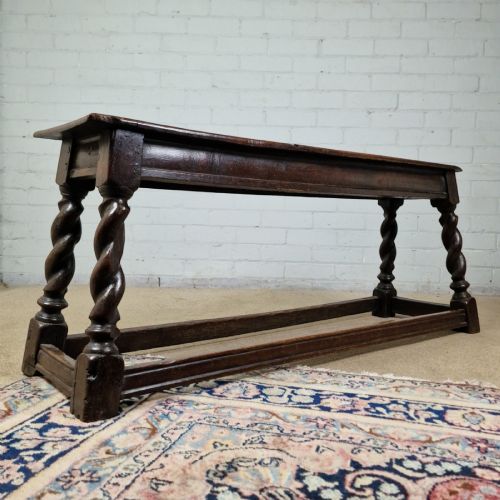
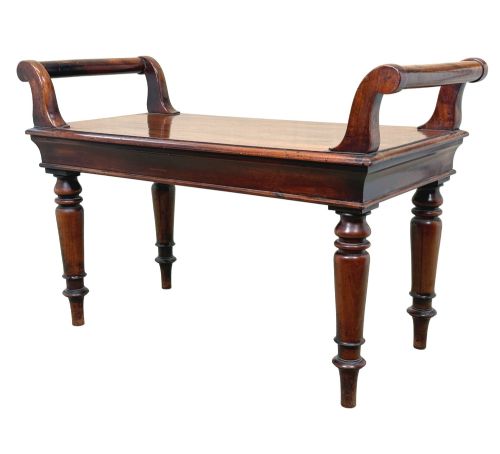
A dark wood window stool appears in various forms across this page, ranging from long Georgian and Regency benches to smaller Edwardian and Victorian examples designed for music rooms or halls. These pieces often serve double duty as piano seats or dressing stools, sitting low enough to fit beneath a sill without blocking the light.
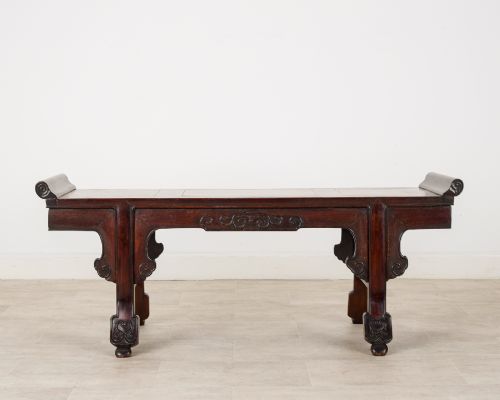
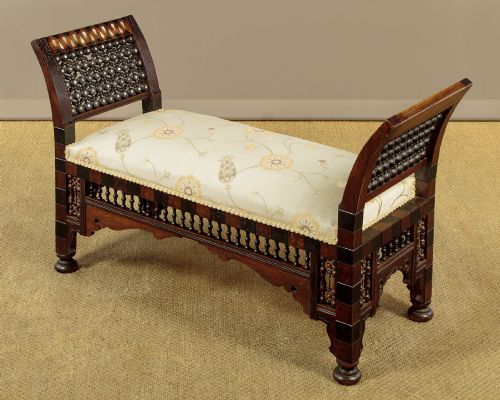
The selection spans centuries and regions, including English mahogany and oak alongside Chinese hardwood altar benches and Syrian pearl inlaid items. Makers applied styles from English Baroque to Neoclassical Revival, meaning a buyer might find a strict X-framed shape or a carved piece featuring elephants.
Most entries belong to the nineteenth century, with Georgian and Edwardian periods also represented among the benches and stools. Buyers select these items for their compact proportions and heavy timber frames, which anchor a room while remaining easy to move.
Judging quality and build
Quality rests on the selection of timber and the crispness of the carving, distinguishing standard utility seating from finer workshop productions. Dense grain in the mahogany or rosewood and deep, well-defined hand carving indicate superior craftsmanship.
Construction methods also set pieces apart, particularly the joinery in frames like the X-shaped supports or hinged compartments. Items bearing attribution to known makers or specific regional styles typically show greater attention to structural proportion and decorative detail.
Charles Nosotti·Gillows
The Dark Wood Window Stool Glossary
- X-framed stool
- A seat supported by intersecting diagonal legs forming an X shape. This ancient form provides robust structural stability under heavy loads.
- Duet stool
- A wider seat designed for two people to sit side by side, commonly used at pianos. These frequently include hinged lids revealing sheet music storage.
- Huali
- A fragrant Chinese hardwood prized for its decorative grain. Artisans utilised it for seating that doubled as altar benches and dressing stools.
- Giltwood
- Timber treated with gold leaf or gold paint to create a brilliant metallic surface. It appears on revival pieces to mimic earlier opulence.
Dark Wood Window Stool: Frequently Asked Questions
How do I date a window stool?
Dating relies on observing the timber species, joinery methods, and stylistic revival cues present in the piece. Nineteenth-century examples often feature dense mahogany or rosewood, while eighteenth-century items lean towards heavy oak.
Stylistic markers such as Regency curves, Edwardian proportions, or Victorian carving styles help narrow down the decade. Examining the underside and hinge mechanisms also reveals the period of manufacture.
Where should I place a window stool?
These benches fit naturally beneath low windows, in narrow hallways as a hall bench, or at the foot of a bed. Their modest height prevents them from blocking natural light while offering a convenient spot to sit.
Model variations like piano duet stools also work well in music rooms or studies, especially those with hinged seats that hold books or small items.
Are these stools comfortable for daily use?
Most of these pieces feature padded upholstery fabric over firm wooden frames, making them suitable for sitting while putting on shoes or playing the piano. The long benches provide ample space for more than one person.
While some antique cushions remain firm, others can be updated with modern padding while preserving the historic wooden frame underneath.