
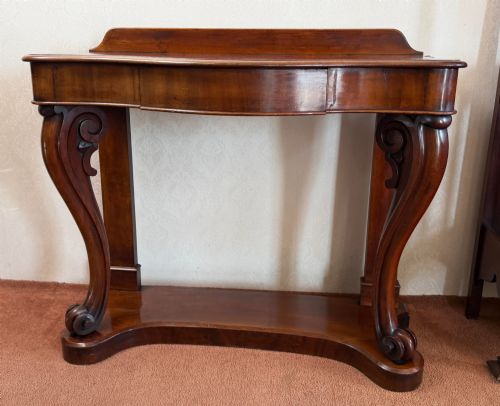
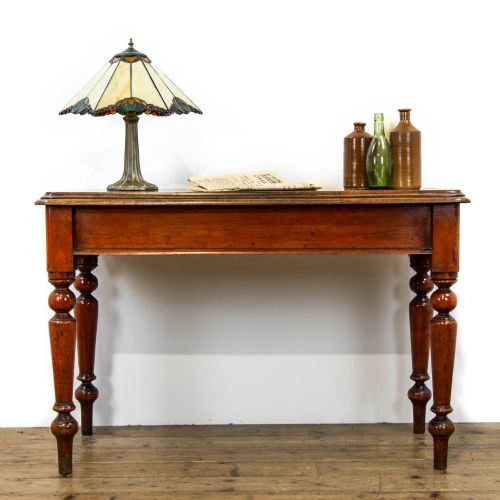
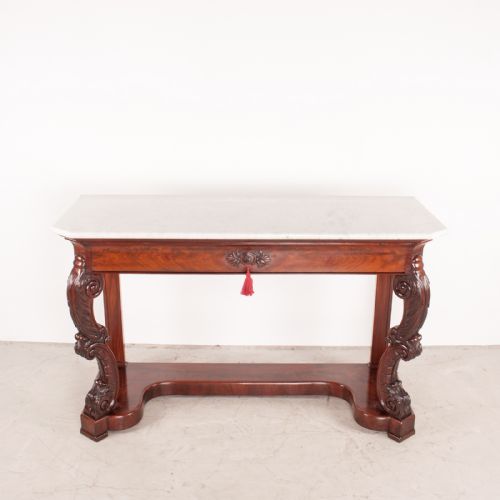
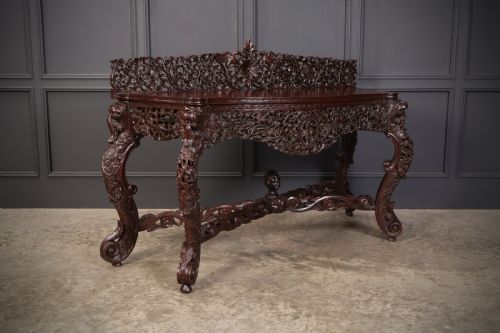
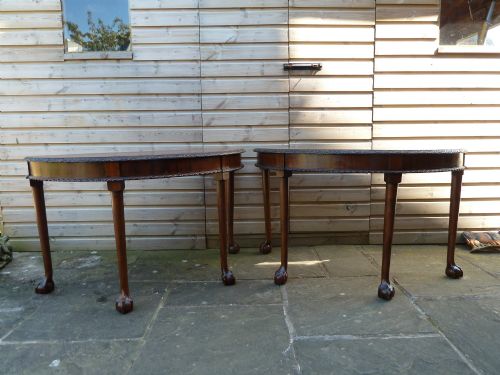
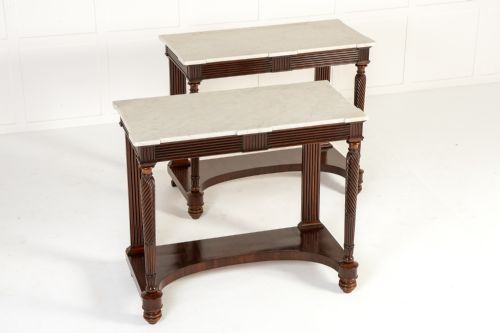


Dark Wood Wall Table
These dark wood wall table designs anchor a hallway or reception room with substantial timber and historical presence.
Dark Wood Wall Table
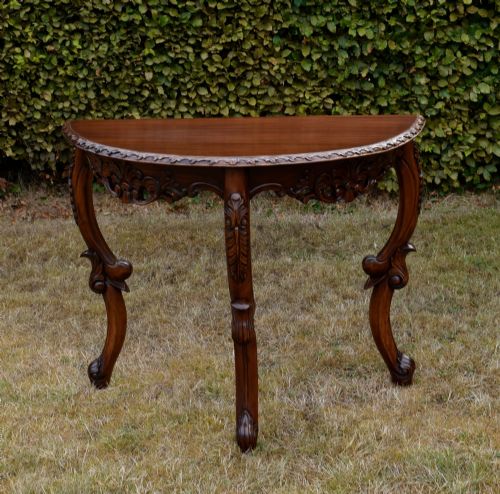
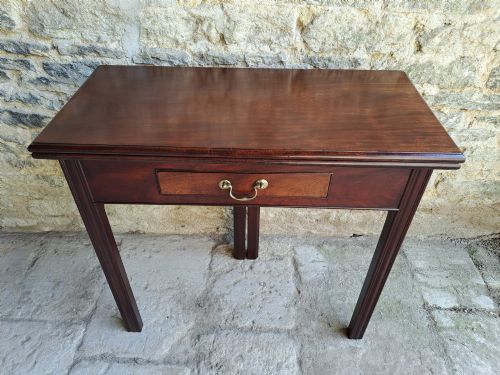
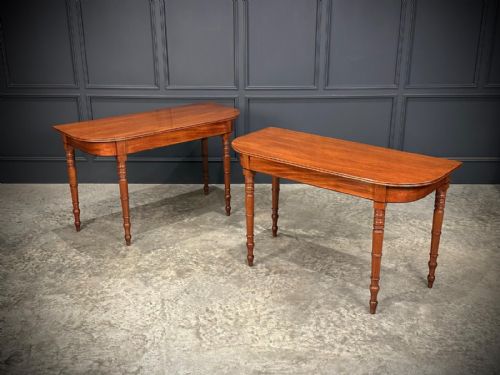
A dark wood wall table typically takes the form of a console, pier, or side table designed to sit flat against a vertical surface. The selection spans 18th-century George III pieces through to Victorian and later revival iterations.
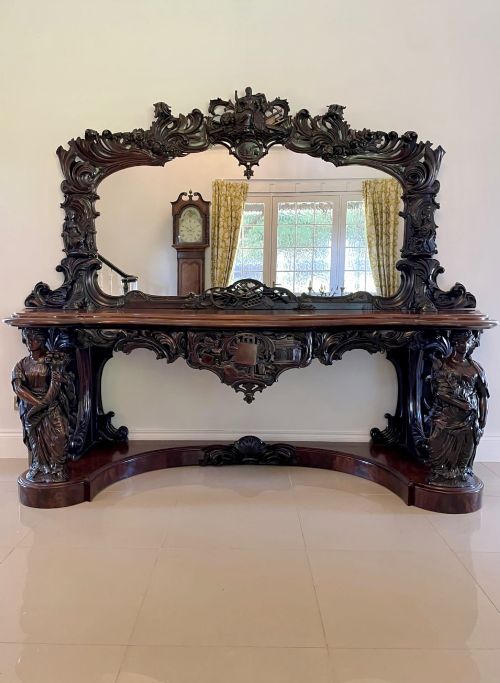
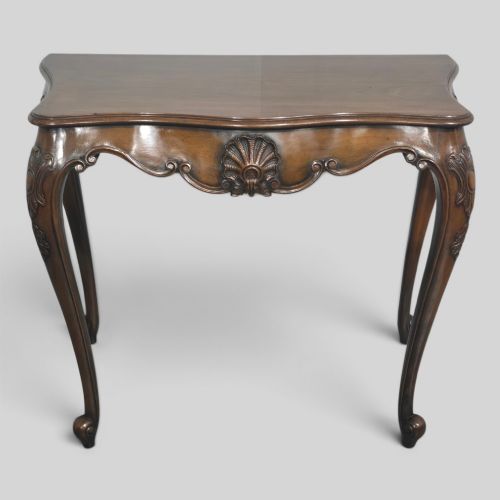
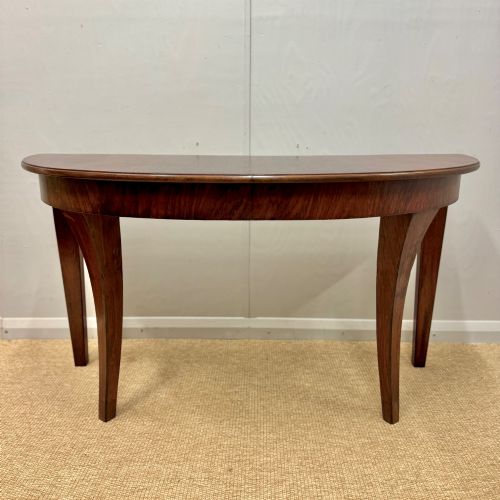
Console tables dominate the selection, often featuring demi-lune, serpentine, or rectangular tops supported by distinct legs or brackets. Origins stretch across English, Italian, French, and Anglo-Indian workshops.
Materials and Construction
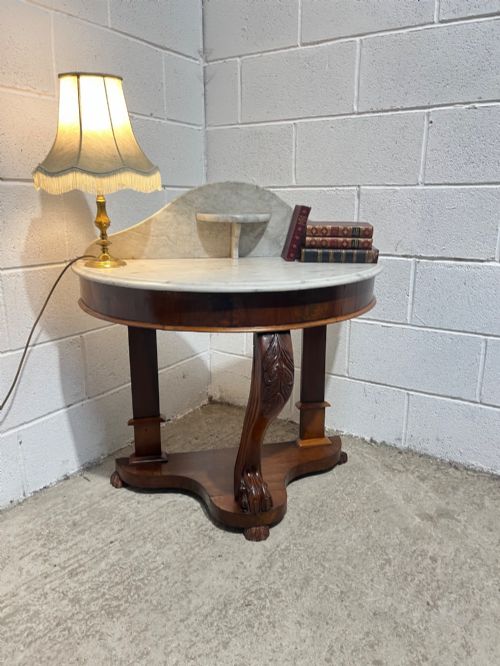
Mahogany, rosewood, walnut, and padauk provide the dense timber foundation for these pieces, occasionally paired with contrasting paint or applied carvings. Marble tops appear frequently on heavy console and pier tables.
Cabinetmakers utilised brass mounts, glass inserts, and intricate hand carving in styles ranging from Regency and Neoclassical to Rococo Revival.
The listings show dark wood wall tables spanning the 18th, 19th, and 20th centuries in mahogany, rosewood, walnut, and marble.
Evaluating Quality
The refinement of the timber grain and the crispness of hand-carved details separate standard examples from finer works. Superior proportion, such as well-balanced serpentine fronts or harmonious matching in paired sets, elevates a piece.
The integration of heavy materials like fitted marble slabs with stable wooden framing demonstrates high-level cabinetmaking proficiency across different historical periods.
The Dark Wood Wall Table Glossary
- Console table
- A table designed to stand against a wall, frequently secured to it with brackets or slender legs.
- Demi-lune
- Half-moon shaped, describing tables with a straight back edge against the wall and a curved front.
- Serpentine
- A furniture edge or front curving inward at the centre and outward at the ends in an undulating wave.
- Pier table
- A low table specifically placed beneath a wall pier or mirror between windows.
- Padauk
- A heavy tropical hardwood known for its deep reddish-brown colour and durability, seen in Burmese pieces.
Dark Wood Wall Table: Frequently Asked Questions
How were dark wood wall tables used?
These tables served primarily as decorative furniture in formal halls, drawing rooms, and dining spaces. They held lamps, clocks, or serving dishes while displaying the wealth and taste of the household.
Because they sit flat against a wall and often relied on structural wall fixings or brackets, they occupied minimal floor space while making a strong visual impact in narrow hallways.
Do these tables need to be fixed to the wall?
Many console and pier tables possess narrow footprints or demi-lune shapes that make them inherently top-heavy, especially when fitted with heavy marble slabs. Historical placement often involved direct attachment to the wall for stability.
Modern placement frequently benefits from discreet wall anchoring to ensure safety, particularly with taller or heavier 19th-century examples.
What is the difference between a console table and a side table?
A console table is specifically designed to stand against a wall and historically required wall support or architectural brackets. Side tables are generally freestanding items with four fully supporting legs.
In practice, antique terminology often blurs the distinction, as many wall tables function equally well as side tables depending on their leg configuration.
How do I identify a Regency period table?
Regency pieces typically date from the early 19th century and draw heavily on classical Greek and Roman motifs. Look for clean architectural lines, dark Cuban mahogany or rosewood timbers, and restrained brass detailing.
Maker influence from firms like Gillows often appears in the robust construction and precise joinery characteristic of this era.