





Dark Wood Vienna Clock
A dark wood vienna clock brings architectural presence to a room, offering precision timekeeping housed in handsome timber cases.
Dark Wood Vienna Clock
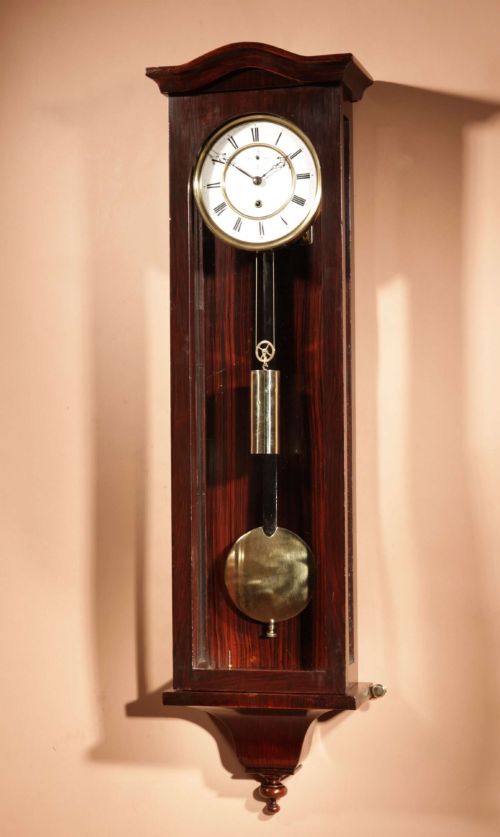
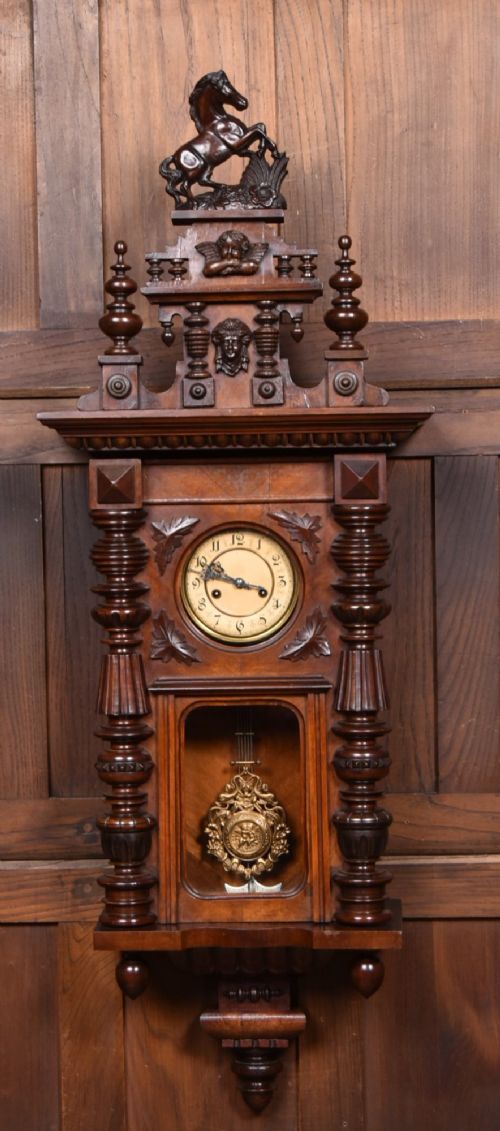
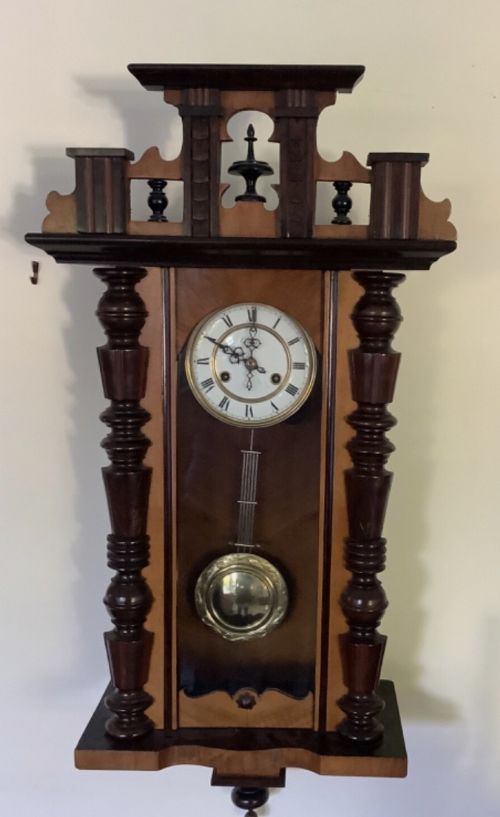
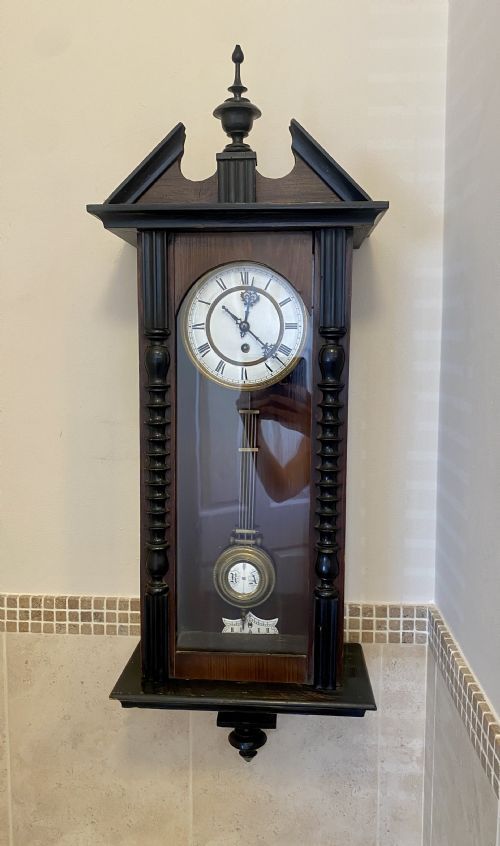
When searching for a dark wood vienna clock, a buyer is looking at precision wall-hanging timepieces originating from Germanic and Austrian centres of horology. These pieces typically date from the nineteenth century, spanning periods from mid Victorian eras down to nineteen hundred. The most common version met on this page is the walnut cased regulator, designed to hang prominently in a principal room.
These wall clocks appear in several distinct stylistic interpretations, including Biedermeier and Gothic influenced Victorian designs alongside traditional Vienna regulators. The forms are exclusively wall clocks, housing long pendulums that require adequate vertical clearance for proper operation. Cases often feature ebonised wood or mahogany alongside walnut, presenting rich dark timber surfaces to the interior.
How they were made
Cabinet makers constructed the housing using walnut, mahogany, and ebonised wood to achieve the deep dark tones characteristic of these timepieces. Glazed doors protected the delicate dial faces and allowed a clear view of the swinging pendulum inside. Brass featured heavily in the construction of weights, bezels, and internal movements.
Enamel provided a clean, readable surface for the clock faces, while metals and woods were joined with the precision required for weight driven mechanical movements. Makers housed eight day striking mechanisms and complex grand sonnerie systems within these architectural timber frames.
Dark Wood Vienna Clock Retail Price Guide 2026
Typical asking prices for dark wood vienna clock among the pieces listed under this phrase on Sellingantiques today, from the lower quarter to the upper quarter. They describe what is for sale here now, not the wider market.
Many of these clocks possess a hidden voice, chiming the hours while visitors wonder where the resonant sound originates in the hallway.
What varies in quality
The sophistication of the internal movement separates standard timepieces from finer examples, particularly those featuring double brass weights or grand sonnerie striking complications. Superior specimens bear the marks of known makers, elevating their standing among horological pieces.
Cabinetry execution dictates much of the visual appeal, with well figured walnut and crisply carved architectural details marking out the better examples. The harmony between the dial enamel, glass glazing, and timber case integrity defines the overall standard of the clock.
Gustav Becker·Johann Baptist Beha
The Dark Wood Vienna Clock Glossary
- Vienna Regulator
- A high precision weight driven wall clock developed in Austria during the nineteenth century. These clocks are known for their accurate timekeeping and visible pendulums.
- Grand Sonnerie
- A complex striking train on a clock movement that chimes the hours and the quarters automatically. It requires advanced mechanical engineering within the brass movement.
- Ebonised Wood
- Timber treated with a dark finish to imitate expensive ebony. This material provides stark contrast against brass dials and glass doors.
- Pendulum
- A suspended weight that swings back and forth to regulate the movement of a clock. In these wall clocks, the pendulum operates in full view behind glass.
Dark Wood Vienna Clock: Frequently Asked Questions
How do I wind the clock?
Most of these clocks run for eight days and require winding using a specialised key to draw up the weights inside the case.
Care must be taken not to overwind the mechanism, ensuring the weights are raised gently to their upper limits.
Where should I hang a wall clock?
Choose an interior wall that is stable and free from excessive vibrations, ensuring the heavy timber case hangs securely from appropriate fixings.
Adequate vertical clearance is essential to accommodate the long drop of the pendulum and weights.
How do I set the correct time?
Move the minute hand gently to the correct position, allowing the striking mechanism to complete its sequence at each hour.
Avoid forcing the hands backward past striking points to protect the internal brass gears.
What maintenance does the movement need?
Mechanical movements benefit from professional cleaning and lubrication every few years to keep the brass pivots and gears functioning smoothly.
Keeping the glass door closed protects the dial and internal components from household dust.